Band Front Lateral Raise
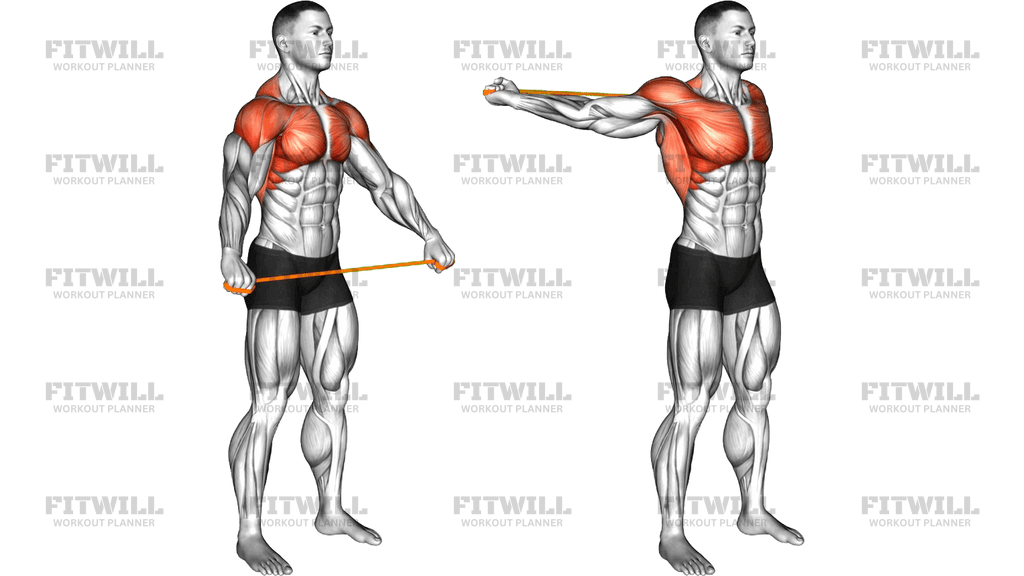
Band Front Lateral Raise is a standing shoulder isolation movement that uses band tension to train the front and side of the shoulders with a smooth, climbing resistance curve. It is especially useful when you want lighter external load, clean control, and repeated tension through the full range without the joint stress that often comes with heavier free weights. The exercise also asks the upper back and arms to stabilize the arm path, so the rep should feel deliberate rather than explosive.
The setup matters because the band gets harder as it stretches. Stand on the middle of the band with a stable base, or use a split stance if that helps you stay balanced, then hold the working handle or band end with the arm slightly in front of your thigh. Keep your ribs stacked over your pelvis, soften the knees, and let the shoulder sit down before the first rep so the delt starts from a clean position instead of a shrugged one.
From there, lift the arm in a controlled diagonal arc slightly in front of the body, not straight out to the side and not behind the torso. Keep a small bend in the elbow and raise until the hand reaches about shoulder height or just below it, stopping sooner if the shoulder starts to hike up. The band should feel like it is loading the shoulder smoothly through the middle and top of the rep rather than yanking you off balance.
Lower the band slowly and let the arm return to the front of the thigh under tension, keeping the torso quiet and the neck long. Exhale as you lift and inhale as you lower so the trunk stays organized while the shoulder works. If you are doing the movement one side at a time, the free hand can stay on the hip or by the side to help you resist rotation.
This exercise fits well in warmups, accessory blocks, shoulder endurance work, and lighter hypertrophy sessions where control matters more than absolute load. It is a good choice when you want to build better shoulder mechanics, improve overhead preparation, or keep the delts working without overloading the lower back. If you feel the traps taking over or the band forcing you to lean, shorten the range, choose less resistance, and keep the lift path smooth and repeatable.
[ Workout Log & Planner ]
Put your next workout in Fitwill
Keep your plan and training log ready when you are.


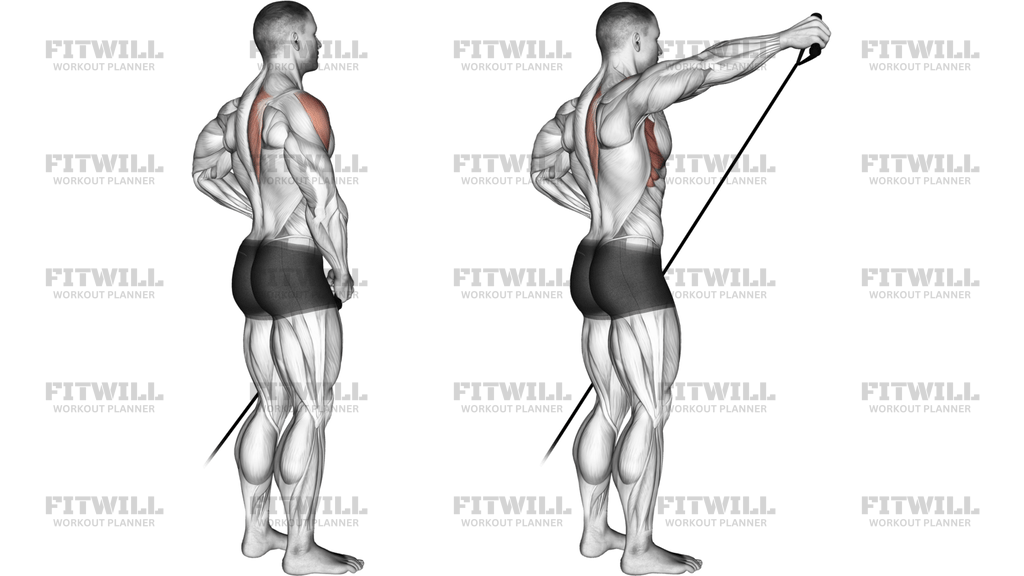
Instructions
- Step on the middle of the band with a stable hip-width stance, or stagger one foot back if you need extra balance.
- Hold the working handle or band end in the arm you want to raise, with the hand resting in front of the thigh and the palm facing down or slightly inward.
- Set your ribs over your pelvis, keep your chest tall, and let the shoulder stay down before the first rep.
- Bend the elbow slightly and lift the arm in a smooth diagonal path about 30 to 45 degrees in front of the body.
- Raise until the hand reaches shoulder height or just below it, stopping before the shoulder rolls up toward the ear.
- Keep the torso still and avoid leaning back or twisting as the band gets tighter.
- Lower the handle slowly until the hand returns to the front of the thigh and the band tension settles.
- Breathe out on the lift, breathe in on the lowering phase, and reset your stance before the next repetition.
- Step off the band carefully when the set is finished and release the handle only after the band is slack.
Tips & Tricks
- A lighter band usually works better here because tension climbs quickly near shoulder height.
- Keep the hand slightly in front of the shoulder line so the raise stays in the scapular plane instead of drifting behind the body.
- If your upper traps take over, stop the lift a little lower and keep the shoulder blade from shrugging up.
- A soft elbow bend helps the shoulder do the work without turning the set into a straight-arm swing.
- Use a split stance if the band pulls you forward or you catch yourself rocking from side to side.
- Lower for two to three seconds so the band stays under control instead of snapping the arm down.
- Keep the wrist neutral; bending it back makes the handle feel unstable and shifts tension away from the shoulder.
- If the front of the shoulder feels pinchy, reduce the range and keep the arm slightly farther from the midline.
Frequently Asked Questions
What muscle does Band Front Lateral Raise target most?
It mainly targets the front and side of the shoulders, with the upper back and arms helping stabilize the raise.
Can beginners perform this exercise?
Yes. Start with a light band and a short, controlled range so you can keep the torso still while the shoulder moves.
Should Band Front Lateral Raise go straight out to the side?
No. The arm should travel slightly in front of the body in a diagonal line, which usually feels smoother on the shoulder.
How high should I lift the handle?
Stop around shoulder height or just below it if you start shrugging or leaning to finish the rep.
Why does the band feel hardest near the top?
Band resistance increases as it stretches, so the top half and the lowering phase usually feel more demanding than the start.
Can I do Band Front Lateral Raise one arm at a time?
Yes, and single-arm work is often easier to control because it reduces twisting and lets you focus on one shoulder path.
What is the biggest form mistake?
Shrugging the shoulder up or leaning back to fake a bigger lift is the most common error.
Is there a good substitute if I do not have a band?
A light dumbbell front raise can work, but it will not give the same smooth tension that the band provides through the top of the rep.