Weighted Bench Dip
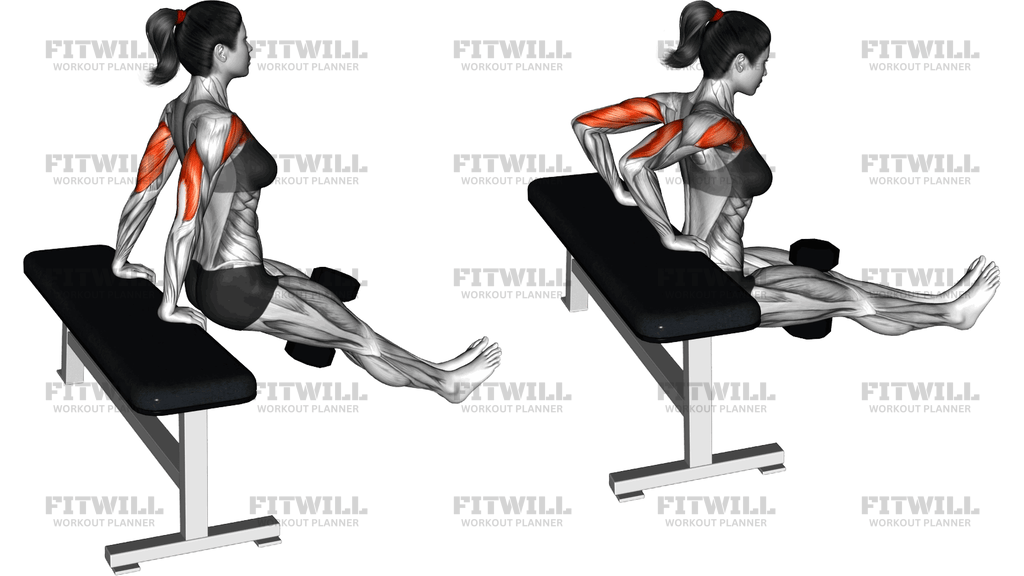
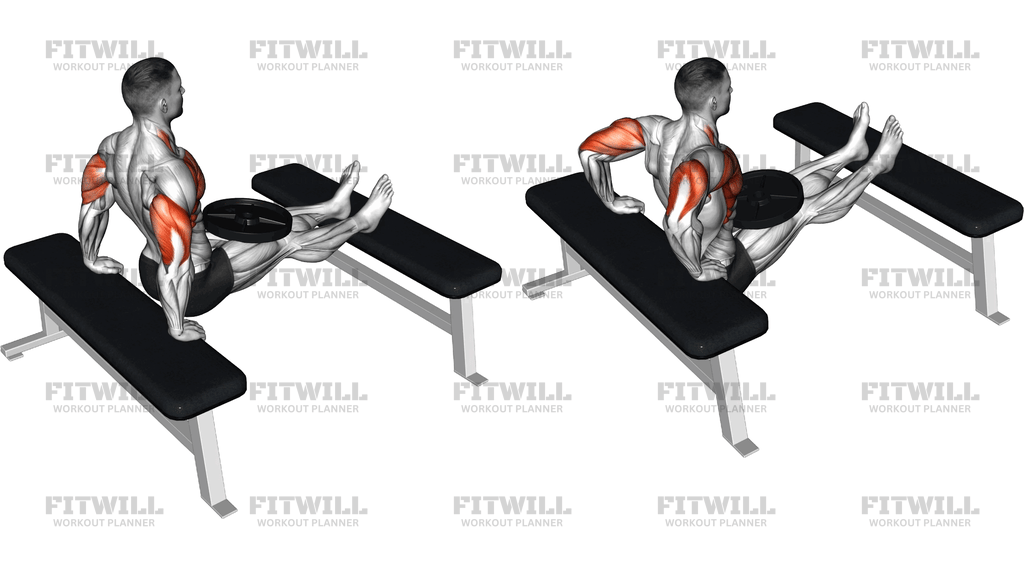
Weighted Bench Dip is a triceps-focused pressing exercise performed between two benches, with your hands braced behind you and a weight plate resting across the lap for added resistance. The image shows the classic setup clearly: one bench supports the hands, the other supports the heels, and the body lowers between them with the elbows bending behind the torso. That arrangement turns a simple bench dip into a much more demanding triceps builder because the load is applied directly to the top of the thigh line and must be stabilized while you move.
The main job in this exercise is elbow extension from the triceps brachii. The shoulders and chest help, while the forearms and core keep the body organized and the plate steady. Because the hands are fixed on the bench edge and the legs are elevated, the shoulder position matters a lot: if the shoulders drift forward or the dip gets too deep, the front of the shoulder can take more stress than the triceps. A clean repetition keeps the chest lifted, the shoulder blades controlled, and the elbows tracking backward instead of flaring wide.
Set up by placing both palms on the bench beside the hips, fingers pointing forward, then extend the legs to the opposite bench so the heels are supported and the hips are just off the edge. Sit the plate firmly across the lap or upper thighs before lifting the hips into the start position. From there, bend the elbows and lower the body straight down between the benches until the upper arms are near parallel to the floor or until the shoulders start to lose their packed position. Press back up by driving through the palms and extending the elbows without bouncing out of the bottom.
The weighted version is useful when bodyweight bench dips are no longer enough to challenge the triceps. It works well as accessory strength work, hypertrophy work, or a triceps finisher after pressing. It also teaches control under load because the plate can shift if you rush the rep, arch the back hard, or let the hips slide off center. A slower lowering phase and a brief pause near the bottom make the movement more honest and usually more productive.
This is not the best choice if the shoulders complain in the bottom position. Use a shorter range of motion, reduce the load, or switch to a less aggressive triceps press if the front of the shoulder feels pinched. For most lifters, the exercise is most effective when the setup is stable, the descent is controlled, and the plate stays centered the whole time. The goal is a repeatable triceps press with clean mechanics, not chasing depth that forces the shoulders to compensate.
[ Workout Log & Planner ]
Put your next workout in Fitwill
Keep your plan and training log ready when you are.


Instructions
- Place your palms on the bench behind you with your fingers pointing forward, and keep the hands just outside your hips.
- Extend your legs to the opposite bench so your heels are supported and your hips are just off the edge of the rear bench.
- Set the weight plate across your lap or upper thighs and stabilize it before you lift your body into the start position.
- Straighten your arms, lift your chest, and keep your shoulders down and slightly back before the first rep.
- Bend your elbows to lower your body between the benches, keeping the elbows tracking behind you instead of flaring wide.
- Descend only until your upper arms are near parallel to the floor or until your shoulders start to lose their packed position.
- Press through your palms to extend the elbows and bring your torso back up without bouncing.
- Exhale as you press up and inhale as you lower into the next repetition.
- Reset the set if the plate shifts, the hips slide, or the front of the shoulders starts to pinch.
Tips & Tricks
- Keep the plate centered on the lap; if it rolls toward one thigh, the torso will twist and the dip will feel unstable.
- Let the elbows bend backward, not straight out to the sides, so the triceps stay on the line of force.
- Stop the descent before the shoulders roll forward or the front of the shoulder starts to feel compressed.
- A slow 2-3 second lowering phase usually keeps the plate steadier and makes the triceps do more of the work.
- Keep the chest lifted and the neck long so you do not dump the bodyweight into the shoulders at the bottom.
- If the movement is too long-levered, bend the knees slightly or reduce the distance between the benches.
- Use a load that lets you press smoothly without kicking the legs or swinging the hips to escape the bottom.
- A brief pause near the bottom removes bounce and makes each rep more consistent.
- If your wrists feel overloaded, keep the heel of the palm flat and do not let the hands drift too far behind the hips.
Frequently Asked Questions
What muscle does Weighted Bench Dip target most?
The triceps are the main target, especially the triceps brachii, with the shoulders, forearms, and core helping to stabilize the dip.
Can beginners perform this exercise?
Yes, but beginners should start with bodyweight and a short, controlled range before adding the lap weight.
How should the plate be positioned during the dip?
Keep the plate centered across the lap or upper thighs so it does not slide as you lower and press.
How low should I go on a bench dip?
Lower only until the upper arms are near parallel to the floor or until the shoulders begin to lose their packed position.
Why use a second bench for the feet?
The front bench keeps the legs elevated and creates a stable bridge so the triceps take more of the load.
What is the most common form mistake?
Dropping too deep and letting the shoulders roll forward is the biggest issue because it shifts stress away from the triceps.
Is this a good triceps finisher?
Yes. The fixed hand position and lap load make it effective for higher-rep triceps work after pressing exercises.
What should I do if my shoulders feel pinched?
Shorten the range of motion, reduce the load, or swap to a triceps exercise that does not put the shoulder into as much extension.