Weighted Triceps Dip On High Parallel Bars
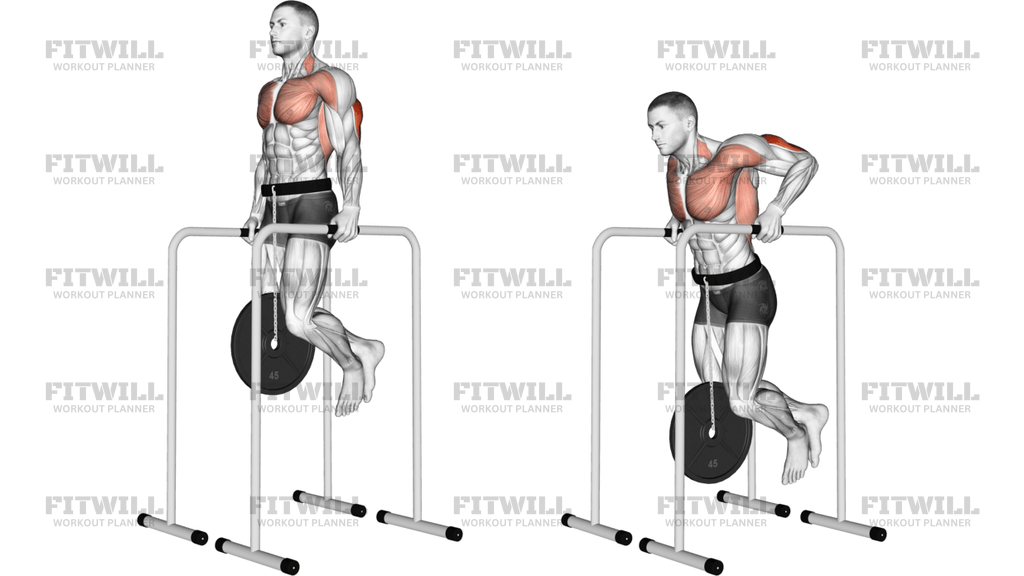
Weighted Triceps Dip On High Parallel Bars is a loaded pressing exercise done between parallel bars with a dip belt or hanging weight attached below the hips. It is built to train the triceps hard while also challenging the chest, front shoulders, forearms, and trunk to stay organized as the body lowers and rises between the bars. The load makes the top support position, the bottom depth, and the return to lockout much less forgiving, so setup quality matters more than on an unweighted dip.
The main emphasis is the triceps brachii, especially as you press out of the bottom and finish the elbow extension at the top. The chest and front deltoids assist, but the exercise works best when the torso stays controlled and the shoulders do not roll forward under the load. A good rep looks smooth and stacked: hands anchored on the bars, shoulders depressed, ribs contained, and the weight hanging quietly beneath you instead of swinging.
Start from a solid top support with straight arms, elbows locked or nearly locked, and the bars positioned close enough that your shoulders can stay comfortable. Lower by bending the elbows and keeping them pointed mostly behind you, not flaring wide. The torso can lean slightly forward, but the goal is still a clean triceps-driven dip rather than a loose chest dip with extra bounce. Stop the descent before the shoulders collapse forward or the upper arms drift far below parallel if that depth feels unstable.
Press the bars down to return to the top, then finish each rep with control instead of snapping into lockout. This movement is useful for lifters who already own the bodyweight dip and want more strength or size stimulus without needing huge rep counts. It also fits well as an accessory after benching or overhead work, provided the shoulders tolerate the depth and the load is increased in small steps. If the shoulders feel pinchy, shorten the range, reduce the load, or use a supported dip variation until the line of motion feels solid.
Fitwill
Log Workouts, Track Progress & Build Strength.
Achieve more with Fitwill: explore over 9600 exercises with images and videos, access built-in and custom workouts, perfect for both gym and home sessions, and see real results.
Start your journey. Download today!




Instructions
- Attach a dip belt or other hanging load, then stand between the high parallel bars and grip each handle firmly.
- Press yourself into the top support with straight arms, shoulders down, and the weight hanging centered below your hips.
- Set your chest tall, ribs controlled, and feet tucked behind you so the load does not swing.
- Inhale and bend your elbows to lower your body between the bars, keeping your forearms close to vertical.
- Let your elbows travel mostly back rather than out to the sides as you descend.
- Lower until your upper arms are about parallel to the floor, or slightly below only if your shoulders stay comfortable and stable.
- Drive the bars down and press back to straight arms, finishing each rep without bouncing out of the bottom.
- Hold the top support long enough to regain control, then repeat for the planned reps before stepping down carefully.
Tips & Tricks
- Keep the dip belt weight hanging straight under your center; if it swings forward, reset before the next rep.
- Use a slightly more upright torso if you want the triceps to stay the main driver instead of turning the set into a chest dip.
- Stop the descent when your shoulders start to tip forward or your upper arms drop so low that you lose tension.
- If your wrists ache, check that the bars sit deep in the palm instead of forcing your hand to bend back.
- Let the elbows track behind you, not wide, so the press stays narrow and triceps-dominant.
- Choose small weight jumps with the belt; this movement usually breaks down before it feels like a leg or grip issue.
- Cross your ankles and keep your knees quiet to reduce swinging during the lowering phase.
- Exhale as you press to the top and avoid holding your breath so long that you lose shoulder position.
- A controlled 2-3 second descent is usually enough; dropping fast makes the bottom position harder on the shoulders.
- If the top lockout feels shaky, reduce the load and rebuild clean support reps before adding more weight.
Frequently Asked Questions
What muscles does Weighted Triceps Dip On High Parallel Bars train most?
The triceps are the main target, with the chest, front shoulders, forearms, and core helping to stabilize the load and control the dip.
Is Weighted Triceps Dip On High Parallel Bars beginner-friendly?
Only if you already control bodyweight dips well. Most beginners should master unweighted parallel-bar dips first before adding a belt.
How deep should I go on the bars?
Lower until your upper arms are about parallel to the floor, or a little deeper only if your shoulders stay packed and pain-free.
Should my torso stay upright or lean forward?
A mostly upright torso keeps the triceps more dominant. A bigger forward lean shifts more work toward the chest and usually makes the bottom position harder on the shoulders.
How do I add weight to Weighted Triceps Dip On High Parallel Bars?
Use a dip belt with small plate jumps so the hanging load stays stable. Add weight only when you can keep the same depth, elbow path, and top support on every rep.
Why do my legs swing during this exercise?
Swing usually comes from the hanging load moving ahead of your hips. Bend the knees, cross the ankles behind you, and reset the belt so the plate hangs still before each rep.
What if my shoulders feel pinchy at the bottom?
Shorten the range of motion, lighten the load, and keep the elbows tracking back. If the pinch remains, switch to assisted dips or close-grip pressing work.
Can I use this exercise after bench pressing?
Yes. It works well as a triceps-heavy accessory after bench work, as long as your shoulders still feel stable and you do not chase sloppy depth when fatigued.