Plate Pinch
Plate Pinch is a grip-strength exercise built around holding a weight plate by the rim rather than resting it in the palm. That pinch position makes the thumb, fingers, forearm flexors, and wrist stabilizers work hard to keep the plate from slipping, while the shoulders and trunk help keep the body tall and organized. It is a simple-looking movement, but the limiting factor is usually thumb pressure and forearm endurance, not brute pulling strength.
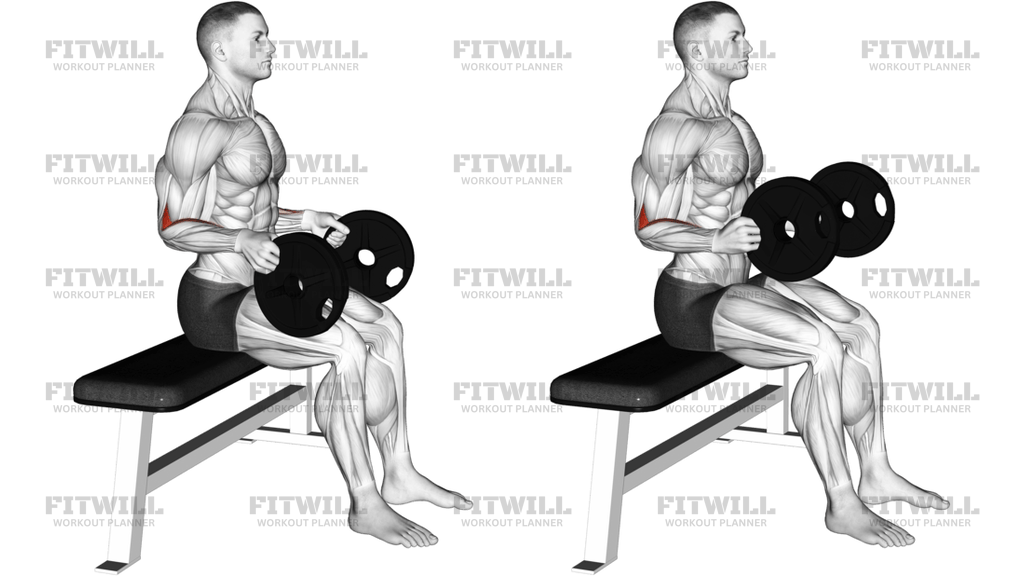
The image shows the plate held at the side with a neutral wrist and an upright torso. That setup matters because any wrist bend, shoulder shrug, or body lean reduces the quality of the hold and turns the set into a compensation drill. Use a smooth plate with a clean edge if you want a true pinch-grip challenge; a plate with too much texture or an awkward edge changes the feel and can hide weak thumb position.
Most athletes use Plate Pinch as a timed hold or a controlled pickup-and-hold variation. Start by pinching the plate between the thumb on one side and the fingers on the other, then stand up without letting the plate roll into the palm. Once you are upright, keep the elbow long, keep the wrist stacked, and breathe in short controlled breaths while you maintain the squeeze. If the exercise is written into your program as repeated efforts, the controlled lowering back to the floor should be just as deliberate as the lift.
This exercise is useful as accessory work for climbers, lifters, field athletes, and anyone who needs better grip endurance for rows, carries, deadlifts, and loaded holds. It also works well early in a session as a short neural primer or later as a finishing grip challenge. Keep the load honest: if the plate drifts, the wrist opens, or the thumb starts sliding, the set is already too heavy. The safest progressions are more time, a more demanding plate, or a stricter unilateral hold, not ugly maximal attempts.
[ Workout Log & Planner ]
Put your next workout in Fitwill
Keep your plan and training log ready when you are.


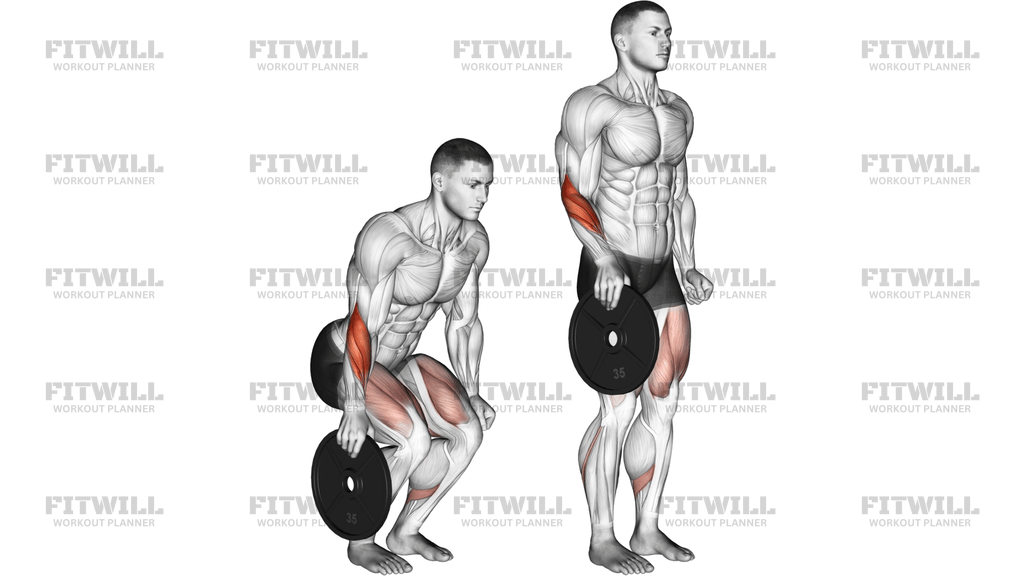
Instructions
- Stand beside a smooth weight plate with your feet about hip-width apart and the plate set just outside one foot.
- Hinge or squat down and pinch the plate rim between your thumb and fingers instead of wrapping the hand around it.
- Keep your wrist straight, your knuckles tall, and your shoulder down before you lift.
- Drive through your legs to stand while keeping the plate vertical and close to your thigh.
- Hold the plate at your side with a long elbow and a firm pinch through the thumb pad.
- Keep the torso upright and avoid leaning away from the plate as the set gets harder.
- Breathe in before the lift, then take short controlled breaths while you maintain the hold.
- If the plate starts to slide, reset before the grip fails completely.
- Lower the plate back to the floor under control and switch sides if the program calls for both hands.
Tips & Tricks
- A smooth steel plate usually feels harder than a knurled or rubber-coated one because the edge slides sooner.
- If the thumb pad burns before the forearm does, the pinch position is doing the intended job.
- Keep the plate just off the outside of the thigh instead of drifting it forward, which tends to pull the torso off balance.
- Do not let the wrist bend back; a stacked wrist keeps the pressure on the thumb and fingers instead of the joint.
- Short timed holds of 10-30 seconds are usually more productive than one ugly max-effort attempt.
- Chalk can help if sweaty hands are the limiting factor, but it should not replace a solid pinch.
- If you have to shrug to keep the plate up, the load is too heavy for a clean hold.
- Progress by increasing hold time, using a thicker or larger plate, or tightening the squeeze rather than bouncing the plate.
Frequently Asked Questions
What muscles does Plate Pinch train most?
It mainly trains the thumb and forearm muscles that control pinch grip, especially the wrist flexors and stabilizers.
Is Plate Pinch a hold or a repetition exercise?
It is usually trained as a timed isometric hold, although some programs use a pickup, hold, and controlled lower as one repetition.
How should I hold the plate?
Pinch the rim between the thumb on one side and the fingers on the other, with the wrist stacked and the plate hanging vertically.
Why does my shoulder feel involved during the hold?
The shoulder helps keep the arm packed and the plate steady, but the main challenge should still come from the grip and forearm.
What is the biggest mistake with Plate Pinch?
Letting the plate roll into the palm or letting the wrist bend back usually turns the hold into a weaker, less specific version of the exercise.
Can a beginner do this exercise?
Yes, but start with a light plate and short holds so the thumb and fingers can adapt without losing control.
What kind of plate works best?
A smooth, standard weight plate with a clean edge is best for a true pinch-grip challenge.
How do I progress Plate Pinch safely?
Increase hold time first, then use a larger or thicker plate, and only add difficulty if the wrist and shoulder stay quiet.