Bottle Weighted Alternate Hammer Curl
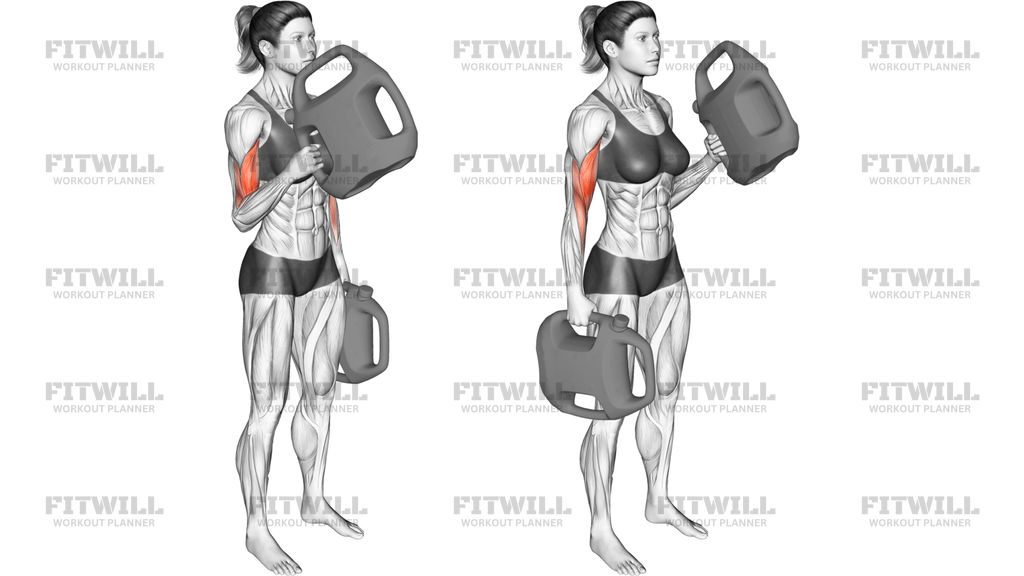
Bottle Weighted Alternate Hammer Curl is a standing single-arm curl done with a neutral, thumbs-up grip on a bottle, jug, or other handled weight. The alternating pattern lets you focus on one arm at a time while the other side stays quiet, which makes it easier to keep the torso still and feel the elbow flexors work through a clean range.
This variation places most of the load on the brachialis and brachioradialis, with the biceps and forearm muscles assisting. Because the grip stays neutral instead of supinated, the movement often feels friendlier on the wrists and lets the forearms contribute more than a standard curl. The simple setup also makes it useful at home or anywhere you only have improvised weights.
The setup matters because the handles, stance, and arm path determine whether the rep stays strict. Stand tall with both arms hanging naturally, keep the shoulders stacked over the hips, and let each elbow stay close to the ribs as you curl. The working hand should travel in a smooth arc without the shoulder rolling forward or the lower back leaning back to help the lift.
On each rep, curl one bottle toward the front of the shoulder, squeeze briefly at the top, then lower it under control before switching sides. The non-working arm should remain relaxed and still instead of helping the rep. That alternating rhythm makes it easier to keep tension on the arm that is working and to notice if one side starts cheating or losing range.
Use this exercise for arm hypertrophy, grip work, or a simple accessory movement when you want focused elbow-flexion training without a barbell or cable station. Light-to-moderate loads usually work best because the improvised bottle shape can shift if you get sloppy. Keep the motion smooth, avoid swinging the torso, and stop the set if the wrist bends back or the shoulder starts taking over.
[ Workout Log & Planner ]
Put your next workout in Fitwill
Keep your plan and training log ready when you are.


Instructions
- Stand tall with a bottle or jug in each hand, arms hanging by your sides and palms facing in.
- Set your feet about hip-width apart and keep your ribs stacked over your pelvis so your torso stays quiet.
- Pin both elbows close to your sides before you start the first rep.
- Curl one weight up toward the same-side shoulder without letting the wrist bend back or the elbow drift forward.
- Squeeze the top for a brief moment, then lower that arm slowly until the hand is back near the thigh.
- Keep the opposite arm still at the bottom while the working side lowers, then switch sides for the next rep.
- Breathe out as you curl and breathe in as the weight comes down under control.
- Finish the set with both weights lowered at your sides and reset your posture before the next set.
Tips & Tricks
- Use a bottle or jug you can control without tilting the shoulder or leaning back.
- Keep the handle centered in your palm so the weight does not pull the wrist into extension.
- Think about bending the elbow, not swinging the hand toward the chest.
- Let the upper arm stay vertical; if the elbow drifts forward, the front of the shoulder starts helping too much.
- Lower the bottle slowly so the forearm stays loaded instead of dropping under gravity.
- If the container shifts in your grip, reduce the load or use a better handle before the set gets sloppy.
- Alternate sides with a brief pause at the bottom so each arm starts from a dead stop.
- Keep the neck long and the jaw relaxed, especially on the last few reps when people usually tense up.
Frequently Asked Questions
What muscles work most in Bottle Weighted Alternate Hammer Curl?
It mainly trains the brachialis and brachioradialis, with the biceps and forearm flexors assisting each rep.
Why use a hammer grip instead of a palm-up curl?
The neutral grip shifts more work to the brachialis and forearms and is often easier on the wrists than a fully supinated curl.
Should both bottles move at the same time?
No. One arm curls while the other stays quiet, then you switch sides after the lowering phase.
How should the bottle or jug sit in my hand?
Grip the handle firmly and keep the wrist straight so the container does not tip forward or backward during the curl.
What is the most common mistake with this exercise?
People usually swing the torso or let the elbow travel forward, which turns the curl into a half-shrug.
Can I do this with water bottles instead of dumbbells?
Yes, as long as the container has a secure handle and the load stays balanced enough for a strict curl.
Is this good for beginners?
Yes. The alternating pattern and neutral grip make it simple to learn with very light resistance.
How many reps should I use?
Moderate to higher reps work well, especially when the goal is arm control, grip endurance, or accessory hypertrophy.