Weighted Seated Reverse Wrist Curl
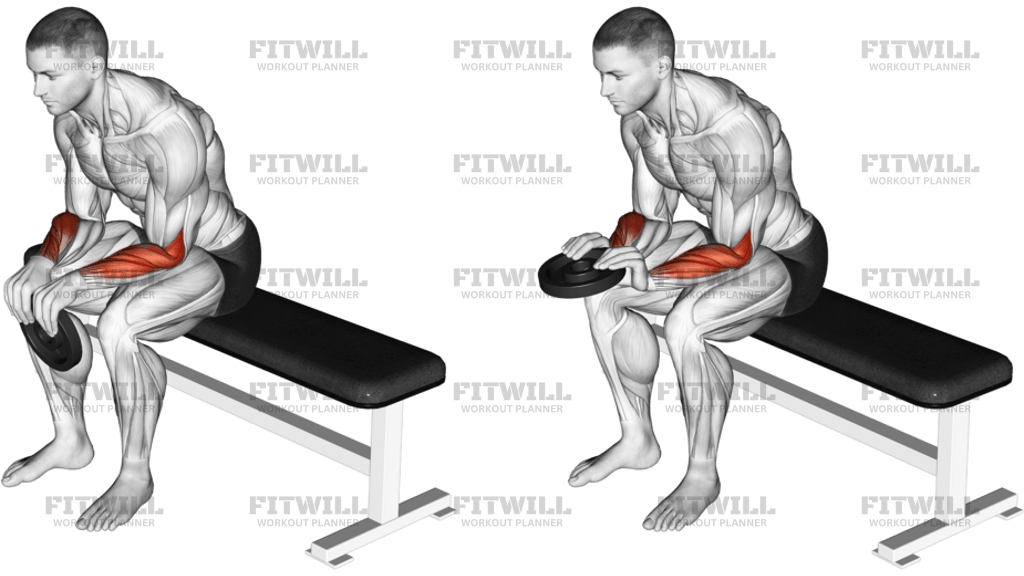
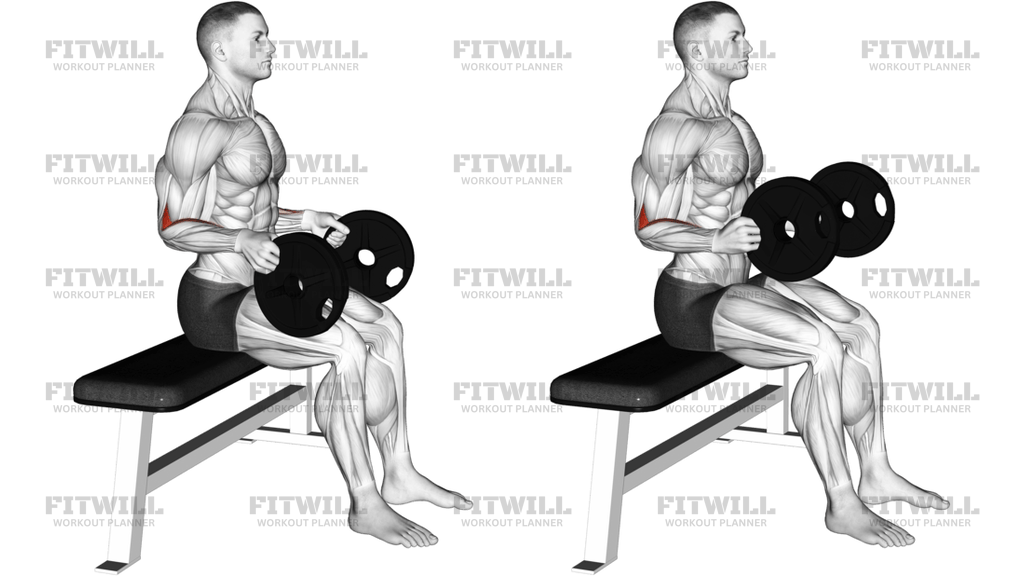
Weighted Seated Reverse Wrist Curl is a seated forearm isolation exercise where the wrists do the work while the forearms stay braced on the thighs. The reverse grip changes the emphasis toward the muscles on the back of the forearm, making this a useful choice for building wrist extension strength, forearm balance, and small-joint control. It is usually performed with a plate, dumbbell, or similar weighted object that lets the hands hang just beyond the knees.
The setup matters because the exercise is easy to turn into a body-swing movement if the elbows drift or the shoulders help. Sit tall on a bench, plant the feet, and place the forearms across the thighs so the wrists can move freely over the knees. That support reduces cheating and lets you feel the forearm muscles working through a short but precise range of motion.
Each rep should start from a controlled lowered position, then lift by extending the wrists so the back of the hands rises toward the shins. The forearms and elbows stay quiet while the hands move through the arc. At the top, squeeze briefly without jerking the weight, then lower slowly until the wrists drop under control and the forearm muscles lengthen again. Breathing should stay smooth: exhale as you lift, inhale as you lower.
This movement is a strong accessory for grip work, arm training, climbing prep, and any program that needs more direct forearm volume. It is best kept strict and moderately light, since the range is small and the wrists are the limiting factor. If the motion causes pinching, the load is too heavy or the range is too deep. Done well, the exercise should feel focused, controlled, and very local to the forearms rather than like a whole-body lift.
[ Workout Log & Planner ]
Put your next workout in Fitwill
Keep your plan and training log ready when you are.


Instructions
- Sit on a flat bench and hold a plate, dumbbell, or similar weight with an overhand grip.
- Rest both forearms across your thighs and let your wrists hang just past the knees.
- Plant your feet and keep your elbows fixed against the legs so only the wrists can move.
- Start with the wrists dropped and the knuckles pointing toward the floor.
- Curl the backs of your hands up toward your shins by extending the wrists.
- Pause briefly at the top without letting the elbows lift or the shoulders help.
- Lower the weight slowly until the wrists hang down again under control.
- Exhale as you lift, inhale as you lower, and reset the forearms before the next rep.
Tips & Tricks
- A plate often feels easier to stabilize than a bulky dumbbell because the hand can stay flatter on the load.
- Keep the forearms pinned to the thighs; if the elbows start sliding, the set is turning into a cheat curl.
- Use a slow 2 to 3 second lowering phase to build more control through the small wrist range.
- Choose a weight that lets you move the wrists, not one that forces the fingers and grip to yank the load upward.
- Stop short of any pinching on the top of the wrist; this exercise should create forearm burn, not joint pain.
- Keep the shoulders relaxed and the chest tall so the bench position stays locked in.
- If the bench edge digs into your forearms, place a towel across the thighs before you start.
- Higher reps usually work better than heavy loading because the lever arm is short and the movement is tiny.
Frequently Asked Questions
What does the weighted seated reverse wrist curl train?
It mainly trains the wrist extensors and the back side of the forearms, with grip endurance helping to hold the load.
How is this different from a regular seated wrist curl?
The reverse version uses an overhand grip and lifts the back of the hand upward, while a regular wrist curl emphasizes wrist flexion with the palms up.
Why do my forearms need to rest on my thighs?
The thigh support keeps the elbows still so the motion comes from the wrists instead of the shoulders or upper arms.
Can I use a dumbbell instead of a plate?
Yes. A light dumbbell or pair of dumbbells works if you can keep the wrists moving cleanly without the grip taking over.
How heavy should I go on this exercise?
Light to moderate is usually best. The movement is small, so too much load quickly turns it into a sloppy forearm cheat rep.
Should I feel this in my shoulders or upper arms?
No. Some stabilizing tension is normal, but the main burn should stay in the forearms and around the wrists.
What is the most common form mistake?
Letting the elbows lift off the thighs or swinging the weight with the whole arm instead of moving only at the wrists.
Is this a good beginner forearm exercise?
Yes, as long as the load is very light and the range stays pain-free. It is a simple way to learn wrist control.