Weighted Seated Supination
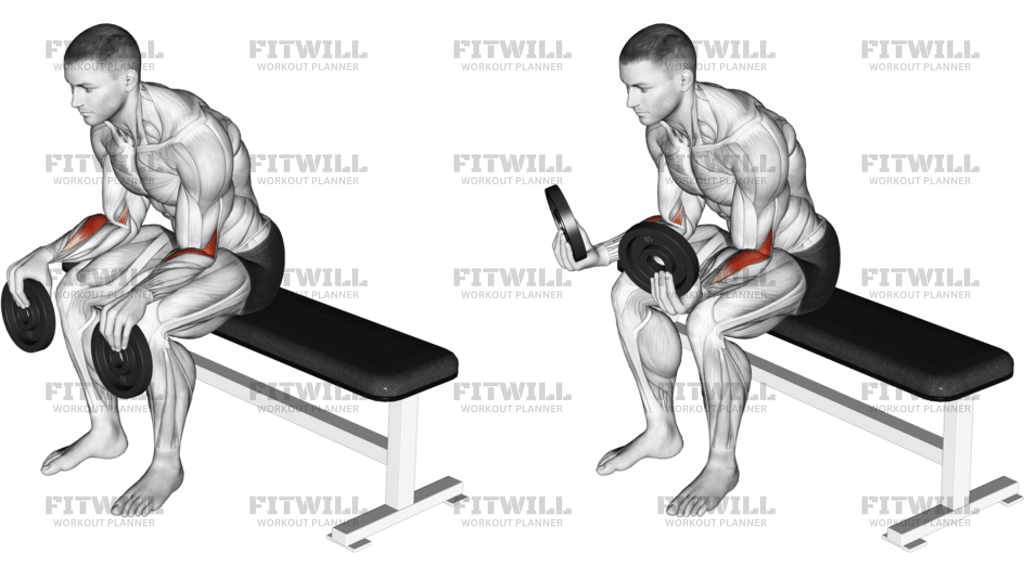
Weighted Seated Supination is a seated forearm rotation drill that trains you to turn the palm upward against resistance with the elbow supported on the thigh. The setup matters because the exercise is small and precise: if the upper arm drifts, the wrist bends, or the torso starts helping, the load stops working the rotators of the forearm and the rep turns into a shrug or curl.
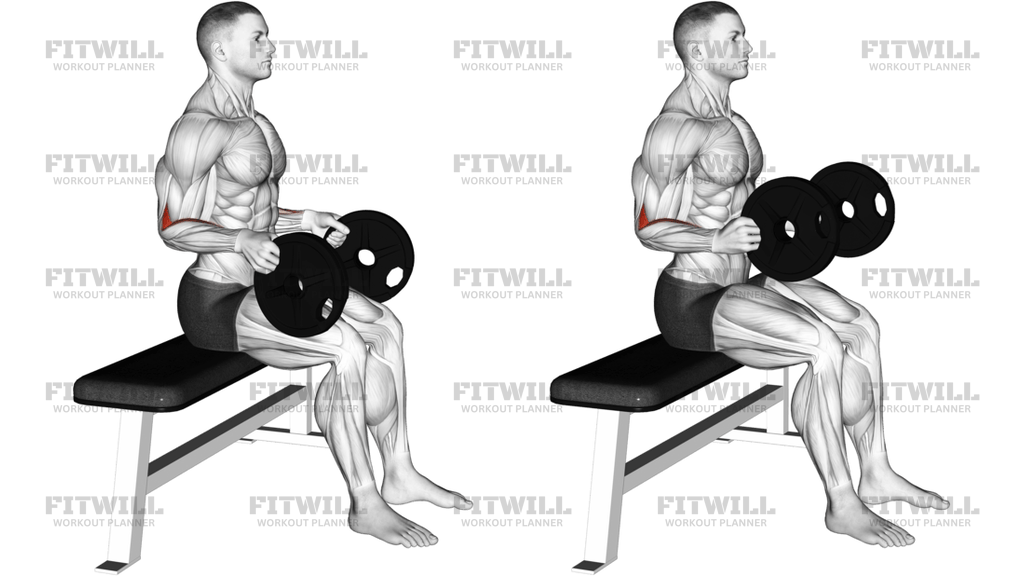
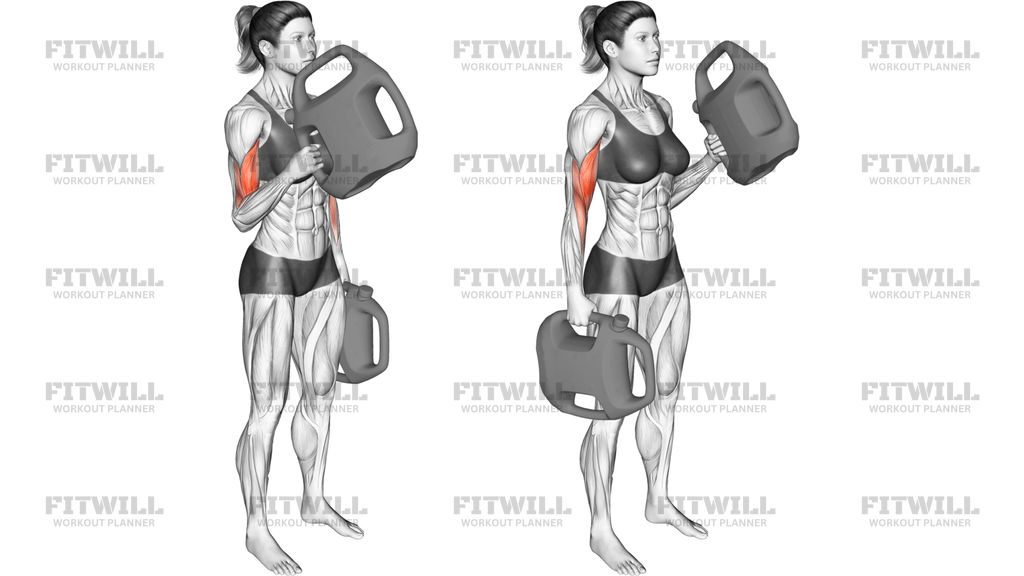
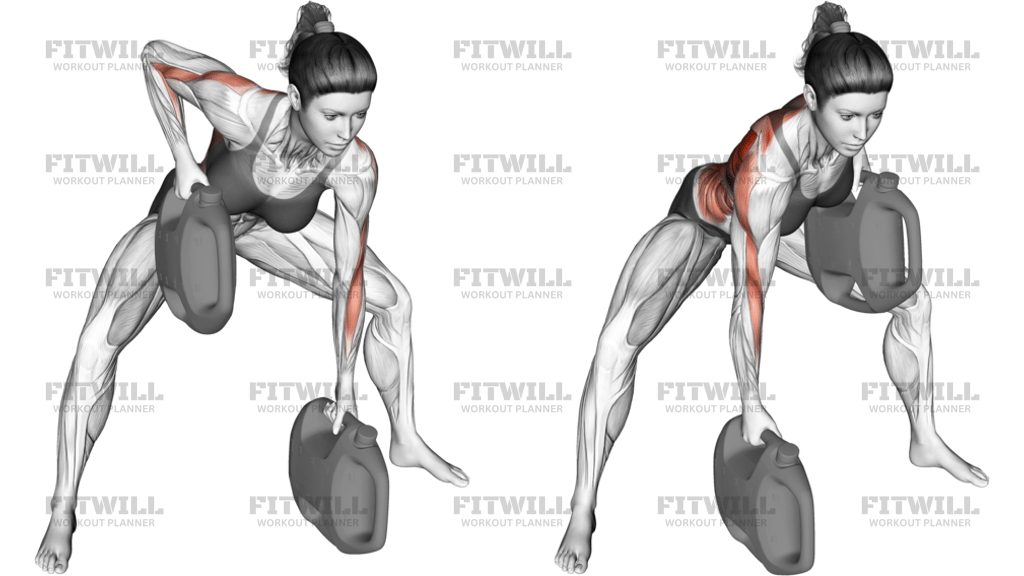
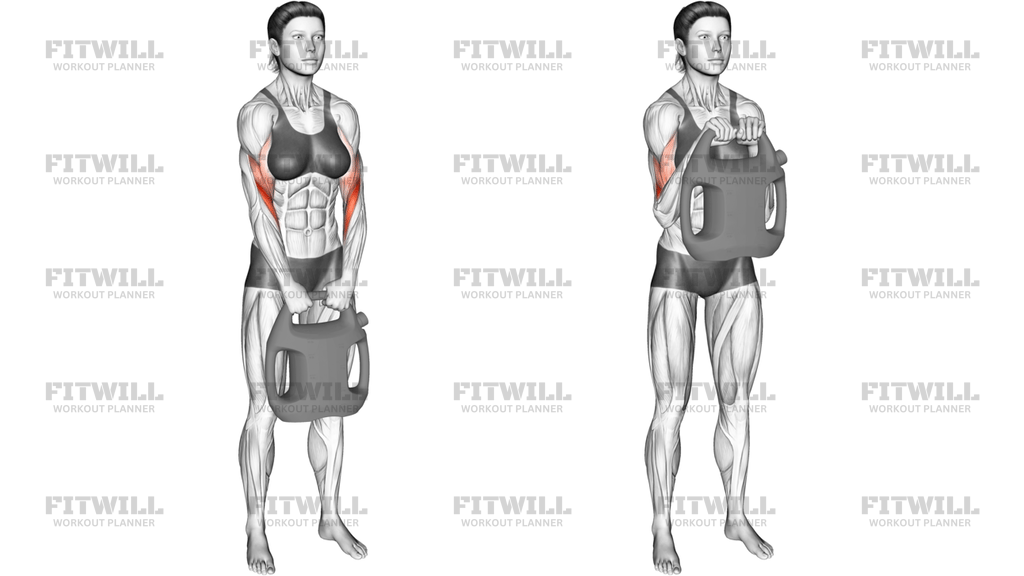
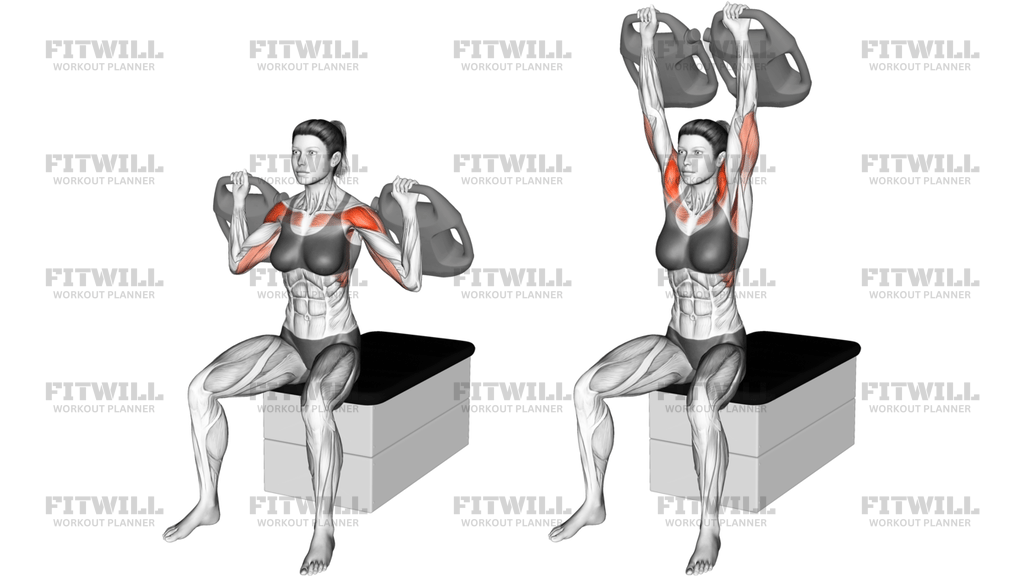
The image shows the lifter seated on a bench with the working elbow pinned to the inner thigh, the forearm hanging just off the knee, and a plate or dumbbell held with a pronated or neutral start. From there, the forearm rotates into supination so the palm faces up while the elbow stays fixed. That makes the movement useful for forearm strength, elbow control, and cleaner carryover to pulling, gripping, and racket or bar work.
The main action should come from rotation, not from lifting the weight with the shoulder or flexing the wrist. Keep the upper arm quiet, let the elbow act like a hinge point, and move through a smooth arc until the palm is fully turned up. The return should be just as controlled, with the forearm slowly rotating back to the starting position instead of dropping open. Light loads are usually enough here because the lever arm is long and the position gets harder near the top and bottom of the range.
This exercise fits well in accessory work, rehab-style forearm training, warmups for pulling sessions, or any program that needs better grip and elbow mechanics. It is usually beginner-friendly if the load stays light and the elbow remains braced, but it is easy to cheat with body English when the weight is too heavy. Keep the wrist stacked, breathe steadily, and stop the set when the forearm no longer controls the turn cleanly.
Use it when you want deliberate forearm work rather than general arm fatigue. The best reps feel local to the forearm, smooth through the rotation, and free of shoulder drive or torso rocking.
Fitwill
Log Workouts, Track Progress & Build Strength.
Achieve more with Fitwill: explore over 9600 exercises with images and videos, access built-in and custom workouts, perfect for both gym and home sessions, and see real results.
Start your journey. Download today!




Instructions
- Sit on a flat bench and plant both feet firmly on the floor.
- Place the working elbow against the inside of the same-side thigh and let the forearm hang just past the knee.
- Hold the plate, dumbbell, or handle with the palm facing down or slightly inward at the start.
- Keep the upper arm still and the wrist straight so the forearm can rotate cleanly.
- Turn the palm upward by rotating through the forearm until the hand reaches a fully supinated position.
- Pause briefly at the top without letting the elbow slide off the thigh or the wrist bend back.
- Lower the load slowly by reversing the rotation until the palm returns to the start.
- Exhale as you rotate up, inhale as you lower, and keep the motion smooth from rep to rep.
- Reset your elbow position before the next repetition if the arm drifts or the setup changes.
Tips & Tricks
- Keep the elbow pinned to the thigh; if it floats away, the shoulder starts helping and the forearm loses tension.
- Use a light plate or dumbbell first, because the long lever makes this harder than it looks.
- Rotate the forearm, not the wrist; bending the wrist turns the rep into a curl-and-flip pattern.
- Stop the top position when the palm is comfortably up, not when the shoulder rolls forward to fake extra range.
- Lower the weight as slowly as the lift; the return phase is where most people lose control.
- Keep the nonworking hand off the moving arm unless you need it to steady the bench setup between sets.
- If the forearm cramps, shorten the set and reduce load before trying to push through sloppy reps.
- Use a bench height that lets the thigh support the elbow without forcing the torso to lean too far forward.
Frequently Asked Questions
What does Weighted Seated Supination train most?
It mainly trains the forearm muscles that rotate the hand palm-up, with biceps and brachioradialis helping stabilize the motion.
Why is the elbow braced on the thigh?
The thigh keeps the upper arm fixed so the forearm does the rotating instead of the shoulder or torso cheating the rep.
Should I use a dumbbell or a plate for this exercise?
Either works if you can hold it securely, but a small plate or light dumbbell usually makes the rotation easier to control.
What should I feel during the rep?
You should feel a focused effort around the forearm near the elbow and along the rotating side of the forearm, not a big shoulder drive.
Is this exercise good for beginners?
Yes, as long as the load is light and the elbow stays planted; the movement is simple but the control demand is high.
What is the most common mistake?
The biggest mistake is letting the elbow leave the thigh and turning the rep into a loose arm swing instead of a pure rotation.
Can I do this on both arms in the same session?
Yes, most people alternate sides or train both arms one after the other so each forearm gets the same amount of work.
How heavy should the load be?
Choose a weight that lets you rotate smoothly for controlled reps without the wrist collapsing or the torso needing to help.