Weighted Incline Svend Press
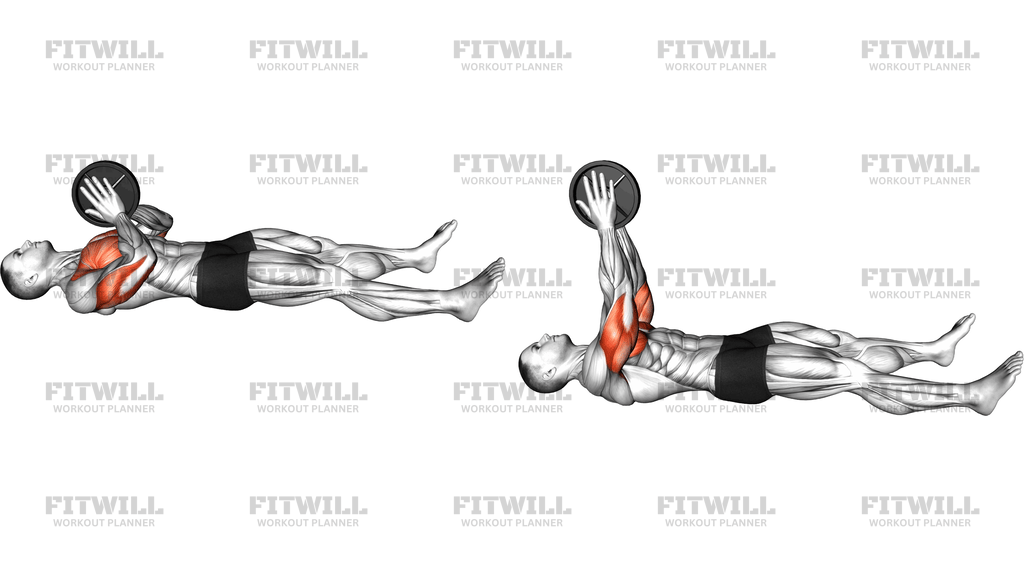
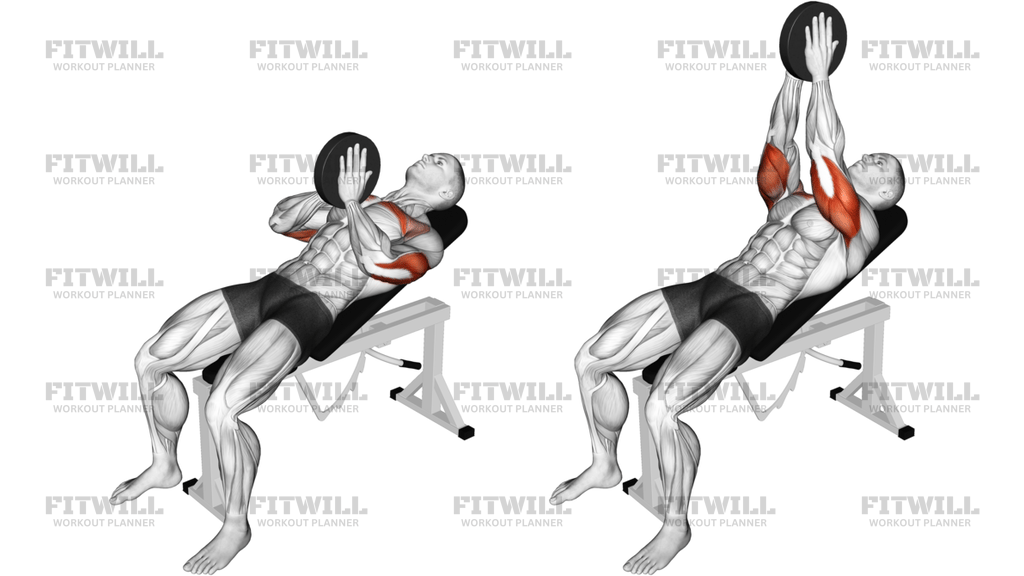
Weighted Incline Svend Press is an incline-bench chest press performed while squeezing a weight, usually a plate, between both palms. The image shows the lifter lying back on an incline bench with the load centered over the upper chest, which puts the emphasis on squeezing the chest inward while still pressing the weight upward in a controlled path. That combination makes the exercise more about chest tension and upper-body control than about brute load.
The incline angle shifts the emphasis slightly toward the upper chest and front of the shoulders compared with a flat Svend press. The Pectoralis major is still the main driver, with the Anterior deltoid and Triceps brachii helping through the press and the Rectus abdominis working to keep the rib cage from flaring. Because the exercise depends on isometric squeeze plus pressing force, the setup matters: if the shoulders are loose or the wrists collapse, the movement turns sloppy fast.
A good rep starts before the press. Set your upper back on the bench, plant your feet, and hold the plate firmly between flat palms or close hands so it does not drift. Keep your shoulder blades set against the bench, then press the load up from the upper chest line rather than letting it travel toward the face. The elbows should stay slightly tucked so the chest can stay engaged without the shoulders taking over.
Lower the load with control until it returns to the upper chest or sternum line, then press it back up while keeping constant inward pressure on the plate. The squeeze is not a side detail; it is the point of the exercise, and it should stay active on every centimeter of the rep. Breathe in on the lowering phase, brace before the press, and exhale as you drive the load upward without losing the squeeze.
Weighted Incline Svend Press is useful as a chest accessory, a warm-up for pressing sessions, or a finisher when you want high chest tension without loading the joints as heavily as a barbell press. It is also a practical option for lifters who want more pec awareness and less reliance on momentum. Keep the repetitions smooth, stop when the plate starts to wobble, and treat any shoulder pinch or wrist discomfort as a sign to reduce the load or adjust the angle.
[ Workout Log & Planner ]
Put your next workout in Fitwill
Keep your plan and training log ready when you are.


Instructions
- Set an incline bench to a moderate angle and lie back with your upper back supported, feet flat on the floor.
- Hold a weight plate between both palms at mid-chest level, keeping your wrists stacked and the plate centered over the sternum.
- Set your shoulder blades gently back and down against the bench before you start the first rep.
- Squeeze the plate inward hard enough that the hands stay active throughout the set.
- Press the plate upward in a smooth arc until your elbows are nearly straight and the load is above the upper chest line.
- Lower the plate back toward the upper chest with the same inward squeeze, keeping the elbows slightly tucked.
- Keep your rib cage from popping up as you press; tighten your midsection and keep your feet planted.
- Inhale as the plate comes down and exhale as you drive it up, then reset the squeeze before each rep.
- Stop the set if the plate starts to drift, the shoulders shrug, or the wrists bend back.
Tips & Tricks
- Use a smooth, grippable plate; if it slides between the palms, the squeeze stops being the limiter.
- Keep the incline moderate. A very steep bench shifts the work toward the shoulders and away from the chest.
- Think about pressing the plate up and slightly back toward the rack line, not straight toward your face.
- Do not let the elbows flare wide; a soft tuck keeps the upper chest engaged and usually feels better on the shoulders.
- Keep your wrists straight and the plate centered, especially near the top where lifters often lose the squeeze.
- Start lighter than you would for a normal press. The isometric squeeze makes the movement harder than it looks.
- Keep the shoulder blades set on the bench instead of reaching forward at the bottom of every rep.
- If the lower back starts arching hard, exhale, reset your feet, and reduce the load before the next set.
- Use slow lowering reps when you want more chest tension; the eccentric is where the squeeze can drift first.
- Stop one or two reps before the plate becomes shaky, because wobble usually means the pecs are no longer driving the press.
Frequently Asked Questions
What muscles does Weighted Incline Svend Press train most?
It primarily targets the pecs, with the upper chest, front shoulders, and triceps helping through the press.
What is the point of squeezing the plate during Weighted Incline Svend Press?
The squeeze keeps constant tension on the pecs and makes the chest do more of the work instead of letting the shoulders take over.
Can beginners do Weighted Incline Svend Press?
Yes, but they should start with a very light plate and learn how to keep the wrists, elbows, and squeeze stable on the incline bench.
How high should the incline bench be for Weighted Incline Svend Press?
A moderate incline is usually best. If the bench is too upright, the movement turns into more of a shoulder exercise than a chest-focused press.
Should the plate touch my chest on every rep?
It should come back to the upper chest line with control, but you do not need to crash it into the chest or lose tension at the bottom.
What are the most common mistakes on the plate hold?
Letting the plate drift, bending the wrists back, flaring the elbows, and shrugging the shoulders are the biggest form breakdowns.
Is Weighted Incline Svend Press a good finisher after bench pressing?
Yes. It works well as a higher-tension accessory after pressing because it keeps the chest under load without needing very heavy weight.
What should I do if I feel the movement mostly in my shoulders?
Lower the bench angle, reduce the load, and keep the elbows slightly tucked so the pecs can keep the main line of force.