Weighted Drop Push-Up
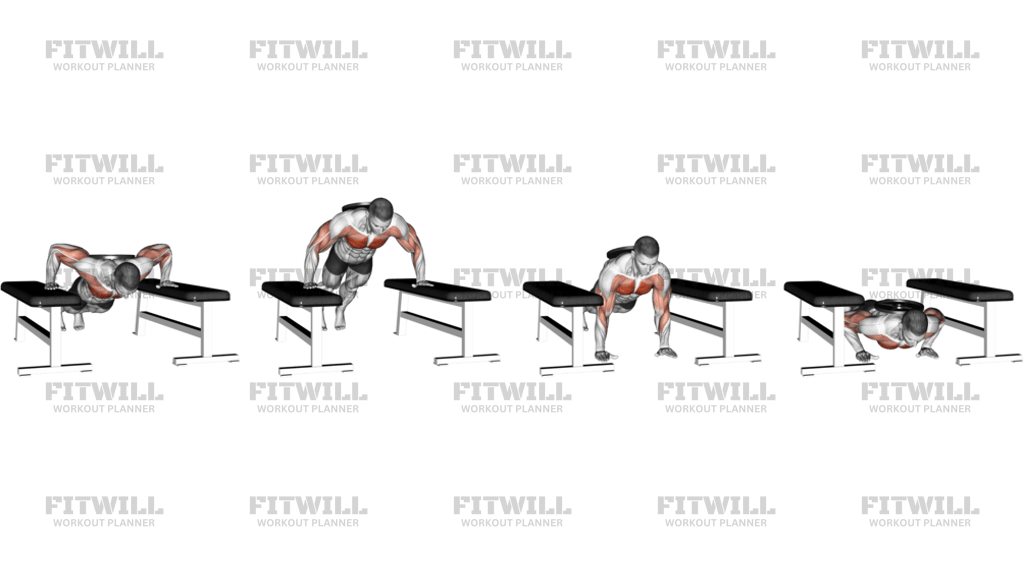
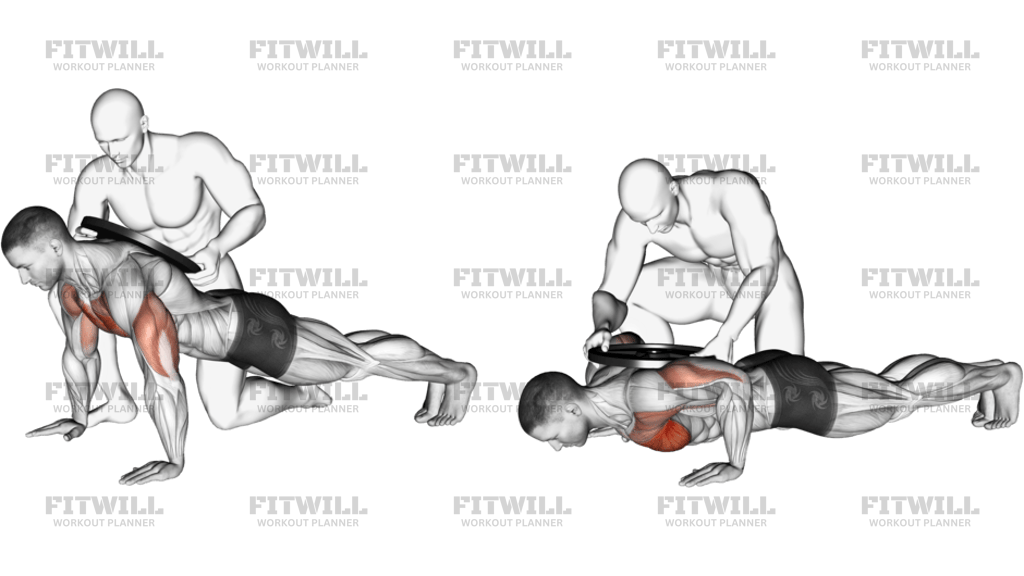
Weighted Drop Push-Up is a loaded push-up variation performed with your hands on two stable elevated supports so the chest can travel lower than it would on the floor. That deeper path makes the press more demanding for the chest, front shoulders, and triceps, while the added load raises the challenge in the bottom position. It is a good choice when a standard push-up is no longer enough but you still want a bodyweight-based pressing pattern.
The setup matters because the exercise is only as good as the supports you choose. Place the benches or boxes parallel, set your hands slightly wider than shoulder width, and make sure the wrists are stacked over firm surfaces that will not shift. If you are using a vest or other external load, secure it before you step into the plank so it stays centered as you lower. Your feet should be planted, your hips level, and your body long from head to heels before the first rep starts.
Each repetition should follow a clean drop and press. Lower your chest between the supports under control until you reach the deepest position you can hold without losing shoulder position, then press the benches away and return to full elbow extension. Keep the elbows angled slightly in from the torso so the shoulders stay organized and the chest can contribute through the whole range. Inhale as you descend and exhale as you drive back up.
The movement rewards patience at the bottom more than speed. If you rush the descent or bounce out of the stretched position, the supports can turn the rep into a shoulder-dominant grind instead of a clean chest press. Use the drop to build controlled range of motion, not to chase a bigger rep count than your torso can own. A smooth pause and a strong press will usually tell you more about progress than swinging through a sloppy set.
Weighted Drop Push-Up works well for stronger lifters who want more range of motion and a harder chest-focused pressing stimulus without moving to a barbell. It can also be a useful accessory movement after heavier presses, provided the setup is stable and the load is manageable. If the chest or shoulders feel jammed, shorten the drop before the bottom becomes sloppy, and if the benches wobble, choose sturdier supports before adding more weight.
[ Workout Log & Planner ]
Put your next workout in Fitwill
Keep your plan and training log ready when you are.


Instructions
- Set two sturdy benches or boxes parallel and slightly wider than shoulder width, then place one hand on each support with your fingers pointing forward.
- Walk your feet back into a straight high plank and lock in a long body line from head to heels.
- If you are using added load, fasten the vest or secure the plate so it stays centered on your upper back before the set begins.
- Stack your shoulders over your hands, keep your wrists neutral, and brace your glutes and abs so the hips do not sag.
- Lower your chest between the benches under control until you reach the deepest position you can hold without losing shoulder position.
- Keep the elbows slightly tucked as you descend, then inhale on the way down and exhale as you press the benches away.
- Drive back to full elbow extension while keeping the chest lifted between the supports and the ribs from flaring.
- Pause briefly at the top, reset your plank, and then step carefully out of the setup when the set is finished.
Tips & Tricks
- Use benches or boxes that do not wobble; unstable supports make the bottom of Weighted Drop Push-Up sloppy fast.
- A weight vest is usually easier to control than a loose plate because it stays centered when your chest drops between the supports.
- If your shoulders feel pinched, shorten the drop so your upper arms stop just below parallel instead of forcing a deeper bottom.
- Keep your gaze a few inches ahead of your hands so your neck stays neutral as the chest lowers.
- Drive through the heel of each palm and think about pushing the supports apart on the way up.
- Let the elbows travel at a slight angle from the torso; hard flare usually turns this into more shoulder strain and less chest work.
- If your lower back starts to arch, reduce the load before the hips sag through the gap between the benches.
- Pause briefly on the chest stretch instead of bouncing, because the controlled bottom is where the exercise earns its range of motion.
Frequently Asked Questions
What muscles does Weighted Drop Push-Up work most?
The chest does most of the work, with the front shoulders, triceps, and core helping to stabilize the deeper pressing path.
How is Weighted Drop Push-Up different from a standard push-up?
The elevated hand setup lets your chest travel lower between the supports, and the added load makes the bottom position harder than a floor push-up.
What equipment do I need for Weighted Drop Push-Up?
You need two stable benches or boxes and, if you want the loaded version, a weight vest or another secure external load.
Should my hands stay on the benches the whole time?
Yes. Keep one hand on each support so the wrists stay stacked and the shoulders can stay organized as you lower and press.
Can beginners do Weighted Drop Push-Up?
Only if the bench height and load let them keep control at the bottom; otherwise a regular or incline push-up is a better starting point.
What is the most common mistake with this exercise?
Letting the hips sag as the chest drops between the benches usually shifts work away from the chest and can irritate the lower back.
Is a weight vest better than a plate?
Usually yes, because a vest stays centered more easily; a plate only works well if it is secure and does not slide as you move.
What should I do if the benches are too high?
Use lower supports or reduce the load so you can still keep a smooth chest path and comfortable shoulder position.