Cable Seated Row
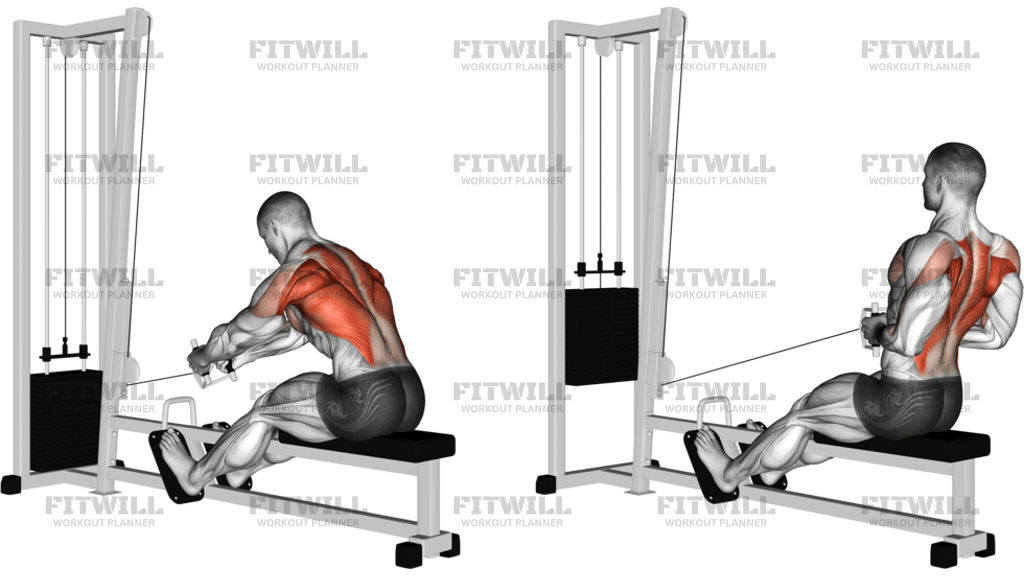
Cable Seated Row is a seated horizontal pulling exercise that uses a cable machine, a low pulley, and a handle attachment to train the upper back with steady tension. In the image, the lifter is braced on the foot platform and pulling the handle toward the torso while staying seated on the bench. That setup matters because the cable keeps resistance on the muscles through both the reach and the squeeze, which makes the movement useful for building back strength, posture control, and cleaner shoulder mechanics.
This row is most directly felt across the mid-back and upper back, with the lats, rhomboids, and biceps assisting through the pull. The torso should stay tall and quiet while the arms follow the cable path. If the chest collapses or the body rocks back and forth, the set turns into momentum work instead of a controlled row. A small amount of forward reach at the start is fine, but the ribs should stay stacked and the shoulders should not shrug up toward the ears.
The working path is simple: let the handle travel forward until the shoulders can protract without rounding the lower back, then drive the elbows back and slightly close to the body to bring the handle toward the lower ribs or upper abdomen. Finish by squeezing the shoulder blades together without over-leaning or yanking the handle into the stomach. The return should be deliberate so the cable does not slam the stack and the shoulders can reach forward again under control.
Cable Seated Row fits well in back-focused sessions, upper-body pulling work, or as an accessory after heavier compound lifts. It is also a useful option when you want to train the back without needing to stabilize a barbell or dumbbell in free space. Choose a handle and load that let you keep the same seat position, foot pressure, and torso angle on every rep. If the movement feels mostly in the lower back, neck, or momentum, the load is too heavy or the setup is too loose.
Fitwill
Log Workouts, Track Progress & Build Strength.
Achieve more with Fitwill: explore over 9600 exercises with images and videos, access built-in and custom workouts, perfect for both gym and home sessions, and see real results.
Start your journey. Download today!




Instructions
- Sit on the bench facing the cable stack and place your feet securely on the platform with a slight knee bend.
- Grab the handle with both hands, then sit tall with your chest open and shoulders set down away from your ears.
- Start with your arms long and your torso braced, allowing a small forward reach without rounding your lower back.
- Pull the handle toward your lower ribs or upper abdomen by driving your elbows back along your sides.
- Squeeze your shoulder blades together at the end of the pull without leaning back hard or shrugging up.
- Pause briefly in the contracted position while keeping your neck long and your ribs stacked over your pelvis.
- Lower the handle back to the start under control until your arms are straight and the cable is taut again.
- Repeat for the planned reps, breathing out as you row and breathing in as you return.
Tips & Tricks
- Keep constant pressure through both feet so the seat does not slide and the pull stays honest.
- Think about driving the elbows back, not curling the handle with the hands.
- A neutral or close-grip handle usually keeps the wrists and elbows in a comfortable line for this row.
- Do not turn the rep into a reclined row; a small torso motion is fine, but the chest should not swing.
- If the shoulders creep toward the ears, reset and start each rep with the shoulder blades down first.
- Let the cable pull your arms forward under control so you get a real stretch through the upper back.
- Choose a load that lets you pause cleanly at the squeeze instead of bouncing off the weight stack.
- Stop the set if you have to jerk from the hips or lose the tall seated posture.
Frequently Asked Questions
What does the cable seated row work most?
It emphasizes the upper and mid-back, especially the rhomboids, lats, and the muscles around the shoulder blades, with the biceps helping during the pull.
Should my torso stay upright on the bench?
Yes. Stay tall with a slight natural forward reach at the start, but avoid rounding or swinging back to finish the row.
Where should the handle travel?
Pull the handle toward your lower ribs or upper abdomen, then return it forward until your arms are long again without losing posture.
Why do my shoulders feel it if I do this wrong?
If you shrug or let the shoulders drift forward and up, the neck and front shoulder take over. Keep the shoulders set down and pull with the elbows.
Is a close neutral handle best for this exercise?
A close neutral handle is a very common choice because it usually keeps the wrists, elbows, and shoulders in a comfortable rowing path.
Can beginners use the seated cable row?
Yes. It is beginner-friendly when the load is light enough to keep the torso still and the handle path clean.
What is the most common mistake on the cable stack?
Using too much weight and leaning back to move the handle is the biggest error. The row should come from the back, not from body English.
How do I make the rep harder without adding a lot of weight?
Slow the return, pause for a second at the squeeze, and keep the stretch phase controlled so the back does the work instead of momentum.