Dumbbell Lying External Shoulder Rotation
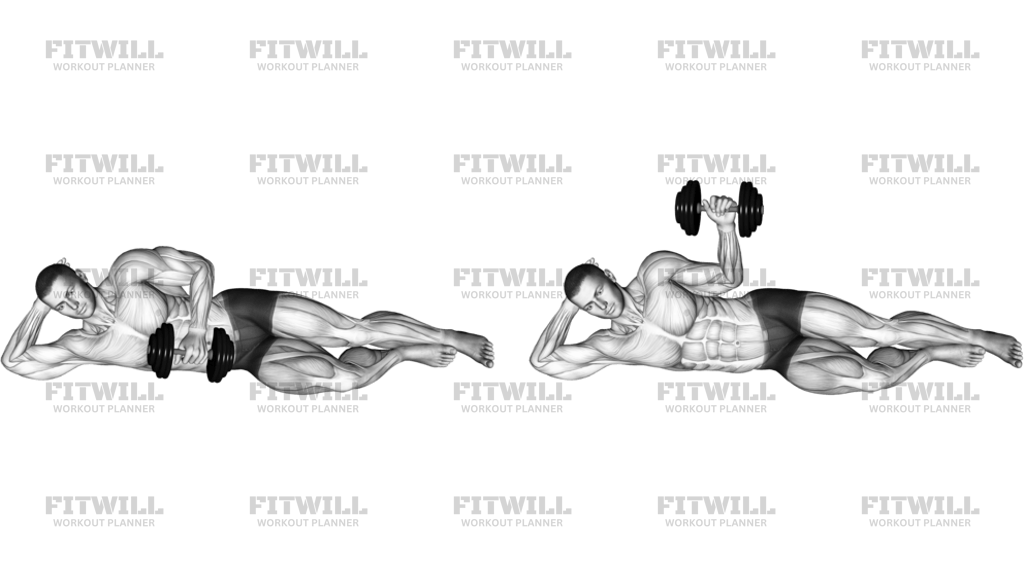
Dumbbell Lying External Shoulder Rotation is a side-lying shoulder exercise that trains the rotator cuff to rotate the upper arm outward with control. The movement is small on purpose: the value comes from keeping the elbow fixed, the shoulder quiet, and the forearm moving through a clean arc rather than from using a heavy dumbbell or a big range.
This exercise is especially useful when you want better shoulder stability for pressing, pulling, throwing, or general upper-body training. The rotator cuff does the main work, with the rear shoulder and upper back helping keep the arm organized. Because the load is low and the leverage is poor, it is a technique exercise first and a strength exercise second.
The setup matters a lot. Lie on your side with your head supported, your shoulders stacked, and the working upper arm tucked against your torso. A towel under the elbow can make the position more comfortable and keep the upper arm from drifting away from the ribs. If the elbow moves, the torso rolls, or the wrist bends back, the exercise stops being a clean external rotation and starts turning into a loose shoulder lift.
During each rep, rotate the forearm upward while keeping the elbow pinned and the upper arm still. The dumbbell should travel in a controlled arc until the forearm is near vertical or just short of the point where the shoulder wants to shrug or roll open. Lower it slowly and keep tension through the descent so the cuff works in both directions instead of just bouncing at the top.
This movement fits well in a warm-up, prehab block, rehab-style session, or accessory slot after bigger compound lifts. It is usually best done for moderate to higher reps with a very light load and strict tempo. If you feel pinching, twisting, or momentum taking over, reduce the weight, shorten the range, or switch to a floor setup until the shoulder can rotate cleanly and pain-free.
[ Workout Log & Planner ]
Put your next workout in Fitwill
Keep your plan and training log ready when you are.


Instructions
- Lie on your side on a bench or the floor with your head supported and your shoulders stacked.
- Hold a light dumbbell in the top hand and bend that elbow to about 90 degrees.
- Tuck the upper arm against your side, and place a small towel under the elbow if you need extra support.
- Start with the forearm across your abdomen and the palm facing in toward your body.
- Brace gently, then rotate the forearm upward while keeping the elbow fixed in place.
- Lift until the forearm is near vertical or just before the shoulder starts to roll open.
- Pause for a moment at the top without letting the wrist bend or the torso twist.
- Lower the dumbbell slowly back to the start and keep the upper arm glued to your side.
- Repeat for the planned reps, then switch sides and match the same tempo.
Tips & Tricks
- Use a very light dumbbell; this movement should feel controlled long before it feels heavy.
- Keep the elbow pinned to your ribs, because letting it drift turns the rep into a loose shoulder swing.
- A towel under the elbow can make the setup more comfortable and help you keep the upper arm still.
- Rotate only through the shoulder; the chest and hips should stay stacked instead of rolling backward.
- Stop the rep when the forearm reaches vertical if the shoulder starts to shrug or the wrist bends back.
- Lower the weight for two to four seconds so the cuff keeps working on the way down.
- If the shoulder pinches at the top, shorten the range and clean up the setup before adding load.
- Keep the wrist neutral so the dumbbell sits over the forearm instead of pulling the hand out of line.
- Higher reps usually work better than low-rep grinding on this exercise.
- Match both sides carefully; the weaker shoulder often needs the cleaner setup, not the heavier dumbbell.
Frequently Asked Questions
What does Dumbbell Lying External Shoulder Rotation train?
It mainly trains the rotator cuff, especially the muscles that rotate the upper arm outward and stabilize the shoulder.
Where should I feel this exercise?
You should feel it deep in the back and side of the shoulder, not in the neck or lower back.
How heavy should the dumbbell be?
Very light is usually correct. If you have to twist your torso or bend the wrist to move it, the load is too heavy.
Can I do this on the floor instead of a bench?
Yes. The floor can help limit how far the elbow drifts and make the movement easier to control.
Why is my elbow kept against my side?
Keeping the elbow tucked isolates shoulder rotation and prevents the movement from turning into a shoulder abduction or swing.
Is a towel under the elbow necessary?
No, but it often makes the setup more stable and more comfortable, especially if your shoulder does not like lying completely flat.
What is the most common mistake?
The most common mistake is rolling the torso open to get the dumbbell higher instead of rotating only at the shoulder.
How many reps should I use?
This exercise usually works best for controlled, higher-rep sets with a deliberate tempo and a light load.
Can beginners use this exercise?
Yes, beginners can use it well if they keep the dumbbell light and focus on a fixed elbow and slow lowering phase.