Dumbbell RDL And Bent-Over Row
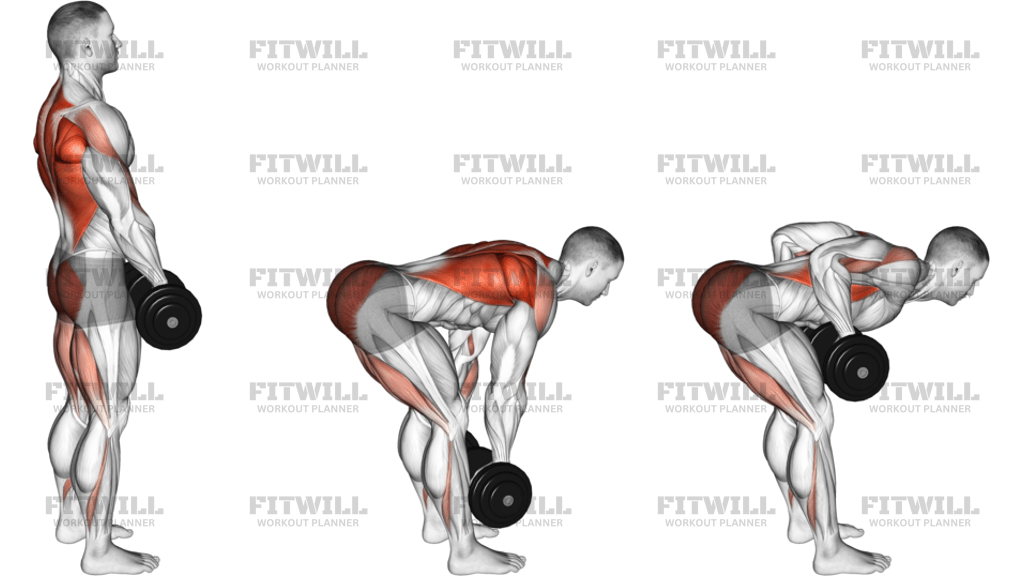
Dumbbell RDL And Bent-Over Row combines a hip hinge with a row, so one repetition trains the posterior chain and upper back in the same controlled pattern. You start from a standing position with the dumbbells at your sides, fold into a Romanian deadlift hinge, then row from that fixed torso angle before returning to standing. The movement is simple on paper, but the setup matters because once your hips travel back and your torso leans forward, your spine, shoulder position, and dumbbell path all have to stay organized.
This exercise is useful when you want hamstring and glute work to blend with upper-back and lat engagement instead of isolating only one area. The hinge loads the hamstrings, glutes, and spinal erectors, while the row adds work for the lats, rear delts, rhomboids, and biceps. Because both halves of the rep are linked, the drill rewards lifters who can brace well, keep the dumbbells close to the body, and avoid turning the row into a shrug.
Start tall with a pair of dumbbells hanging in front of your thighs, feet about hip-width apart, and knees softly bent. From there, send the hips back until your torso is clearly hinged forward and the dumbbells travel close to the legs, then lock that torso angle in place before you row. The row should bring the dumbbells toward the lower ribs or upper waist, not the chest, and the elbows should sweep back without the shoulders rolling forward or up.
The return phase should feel as controlled as the lowering phase. Lower the dumbbells from the row, keep them close to the shins and thighs as you hinge or stand, and finish the rep by driving the hips forward rather than leaning the chest back. If your low back starts doing the work, the hinge is probably too deep, the weights are too heavy, or the dumbbells have drifted away from the body. A crisp rep keeps tension where it belongs and makes the exercise far more productive than a rushed, swinging version.
Dumbbell RDL And Bent-Over Row fits well in an accessory block, a pull day, or a full-body session when you want compound work without a barbell. It is demanding enough that lighter dumbbells usually produce better training than ego loading, especially because the hinge and row each expose different weak points. Use it when you can keep every rep smooth, repeatable, and pain-free, and stop the set when the hinge angle or row path starts to change.
[ Workout Log & Planner ]
Put your next workout in Fitwill
Keep your plan and training log ready when you are.


Instructions
- Stand tall with a dumbbell in each hand, feet about hip-width apart, knees soft, and the weights hanging in front of your thighs.
- Pull your shoulders down, brace your torso, and keep your neck long before you start the hinge.
- Push your hips back and lower the dumbbells close to your legs until your torso reaches a strong bent-over position.
- Keep your spine neutral and your shins nearly vertical as the dumbbells hang under your shoulders.
- From that fixed hinge, row both dumbbells toward your lower ribs or upper waist by driving your elbows back.
- Pause briefly at the top of the row without shrugging your shoulders toward your ears.
- Lower the dumbbells under control until your arms are straight again and the weights are hanging beneath your shoulders.
- Keep the dumbbells close to your thighs and shins as you reverse the hinge and drive your hips forward to stand up.
- Finish tall with your glutes squeezed, then reset your posture before the next repetition.
- Exhale as you row or stand up, inhale as you hinge back down, and stop the set if your back starts rounding or the dumbbells drift away from your body.
Tips & Tricks
- Keep the dumbbells sliding close to your thighs and shins; if they swing out in front, the hinge usually turns into a low-back exercise.
- Row to the lower ribs, not the chest, so your torso angle stays fixed and the elbows track back instead of flaring wide.
- Use a lighter pair than you would for a regular row or RDL, because combining both movements raises the difficulty fast.
- Think about locking the hinge before you row; if your chest keeps lifting during the pull, the row becomes a cheat rep.
- Squeeze the handles hard enough that the dumbbells stay quiet in the hands, but do not let that tension creep into your shoulders.
- If your hamstrings limit the hinge, soften the knees a little more and shorten the range instead of rounding the lower back.
- Let the hips move the standing phase back to tall posture; do not finish by leaning your torso behind your heels.
- A one-beat pause at the top of the row helps prevent swinging and makes the upper-back work much clearer.
- Keep your gaze a few feet ahead on the floor so your neck stays aligned with the rest of your spine.
- End the set when the dumbbells stop staying close to your body or when the row starts changing your torso angle.
Frequently Asked Questions
What muscles does Dumbbell RDL And Bent-Over Row work?
It hits the hamstrings, glutes, spinal erectors, lats, rhomboids, rear delts, and biceps. The hinge emphasizes the posterior chain, while the row adds more upper-back work.
Is Dumbbell RDL And Bent-Over Row more of a back exercise or a leg exercise?
It is both. The Romanian deadlift portion loads the hamstrings and glutes, and the bent-over row portion shifts more work to the upper back and lats.
How low should I lower the dumbbells before rowing?
Lower them until you have a strong hip hinge with a neutral spine and the dumbbells hanging close to your shins. You do not need to chase depth if your back starts to round.
Do I row after every hinge rep?
Yes. The combo is usually done by hinging into the bent-over position, rowing from there, and then returning to standing under control.
Can beginners do Dumbbell RDL And Bent-Over Row?
Yes, if they use light dumbbells and keep the hinge shallow at first. It is a good way to learn how to brace through a bent-over position while controlling the row.
What is the most common mistake with this exercise?
The biggest mistake is letting the dumbbells drift away from the body, which usually causes the lower back to take over. Keep the weights close and keep the torso angle steady.
Should my elbows flare out on the row?
No, not much. Let the elbows travel back at roughly a natural diagonal so the dumbbells land near the lower ribs instead of turning the row into a shrug.
Can I use this instead of separate RDLs and rows?
You can, but the load will usually be lighter because both patterns happen in the same rep. It is best treated as a compound accessory move, not a max-strength version of either exercise.