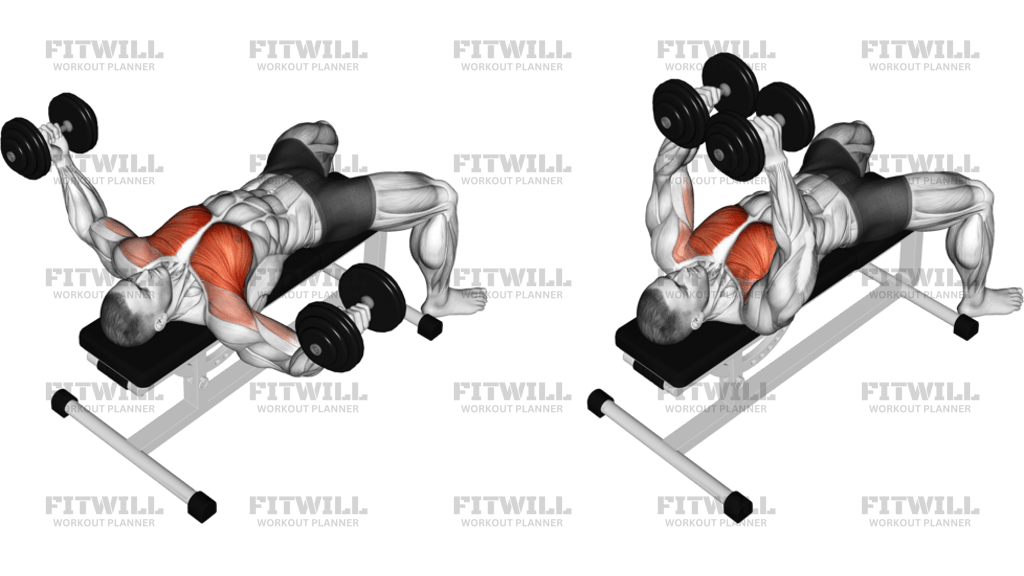
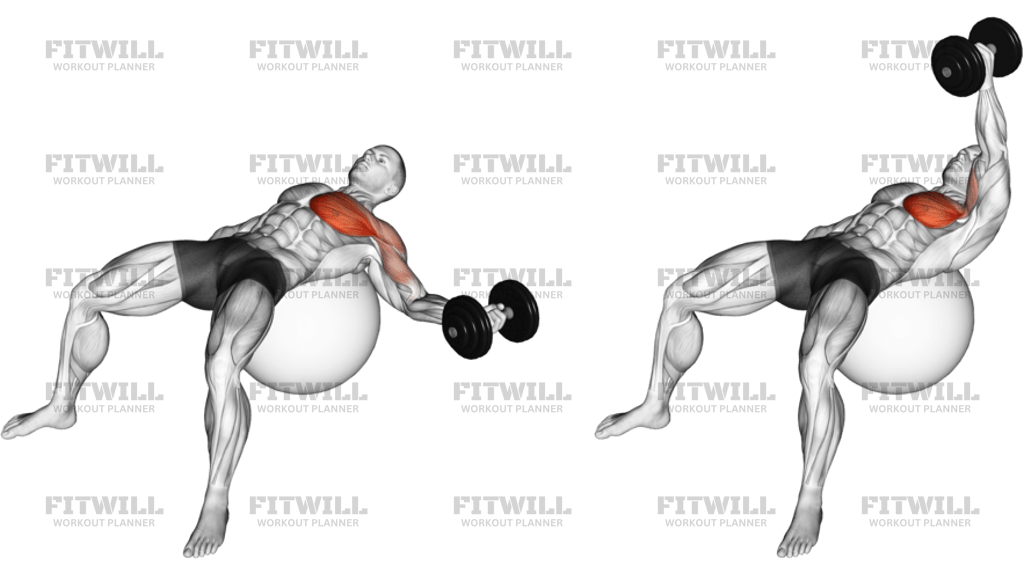
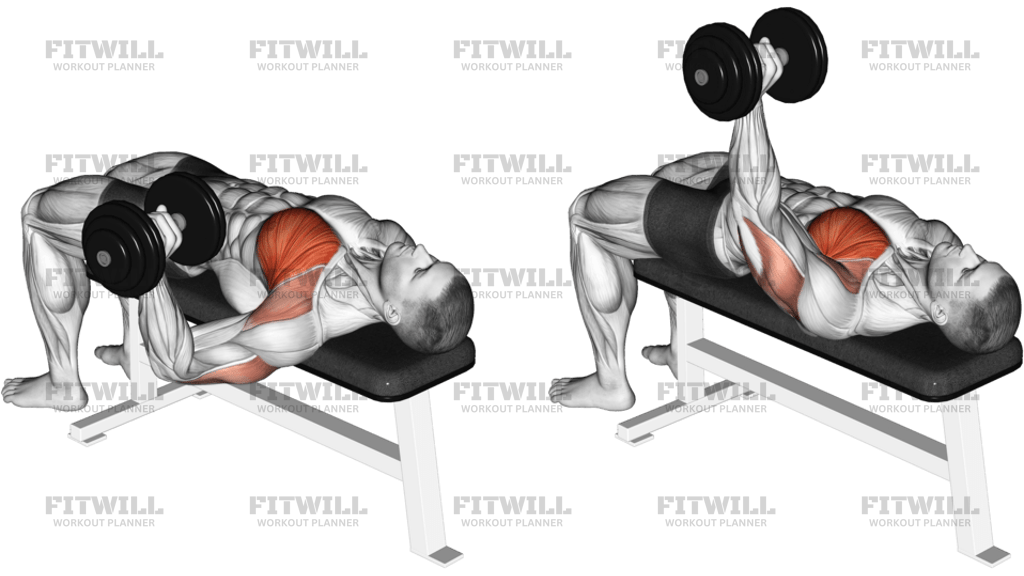
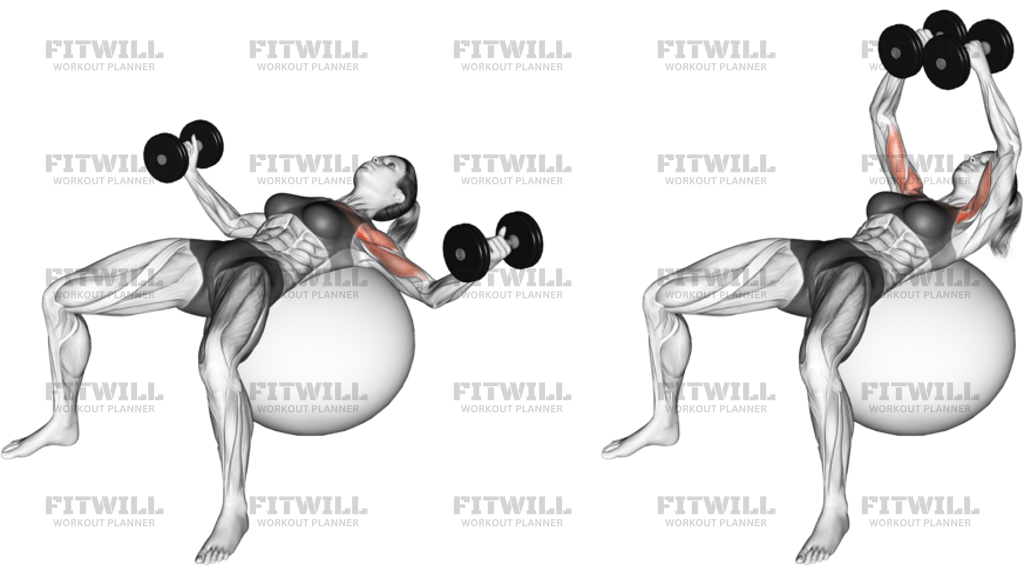
Dumbbell One-Arm Pullover On Exercise Ball
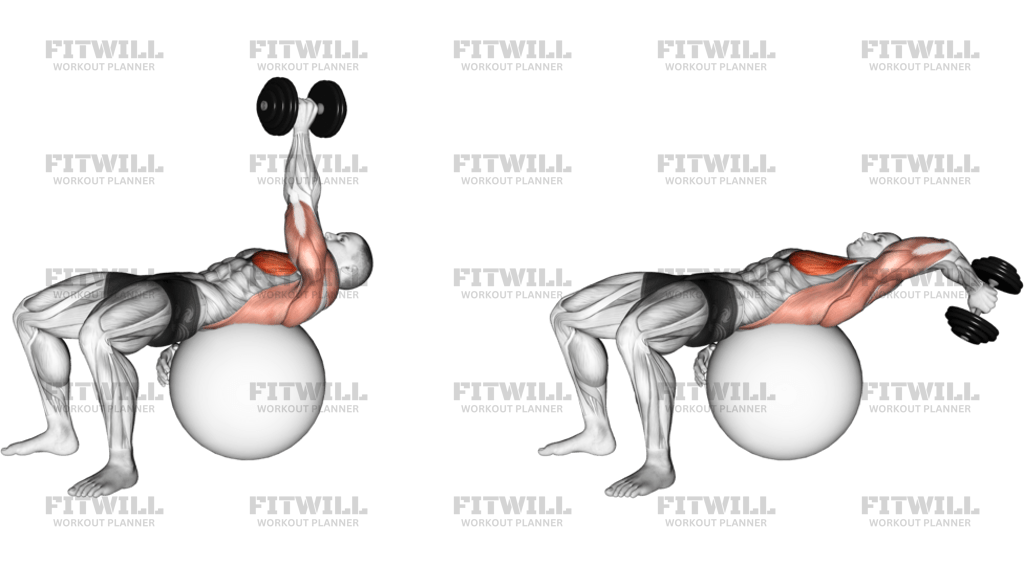
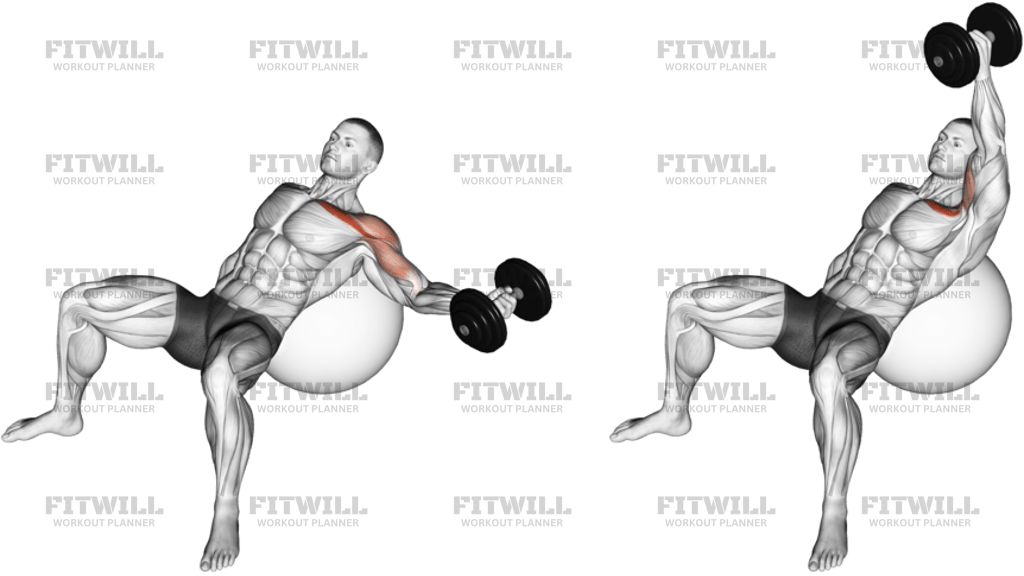
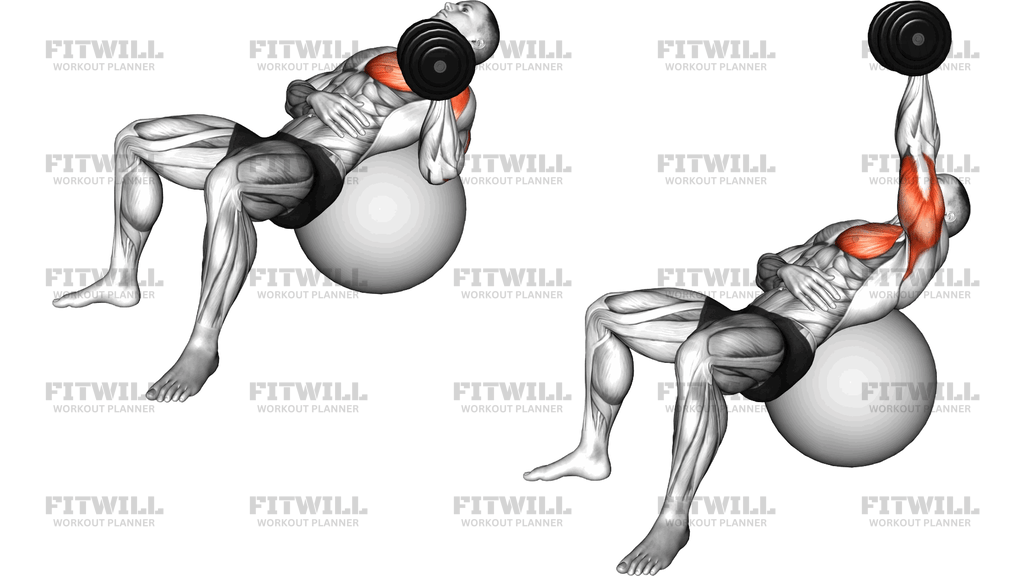
Dumbbell One-Arm Pullover On Exercise Ball is a supported chest-and-lats accessory movement performed with your upper back draped over an exercise ball, feet planted on the floor, and one dumbbell moving in a long arc behind and then back over the chest. The ball adds a balance demand that makes the torso work harder than a flat-bench pullover, so the exercise trains upper-body strength together with trunk control.
The main training effect comes from the shoulder moving through flexion and extension under load while the ribcage stays stacked and the pelvis stays steady. That makes the pullover useful for the chest, serratus, lats, and the shoulder stabilizers, with the abdominals and glutes helping keep the body from overextending on the ball. In anatomy terms, the primary emphasis is on the pectoralis major, with strong assistance from the anterior deltoid, triceps brachii, and rectus abdominis.
The setup matters because the ball changes the leverage on your spine and shoulders. If you start with the hips sagging or the feet too close together, the movement turns into a back-extension exercise instead of a controlled pullover. A good rep begins with the upper back supported, knees bent, glutes lightly engaged, and the dumbbell held over the chest before the weight travels back only as far as the shoulders can stay comfortable.
Use a smooth lowering phase and a deliberate pull back to the top. The working arm should trace a clear arc instead of drifting diagonally, and the elbow should stay softly bent rather than locked out. Keep the neck long, the ribs from flaring, and the breath steady so the torso does not twist toward the loaded side.
This is best used as an accessory exercise for chest, upper-back, or trunk stability work, especially when you want a pullover pattern without heavy loading. It fits well after the main compound lifts or as a focused drill in a bodybuilding, general strength, or stability-focused session. Light to moderate loads usually produce better mechanics than chasing load, because the ball rewards control and punishes sloppy range.
[ Workout Log & Planner ]
Put your next workout in Fitwill
Keep your plan and training log ready when you are.


Instructions
- Sit on the floor in front of the exercise ball with a dumbbell in one hand, then walk your feet forward and roll your upper back onto the ball until your shoulder blades and mid-back are supported.
- Plant both feet hip-width apart, bend your knees, and lift your hips so your torso stays in a straight line from shoulders to knees or slightly hips-down if that is more stable.
- Hold the dumbbell above your chest with a slight bend in the elbow and keep the free arm out of the way or lightly braced for balance.
- Brace your ribs down and inhale before you lower the weight, keeping your head, neck, and pelvis centered on the ball.
- Lower the dumbbell in a slow arc behind your head until you feel a controlled stretch through the chest and lats without losing shoulder position.
- Pause briefly in the stretched position while the elbow angle stays the same and the torso remains steady.
- Pull the dumbbell back over the chest along the same arc until the hand finishes above the sternum or upper chest.
- Exhale as you drive the weight back up, then reset the shoulders and repeat for the next rep without bouncing off the ball.
- Keep the set controlled and stop if the ball shifts, the hips drop, or the shoulder starts to feel pinched.
Tips & Tricks
- Keep the dumbbell path in a smooth overhead arc; if it travels toward your face or hips, the shoulder angle is drifting.
- Do not let the ribs flare when the weight goes back, because that usually turns the set into a lower-back arch.
- A soft elbow bend helps keep tension on the chest and shoulders without turning the movement into a triceps press.
- The exercise ball should support your upper back, not your lower back; if you are perched too high, the neck and spine will fight the rep.
- Plant the feet firmly enough that the hips stay lifted, but avoid pushing so hard that your pelvis shifts side to side.
- Use a lighter dumbbell than you would for a floor pullover, since the ball makes the stabilizing demand much higher.
- Lower the weight only as far as the shoulder stays comfortable; depth is useful only when the torso stays organized.
- If the loaded side pulls you into rotation, shorten the range and slow the tempo before adding more weight.
Frequently Asked Questions
What muscle does Dumbbell One Arm Pullover On Exercise Ball target most?
The main emphasis is on the pecs, with the lats, serratus, front delts, triceps, and core helping stabilize the rep.
Can beginners perform this exercise?
Yes, but beginners should start very light and master the ball setup first. The unstable surface makes it more technical than a floor pullover.
How should the exercise ball be positioned?
Place the ball under your upper back and shoulder blades, not under your head or low back. That keeps the pullover path stable and protects the neck.
Should my hips stay up during the pullover?
Yes, keep the hips lifted enough that your torso stays braced. If the hips drop, the set usually turns into a back-extension exercise.
Why use one arm instead of two?
A one-arm pullover challenges anti-rotation and makes the torso work harder to stay square on the ball. It also lets you focus on one shoulder at a time.
How low should I lower the dumbbell?
Lower it only until you feel a controlled stretch through the chest and lats without shoulder pinching or rib flare. Range of motion should stay clean, not forced.
What is the most common mistake?
Letting the torso arch or twist to chase a bigger range is the biggest mistake. The ball should stay quiet while the arm moves.
What is a good substitution if the ball feels unstable?
A flat-bench or floor pullover is the simplest substitution. Those versions reduce the balance demand while keeping the same basic arm path.