Dumbbell Straight Arm Pullover
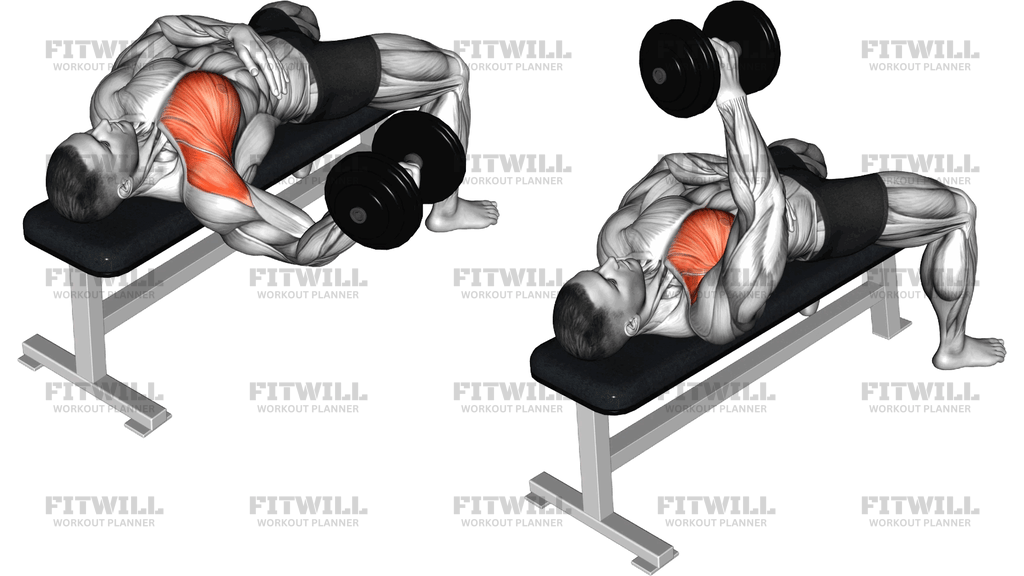
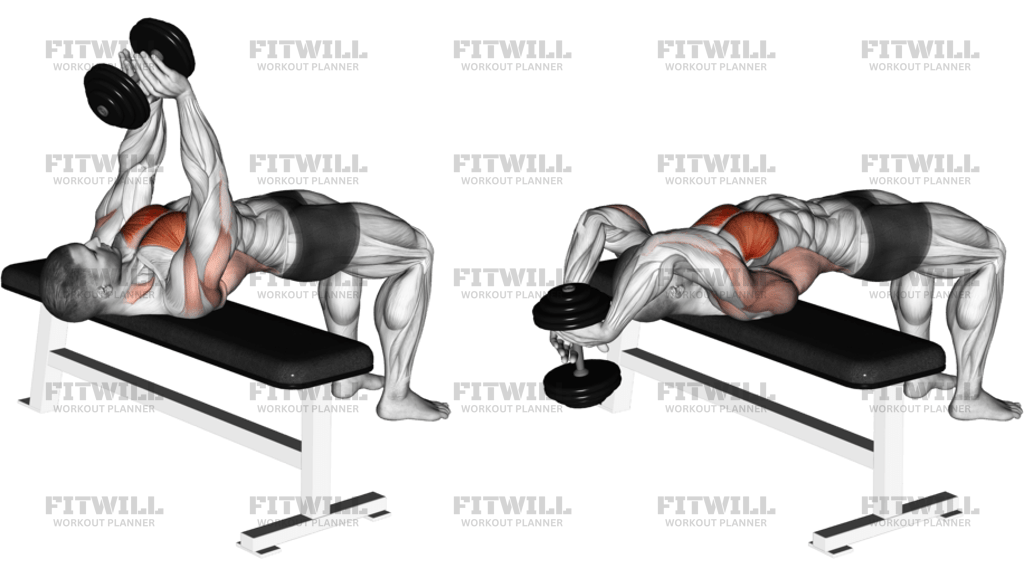
Dumbbell Straight Arm Pullover is a bench-based dumbbell exercise that loads the chest through a long overhead arc while the lats, serratus, triceps, and core help control the shoulder position. In the image, the lifter lies across a flat bench with the upper back supported, the hips lifted, and the dumbbell traveling from above the chest to behind the head before returning to the start. That setup matters because it keeps the torso stable and lets the shoulder and rib cage move through a deliberate range instead of turning the rep into a sloppy press.
The main training effect is a loaded stretch and pull across the front of the torso. When the arms stay nearly straight and the ribs stay down, the chest and lats share the work without the elbows collapsing or the lower back taking over. That makes the exercise useful as an accessory movement for pressing strength, chest hypertrophy, and upper-torso control, especially for lifters who want more work in the extended position than they get from flat pressing alone.
Good execution starts with a steady bridge and a dumbbell that sits securely in both hands. The upper arms should travel in a smooth arc, but the elbow angle should stay only slightly bent and mostly unchanged. Let the weight move behind the head only as far as the shoulders stay comfortable and the rib cage stays quiet. The return should feel like drawing the dumbbell back over the chest, not like snapping it up with momentum.
Use this movement when you want a chest-focused pullover that is easy to standardize from rep to rep. It works well after the main pressing work, or as a controlled accessory when you want more time under tension without a machine. Keep the load honest, the pace smooth, and the range consistent. If the shoulders pinch, the lower back arches hard, or the dumbbell drifts instead of following the same arc, shorten the range and lighten the weight.
[ Workout Log & Planner ]
Put your next workout in Fitwill
Keep your plan and training log ready when you are.


Instructions
- Lie across a flat bench with your upper back supported, feet planted on the floor, and your hips lifted into a firm bridge.
- Hold one dumbbell with both hands over the center of your chest, with your palms under the inner plate and your elbows slightly bent.
- Set your ribs down, brace your midsection, and keep your neck relaxed before you start the first rep.
- Begin with the dumbbell stacked over your shoulders and chest, not drifting toward your face or stomach.
- Inhale and lower the dumbbell in a smooth arc behind your head while keeping the elbow angle almost unchanged.
- Lower only as far as your shoulders stay comfortable and your lower back does not arch off the bridge.
- Exhale and pull the dumbbell back along the same arc until it returns over the chest.
- Pause briefly at the top, reset your rib position, and repeat the next rep with the same path.
Tips & Tricks
- Keep the bench under your upper back, not your whole spine, so the dumbbell can travel freely behind your head.
- Use a bridge height that feels locked in; if your hips sag, the lower back will try to replace the shoulder motion.
- Think of the elbows as gently soft, not bending and straightening through the rep.
- Stop the descent when the upper arms are level with the torso or just below it if the shoulders stay happy there.
- Choose a dumbbell that you can control with both hands without the plates wobbling or the wrists collapsing.
- Let the chest and lats stretch under load, but do not chase extra range by flaring the ribs.
- Keep the dumbbell moving in one smooth arc; any jerking usually means the weight is too heavy.
- Use a slower lowering phase than the lift back to the top to keep tension on the target muscles.
Frequently Asked Questions
What muscles does Dumbbell Straight Arm Pullover work?
It mainly trains the chest, with the lats, serratus, triceps, and core helping control the dumbbell through the long arc.
Where should the dumbbell travel during the rep?
It should move from stacked above the chest to behind the head and then back over the chest in the same smooth arc.
Should my elbows bend a lot on Dumbbell Straight Arm Pullover?
No. Keep only a slight bend and keep that angle nearly fixed so the movement stays a pullover instead of a triceps press.
How far behind my head should I lower the weight?
Only as far as your shoulders stay comfortable and your ribs stay down. A smaller range is better than forcing the dumbbell too deep.
Is Dumbbell Straight Arm Pullover good for beginners?
Yes, if the load is light and the bridge, grip, and shoulder path stay controlled. Shorten the range if the shoulders feel unstable.
What is the most common mistake on this exercise?
Letting the lower back arch hard as the dumbbell goes behind the head. Keep the bridge firm and the ribs stacked instead.
Can I turn this into a triceps exercise?
Not really. If you bend the elbows more and start pressing, the movement stops being a straight-arm pullover and shifts toward a triceps extension or press.
What should I do if my shoulders feel pinched?
Reduce the range first, then lower the weight. If the pinch stays, switch to a shorter-range pullover or another chest accessory.