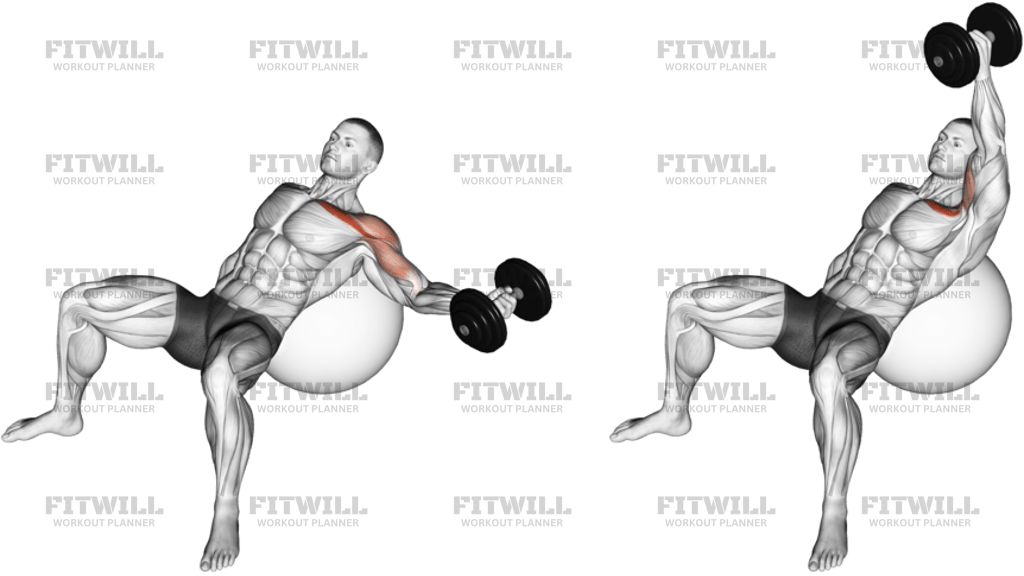
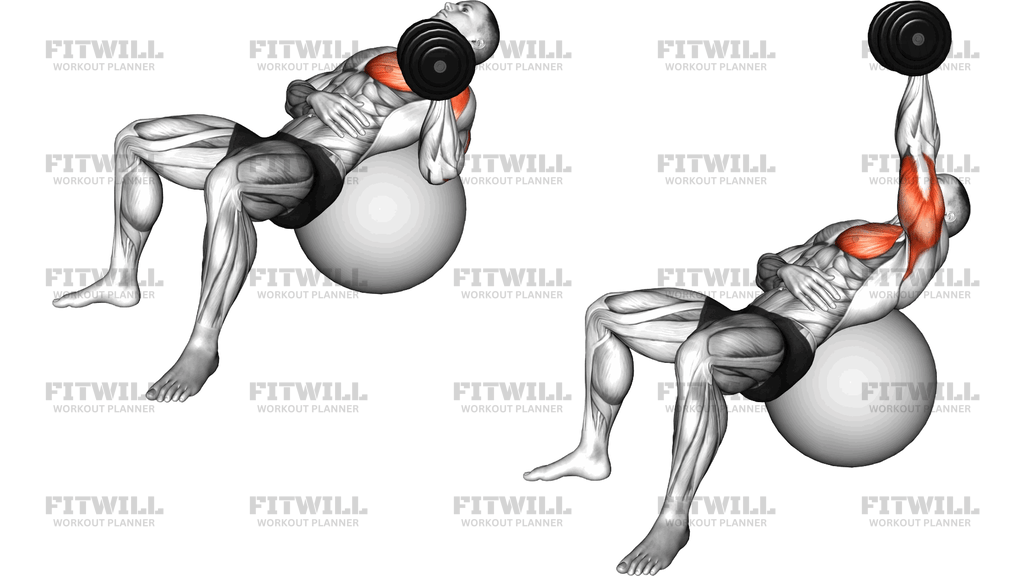
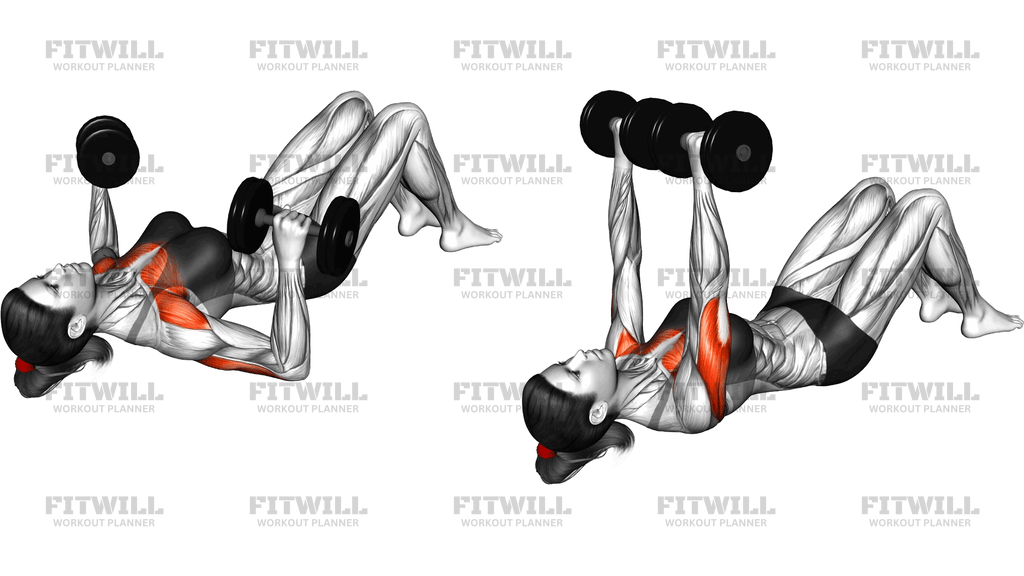
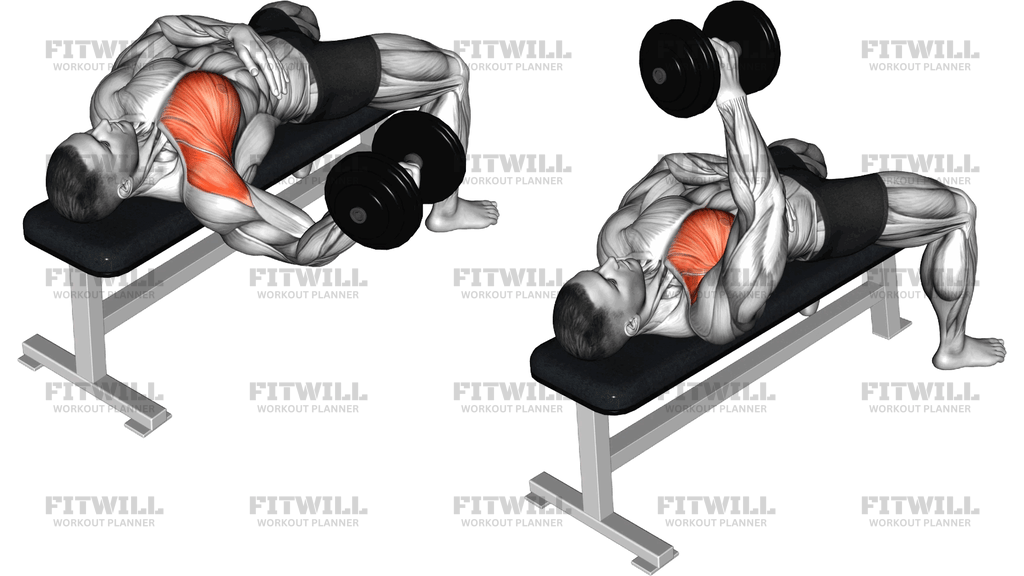
Dumbbell Straight Arm Pullover Knees At 90 Degrees
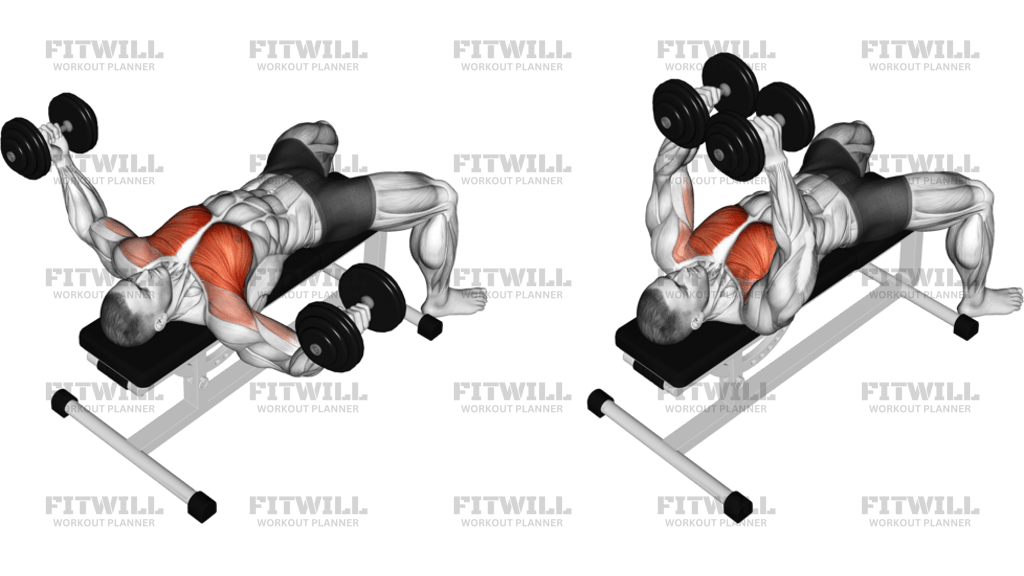
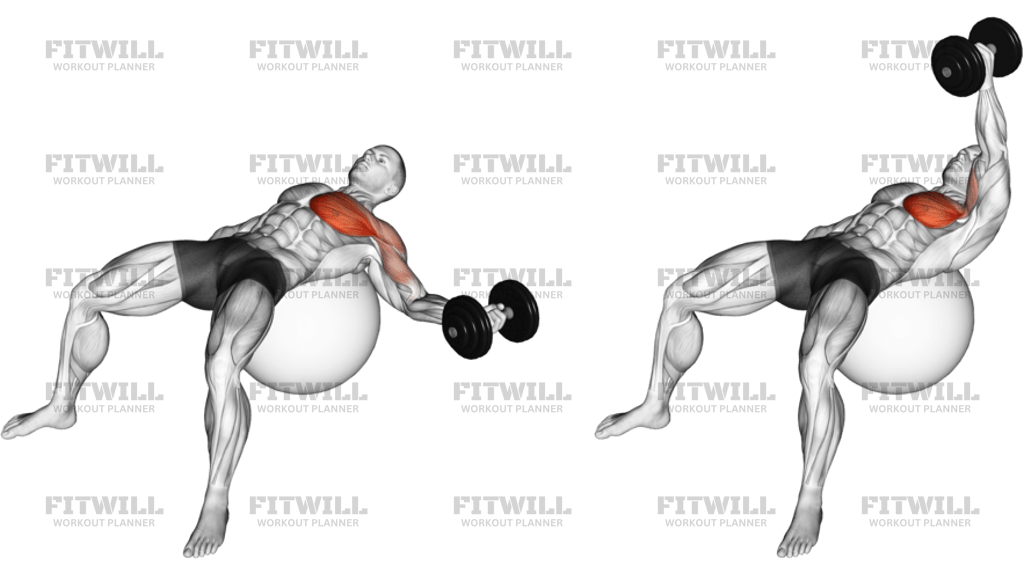
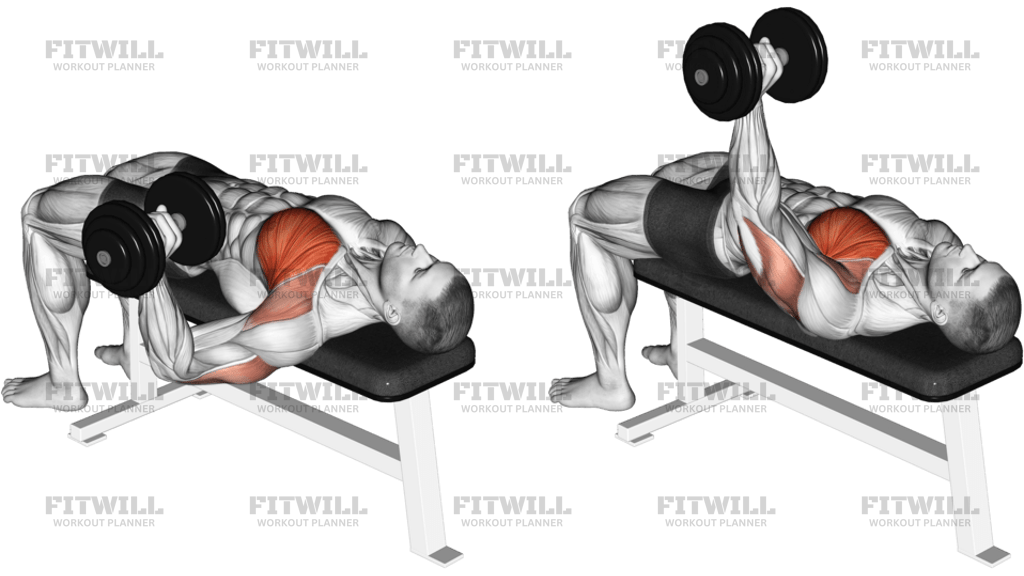
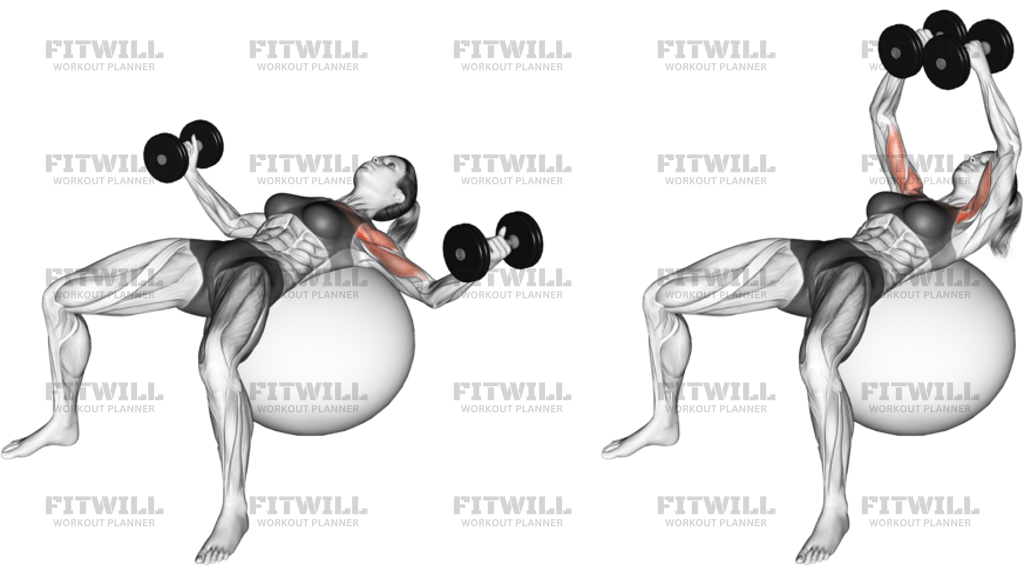
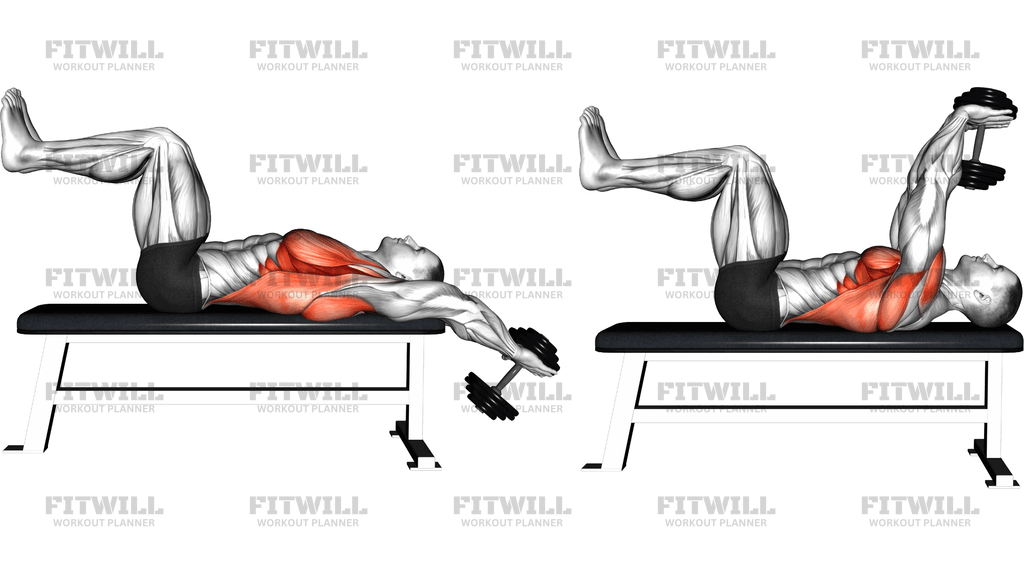
The dumbbell straight-arm pullover with the knees held at 90 degrees is a bench-based chest exercise that trains shoulder extension and ribcage control at the same time. You lie across a flat bench, support your upper back, and move one dumbbell in a long arc from above the chest to behind the head while keeping the arms almost straight. The raised-leg position shortens the lever on the low back and helps keep the pelvis from tipping into an exaggerated arch.
This exercise is usually chosen when you want a controlled upper-body accessory lift that teaches you to keep the torso stacked while the shoulders move through a large range. The primary emphasis in this version is the chest, with the shoulders, triceps, and core helping to stabilize the position and control the arc. If you feel the movement turning into a triceps extension or a bench press pattern, the dumbbell is usually too heavy or the elbow angle is changing too much.
The setup matters more here than in many other dumbbell lifts. Your shoulder blades, rib position, and leg position all affect whether the weight stays over the chest or drifts into a sloppy overhead swing. With the knees fixed at roughly 90 degrees, keep the legs quiet and use the abdomen to stop the lower back from overextending as the dumbbell travels behind the head. That lets the chest and shoulder line do the work without turning the set into a back bridge.
Use a smooth lowering phase and a controlled return. The dumbbell should travel in one consistent arc, not drop straight down and then jerk back up. Stop the descent when you still have control over your ribs and shoulders, then bring the weight back over the chest by squeezing through the same path. Breath should stay organized: inhale on the way down, exhale as you pull the dumbbell back to the start.
It works well as accessory chest work, as part of an upper-body pull or push session, or as a lighter movement to build shoulder control and trunk discipline. Beginners can use it if the load is light and the range stays pain-free, but it should never be forced into a deep overhead stretch. The best reps feel smooth, stable, and repeatable rather than dramatic.
[ Workout Log & Planner ]
Put your next workout in Fitwill
Keep your plan and training log ready when you are.


Instructions
- Lie lengthwise on a flat bench with your upper back and shoulders supported and your hips anchored on the pad.
- Raise your legs so your hips and knees stay bent at about 90 degrees, then keep the legs quiet for the whole set.
- Hold one dumbbell vertically with both hands around the inner plate or handle, and start with the weight stacked above the middle of your chest.
- Set your shoulders down and back lightly, then keep a small bend in the elbows that does not change as you move.
- Inhale and lower the dumbbell in a slow arc behind your head until your arms are roughly in line with your torso or your shoulders reach a comfortable stretch.
- Keep your ribs from flaring and do not let your lower back arch to chase more range.
- Exhale and pull the dumbbell back along the same arc until it returns over your chest.
- Pause briefly at the top, reset your shoulder position, and repeat for the planned reps without bouncing.
Tips & Tricks
- Keep the elbow angle nearly fixed; turning the movement into a triceps bend-and-press makes the pullover less effective.
- Stop the descent when your shoulders still feel in control, not when the dumbbell touches the floor or the bench.
- A vertical dumbbell is easier to steer than a loose, wobbling one; keep both hands locked around the top end.
- If your low back starts to arch, bring the range up a little and keep the knees fixed at 90 degrees.
- Think about moving the upper arms in one big arc instead of dropping the weight straight down behind you.
- Use a lighter load than you would for presses; this lift rewards shoulder control more than brute force.
- Keep your chin neutral and avoid pushing the head into the bench as the weight travels overhead.
- A smooth tempo on the way down usually makes the chest and shoulders work better than a fast drop and rebound.
Frequently Asked Questions
What does the knees-at-90-degrees position change in this pullover?
It helps limit lower-back arch and keeps the torso more stable while the shoulders move through the arc.
What muscles does this exercise work most?
The chest is the main target, with the shoulders, triceps, and core helping to stabilize the movement.
Should my elbows bend a lot during the rep?
No. Keep a small, fixed bend and move the dumbbell with the shoulders instead of turning it into a press.
How far behind my head should I lower the dumbbell?
Only as far as you can keep the ribs down and the shoulders controlled. Depth should be pain-free and repeatable.
Can beginners use this exercise?
Yes, but they should start very light and learn the arc before increasing load.
What is the most common mistake here?
Letting the lower back arch and the dumbbell drop too far behind the head are the biggest problems.
Do I need a spotter?
A spotter is not mandatory, but it can help when you are learning the setup or using heavier dumbbells.
How should I progress this movement?
Add a small amount of load only after you can keep the same arc, elbow angle, and rib position on every rep.