Lever Shoulder Press Plate Loaded Version 2
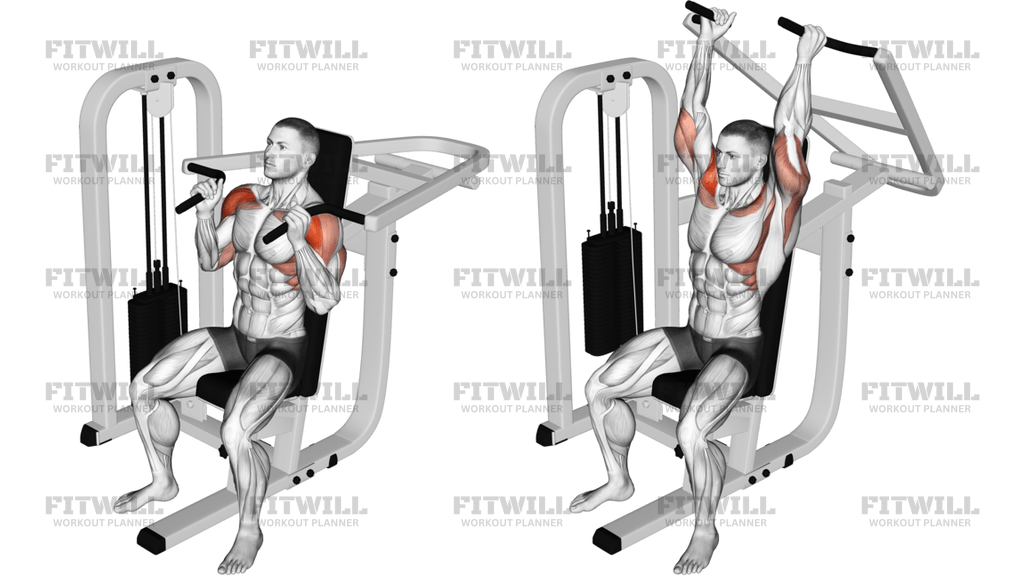
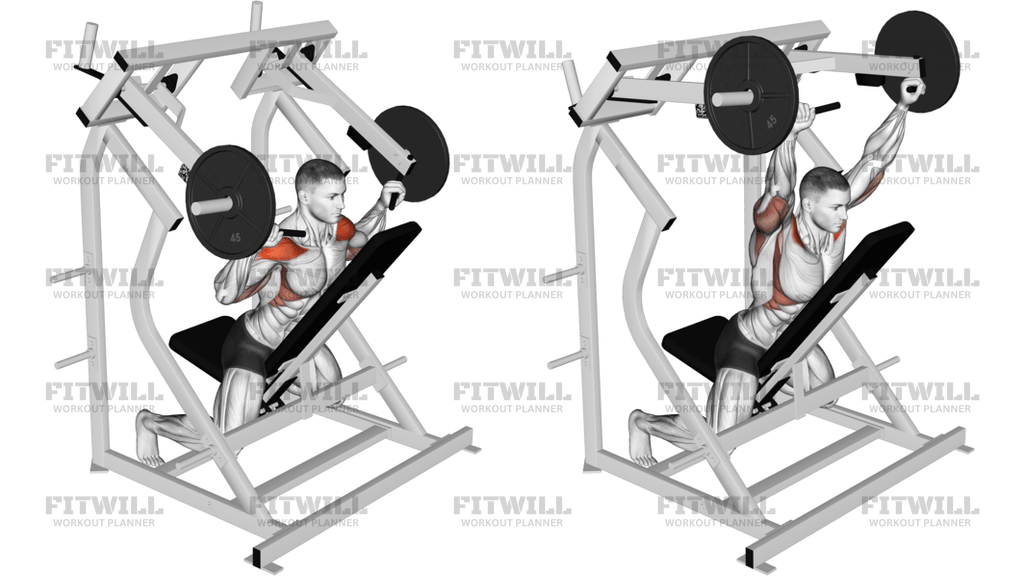
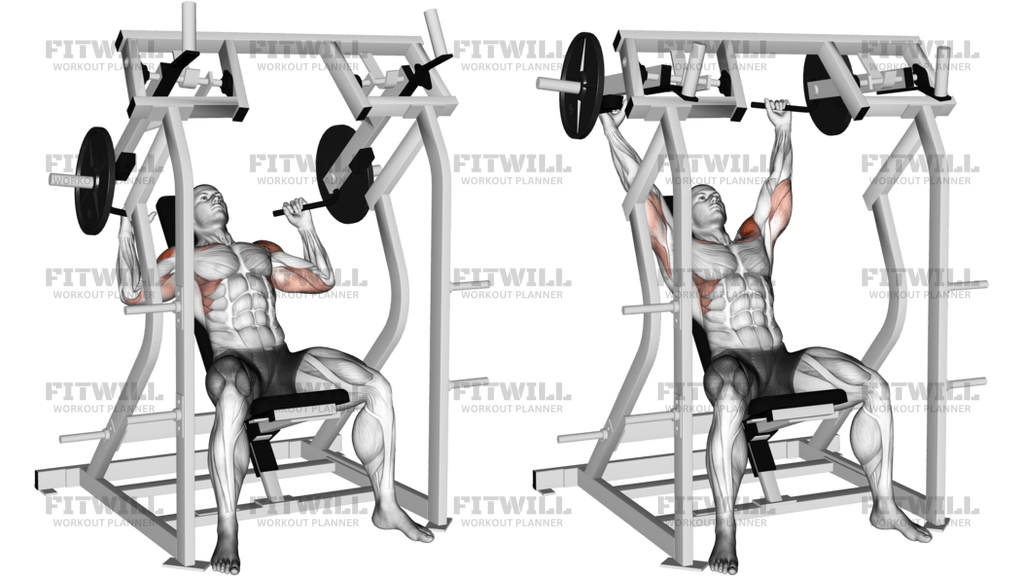
Lever Shoulder Press (Plate Loaded) Version 2 is a seated overhead press on a leverage machine that lets you train the shoulders through a fixed, guided path. The machine removes a lot of the balance demand that comes with free-weight pressing, so the set can stay focused on the deltoids, triceps, and the upper-back stabilizers that keep the shoulders organized.
Because the handles travel on a set arc, the setup matters more than it does on many other shoulder exercises. Seat height changes where the press begins, where the elbows sit, and how comfortable the shoulder joint feels at the bottom. A good setup lets you keep your back against the pad, feet flat, wrists stacked over the forearms, and the starting handles close to shoulder level instead of forcing you to reach, shrug, or arch to get moving.
The press itself should feel smooth and deliberate. Drive the handles upward and slightly forward along the machine path until the arms are nearly straight, then lower them under control until the upper arms return to a comfortable depth. The goal is steady tension through the delts rather than a violent lockout or a rebound off the bottom stop, so the rep stays clean from the first press to the last.
Lever Shoulder Press (Plate Loaded) Version 2 works well as a main shoulder movement, a machine-based substitute for barbell overhead pressing, or a safer option when you want to train hard without having to stabilize a free load overhead. It is especially useful for hypertrophy blocks, accessory work after heavier pressing, or sessions where you want to keep the torso supported and the rep path consistent. A controlled machine press can also help lifters who struggle to keep the bar path steady or who need a more shoulder-friendly way to train overhead strength.
The main things to watch are shoulder shrugging, excessive lower-back arching, and a range of motion that feels jammed in the front of the shoulder. Keep your chest tall without flaring the ribs, let the shoulder blades move naturally against the pad, and choose a load that you can lower smoothly. When the seat, grip, and depth are right, Lever Shoulder Press (Plate Loaded) Version 2 gives you a direct shoulder stimulus with enough support to keep the set disciplined and repeatable.
[ Workout Log & Planner ]
Put your next workout in Fitwill
Keep your plan and training log ready when you are.


Instructions
- Sit on the machine with your back and head against the pad, feet flat on the floor, and the seat adjusted so the handles start around shoulder height.
- Grip the fixed handles with your wrists stacked over your forearms and your elbows slightly in front of your torso.
- Plant both feet and keep your hips and ribcage anchored before you start the first rep.
- Take a breath in, brace your midsection, and keep your chest tall without flaring your ribs.
- Press the handles upward and slightly forward along the machine's arc until your arms are nearly straight.
- Keep your shoulders down instead of shrugging them toward your ears as the handles rise.
- Lower the handles slowly until your upper arms return to a comfortable depth just below shoulder level.
- Pause briefly at the bottom without bouncing off the stops or letting your torso lift from the pad.
- Exhale on the press, inhale on the way down, and finish the set by letting the handles settle back under control.
- Re-rack or let the machine rest safely before adjusting the load or getting up.
Tips & Tricks
- If the bottom position makes you reach too far, raise the seat so the handles begin closer to shoulder height.
- Keep your wrists neutral; bent wrists turn the press into a forearm fight instead of a shoulder set.
- Think about driving the handles up and slightly forward, not straight out in front of you.
- Stop just short of a hard lockout if fully straight elbows make you shrug.
- A light pause near the bottom removes bounce and keeps the delts working instead of the machine's momentum.
- If your lower back arches off the pad, the load is too heavy or the seat is too low.
- Let the elbows travel a little in front of the torso at the bottom instead of forcing them far behind your body.
- Use a grip width that feels natural on the handles; forcing a wider or narrower grip often changes the shoulder angle too much.
- Choose a load that lets you lower for at least two seconds without losing contact with the back pad.
Frequently Asked Questions
What muscles does Lever Shoulder Press (Plate Loaded) Version 2 work most?
The main target is the deltoids, with the triceps helping to finish the press and the upper back helping you stay stable against the pad.
How should the seat be set on Lever Shoulder Press (Plate Loaded) Version 2?
Set it so the handles start around shoulder height and you can press without shrugging or reaching. If you feel jammed at the bottom, the seat is usually too low.
Should my back stay against the pad the whole time?
Yes. If your ribcage lifts away from the pad to finish reps, the load is too heavy or the seat height is off.
How deep should I lower Lever Shoulder Press (Plate Loaded) Version 2?
Lower only until your upper arms reach a comfortable depth below shoulder level. Stop earlier if the front of the shoulder feels pinched.
Is this machine easier than a barbell overhead press?
Usually yes, because the machine guides the path and reduces the stability demand. It is still a serious shoulder exercise, but it is easier to keep the reps controlled.
Can beginners use Lever Shoulder Press (Plate Loaded) Version 2?
Yes. It is a good beginner option when you start with light plates, a stable seat height, and a smooth range of motion.
Why do I feel this in my traps instead of my shoulders?
That usually means you are shrugging at the top or using too much load. Keep the shoulders down and stop the set before your upper traps take over.
What is the best grip on the handles?
Use the natural grip the machine gives you and keep the wrists stacked over the forearms. Do not twist the wrists to force a different angle.