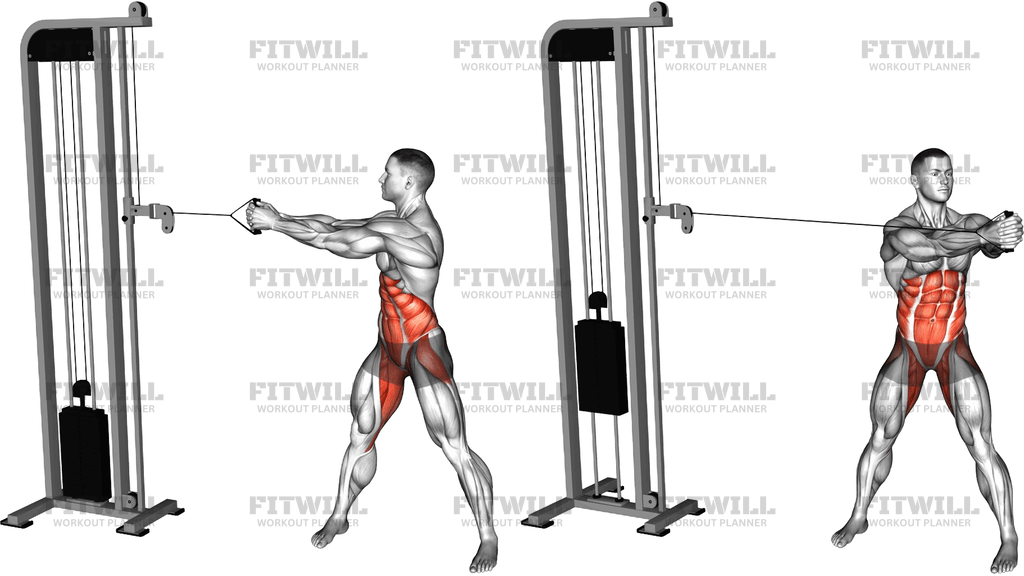
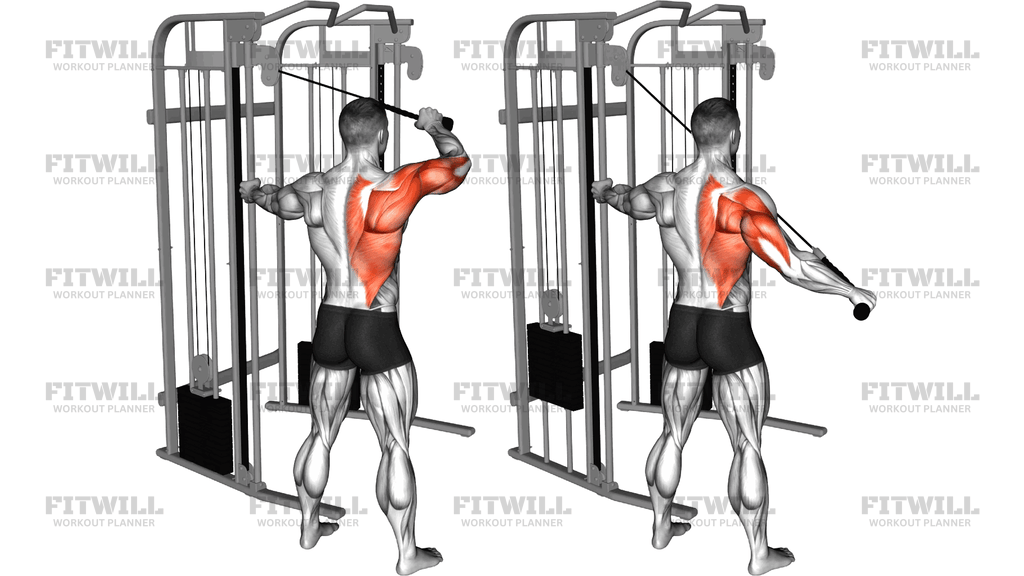
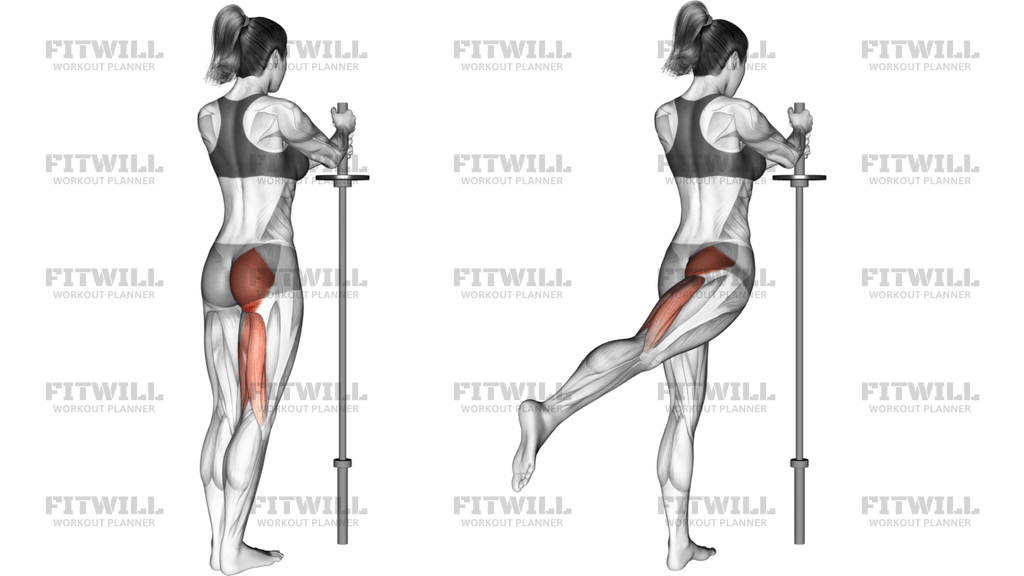
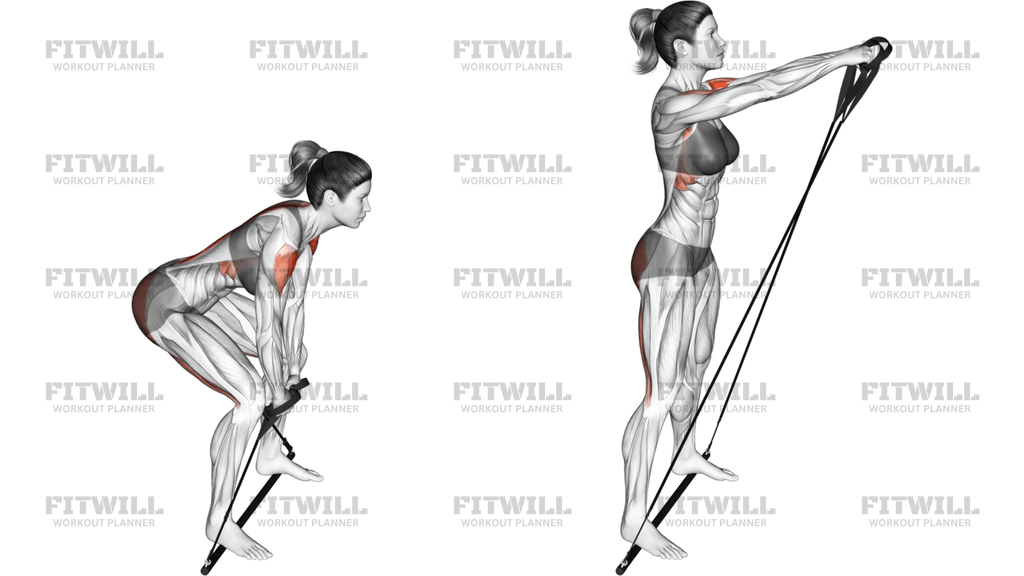
Cable Pull Through
Cable Pull Through is a cable-based hip hinge that loads the glutes and hamstrings while teaching you to keep your spine neutral and your ribs stacked over your pelvis. The cable line pulls from behind, so the exercise rewards a clean hinge more than a deep squat or an aggressive lower-back extension. That makes it useful for building posterior-chain strength, warming up the hips, or adding volume after heavier lower-body work.
The setup matters because the cable should stay low and close enough that it gives tension from the start without yanking you off balance. With the handle or rope clipped to the low pulley, step forward so the cable runs between your legs, then hinge your hips back until you can grip the attachment. Keep a soft bend in the knees, feet planted, and your torso angled forward while your spine stays long. From there, the movement should feel like loading the hips, not dropping into a squat.
On each rep, let the hips travel back first, keep the shins fairly vertical, and lower the handle along the same line until you feel a strong stretch in the glutes and hamstrings. Then drive the floor away, squeeze the glutes, and bring the hips through until you stand tall without leaning back. The arms only connect you to the cable; they do not pull the weight up. A brief pause in the standing position helps you finish the hip extension without turning the rep into a lower-back arch.
Cable pull throughs work well as accessory work for glute development, hinge patterning, and general posterior-chain volume. They are also useful when you want a lower-risk hinge than a heavy barbell deadlift variation. Beginners can usually learn them quickly because the cable provides a clear path and easy feedback, but the exercise still needs patience: if the cable starts to swing, the knees drift too far forward, or the chest rises too early, the glutes lose tension and the set turns into momentum work.
Use a load that lets every rep look the same from the side. If the cable stack is moving you instead of your hips moving the cable, the weight is too heavy. Keep your neck neutral, breathe out as you stand, and reset the hinge with control on the way down. The goal is a repeatable hip snap and a smooth return, not a huge range or a dramatic lockout.
[ Workout Log & Planner ]
Put your next workout in Fitwill
Keep your plan and training log ready when you are.


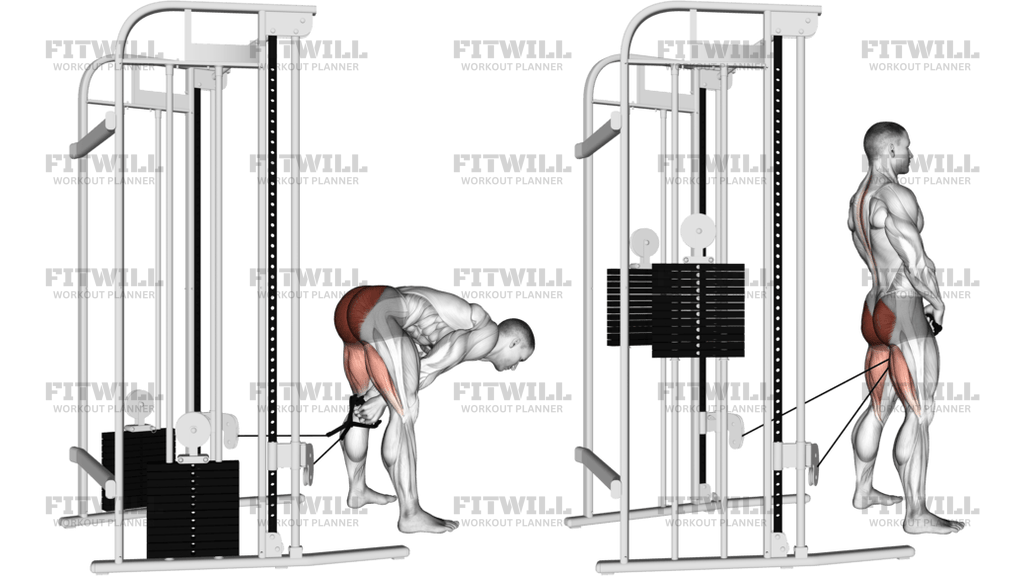
Instructions
- Clip a handle or rope to the low pulley, then step forward until the cable runs between your legs with tension on it.
- Hinge your hips back, soften your knees, and grasp the attachment with both hands while keeping your chest long and your spine neutral.
- Set your feet about hip-width apart and let your weight stay balanced through the whole foot, especially the heels and midfoot.
- Take a breath, brace your trunk, and keep your ribs stacked over your pelvis before you start the rep.
- Push your hips back until your torso leans forward and you feel a strong stretch in the glutes and hamstrings.
- Drive your hips forward by squeezing the glutes, allowing the cable to travel forward and up as your torso returns to tall standing.
- Finish the rep with your hips fully extended but without leaning back or over-squeezing your lower back.
- Lower the handle back between your legs under control, keeping the knees softly bent and the cable path smooth.
- Reset the hinge before the next rep and keep breathing steady through the full set.
Tips & Tricks
- If the cable stack lifts before you hinge, stand a little farther from the machine so the first part of the rep still has tension.
- Keep the knees slightly bent, but do not turn the movement into a squat with lots of knee travel.
- Let the hips move back far enough to load the glutes and hamstrings, not just enough to fold at the waist.
- Think about sliding the handle forward with the hips rather than pulling it with the arms.
- Stop the stand-up phase when your torso is tall and your glutes are tight; leaning back adds strain without adding quality.
- Keep the handle close to the body on the way up so the cable does not swing in an arc.
- Use a slower return than the drive up if you want more time under tension and cleaner hinge mechanics.
- Choose a load that lets you pause for a second in the stretched hinge and still keep your back position.
Frequently Asked Questions
What muscle does Cable Pull Through target most?
The glutes are the primary driver, with the hamstrings and core helping stabilize the hinge.
Can beginners perform this exercise?
Yes. It is usually beginner-friendly if the pulley is set low and the load stays light enough to keep the hinge pattern clean.
How do I set up the cable and attachment?
Clip a handle or rope to the low pulley, step forward until there is tension, then hinge back so the attachment sits between your legs before each rep.
Should my knees bend a lot during the rep?
No. Keep a soft bend, but let the hips travel back more than the knees travel forward.
Where should I feel the stretch?
You should feel the loaded stretch in the glutes and hamstrings as you hinge back, not in the lower back.
What is the most common form mistake?
Turning the rep into a squat or arching the lower back at the top are the two most common problems.
Is this better before or after heavy lifting?
It works well as a warm-up hinge drill or as accessory work after heavier squats or deadlifts.
How should I breathe during Cable Pull Throughs?
Inhale and brace before you hinge, then exhale as you drive the hips through and stand tall.