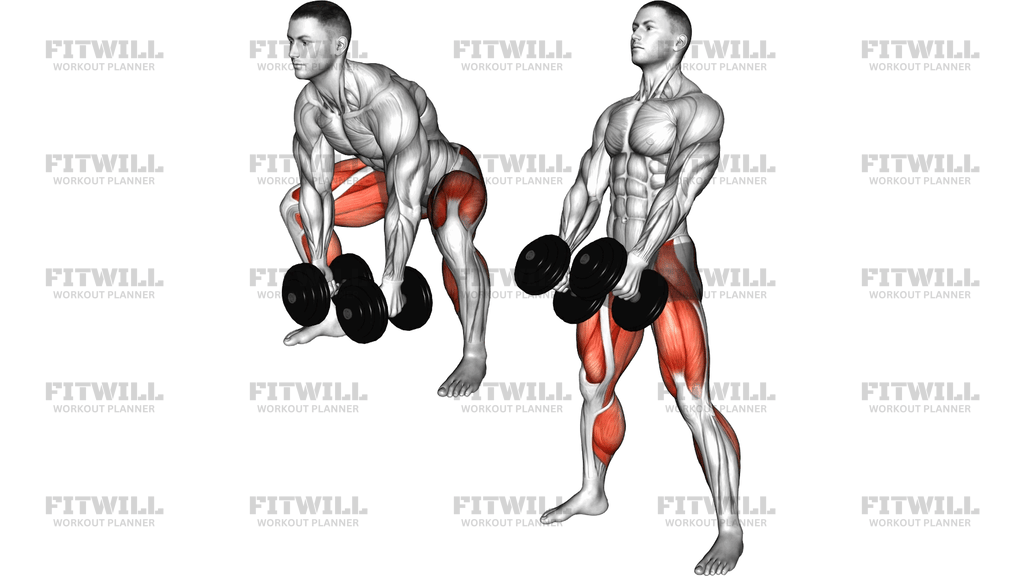
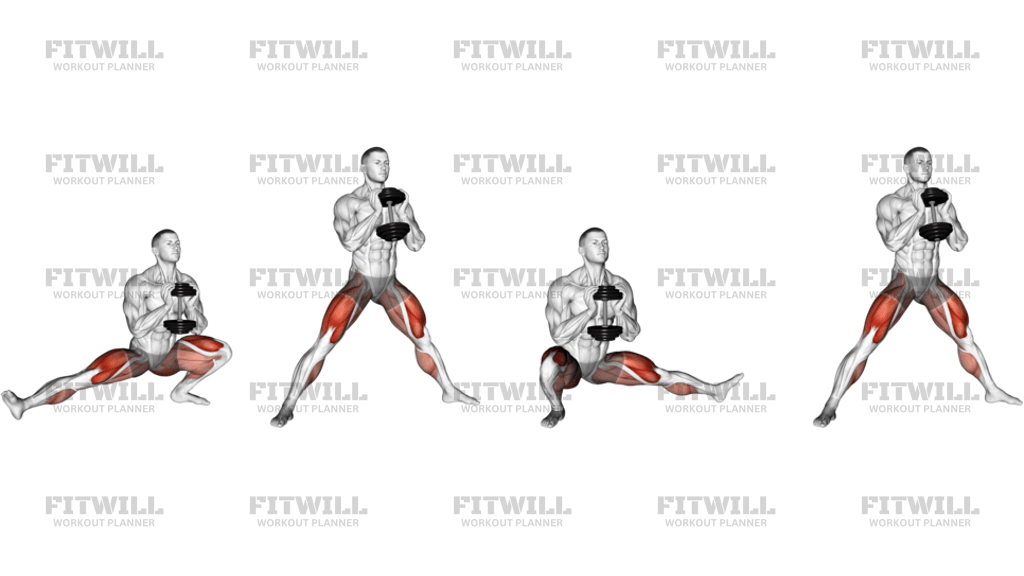
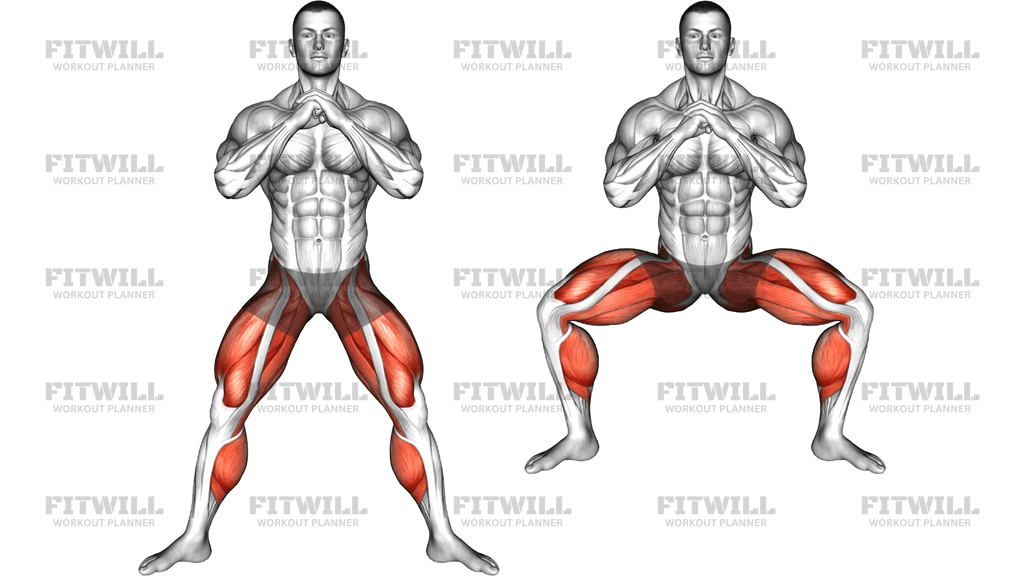
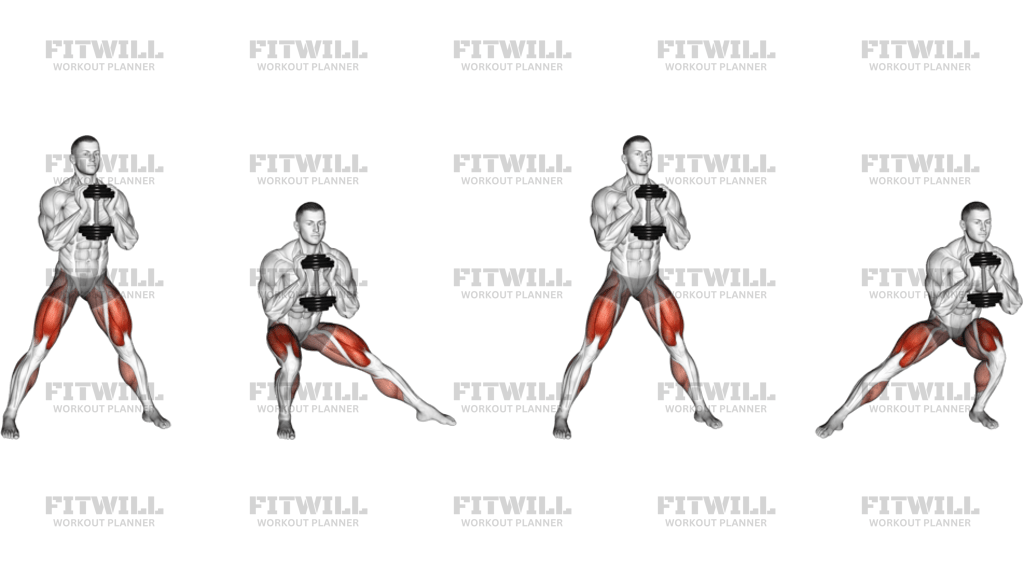
Dumbbell One Leg Squat
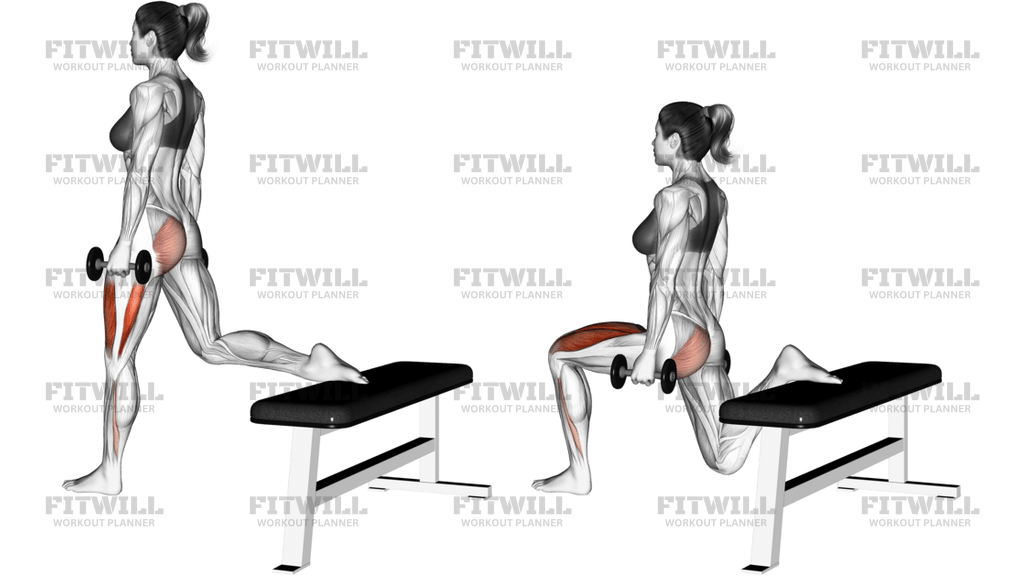
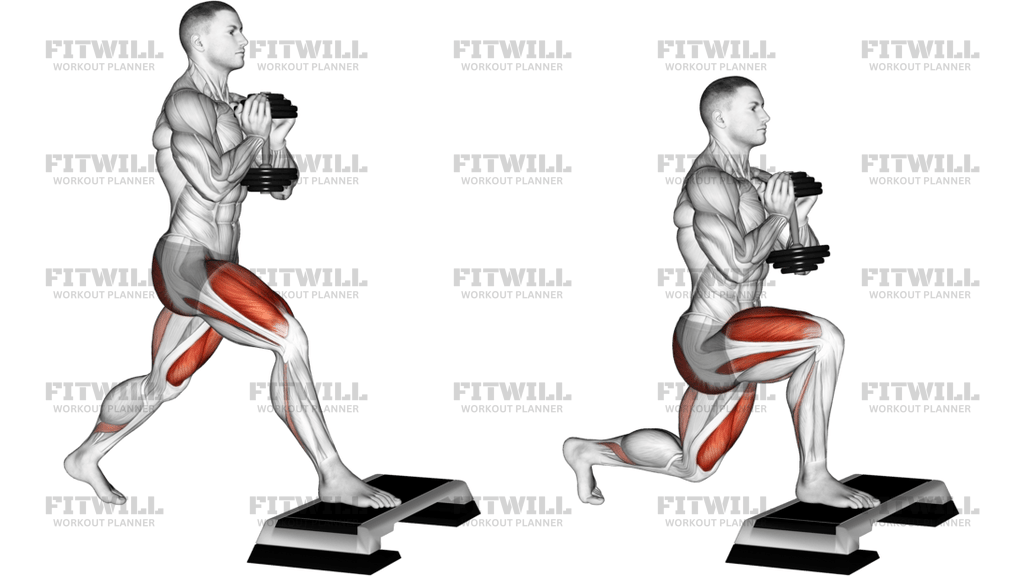
Dumbbell One Leg Squat is a unilateral lower-body exercise performed with the rear foot elevated on a bench while the front leg does most of the work. The dumbbells add load at your sides, which makes the movement honest: if your stance, balance, or knee tracking is off, it shows up quickly. That is why this exercise is so useful for building stronger quads and glutes while also exposing side-to-side differences that bilateral squats can hide.
The setup matters more here than in many other leg exercises. Step far enough in front of the bench that the front heel can stay planted and the torso can stay tall as you lower. The back foot should rest lightly on the bench rather than drive the rep, and the pelvis should stay square instead of twisting toward the front leg. When the stance is right, the front leg can bend deeply without the movement turning into a balance fight.
During each repetition, descend straight down with control, letting the front knee travel in line with the toes while the back knee drops toward the floor. Most of the load should stay on the front leg, with the rear leg acting as a support point, not a push-off. Keep the dumbbells close to the sides, keep the chest stacked over the front hip, and exhale as you drive back to standing. The goal is a smooth, repeatable squat pattern rather than a rush to touch the floor.
Dumbbell One Leg Squat is a strong choice for athletes, lifters, and anyone who needs unilateral leg strength without the spinal loading of a heavy barbell squat. It fits well in accessory work, hypertrophy blocks, or warmups before heavier lower-body training. Because the movement challenges the quad, glute, adductor, and core at the same time, it is also useful for identifying weak links in ankle mobility, hip stability, or pelvic control.
Keep the range of motion pain-free and controlled. If your front heel lifts, your stance is probably too short or your load is too ambitious. If the front knee caves inward or the torso tips hard to one side, reduce the weight, slow the descent, or use a light hand support until the pattern is solid. The cleanest reps come from a stable front foot, a quiet rear leg, and a controlled path from the top to the bottom and back again.
[ Workout Log & Planner ]
Put your next workout in Fitwill
Keep your plan and training log ready when you are.


Instructions
- Place a stable bench behind you and stand about one to two steps in front of it with a dumbbell in each hand at your sides.
- Reach one foot back and rest the top of that foot on the bench, keeping your hips square to the front and your chest tall.
- Step the front foot far enough forward that you can lower straight down without the front heel lifting.
- Let the dumbbells hang beside your thighs, soften the front knee slightly, and brace your midsection.
- Lower under control by bending the front knee and hip together while the back knee drops toward the floor.
- Keep the front knee tracking over the middle toes and the torso stacked over the front hip.
- Descend until the back knee is close to the floor or the front thigh reaches a strong, pain-free depth.
- Drive through the front heel and midfoot to stand back up, keeping the rear leg relaxed and the dumbbells still.
- Finish tall with the front glute squeezed, then reset your stance before the next rep or switch sides.
Tips & Tricks
- A slightly longer stance usually helps keep the front heel down and makes the descent feel smoother.
- Keep the back foot relaxed on the bench; if you push off it, the front leg stops doing the real work.
- Think about lowering the front knee between the second and third toes to avoid collapse inward.
- Let the dumbbells stay close to the thighs instead of drifting forward, which reduces wobble and makes the torso easier to control.
- Use a slower two- to three-second descent if you struggle to stay balanced at the bottom.
- If the back knee hits the floor early, shorten the depth slightly and keep the rep controlled instead of bouncing.
- A light rack or wall touch with the free hand can help if balance, not leg strength, is the limiting factor.
- Keep the front foot planted on the big toe, little toe, and heel so pressure does not shift to the toes.
- Stop the set when the front knee caves, the torso twists, or you have to swing the dumbbells to stand.
Frequently Asked Questions
What muscles does Dumbbell One Leg Squat work most?
The front leg gets the biggest demand, especially the quads and glutes, with the adductors, hamstrings, and core helping keep the position stable.
Is Dumbbell One Leg Squat the same as a Bulgarian split squat?
Yes. This is the dumbbell version of a rear-foot-elevated split squat, which is the standard Bulgarian split squat pattern.
How far in front of the bench should I stand?
Far enough that your front heel stays flat and your torso can stay tall at the bottom. If the front heel lifts, step a little farther forward.
Why does my front knee cave inward on Dumbbell One Leg Squat?
Usually the stance is too narrow, the load is too heavy, or the foot is not staying rooted. Keep the knee tracking over the middle toes and lower the weight if needed.
Can beginners do Dumbbell One Leg Squat?
Yes, but most beginners should start with bodyweight or very light dumbbells and use a support nearby until the balance and depth feel consistent.
Should the back leg do much work?
No. The back leg is mainly there for balance. If you are pushing hard off the bench foot, the front leg is not getting the full training effect.
What if I feel this more in my knee than my thigh or glute?
Shorten the depth slightly, slow the descent, and make sure your front foot is far enough forward for the knee to travel smoothly over the toes.
What is a good way to progress Dumbbell One Leg Squat?
Add load gradually, then add control by pausing briefly at the bottom or slowing the lowering phase before you chase more weight.