Kettlebell Dumbbell Sumo Squat Off Stepbox
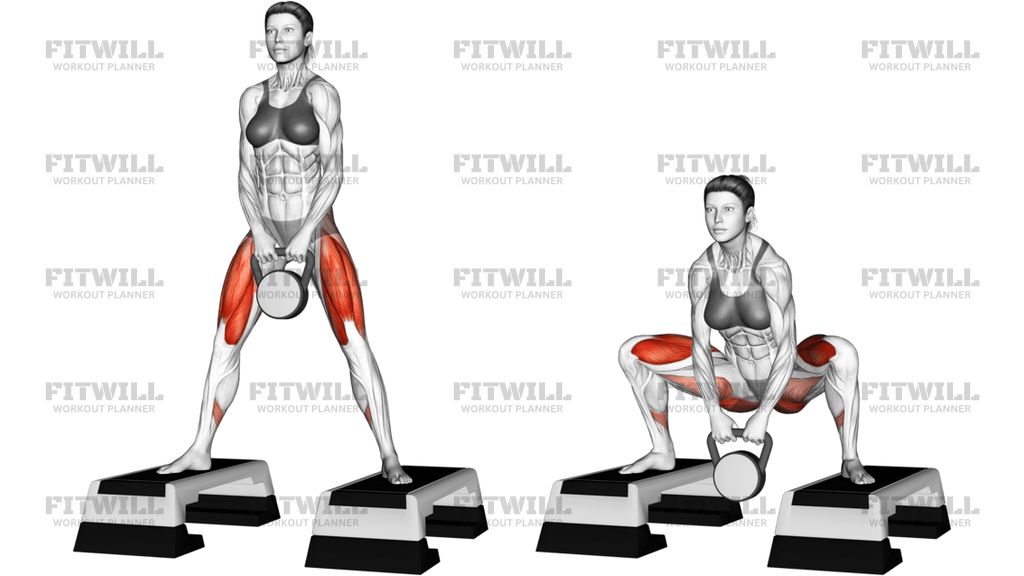
Kettlebell Dumbbell Sumo Squat Off Stepbox is a wide-stance squat performed from raised step boxes with the load hanging between the legs. The elevated foot position lets you sink deeper into the squat while keeping the torso tall, the knees tracking outward, and the weight centered. That makes the exercise useful when you want a lower-body pattern that feels more squat-specific than hinge-specific and still demands balance, hip control, and steady trunk tension.
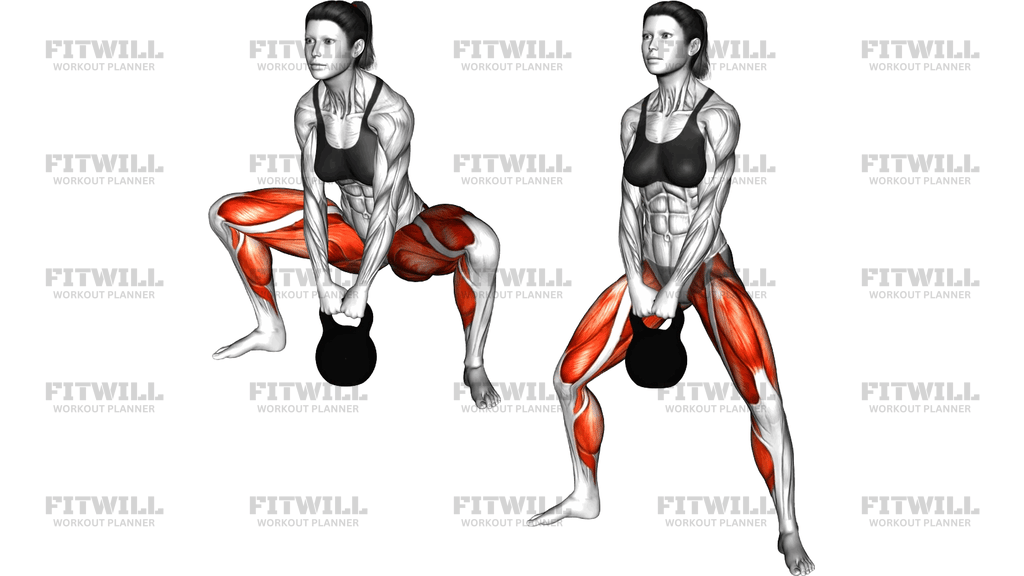
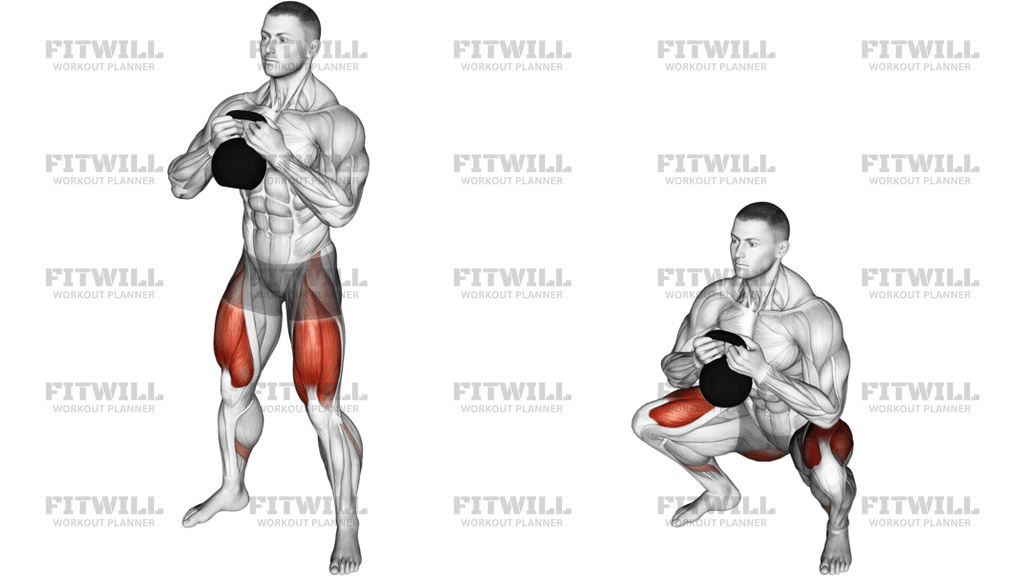
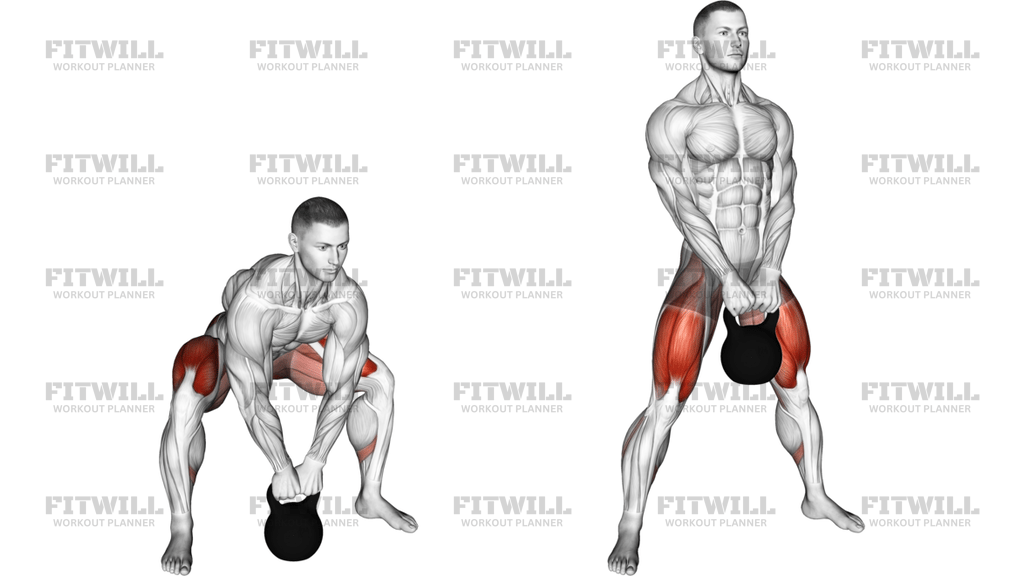
The image shows a kettlebell held with both hands and the feet placed wide on separate step platforms. That setup changes the bottom position in a meaningful way: the hips drop below or close to knee level, the knees travel out over the toes, and the adductors and quads have to help stabilize the descent and drive the stand. If the stance is too narrow or the feet are not firmly rooted on the steps, the movement turns shaky very quickly, so the setup matters as much as the depth.
This variation is most useful for building leg strength, learning a clean sumo squat pattern, or adding variety to a lower-body session without a barbell rack. It is especially relevant when you want to emphasize quads along with glutes, inner thighs, and trunk stabilizers. Because the load hangs low between the legs, it also gives you clear feedback about posture: if you fold forward, the kettlebell will pull you off balance; if you stay braced and upright, the rep feels smooth and controlled.
Perform each rep by setting the feet wide, turning the toes slightly out, and taking the kettlebell into a dead-hang position between the legs. Sit the hips down and back until the thighs reach a deep, comfortable depth, then drive the floor away through the whole foot to stand. Keep the chest open, ribs stacked over the pelvis, and the knees tracking in line with the toes. The rep should feel deliberate on the way down and powerful on the way up, never dropped or bounced.
Use a load and step height that let you own the bottom position without collapsing the arches or letting the knees cave inward. If the stance width, box height, or kettlebell weight forces you to round your back or lose balance, the setup is too aggressive. This is a strong accessory movement for quad and adductor development, squat practice, and controlled lower-body conditioning when you want the legs to work hard without turning the rep into a speed drill.
[ Workout Log & Planner ]
Put your next workout in Fitwill
Keep your plan and training log ready when you are.


Instructions
- Place the step boxes so each foot has a stable, level surface and stand with a wide sumo stance, toes turned slightly out.
- Hold the kettlebell with both hands by the handle and let it hang vertically between your thighs.
- Stack your ribs over your pelvis, lift your chest, and brace before you start the descent.
- Push the knees out in line with the toes and sit the hips straight down between the legs.
- Keep the heels planted and the arches active as you lower to a deep, controlled squat.
- Let the kettlebell travel straight down without swinging forward or drifting away from the body.
- Pause briefly at the bottom if you can keep the spine long and the knees open.
- Drive through the whole foot to stand back up, exhale as you rise, and finish with the hips tall before the next rep.
Tips & Tricks
- Set the boxes far enough apart that the knees can open without forcing the thighs into the ribs.
- Keep the kettlebell centered under the pelvis; if it swings forward, the torso will tip and the rep turns into a balance drill.
- Turn the toes out only as far as your hips allow so the knees can track over them cleanly.
- Maintain pressure through the big toe, little toe, and heel of each foot to keep the arches from collapsing on the descent.
- Use a depth that you can control without tucking the pelvis hard under at the bottom.
- A lighter kettlebell is often enough on this movement because the long bottom position makes the legs work hard quickly.
- Keep the neck relaxed and eyes forward instead of looking down at the weight.
- If the knees cave inward on the way up, reduce load or stance width before adding more reps.
Frequently Asked Questions
What does the step-box setup change in this squat?
The raised platforms let you drop into a deeper sumo squat while keeping the weight centered between the legs. That increases the demand on the quads, glutes, and adductors at the bottom.
What muscles should I feel working most?
The quads are the primary target, with strong help from the glutes, inner thighs, and trunk stabilizers. The knees and hips should share the work instead of the lower back taking over.
Do I need a kettlebell, or can I use a dumbbell?
Either can work if the load hangs vertically and stays centered under your body. A kettlebell is easier to control here, but a single dumbbell can be used in the same low-hanging position.
How wide should my stance be on the boxes?
Wide enough that your knees can open in line with your toes without pinching at the hips. If you have to force the stance to get depth, the setup is too wide.
What is the most common mistake on this exercise?
Letting the kettlebell drift forward and folding the torso to chase depth. Keep the load hanging straight down and let the hips drop between the feet instead.
Can beginners use this version safely?
Yes, if the boxes are stable and the load is light enough to control through the bottom position. Beginners should earn depth before adding heavier resistance.
Should my heels stay flat on the step boxes?
Yes. Keep the whole foot planted and avoid rocking onto the toes, especially as you rise out of the squat.
How do I know the weight is too heavy?
If your knees cave, your arches collapse, or your chest drops forward before you reach the bottom, the load is too heavy for this setup.