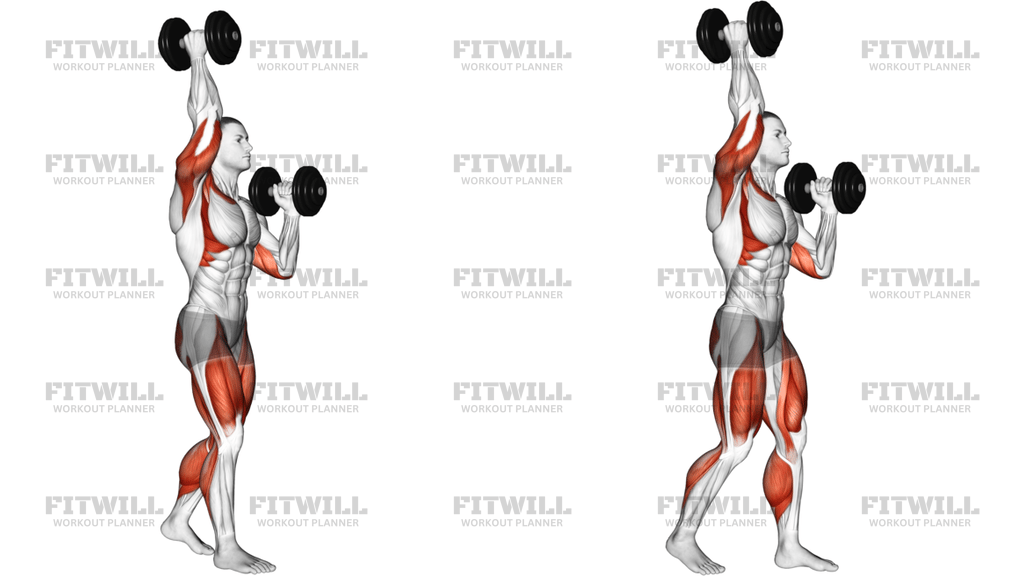
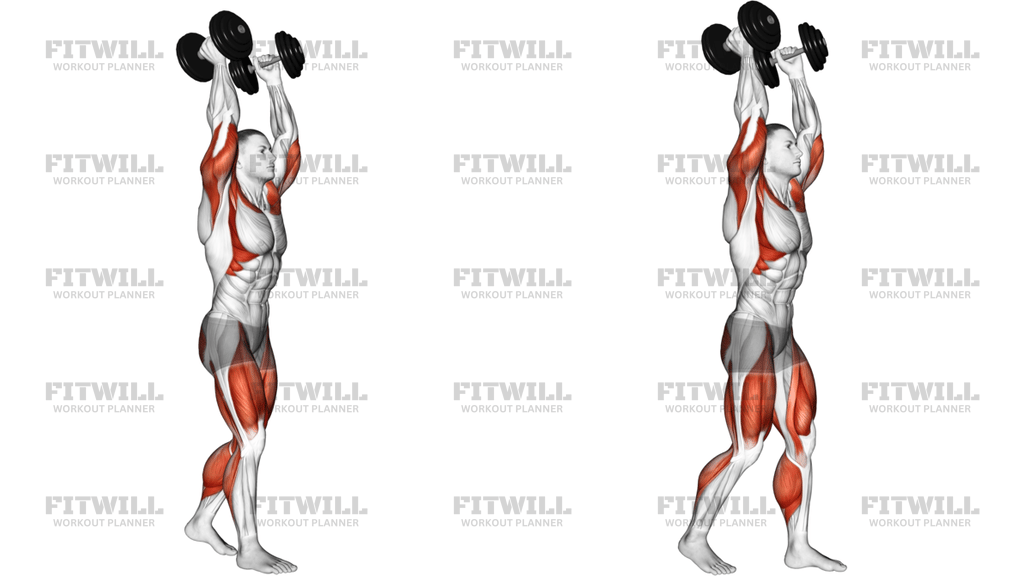
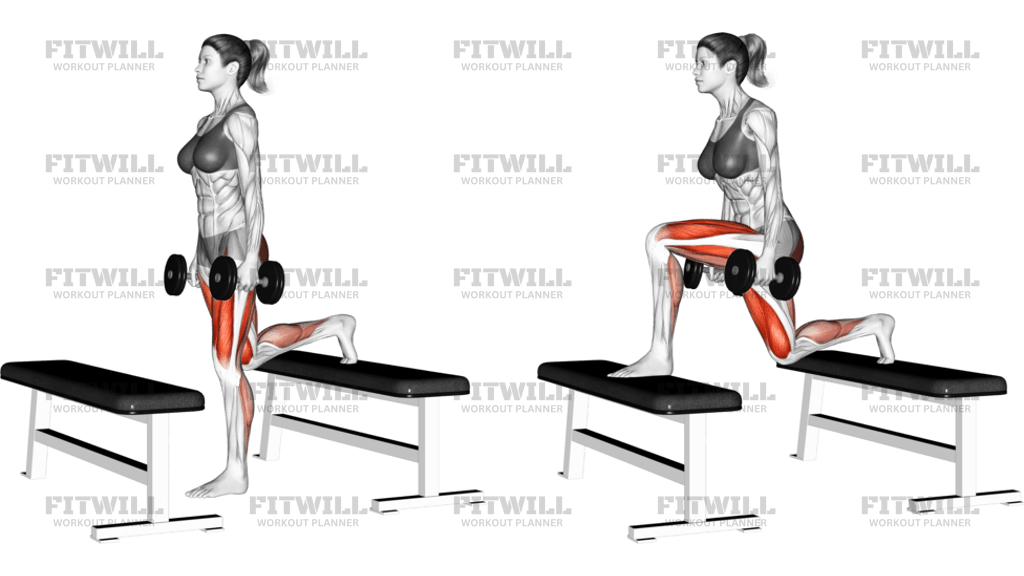
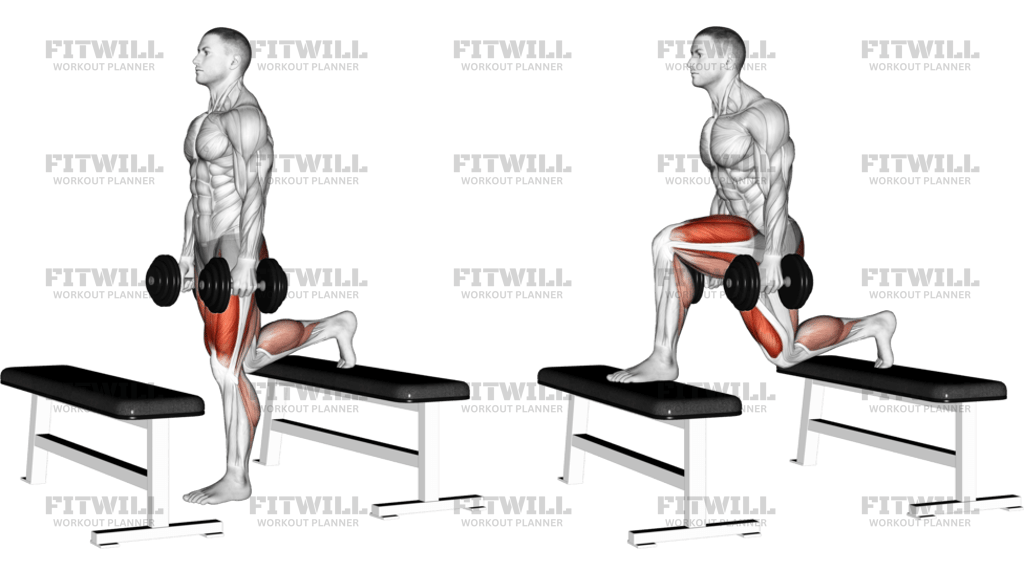
Dumbbell Goblet Squat And Biceps Curl
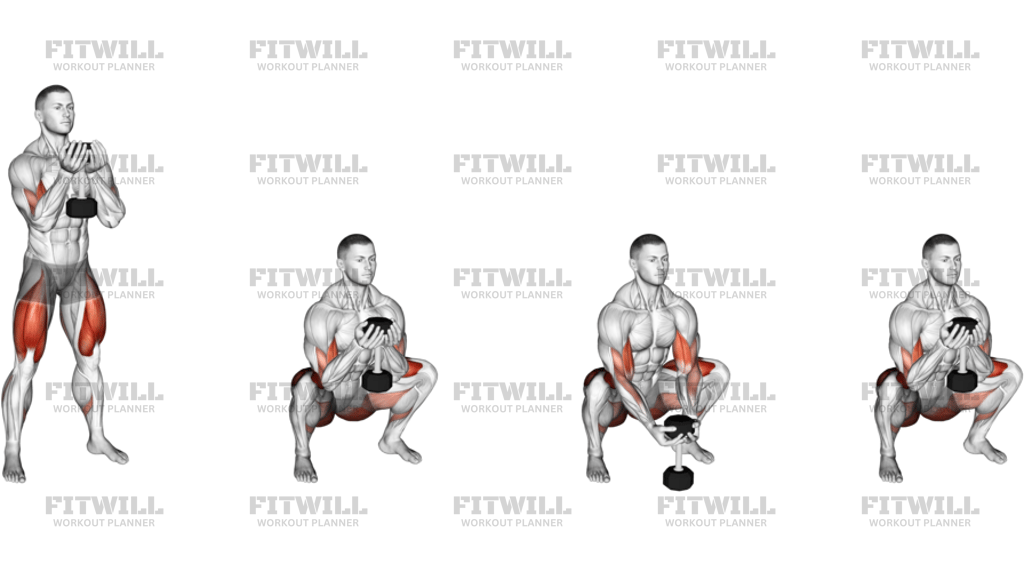
Dumbbell Goblet Squat And Biceps Curl is a hybrid lower-body and arm exercise built around a front-loaded squat with a curl component. The dumbbell stays close to the front of the body, which keeps the torso more upright than a free-hanging curl and makes the legs do most of the visible work. It is useful when you want a single movement that challenges the quads, glutes, biceps, and upper-back tension at the same time.
The setup matters because the weight has to stay centered while the hips and knees move. Stand with a shoulder-width stance, turn the toes out only slightly, and keep the dumbbell close to the chest or upper torso in a goblet-style hold. That front-loaded position encourages a tall chest, stacked ribs, and a stable midfoot so the squat does not collapse forward as the curl tension increases.
Each repetition should feel like one coordinated pattern rather than two separate motions. Lower into the squat with the elbows tucked and the dumbbell under control, then use the biceps to keep the weight organized as you rise and reset. If the arms swing away from the body or the dumbbell drifts too far forward, the curl becomes sloppy and the squat loses its clean line.
Because this movement combines a squat with an arm curl, the load usually needs to be lighter than a regular goblet squat. The goal is not to chase the heaviest dumbbell possible, but to keep the elbows, wrists, and torso in a strong position while the legs work through a smooth squat. That makes the exercise especially useful for accessory work, conditioning blocks, or sessions where you want a bit more upper-body involvement than a plain squat provides.
It also works well as a teaching drill for staying upright under front load. Beginners can use it to learn how to keep the chest tall, the knees tracking over the toes, and the dumbbell close to the body without letting the shoulders shrug or the lower back take over. If the set starts turning into a swing, shorten the range, reduce the load, and keep the rep pattern crisp from start to finish.
[ Workout Log & Planner ]
Put your next workout in Fitwill
Keep your plan and training log ready when you are.


Instructions
- Stand with your feet about shoulder-width apart and hold one dumbbell vertically in both hands close to your chest or upper torso.
- Turn your toes slightly out, stack your ribs over your pelvis, and keep your elbows tucked so the weight stays centered over your midfoot.
- Take a breath and brace before you move, keeping your chest tall and your shoulders down away from your ears.
- Lower into a squat by sending your hips down between your heels while keeping the dumbbell close to your body.
- As you descend, keep the curl controlled so the elbows do not flare forward or let the weight swing away from your torso.
- Reach the bottom of the squat with your heels planted, knees tracking over your toes, and the dumbbell still under control at the front of the body.
- Drive through the midfoot and heels to stand back up, keeping the dumbbell close as the biceps help hold the front-loaded position.
- Lower the dumbbell with control back into the start position, reset your breath, and repeat for the planned number of reps.
Tips & Tricks
- Choose a lighter dumbbell than you would for a regular goblet squat; the curl makes the front-loaded hold more limiting.
- Keep the dumbbell close to your sternum or upper abdomen so the biceps do not turn the rep into a front swing.
- If your elbows slide forward, the weight is too heavy or your squat depth is too deep for the current load.
- Let the knees travel forward and out with the toes instead of folding the torso over the thighs to protect the squat pattern.
- Use a controlled lowering phase so the dumbbell never drops out of the curl and yanks the shoulders forward.
- Stop the rep before your wrists start bending back or the dumbbell starts pulling you onto your toes.
- A short pause at the bottom can help if you tend to bounce and lose the front-loaded position.
- End the set when the curl tension breaks or the squat turns into a hinge.
Frequently Asked Questions
What muscles does Dumbbell Goblet Squat And Biceps Curl work?
It mainly hits the thighs and glutes, with the biceps, upper back, and core working hard to keep the dumbbell stable in front of the body.
Is Dumbbell Goblet Squat And Biceps Curl good for beginners?
Yes, if the load stays light and the squat stays clean. Beginners should treat it as a coordination drill first and only add weight once they can keep the dumbbell close and the torso upright.
How heavy should the dumbbell be for this exercise?
Use a lighter dumbbell than your usual goblet squat load, because the curl makes the front hold and elbow position the limiting factor.
What is the biggest form mistake in Dumbbell Goblet Squat And Biceps Curl?
Letting the dumbbell drift away from the chest or swing through the rep. That usually turns the curl into momentum instead of controlled tension.
Should my heels stay down during the squat?
Yes. If the heels lift, the load is too heavy or your stance is too narrow for the depth you are trying to reach.
Does the curl happen at the same time as the squat?
It should stay coordinated with the squat instead of becoming a separate swing. Keep the dumbbell close, let the legs do the squat, and let the biceps control the front-loaded position.
Can I use this as a finisher?
Yes. It works well in higher-rep accessory or conditioning work as long as the dumbbell stays light enough that the squat and curl both stay crisp.
What can I do if my wrists or elbows get uncomfortable?
Reduce the load and keep the dumbbell closer to the chest. If the joint angle still feels awkward, switch to a plain goblet squat or a standard dumbbell curl instead.