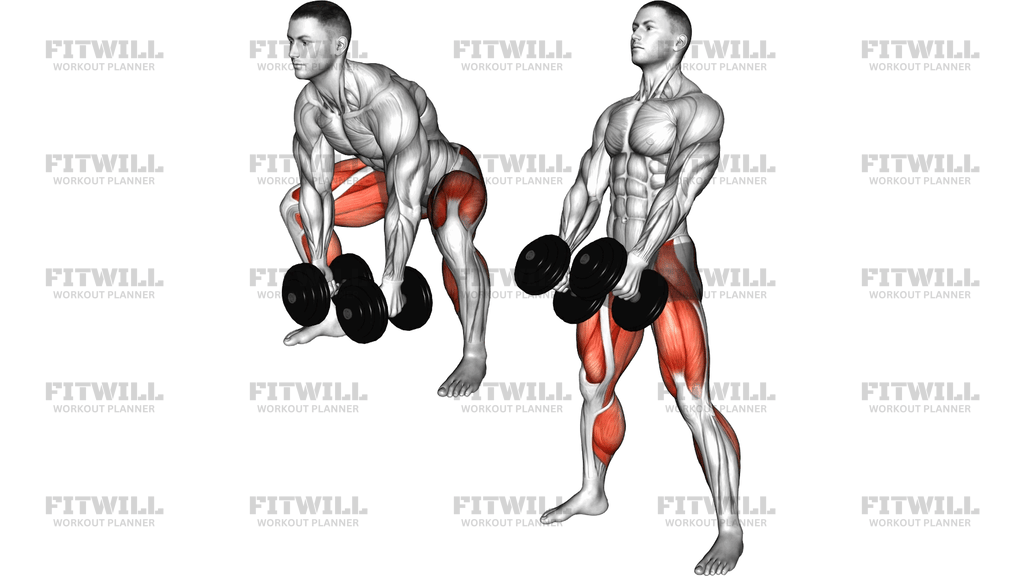
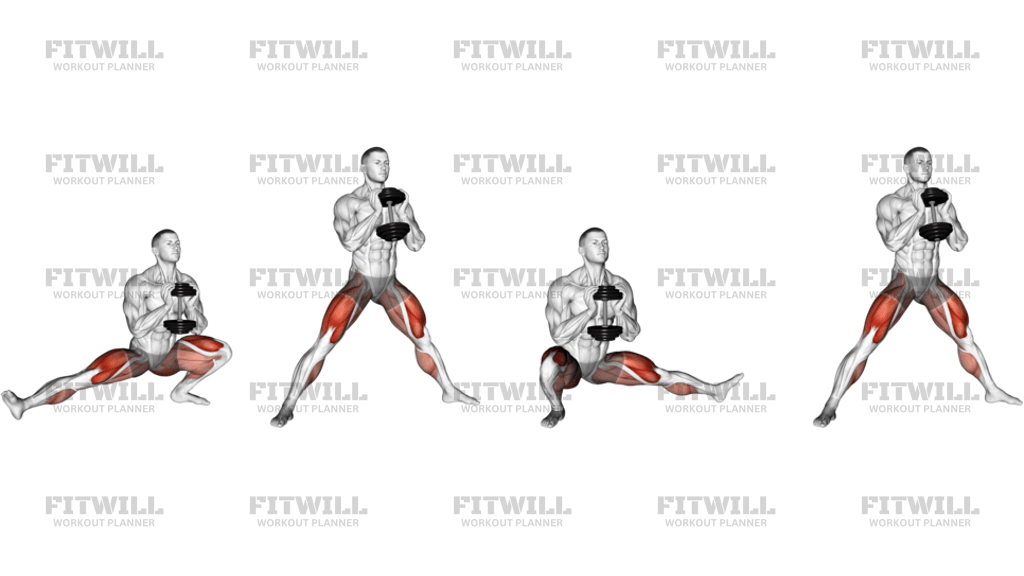
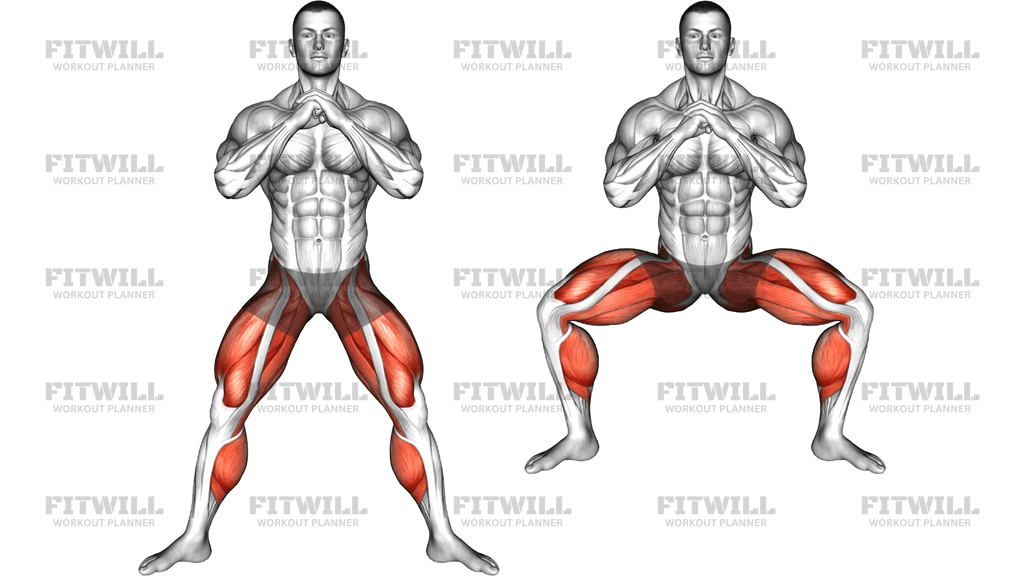
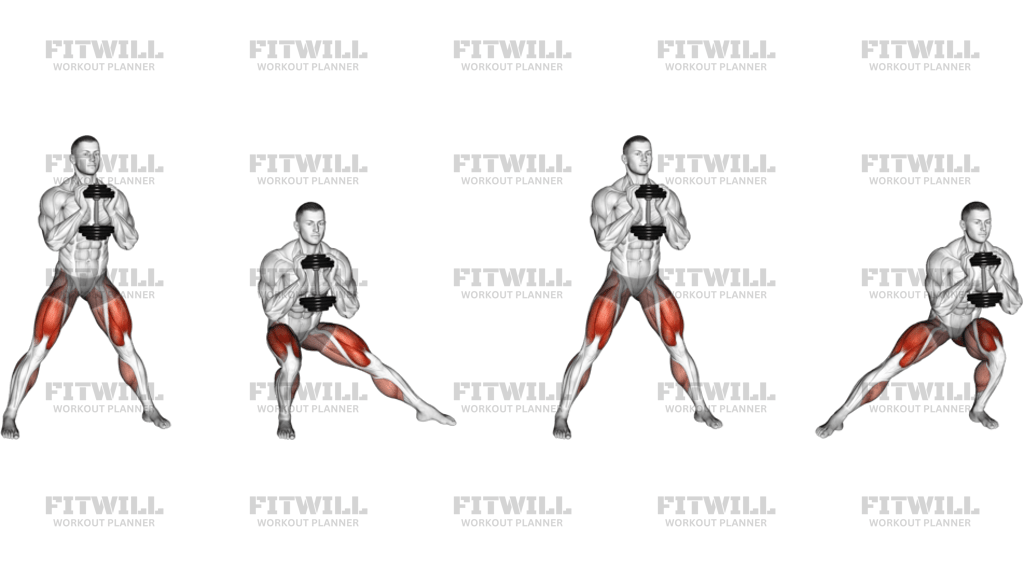
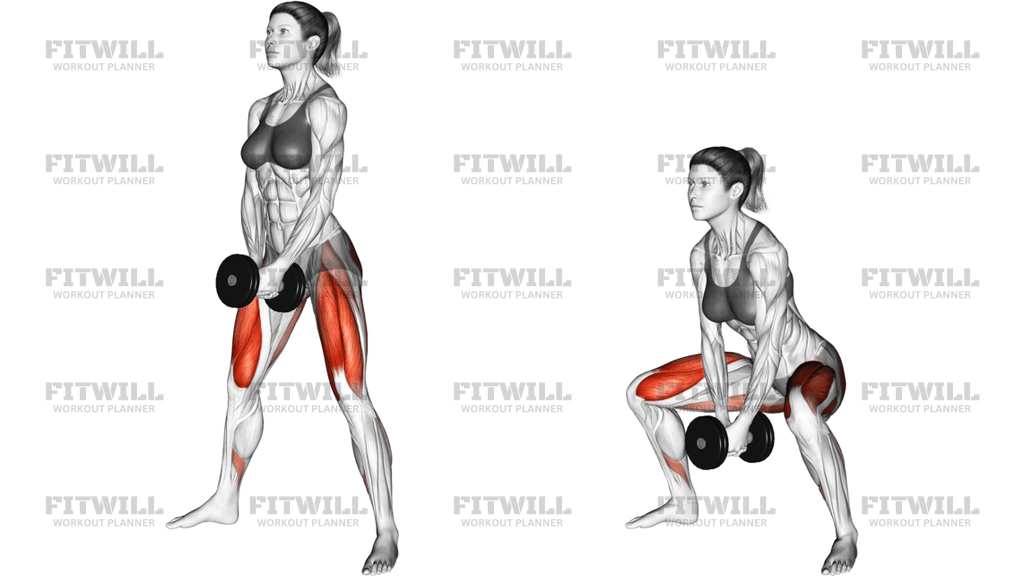
Dumbbell Narrow Stance Squat
Dumbbell Narrow Stance Squat is a quad-focused squat variation performed with a dumbbell in each hand and the feet set closer than a standard squat stance. The narrow base keeps the movement honest and usually makes the knees, ankles, and quads do more of the work while the torso stays relatively upright. It is a practical choice when you want lower-body strength without a barbell, or when you want a squat pattern that feels more direct and controlled.
Because the stance is narrow, the setup matters more than it does in a wider squat. The feet should be close enough to bias the thighs, but not so close that the knees collapse inward or the heels peel up. Holding the dumbbells at the sides loads the body evenly and lets the arms stay quiet while the legs drive the movement. That simple setup makes the exercise useful for home training, accessory work, and lighter strength sessions where clean repetitions matter.
Dumbbell Narrow Stance Squat trains the quads hardest, with the glutes, adductors, and core helping keep the torso stable as you descend and stand. If you keep the chest tall and the ribs stacked over the pelvis, the squat stays organized instead of turning into a forward fold. The best reps come from controlled depth, even pressure through the whole foot, and knees that track in the same direction as the toes.
Lower under control until your thighs reach a depth you can own without losing heel contact or letting the dumbbells swing forward. Drive back up by pushing the floor away and extending the knees and hips together, then finish tall without leaning back or bouncing at the top. If mobility is limited, use a slightly less narrow stance or a smaller range of motion and earn depth gradually. Done well, Dumbbell Narrow Stance Squat is a straightforward way to build quad strength, leg control, and squat confidence with minimal equipment.
It also works well as a regression from barbell squats or as a higher-rep leg builder when you want more leg stimulus with less spinal loading than a heavy barbell. The movement rewards patience more than speed, so a clean descent and a stable bottom position matter more than chasing load. When the knees stay aligned, the feet stay planted, and the dumbbells remain steady, the exercise becomes a reliable lower-body staple instead of a rushed conditioning drill.
Fitwill
Log Workouts, Track Progress & Build Strength.
Achieve more with Fitwill: explore over 9600 exercises with images and videos, access built-in and custom workouts, perfect for both gym and home sessions, and see real results.
Start your journey. Download today!




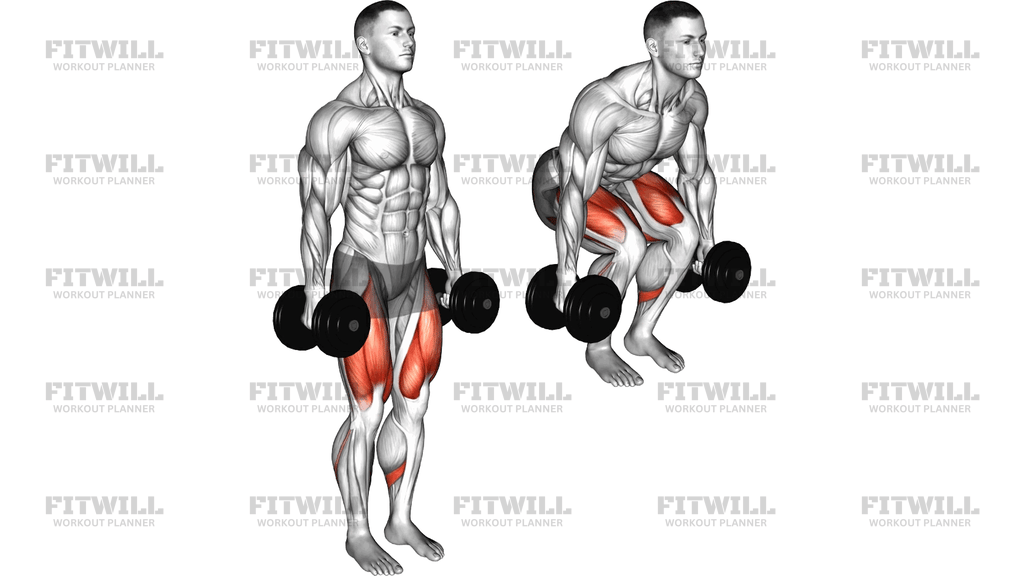
Instructions
- Stand upright with a dumbbell in each hand at your sides, feet about hip-width or slightly narrower, and toes turned out only a little.
- Plant your whole foot, lift your chest, and let the dumbbells hang still beside your thighs instead of drifting forward.
- Brace your midsection, inhale, and send your hips slightly back as you bend your knees to start the descent.
- Lower straight down between your feet, keeping your knees tracking over your toes and your heels on the floor.
- Stop at a depth you can control without your lower back rounding or your knees collapsing inward.
- Drive through the middle of each foot and stand up by extending the knees and hips together.
- Exhale as you pass the hardest part of the ascent and finish tall without leaning back or shrugging the dumbbells.
- Reset your stance before the next rep, and lower the dumbbells to the floor with control when the set is finished.
Tips & Tricks
- Keep the dumbbells slightly outside your thighs so they do not bang against your knees on the way down.
- A hip-width stance is usually narrow enough for this exercise; feet that are too close together often force the knees inward.
- Think about sitting straight down rather than folding forward, especially if you want more quad emphasis.
- If your heels lift, widen the stance a little or reduce depth until your ankles can handle the position.
- Keep the knees tracking in the same line as the second and third toes to avoid the common cave-in at the bottom.
- Use a smooth lowering phase and a strong stand-up; bouncing out of the bottom usually turns the set into momentum work.
- Choose dumbbells that let your arms stay relaxed, because gripping too hard often makes the shoulders tighten and the torso pitch forward.
- If the bottom feels cramped, try a slightly wider narrow stance before assuming the exercise is too advanced.
Frequently Asked Questions
What does Dumbbell Narrow Stance Squat work most?
It mainly targets the quads, with the glutes, adductors, and core helping keep the squat stable.
Where should I hold the dumbbells in Dumbbell Narrow Stance Squat?
Hold one dumbbell in each hand at your sides with straight arms, not racked on the shoulders.
How narrow should my stance be?
Usually hip-width or slightly narrower is enough. If the feet are too close together, the knees and ankles often lose room to move cleanly.
How deep should I go in Dumbbell Narrow Stance Squat?
Descend as far as you can while keeping your heels down, knees aligned, and torso organized. Depth should never come at the cost of control.
Is Dumbbell Narrow Stance Squat good for beginners?
Yes, if you start light and keep the stance and depth conservative. It is easy to learn when the dumbbells stay at the sides.
Why do my knees cave in on this squat?
The stance is often too narrow or the load is too heavy. Widen the feet slightly and press the knees in line with the toes on the way down and up.
What is the main mistake to avoid in Dumbbell Narrow Stance Squat?
Letting the torso fold forward and the dumbbells swing. The movement should stay upright and controlled, not turn into a hinge.
Can I use this instead of a barbell squat?
Yes, it can be a useful squat variation when you want a simpler load and less spinal compression. It is especially handy for accessory work and home training.