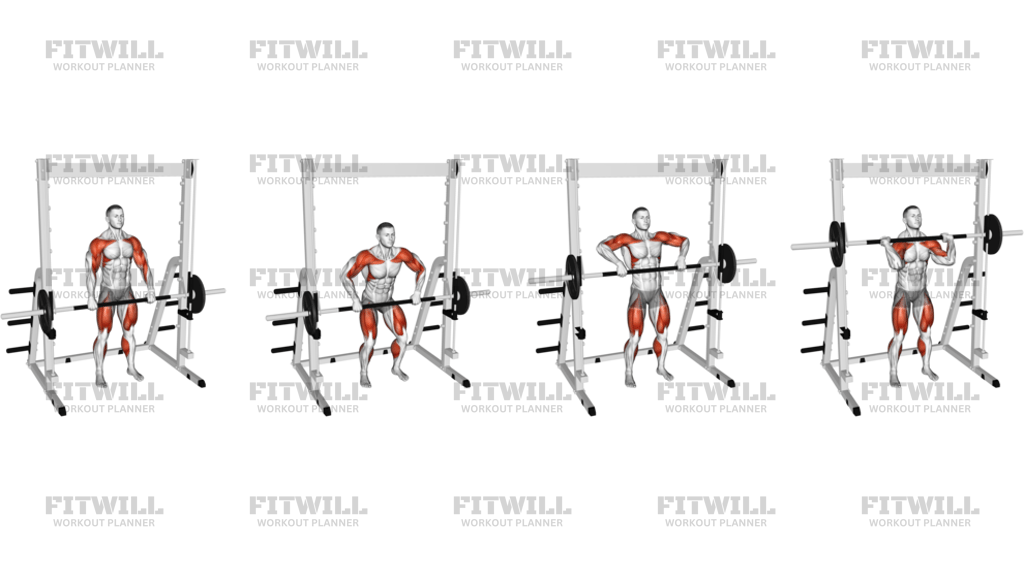
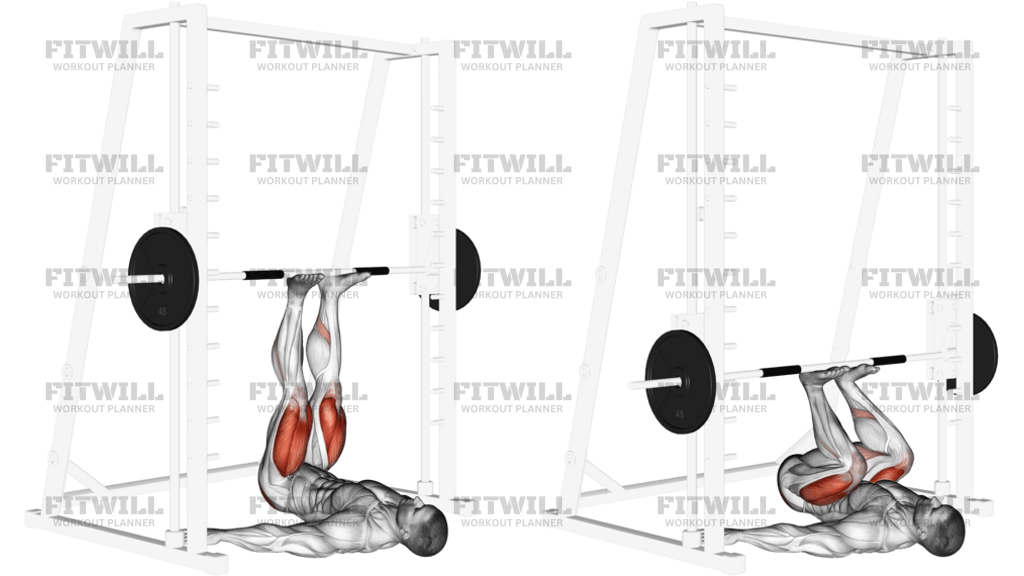
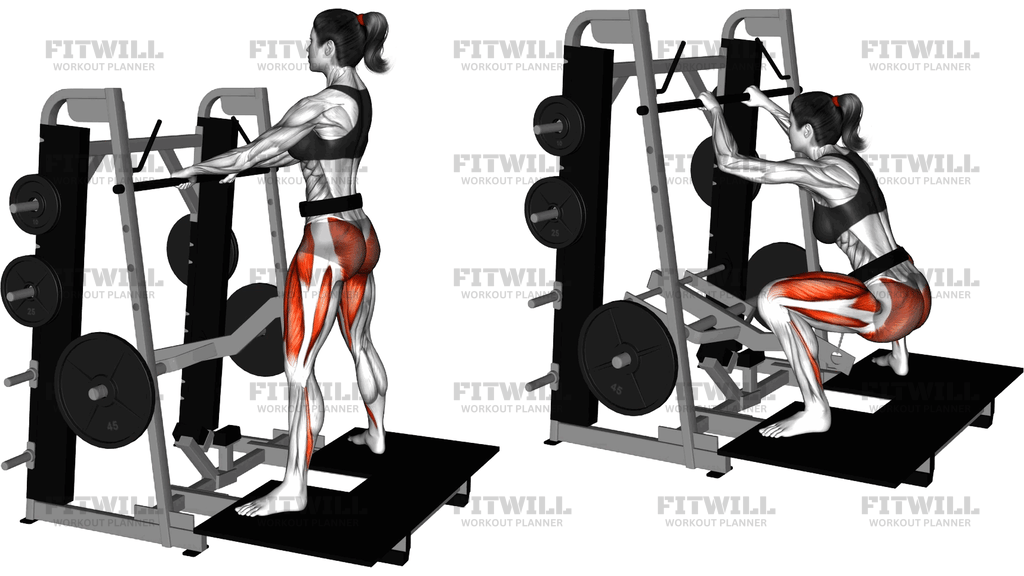
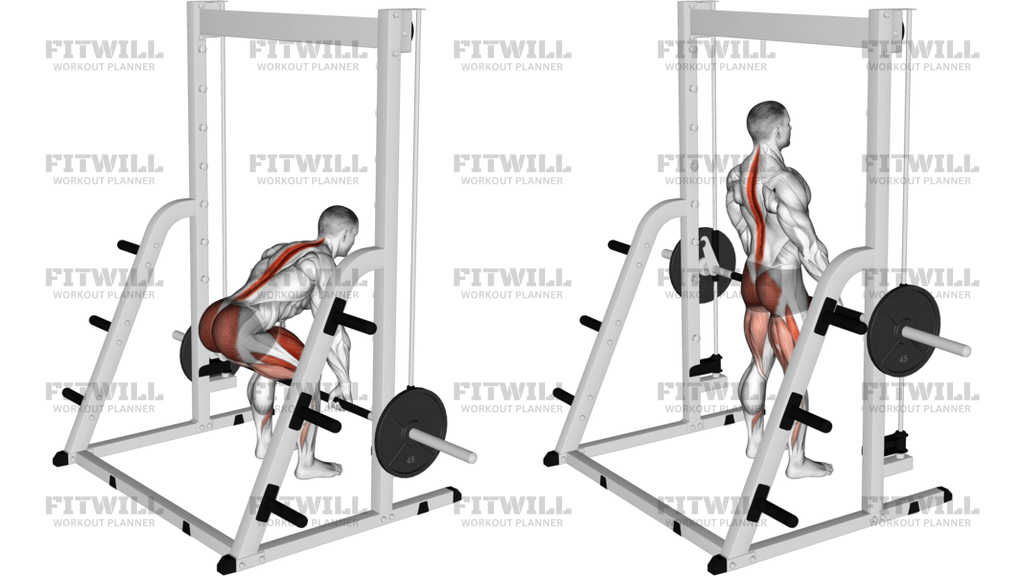
Smith Lateral Step-Up
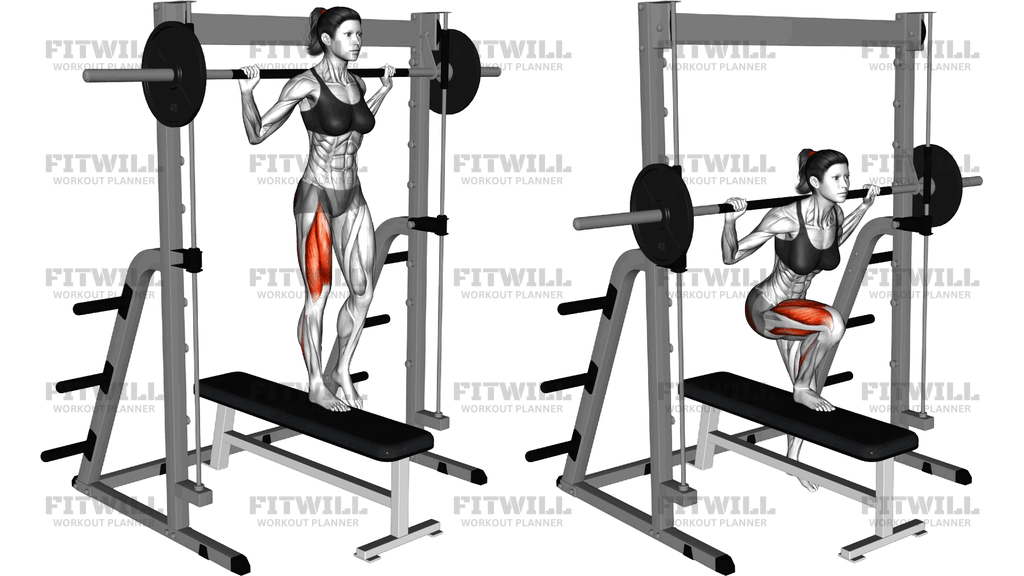
Smith Lateral Step-Up is a guided lower-body strength exercise built around stepping up sideways with the barbell fixed in a Smith machine. In the image, the bar sits across the upper traps while a bench or platform is placed beside the machine so one working foot can plant fully on top and drive the body upward. That setup matters because it keeps the bar path predictable and lets you focus on the leg that is actually doing the work.
This movement is mainly a glute and thigh exercise, with the working leg's quads and glutes doing most of the lifting and the hamstrings, core, and spinal stabilizers helping you stay stacked. In anatomy terms, the main emphasis is on the Gluteus maximus, with support from the Biceps femoris, Rectus abdominis, and Erector spinae. It is useful when you want unilateral lower-body work without needing to balance a free barbell.
The cleanest reps start before the first rep. Set the bench height so the working leg can step up without twisting the hips or bouncing off the floor leg. Keep the whole foot on the platform, brace your torso, and let the Smith bar travel straight up as you drive through the heel and midfoot. The body should rise as one piece instead of leaning away from the bench or rotating through the pelvis.
At the top, stand tall with the hips level and the knee tracking in line with the toes. Lower under control until the trailing foot returns to the floor, then reset before the next rep. The descent is where many people lose tension, so avoid dropping fast or using the floor leg to spring back up. If the platform is too high or the load is too heavy, the movement turns into a hop instead of a step-up.
Smith Lateral Step-Up works well in accessory lower-body training, glute-focused sessions, and unilateral strength blocks where you want controlled tension and a stable load. It can be a good option for beginners if the step is low and the resistance is light, but the exercise still rewards deliberate technique. Keep the movement smooth, the bar path vertical, and the working side honest from the first rep to the last.
[ Workout Log & Planner ]
Put your next workout in Fitwill
Keep your plan and training log ready when you are.


Instructions
- Set the Smith bar across your upper traps and place a sturdy bench or step beside the machine so one foot can land fully on top.
- Stand sideways to the bench, grip the bar just outside shoulder width, and plant the working foot flat on the platform with the knee tracking over the toes.
- Brace your torso and keep your chest tall before you start the rep so the bar stays controlled and your hips stay level.
- Drive through the heel and midfoot of the foot on the bench to rise laterally without pushing off hard from the floor leg.
- Bring the trailing leg up under control as you reach the top, finishing with the hips square and the standing knee extended but not locked out.
- Lower yourself slowly until the trailing foot returns to the floor and the working leg is loaded again.
- Reset your balance at the bottom before starting the next rep instead of bouncing out of the hole.
- Complete the planned reps on one side, then switch sides if the program calls for both legs.
Tips & Tricks
- Choose a bench height that lets the working thigh stay close to parallel without forcing a hip twist or a jump to the top.
- Keep the entire foot on the platform; a half-foot setup makes the ankle unstable and the knee drift inward.
- Think about pressing the bench away through the heel and midfoot rather than pulling yourself up with the trailing leg.
- Keep the Smith bar stacked over the midfoot so the rep rises vertically instead of drifting forward or backward.
- If one hip hikes higher than the other, reduce the load and reset the setup before the next rep.
- Use the floor leg for balance only; if it is doing the work, the step is too high or the load is too heavy.
- Lower slowly enough to feel the working side stay engaged on the way down instead of dropping off the box.
- Stop the set when the torso starts leaning hard away from the bench or the knee stops tracking over the toes.
Frequently Asked Questions
What muscle does Smith Lateral Step-Up target most?
It primarily targets the glutes and thighs, especially the working leg's gluteus maximus and quads.
Can beginners perform this exercise?
Yes, beginners can use it if they start with a low step, light load, and a slow controlled lowering phase.
Where should the Smith bar sit during the step-up?
The bar should rest across the upper traps or rear delts, with your grip only steadying the bar rather than holding the weight up.
How high should the bench or step be?
Use a height that lets you step up without rocking the hips or bouncing off the floor leg; lower is usually better for clean reps.
Do I push off the floor leg?
No. The floor leg should only help you balance. The foot on the bench should do the actual lifting.
What is the most common form mistake?
People usually let the torso lean away from the bench or use a small hop from the floor leg to finish the rep.
Is this different from a regular step-up?
Yes. The lateral version loads the side-to-side step pattern and asks more of the glute medius and trunk control.
What can I do if I do not have a Smith machine?
Use a dumbbell lateral step-up or a bodyweight step-up on a stable box to train the same pattern.