Band Hyperextension
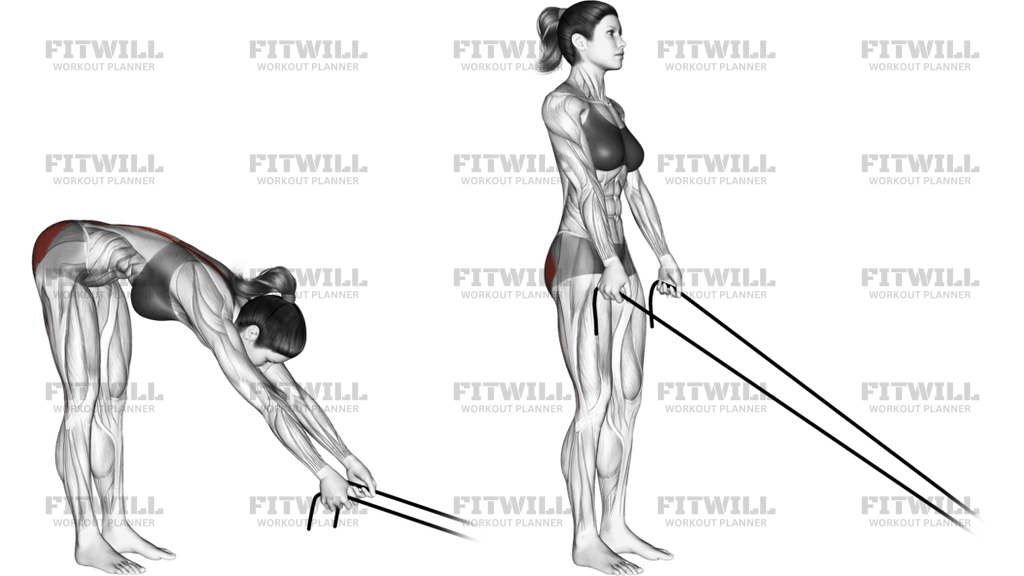
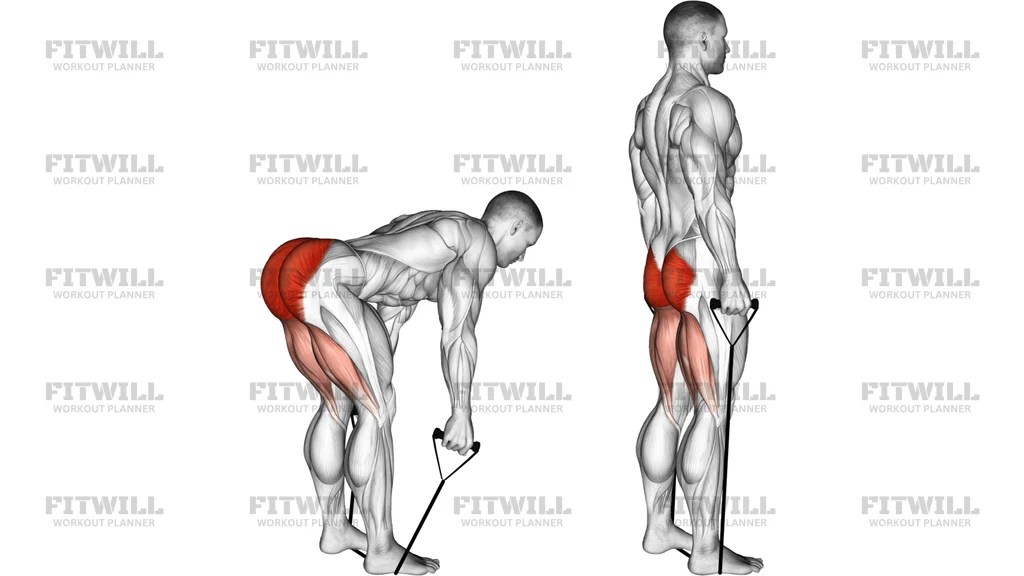
Band Hyperextension is a standing hip-hinge exercise that loads the glutes and hamstrings with a resistance band instead of a barbell or machine. It is useful when you want to practice the hinge pattern, build posterior-chain strength, or add controlled accessory work without needing heavy external load. The movement looks simple, but the band changes tension quickly, so the setup and tempo matter.
The exercise starts with the band anchored under both feet and held in the hands in front of the thighs. From that position, you hinge at the hips, send the hips back, and keep the spine long as the torso folds forward. The glutes, hamstrings, core, and spinal erectors all work, but the main goal is to let the hips travel while the ribs stay stacked over the pelvis instead of dumping into the lower back.
A good set feels smooth from the first rep to the last because the band is controlled, not yanked. Keep the feet planted, soften the knees, and let the band tension increase as you fold forward. The most useful depth is the point where you still have a neutral back, balanced feet, and enough hamstring tension to stop the descent without rounding.
On the way up, drive the floor away, squeeze the glutes, and stand tall until the hips are fully extended. The finish should feel like a strong hip squeeze, not a backward lean or a low-back arch. That makes Band Hyperextension a practical option for beginners learning to hinge, for lifters using it as a warm-up or accessory drill, and for anyone who wants repeatable posterior-chain reps with clear body control.
Because the band runs along a fairly straight line from the feet to the hands, small setup errors show up fast. If the band is uneven, the stance is too narrow, or the torso rounds before the hips finish moving back, the rep stops being a clean hyperextension and turns into a sloppy bend. Keep the motion deliberate, stay within a pain-free range, and use the exercise to teach tension through the whole backside rather than to chase load.
[ Workout Log & Planner ]
Put your next workout in Fitwill
Keep your plan and training log ready when you are.


Instructions
- Stand on the center of the band with your feet about hip-width apart and hold the ends or handles in front of your thighs, palms facing your legs.
- Make sure the band is even on both feet, then take a small step or two to create light tension before you start the first rep.
- Soften your knees, stack your ribs over your pelvis, and keep your shoulders relaxed instead of shrugging up toward your ears.
- Take a breath in, brace your midsection, and push your hips straight back as you hinge forward from the hips.
- Let your hands slide down the front of your thighs while your torso lowers and your back stays long and neutral.
- Lower only until you feel the hamstrings load and you can still keep your spine flat without rounding.
- Drive through your feet, exhale, and squeeze your glutes to bring your torso back to standing.
- Finish tall with your hips fully extended, then reset the hinge for the next repetition without leaning backward.
Tips & Tricks
- Keep the band centered under the arches or midfoot so it does not slide as tension rises.
- Think about moving the hips back, not reaching the chest forward; that keeps the hinge in the glutes and hamstrings.
- If your knees keep drifting forward, widen the stance slightly and soften them less at the start.
- Stop the descent the moment your lower back starts to round, even if the band could stretch farther.
- Keep the handles or band ends close to your thighs so the resistance line stays stable.
- Squeeze the glutes at the top without leaning back or jamming the pelvis forward.
- Use a slower lowering phase if you want more hamstring tension and better body awareness.
- Choose a lighter band if you cannot keep your shoulders relaxed and your torso steady through the hinge.
Frequently Asked Questions
What muscles does Band Hyperextension work most?
Band Hyperextension mainly targets the glutes and hamstrings, with the core and spinal erectors helping you hold a strong hinge.
Is Band Hyperextension good for beginners?
Yes. It is a good way to learn the hip-hinge pattern with light resistance before moving to heavier good mornings or barbell hinges.
Where should the band sit on Band Hyperextension?
The band should be under both feet, usually centered under the arches or midfoot, so the tension rises evenly on each side.
How low should I hinge in Band Hyperextension?
Lower only as far as you can keep your back long and your hips traveling back. Once the spine starts to round, you have gone too far.
Should I feel Band Hyperextension in my lower back?
You may feel the lower back working isometrically, but the main effort should come from the glutes and hamstrings. If the lower back is doing most of the work, shorten the range and lighten the band.
Is Band Hyperextension the same as a good morning?
It is very similar. This version uses a band for resistance instead of a barbell, so the hinge pattern stays the same but the loading feels lighter and more forgiving.
What is the most common mistake in Band Hyperextension?
Most people either round their back at the bottom or lean backward at the top. Keep the torso long on the way down and finish by squeezing the glutes, not by arching the spine.
How can I make Band Hyperextension harder?
Use a stronger band, slow the lowering phase, or pause for a second in the stretched hinge position while keeping the spine neutral.