Band Straight Back Stiff Leg Deadlift
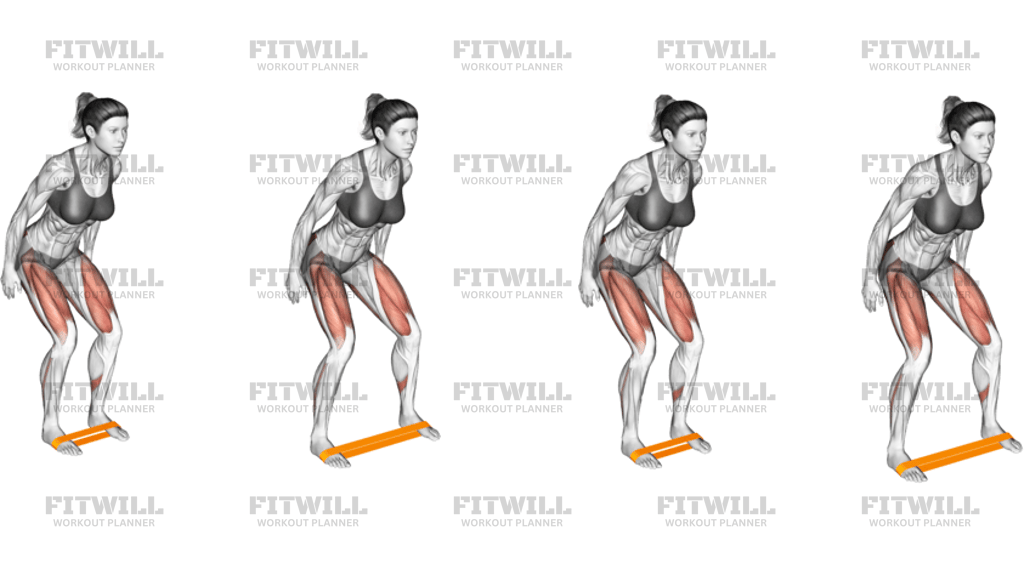
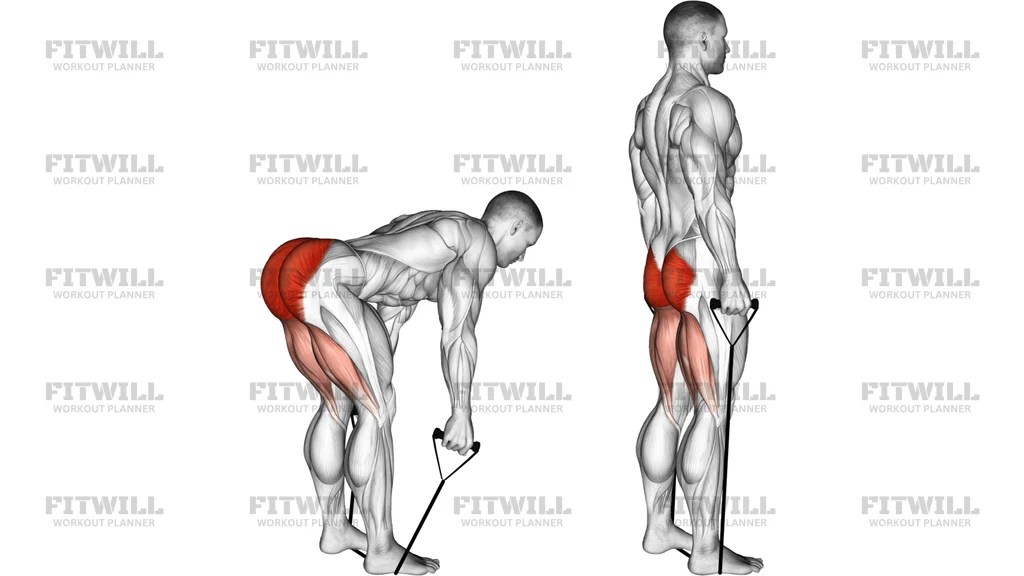
Band Straight Back Stiff Leg Deadlift is a standing band hip hinge performed with the band anchored under both feet and the handles held at the sides of the thighs. The image shows a controlled forward fold with a long spine, soft knees, and the band tracking close to the legs, which makes this a lower-body hinge pattern rather than a squat or floor deadlift.
The exercise primarily loads the glutes and hamstrings, while the spinal erectors and deep trunk muscles work to keep the torso from rounding. Because the resistance comes from a band standing on the floor, tension increases as you stand up and the band lengthens. That makes clean lockout control important: the top of the rep is where the band usually feels hardest.
Setup matters more here than in many band drills. Stand on the middle of the band with feet about hip-width apart, then hold the handles so there is usable tension when you are tall but not so much that you cannot hinge back smoothly. Keep the shoulders packed down, the chest open, and the knees only slightly bent so the movement stays in the hips. If the band starts too slack, the first half of the rep becomes sloppy and the back tends to do the work.
On each repetition, send the hips back first and let the torso tip forward as one long line. The hands should travel close to the thighs and shins, not drift away from the body. Lower only until the hamstrings are stretched and the spine can stay neutral, then drive the floor away, squeeze the glutes, and finish tall without leaning back. The band should feel smooth and continuous, not jerky.
This exercise fits well as home training, accessory hamstring work, or a hinge-pattern drill for lifters who need a simpler setup than a loaded barbell deadlift. It is also useful when you want posterior-chain work with less absolute load and more emphasis on control. Keep the rep clean, stop before the low back takes over, and use a band level that lets you hinge, return, and reset without losing position.
[ Workout Log & Planner ]
Put your next workout in Fitwill
Keep your plan and training log ready when you are.


Instructions
- Stand on the middle of the band with feet about hip-width apart and toes pointing mostly forward.
- Hold a handle in each hand and let the band rise along the front of your legs so there is light tension at the top.
- Soften your knees slightly, lift your chest, and pull your shoulders down away from your ears.
- Brace your midsection and keep your spine long before you start the hinge.
- Push your hips straight back as you tip your torso forward, keeping the handles close to your thighs.
- Lower until you feel a strong hamstring stretch and your back can still stay flat.
- Pause briefly at the bottom without bouncing or losing tension in the band.
- Drive through your heels and midfoot, squeeze your glutes, and stand back up tall.
- Finish with your hips fully extended, then reset your shoulders before the next rep.
Tips & Tricks
- Keep the handles close to your thighs and shins; if they drift forward, the band will pull you out of the hinge.
- Use just a soft bend in the knees. Locking them straight usually shifts stress into the low back and makes the hamstrings feel less controlled.
- Shorten the stance or use a thicker band if the top position feels too easy; band tension should be present before the first rep starts.
- Stop the descent when your pelvis starts to tuck under or your lower back wants to round, even if your hands could reach lower.
- Think about pushing the hips back instead of reaching the chest down. That keeps the motion centered in the hip joint.
- Lower under control for a longer eccentric phase so the hamstrings stay loaded instead of the band snapping you back up.
- Exhale as you drive through the top third of the rep, where the band tension is usually highest.
- Keep your gaze a few feet in front of you on the floor so your neck stays in line with your spine.
- If your grip gives out first, reduce band tension or shorten the set; this movement should be limited by hip control, not hand fatigue.
Frequently Asked Questions
What muscles does the Band Straight Back Stiff Leg Deadlift work most?
It mainly targets the glutes and hamstrings, with the spinal erectors and core helping you keep the torso rigid.
How bent should my knees be during the band deadlift?
Keep only a slight bend in the knees. The goal is a hip hinge, not a squat, so the shins should stay close to vertical.
How low should I lower the handles?
Lower only until you feel a strong hamstring stretch and can still keep your back flat. Depth should be limited by position, not by where your hands can reach.
Should the handles stay close to my legs?
Yes. Keeping them close to the thighs and shins helps the band stay aligned with the hinge and reduces unwanted pull on the low back.
Is this more like a deadlift or a good morning?
It is a standing band hip hinge. The band is held in the hands like a deadlift, but the movement pattern is a hinge with the hips moving back.
Can beginners use this exercise safely?
Yes. Start with a light band, a short range, and a slow hinge so you can keep the spine neutral and learn the pattern.
What is the most common form mistake?
Rounding the back while trying to go too low is the biggest issue. The second common mistake is letting the band pull the hands away from the thighs.
How can I make the band resistance harder without changing the exercise?
Stand on a longer section of band, use a thicker band, or step slightly wider so there is more tension at the top of the rep.