Band Kneeling Crunch
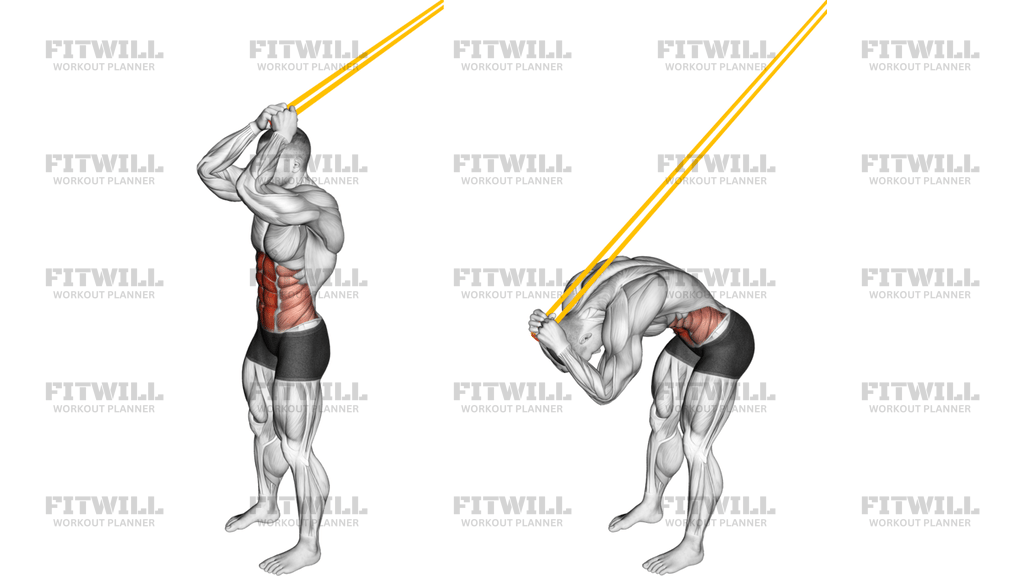
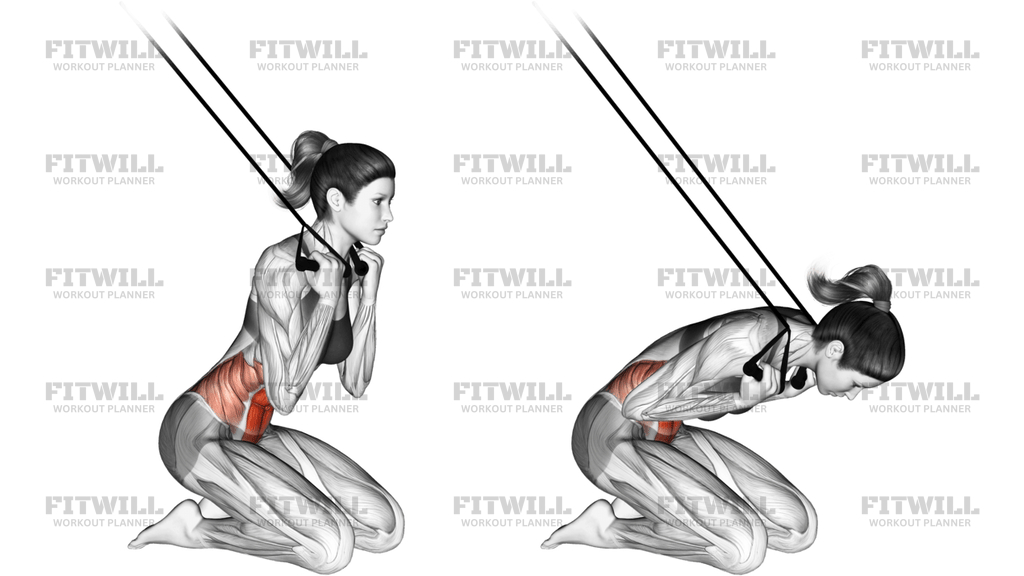
Band Kneeling Crunch is a tall-kneeling band-resisted trunk flexion exercise that loads the abs through a fixed, guided path. With the band anchored high behind you, the handles sit at the shoulders while your torso curls forward against the pull of the band. That setup makes the movement very different from a floor crunch: the resistance stays on the upper body throughout the rep, so you have to control the ribs, pelvis, and breathing instead of simply lying back and lifting.
The main target is the rectus abdominis, with the obliques and deep core helping you keep the trunk from twisting or overextending. The hip flexors will assist, especially if you let the hips drift backward or try to turn the movement into a sit-up. In practice, Band Kneeling Crunch works best when the pelvis stays stacked over the knees and the crunch comes from the torso rounding down, not from collapsing at the hips.
The setup matters more than it does for many ab exercises. Kneel on both shins, face away from the anchor, and hold the band handles beside the upper chest or shoulders so the line of pull stays high. From there, keep the ribs down, squeeze the glutes lightly if that helps you keep the pelvis stable, and begin each rep by curling the sternum toward the thighs. The finish should feel like a controlled spinal flexion, not a yank through the shoulders or neck.
This exercise is useful for lifters who want direct abdominal work with constant tension and a clear range of motion. It can fit into a core block, accessory work after heavy compounds, or conditioning circuits where you want the abs to do the work without needing a machine. Because the load is driven by band tension rather than a stack or plate, small changes in distance from the anchor can make the movement much harder or easier, which is useful for progressing or regressing the exercise.
Keep the movement smooth and repeatable. The strongest reps usually come from a short exhale as you crunch down, a brief pause near the bottom, and a controlled return to the tall-kneeling start without losing the ribcage position. If your lower back takes over, your hips drift forward, or the band starts pulling your shoulders out of alignment, the resistance is too heavy or you are standing too far from the anchor. Clean Band Kneeling Crunch reps should feel like the abs shortening and the torso folding under control.
[ Workout Log & Planner ]
Put your next workout in Fitwill
Keep your plan and training log ready when you are.


Instructions
- Anchor the band high behind you and kneel on both shins facing away from the anchor.
- Hold a handle in each hand and rest your hands beside the upper chest with your elbows tucked in.
- Stack your knees under your hips, keep your chest tall, and set your hips over your heels without sitting back.
- Brace your abs and lightly tuck your ribs down before the first rep.
- Exhale as you curl your sternum toward your thighs and let your upper back round slightly.
- Keep your hands at the shoulders while your torso folds forward against the band tension.
- Pause briefly at the bottom when your abs are fully shortened and your hips have stayed in place.
- Inhale as you slowly return to the tall-kneeling start without letting the band yank your torso backward.
- Reset your ribs over your pelvis before the next rep or step forward to release tension safely when finished.
Tips & Tricks
- Keep the anchor high enough that the band pulls mostly from above your shoulders, not from behind your waist.
- If your hips travel backward as you crunch, shorten the band distance or kneel closer to the anchor.
- Think about curling your ribs toward your pelvis instead of pulling with your arms.
- Let the upper back round a little, but do not hinge hard at the hips and turn it into a kneeling bow.
- A short exhale on the crunch helps keep the ribs down and makes the bottom position cleaner.
- Keep your chin slightly tucked so the neck stays in line with the torso instead of jutting forward.
- Use a lighter band if the handles climb upward or your shoulders start shrugging during the set.
- Pause for a split second at the bottom to remove any bounce from the band.
- Stop the set when you can no longer return to the tall-kneeling start without losing rib control.
Frequently Asked Questions
What muscle does Band Kneeling Crunch target most?
The main target is the rectus abdominis, with the obliques and deep core helping stabilize the torso.
Where should the band be anchored for Band Kneeling Crunch?
Anchor it high behind you so the pull comes from above shoulder level while you kneel facing away from the anchor.
How far should I be from the anchor point?
Start close enough that you can kneel tall and crunch without the band dragging your hips backward. If the tension feels too sharp at the start, step a little closer.
Should my hips move during Band Kneeling Crunch?
They should stay mostly stacked over your knees. A little shift is normal, but if your hips slide back a lot, the band is too heavy or you are using too much body swing.
Do I pull with my arms or my abs?
The arms just hold the handles in place. The actual movement should come from the abs curling the torso forward against the band.
Is Band Kneeling Crunch good for beginners?
Yes, as long as the band is light and the range stays controlled. Beginners should focus on keeping the ribs down and finishing each rep without yanking.
What is the most common mistake on Band Kneeling Crunch?
Letting the movement turn into a hip hinge or a shoulder pull is the biggest error. The torso should fold, but the hips should stay mostly fixed.
How should I breathe during the rep?
Exhale as you crunch down, then inhale as you return to the start under control.
Can I use this in a core finisher?
Yes. It works well in a core block or finisher when you want direct abdominal tension without needing a machine.