Band Low Fly
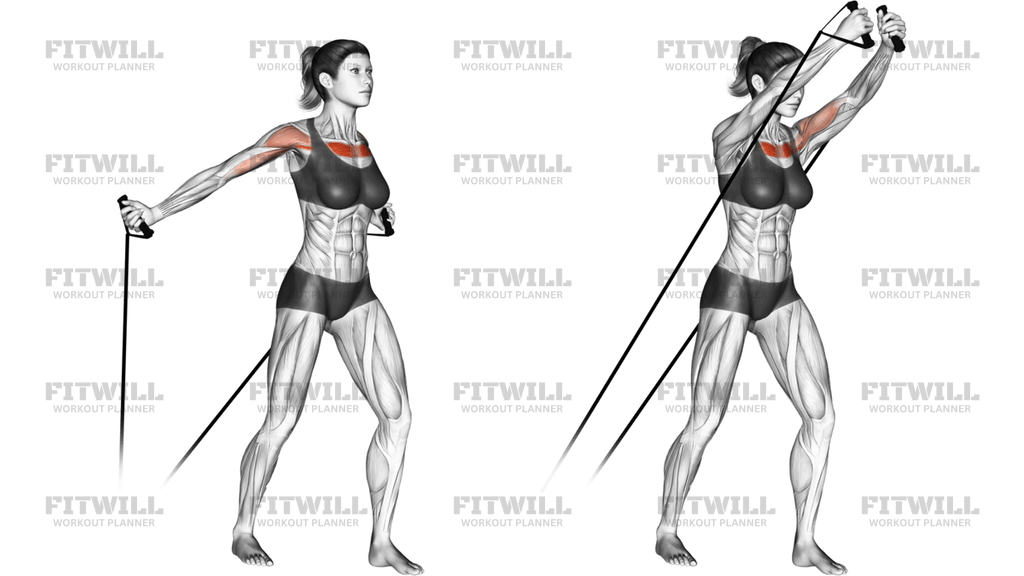
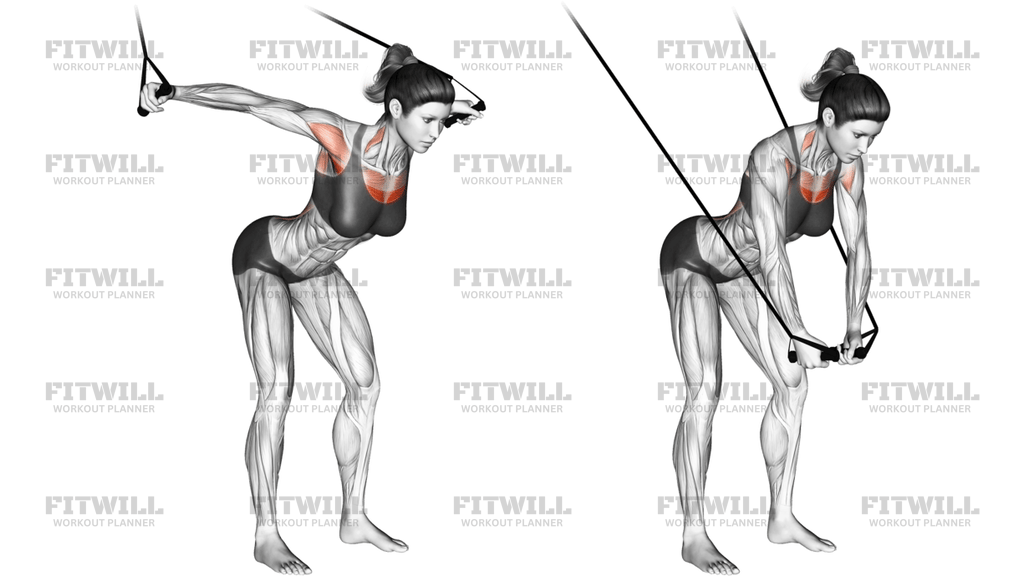
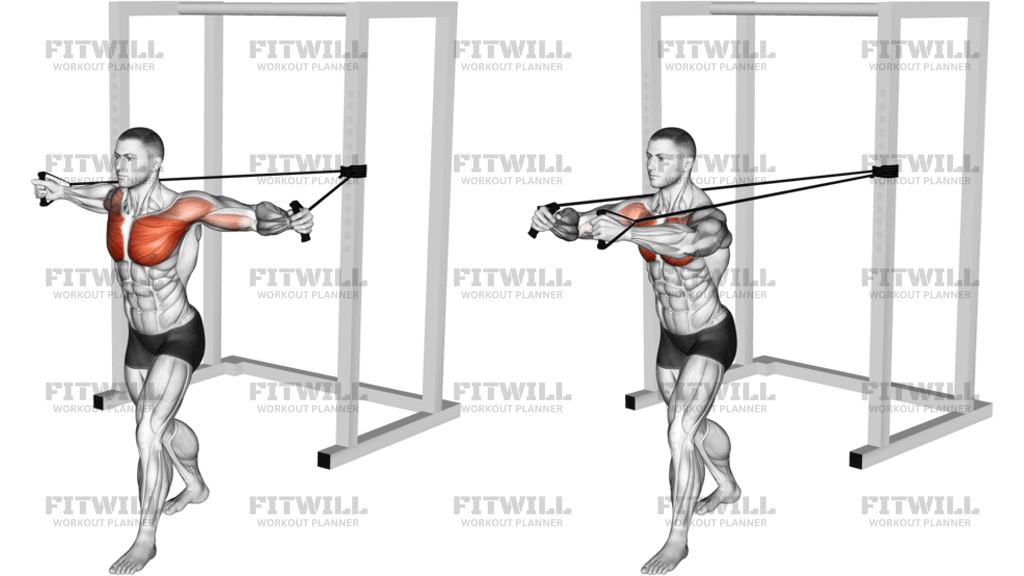
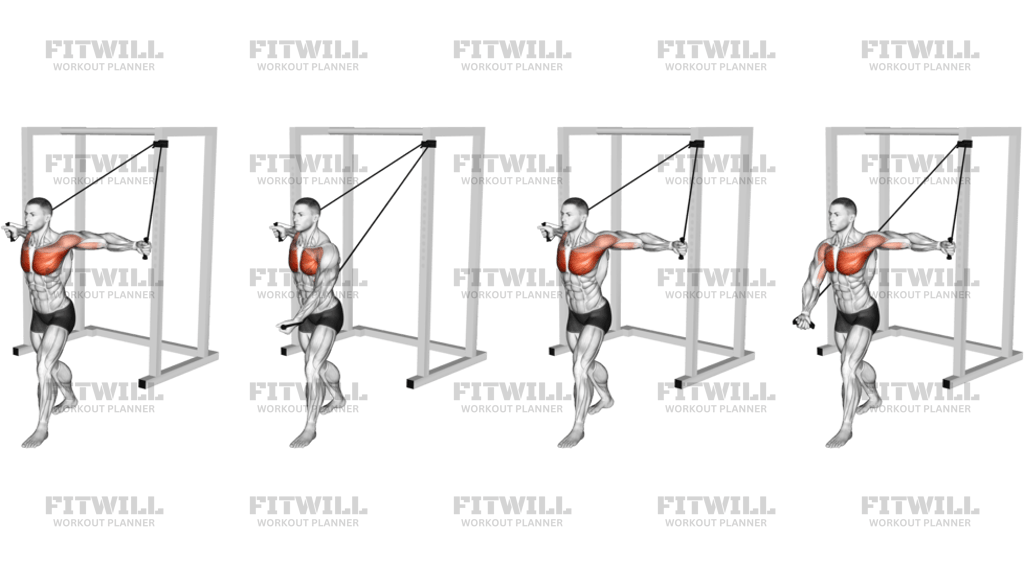
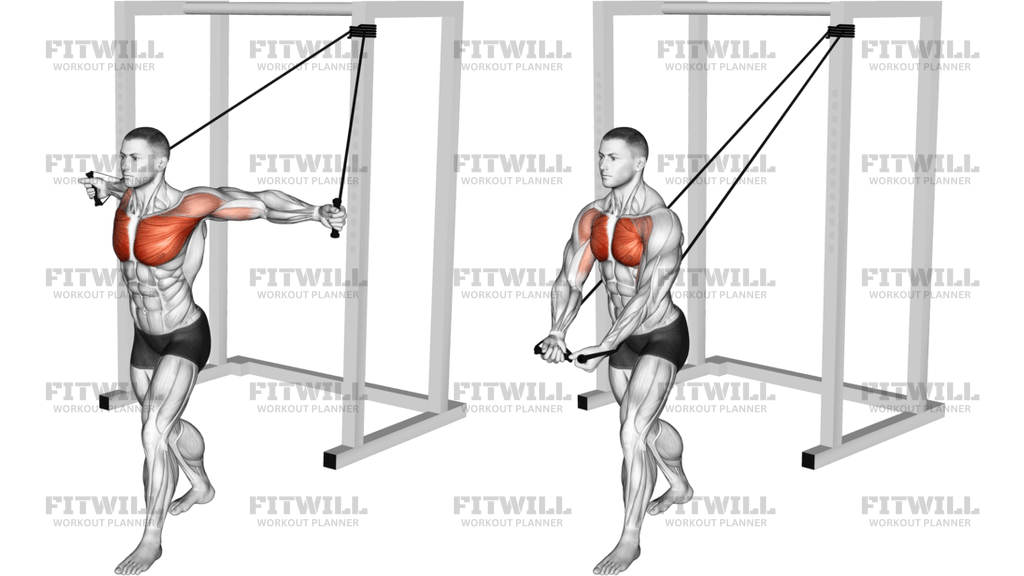
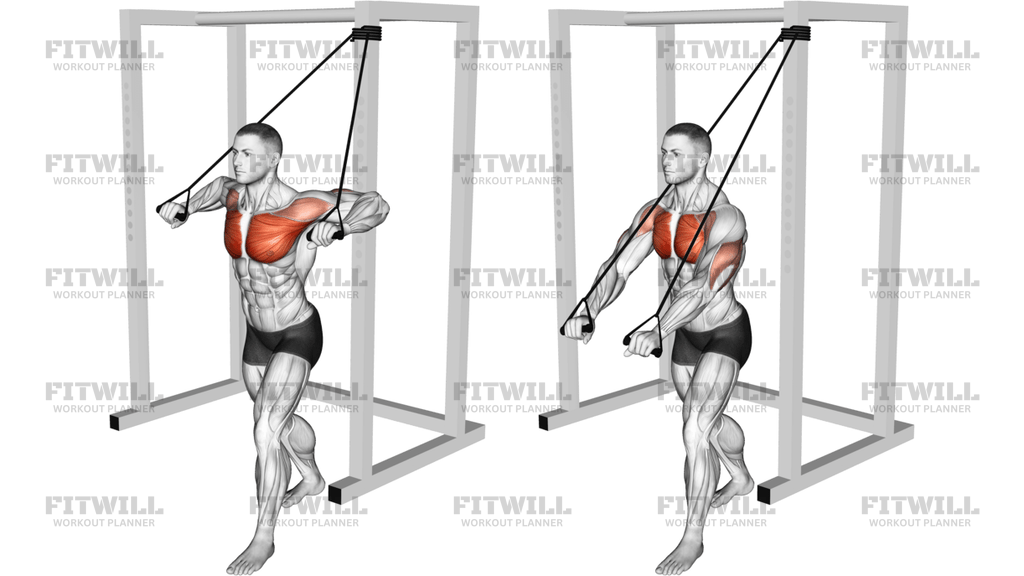
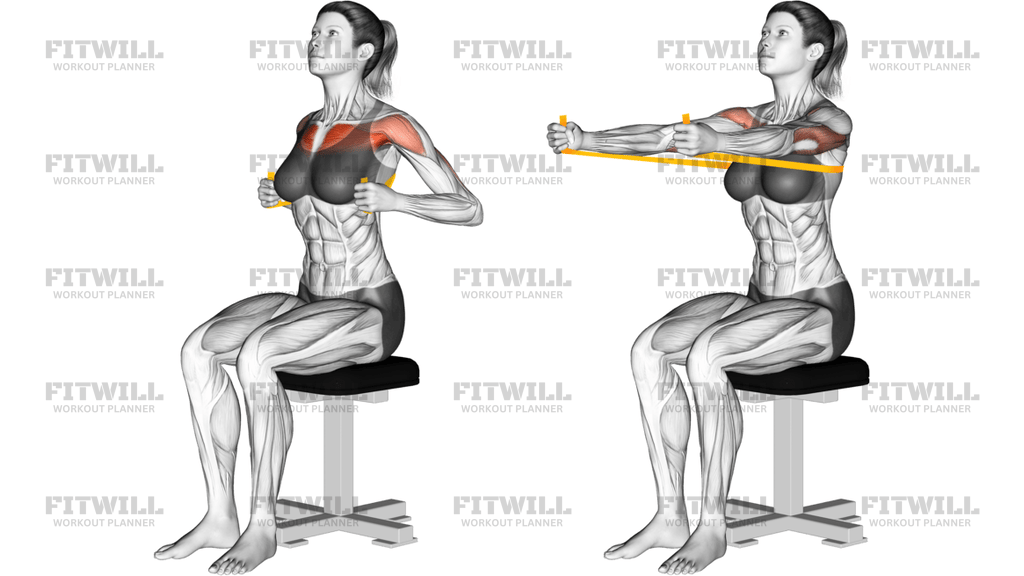
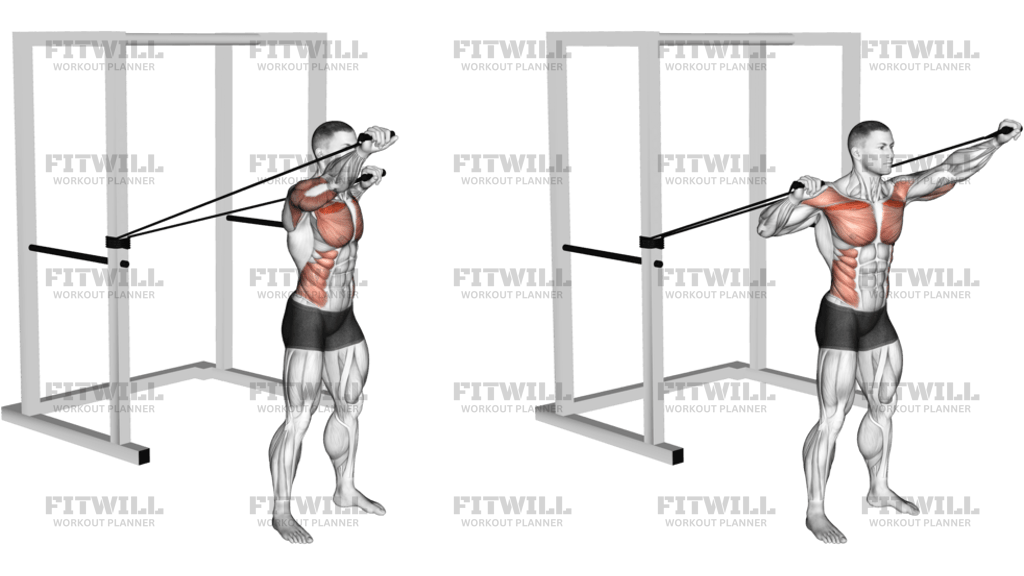
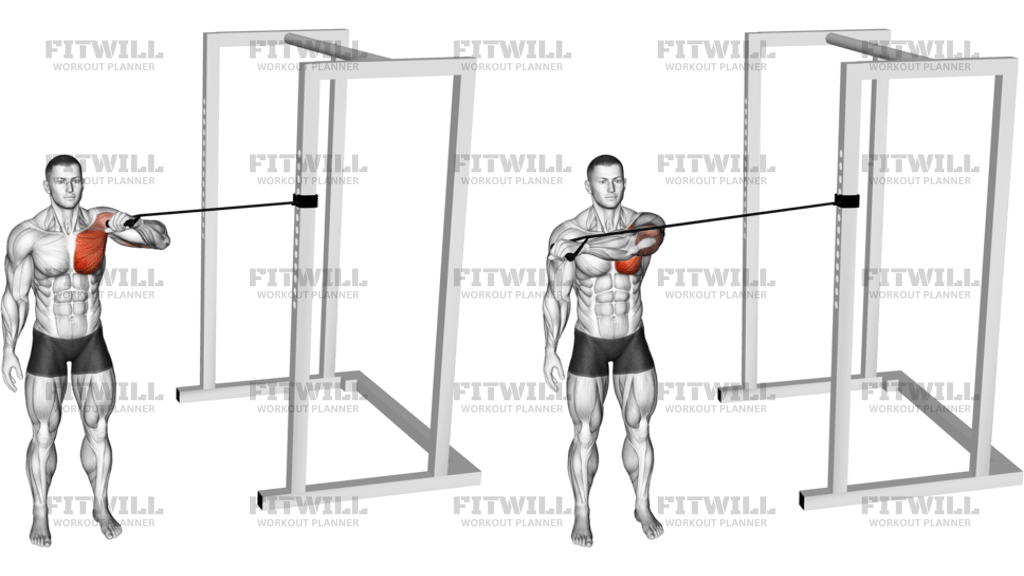
Band Low Fly is a standing low-to-high fly for the chest, using a band anchored low behind you to create a sweeping arc of tension. The movement trains horizontal adduction through a rising path, so the chest has to contract hard while the shoulders and arms help guide the band through the rep. It is a useful accessory exercise when you want chest work without heavy external loading, and it fits well in warm-ups, hypertrophy blocks, or controlled finishers.
The setup matters because the band angle determines where the resistance is highest. In the position shown, the hands start low and wide, then travel upward and inward until they finish higher in front of the body. That low-to-high line changes the feel compared with a flat fly or a press, and it helps you load the chest through the midrange and top of the movement instead of bouncing through the bottom.
A good repetition stays smooth from the first inch to the last. Keep the ribcage stacked over the pelvis, hold a soft bend in the elbows, and let the arms sweep in a wide arc rather than turning the movement into a front raise. The goal is to bring the hands together with control, squeeze briefly at the top, and then resist the band on the way back as the arms open again.
Because this is a band exercise, tension changes across the rep. That makes tempo and body position more important than brute force. If you lean back, arch excessively, or shrug your shoulders forward, the line of pull gets sloppy and the chest loses tension. Keep the neck long, the shoulders down, and the stance stable so the band does the work instead of your momentum.
Band Low Fly is also easy to scale. Use lighter resistance for warm-ups, technique practice, or shoulder-friendly chest volume, and increase band tension only when you can keep the same path and finish position. When executed well, it gives the chest a clean contraction with minimal joint stress and a very direct feel through the working range.
Fitwill
Log Workouts, Track Progress & Build Strength.
Achieve more with Fitwill: explore over 9600 exercises with images and videos, access built-in and custom workouts, perfect for both gym and home sessions, and see real results.
Start your journey. Download today!




Instructions
- Anchor the band low behind you or stand on it so the handles pull from below waist height.
- Stand in a staggered or shoulder-width stance with one foot slightly forward and your torso tall.
- Hold the handles with a slight bend in both elbows and start with your hands low and out to the sides.
- Set your shoulders down and back without pinching your shoulder blades together too hard.
- Brace your midsection and keep your ribs stacked over your pelvis before you begin the pull.
- Sweep both hands upward and inward in a wide arc until they meet in front of your upper chest or face.
- Squeeze your chest briefly at the top without shrugging or leaning back.
- Lower the handles slowly along the same arc until your arms are open and the band is under control again.
- Keep breathing steady and repeat for the planned number of reps before safely stepping off or releasing the band.
Tips & Tricks
- Keep the elbows softly bent and locked in that angle so the movement stays a fly, not a press.
- Think about bringing your biceps together in front of you, which helps the chest finish the rep instead of the hands drifting apart.
- If the band starts too heavy at the bottom, shorten the range slightly or use a lighter band so the first inch stays smooth.
- Avoid letting your shoulders creep toward your ears during the upward sweep; that usually shifts tension away from the chest.
- A slight forward stagger helps you stay balanced when the band gets tight near the top of the arc.
- Keep your chest tall, but do not overarch your lower back to fake a bigger finish position.
- Lower the handles at the same speed you lifted them, because the eccentric phase is where the band can pull you out of position.
- Choose a band tension that lets you pause cleanly at the top without fighting to keep your wrists aligned.
- If you feel the front of the shoulder taking over, reduce the height of the finish and keep the path lower and more chest-driven.
Frequently Asked Questions
What does Band Low Fly train most?
It mainly trains the chest, especially the pectoralis major, through a low-to-high adduction path.
Why is the band anchored low?
A low anchor changes the resistance angle so the arms finish higher, which shifts the emphasis toward the upper part of the chest-fly arc.
Should my elbows stay bent during Band Low Fly?
Yes. Keep a small, fixed elbow bend so the movement stays a fly and not a straight-arm shoulder raise.
How high should my hands come up?
Finish where you can keep your ribs down and shoulders relaxed, usually in front of the upper chest or face rather than behind your head.
What is the most common mistake with this exercise?
Most people shrug, lean back, or turn it into a front raise, which reduces chest tension and makes the rep less controlled.
Is Band Low Fly good for beginners?
Yes, if the band is light enough to control the first part of the rep and the shoulders stay in a comfortable position.
Can I use this as a warm-up before pressing?
Yes. Light resistance and short, controlled sets work well to prime the chest without fatiguing the shoulders.
How can I make the exercise harder without changing the form?
Use a thicker band, step farther from the anchor, or add a pause at the top while keeping the same arm path.