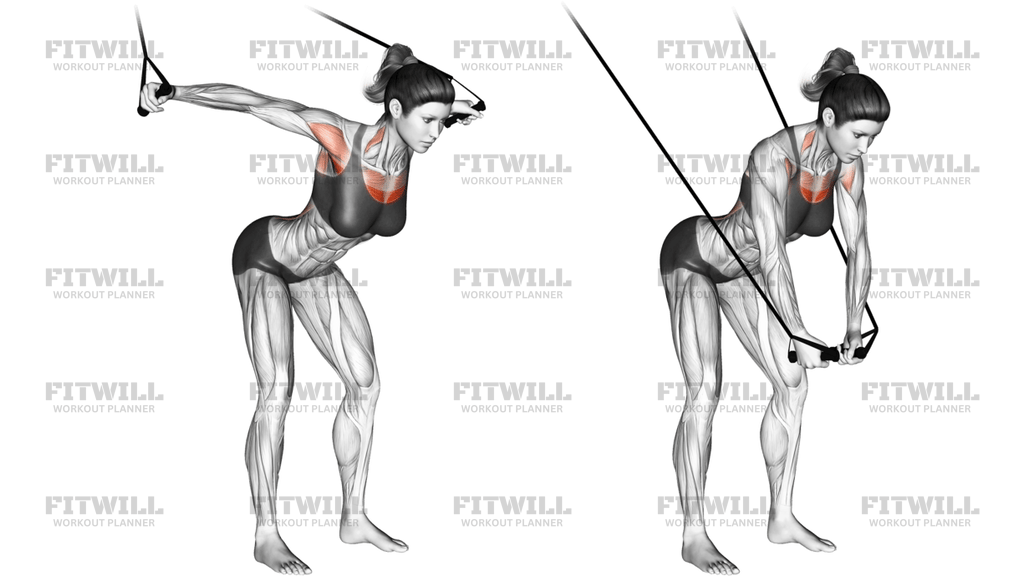
Band Middle Fly
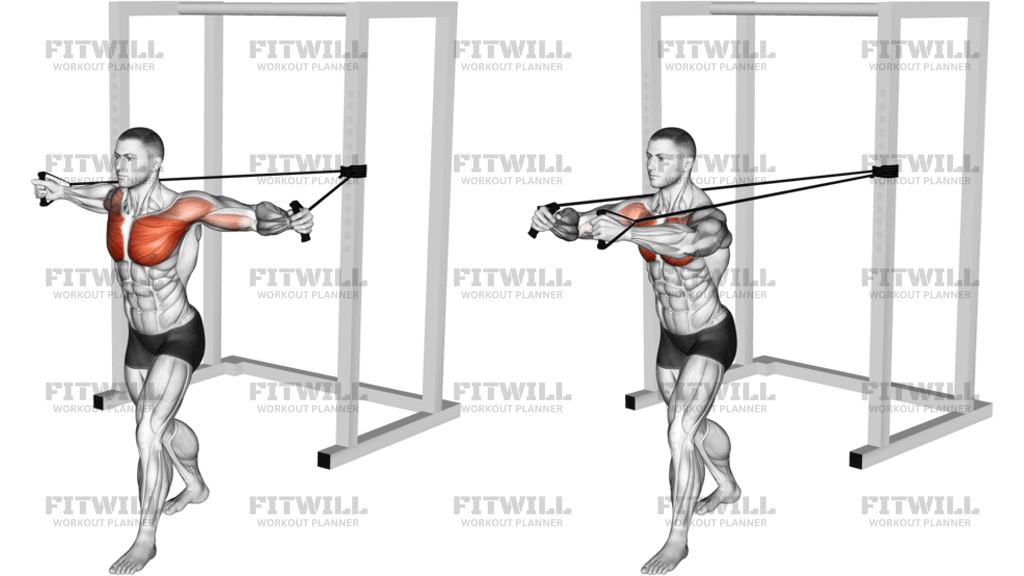
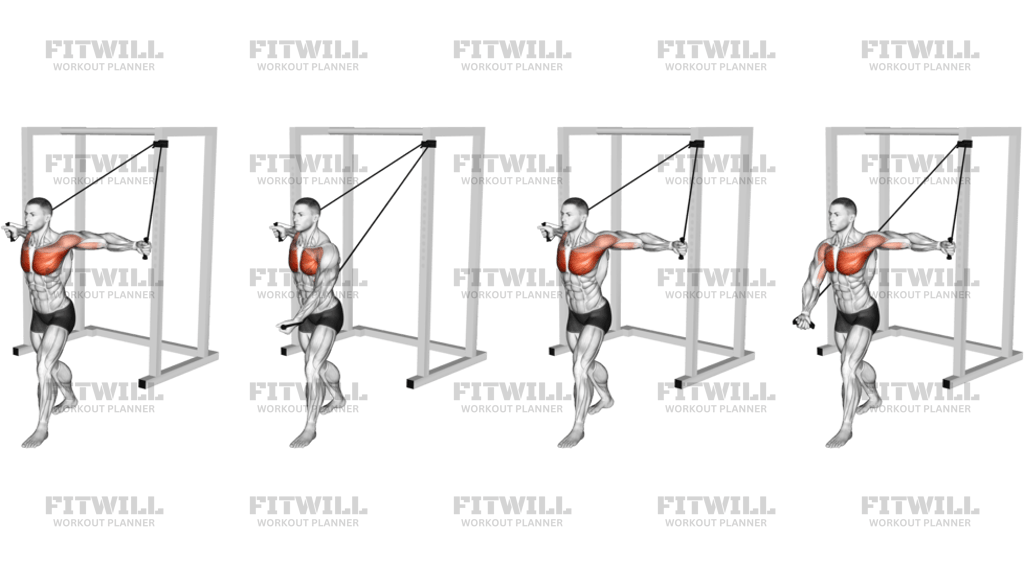
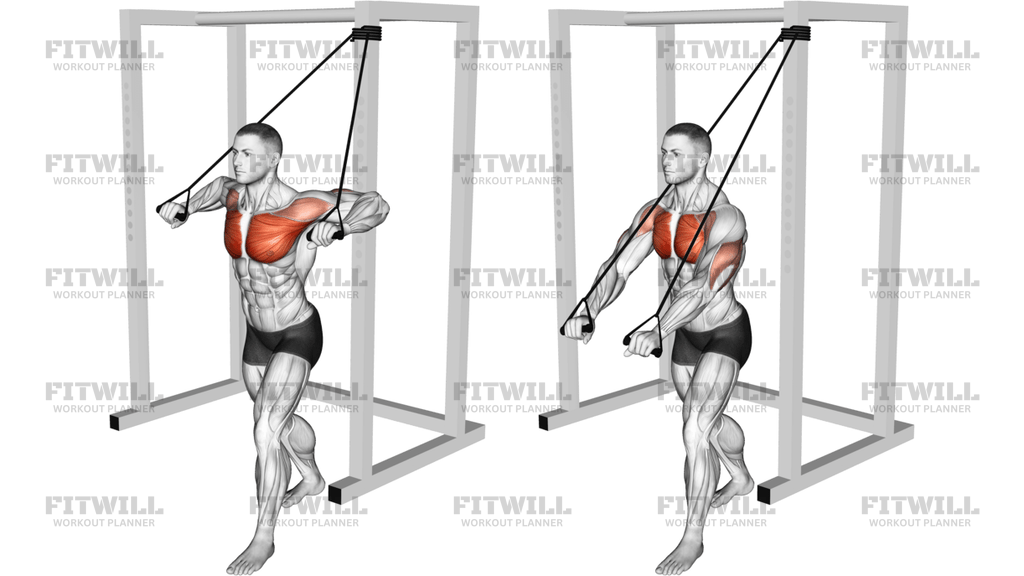
Band Middle Fly is a standing chest fly that keeps constant tension on the pecs through the whole repetition. With the band anchored behind you at about chest height, the exercise trains horizontal adduction of the arms, which is the main job of the pectoralis major. It is useful when you want chest work without relying on heavy pressing, or when you need a controlled accessory movement that lets you stay honest about range, posture, and scapular position.
The setup matters because the band changes tension as you move. A split stance gives you a steadier base, and a slight bend in the elbows helps you keep the movement in the chest instead of turning it into a front-shoulder raise. The shoulders should stay down and slightly back, the ribs should stay controlled, and the hands should travel in a wide arc rather than drifting upward or crossing aggressively in front of the face.
Band Middle Fly is not about loading the heaviest resistance you can find. It works best when the start position opens the chest without yanking the shoulders forward and the finish position brings the hands together with a deliberate squeeze across the middle of the chest. The anterior deltoids and triceps assist, while the core keeps the torso from rotating or leaning into the band. That makes the movement a good match for accessory chest work, warmups, upper-body circuits, or higher-rep hypertrophy sets.
Clean reps matter more than distance. If the band pulls you off balance, shorten the range, step a little closer or farther from the anchor, or reduce resistance until you can open and close the arms without shrugging. The return should stay smooth and controlled so the chest stays under tension instead of snapping back. Done well, Band Middle Fly is a simple way to build chest awareness, pressing stability, and repeated tension in a low-impact standing position.
[ Workout Log & Planner ]
Put your next workout in Fitwill
Keep your plan and training log ready when you are.


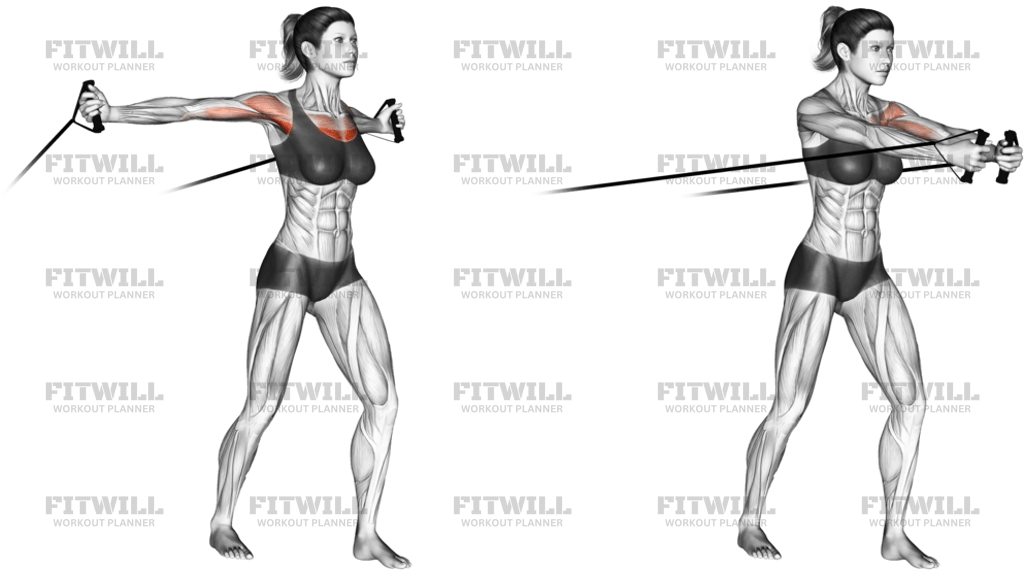
Instructions
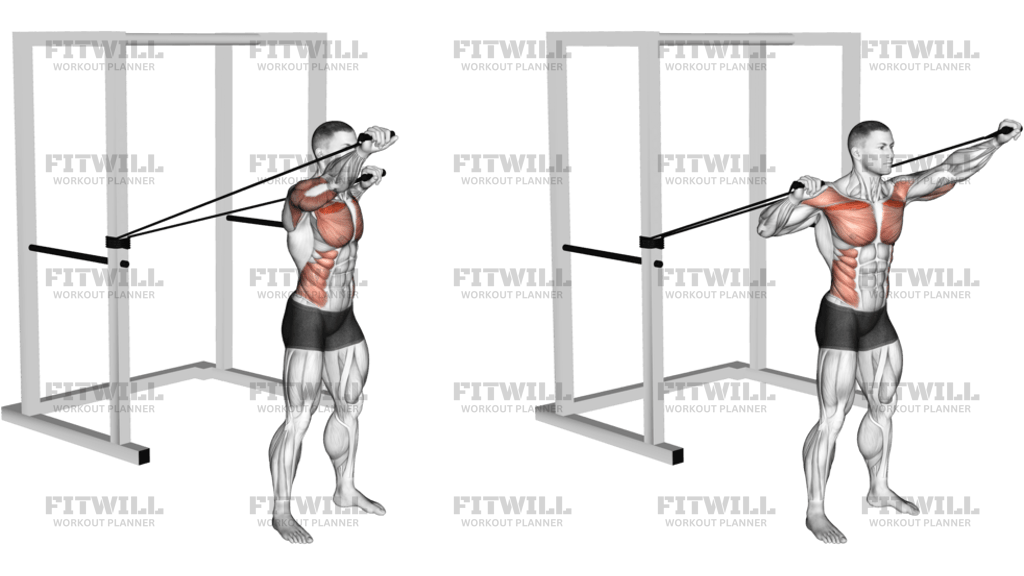
- Anchor the band behind you at roughly chest height and stand facing away from the anchor point.
- Take a staggered stance with one foot slightly in front of the other so your torso stays steady.
- Hold a handle in each hand with your arms out to the sides, elbows softly bent, and palms facing inward.
- Set your chest tall, keep your ribs stacked over your hips, and let your shoulders stay down instead of creeping toward your ears.
- Take a breath in and brace lightly before you start the first rep.
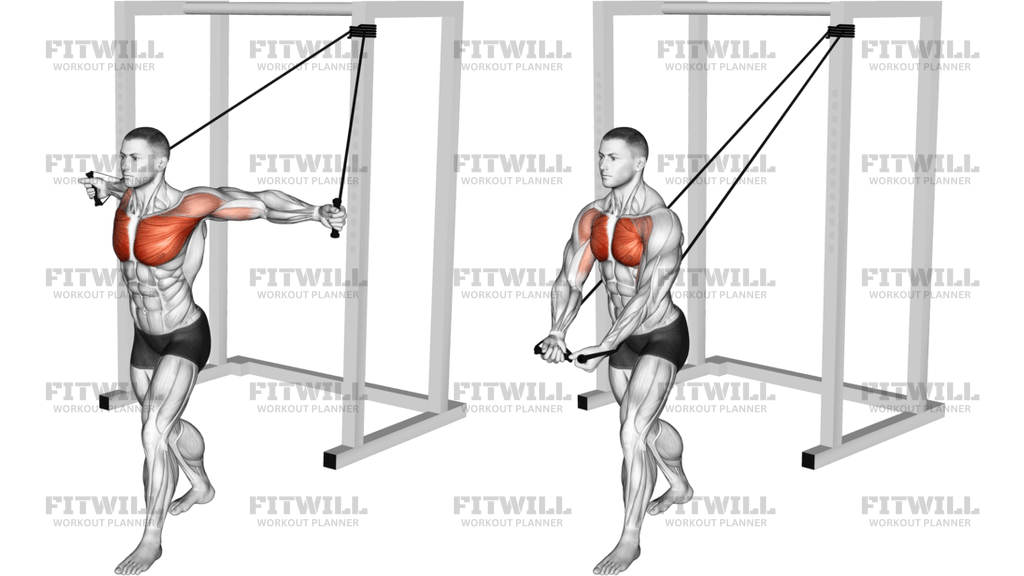
- Sweep both hands forward in a wide arc until they meet in front of your chest.
- Squeeze your pecs for a brief moment without locking out your elbows or leaning into the band.
- Inhale as you open your arms back out with control until you feel the chest stretch and the band tension settles.
- Reset your stance before the next rep if the band starts pulling your torso forward or twisting you around.
Tips & Tricks
- Keep the band anchored at chest height so the fly line stays in the middle of the pecs instead of drifting into a low press or high raise.
- Use a split stance if the band tries to pull you forward; it is easier to resist rotation than with feet together.
- Hold the elbow angle nearly fixed through the whole rep so the movement stays a fly and not a triceps extension.
- Stop the return when your upper arms are just behind your torso; forcing a bigger stretch can dump stress into the front of the shoulder.
- Think about bringing your biceps together around a barrel, not just touching your hands in front of your chest.
- Keep your shoulders low during the squeeze; shrugging usually shifts work away from the pecs.
- Use a slower return than press-out speed so the band never snaps your arms open.
- If your lower back arches, bring your front foot a little farther forward and keep the ribs down.
- Choose resistance that lets you finish every rep with the same chest position, not one that turns the last reps into a body swing.
Frequently Asked Questions
What muscle does Band Middle Fly target most?
The main target is the pectoralis major, especially the middle and inner chest feel created by bringing the arms together in front of the body.
Why is the band anchored at chest height for Band Middle Fly?
A chest-height anchor keeps the pull line aligned with horizontal adduction, which lets the chest work without turning the movement into a low press or a shoulder-dominant lift.
Should my elbows stay bent during Band Middle Fly?
Yes. Keep a soft, mostly fixed bend so the arms travel like a fly and the triceps do not take over the motion.
How far back should I let my arms open on Band Middle Fly?
Open only until you feel a chest stretch and can still keep your shoulders down and your torso still. If the band pulls your shoulders forward, shorten the range.
Is Band Middle Fly good for beginners?
Yes, if the band is light and the range is controlled. It is a useful way to learn chest tension without needing a heavy bench press setup.
What is the most common mistake in Band Middle Fly?
Letting the shoulders shrug or the torso rotate to finish the rep is the biggest issue. The hands should move, not the whole body.
How much resistance should I use for Band Middle Fly?
Use a band that lets you close the arms smoothly for every rep without snapping back on the return or losing the chest position.
Can I change the angle to hit the chest differently?
Yes. A slightly higher or lower anchor changes the line of pull, but the classic chest-height setup is the most direct version of Band Middle Fly.