Band Twist Down-Up
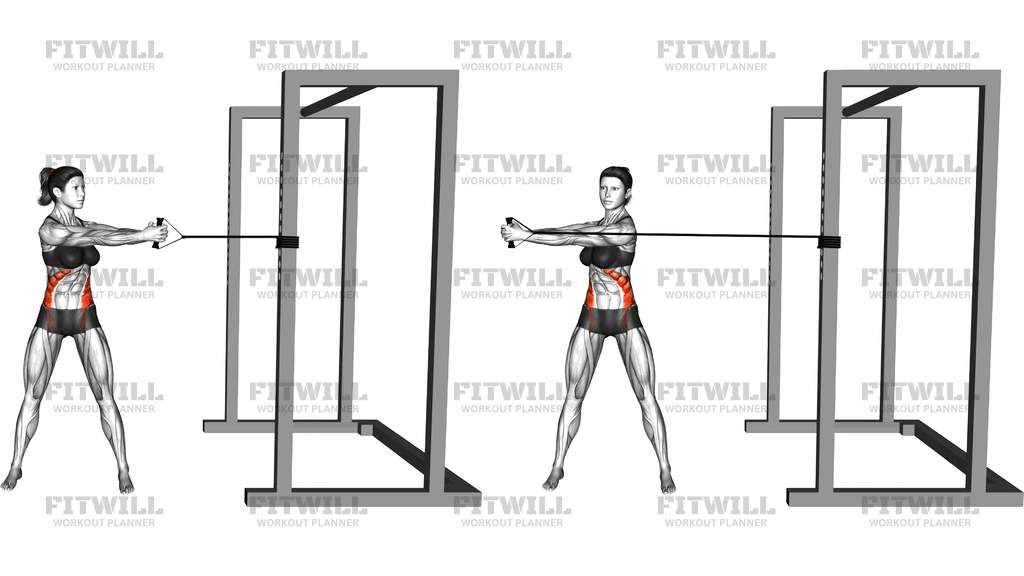
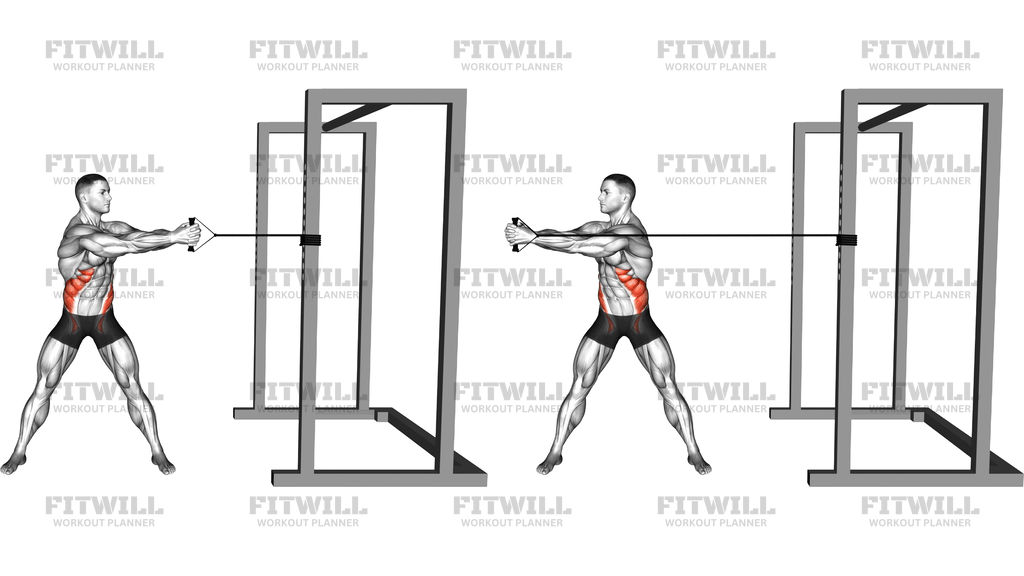
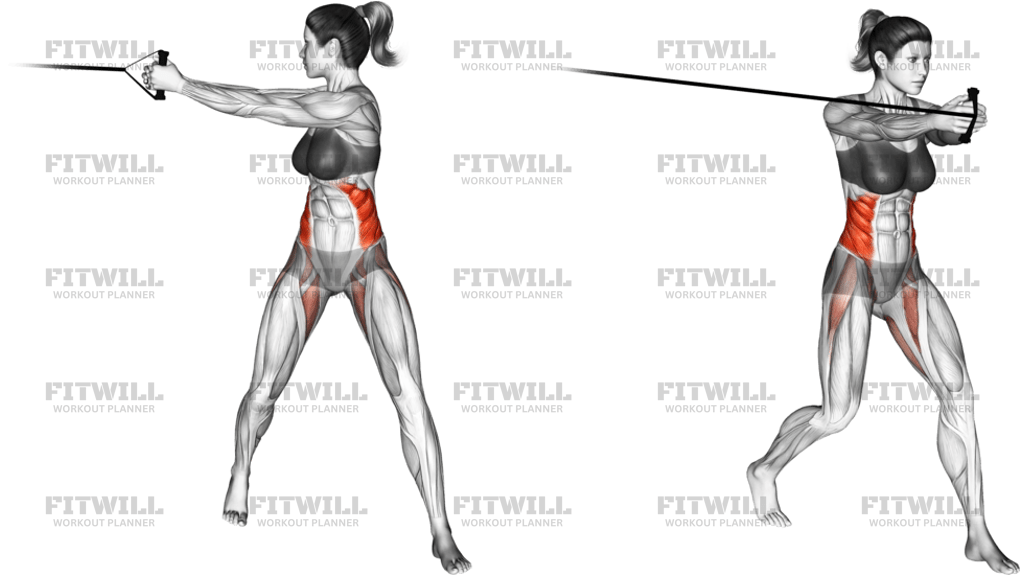
Band Twist Down-Up is a low-to-high diagonal band chop that trains the trunk to rotate and brace while the hips and legs help carry force through a longer range. The exercise is usually performed from a lowered, half-kneeling or lunge-like start and finished in a tall, extended position, so the band line, stance, and body angle matter as much as the pull itself.
This movement strongly emphasizes the obliques, with the abs and deeper core muscles helping resist unwanted extension and side-bending. The hips and lower body also contribute as you drive from the floor into the finish, which makes it useful for athletes and general lifters who need coordinated rotation rather than isolated crunching. In anatomy terms, the main work centers on the External obliques, with help from Rectus abdominis, Erector spinae, and Transversus abdominis.
The setup should place you slightly side-on to the anchor so the band travels from low and across the body to high and away from the anchor. Start with enough distance that the band is already under tension, then organize your ribs over your pelvis before you pull. If the torso collapses forward or the shoulders shrug, the rep turns into an arm-dominant swing instead of a controlled trunk drill.
On each repetition, sweep the band diagonally upward while the torso rotates as one unit and the hips extend into the finish. The goal is a smooth, forceful path from the lowered position to the tall position, not a jerky yank. Let the return happen under control so the obliques can resist the pull on the way back down, and keep breathing coordinated with the effort rather than holding your breath through the whole set.
Use Band Twist Down-Up when you want rotational core work that also teaches bracing through a transition from low to high. It fits well in warm-ups, accessory blocks, athletic core sessions, and cable-or-band replacements when you want a joint-friendly diagonal chop. Keep the range pain-free, choose resistance you can control without twisting through the low back, and stop the set before your posture or anchor position starts to drift.
[ Workout Log & Planner ]
Put your next workout in Fitwill
Keep your plan and training log ready when you are.


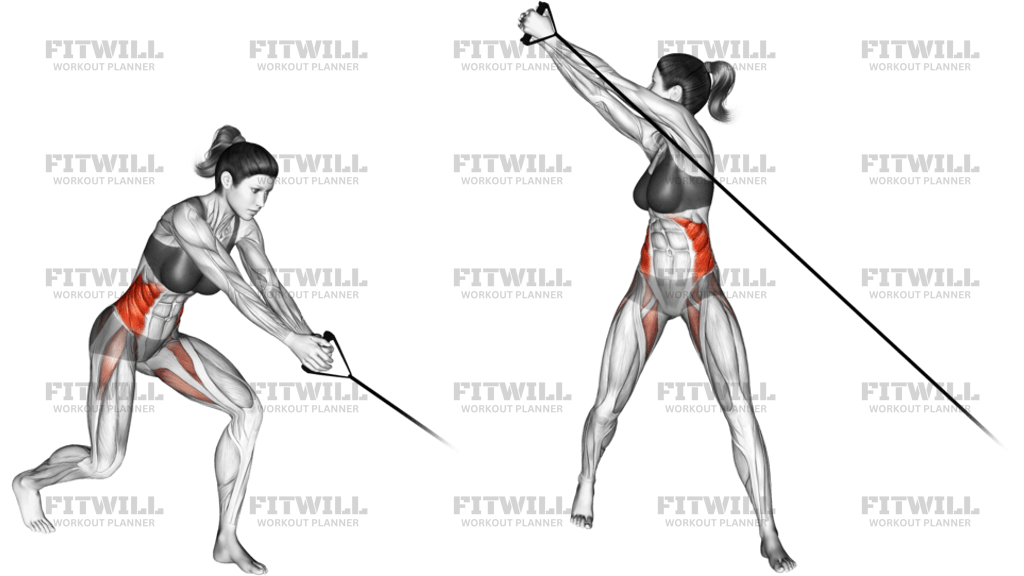
Instructions
- Stand or half-kneel side-on to the band anchor with the band starting low and slightly across the body.
- Grip the band with both hands and set your stance so the anchor-side hip and shoulder are ready to load the start position.
- Keep your ribs stacked over your pelvis, soften your knees if standing, and brace before the pull begins.
- Pull the band diagonally upward and across the body, letting the torso and hips rise together instead of yanking with the arms.
- Finish tall with the hands high and the trunk rotated toward the top of the chop path without overextending the lower back.
- Squeeze briefly at the top while keeping the neck long and the shoulders down away from the ears.
- Return the band along the same diagonal path under control until you are back in the lowered start position.
- Reset your brace, breathe, and repeat for the planned reps before switching sides.
Tips & Tricks
- Pick a band that lets you finish tall without being pulled off balance at the top.
- If you are half-kneeling, keep the front foot planted and avoid sliding the rear knee as you rise.
- Let the band path stay diagonal; turning it into a straight arm raise removes the twist challenge.
- Keep the torso from collapsing forward on the way down or you will dump the work into the low back.
- Exhale through the upward chop so the ribs do not flare as the hands travel overhead.
- Use the hips to help you stand, but do not arch back to fake a bigger finish position.
- Hold the band with relaxed hands and think about moving the ribcage, not just the wrists.
- Slow the return phase so the obliques have to resist the band instead of snapping back to the start.
Frequently Asked Questions
What muscles does Band Twist Down-Up target most?
The main target is the obliques, with the abs, deeper core, hips, and lower back helping stabilize the movement.
Should I start this in a kneeling or standing position?
Either can work, but the image shows a lowered start that rises into a tall finish, so a half-kneeling or low lunge setup matches the movement best.
Where should the band anchor be for this exercise?
The band should be anchored low so you can pull on a low-to-high diagonal across the body.
Do my arms do most of the work in the twist?
No. The arms guide the band, but the trunk and hips should drive the diagonal path and control the return.
How do I know if the resistance is too heavy?
If you have to lean back, shrug, or lose the diagonal path to finish the rep, the band is too heavy.
What is the biggest form mistake with band chops like this?
Most mistakes come from over-rotating the low back or turning the movement into a fast arm swing instead of a controlled chop.
Is this exercise more for strength or conditioning?
It can serve both, but it is especially useful for core strength, trunk control, and athletic rotation work.
What should I feel at the top of the repetition?
You should feel the obliques and upper trunk working as you finish tall, not a hard pinch in the lower back.