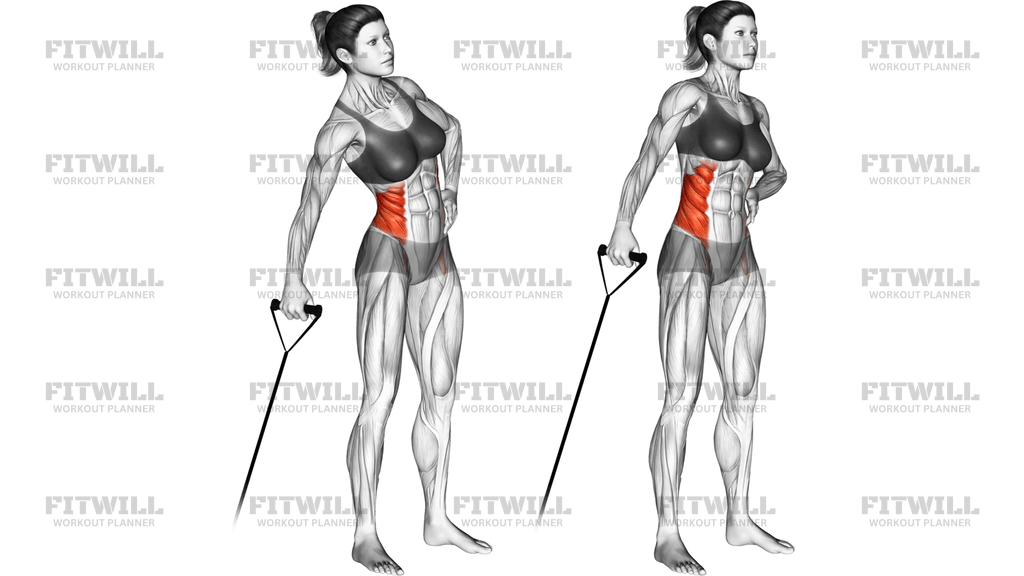
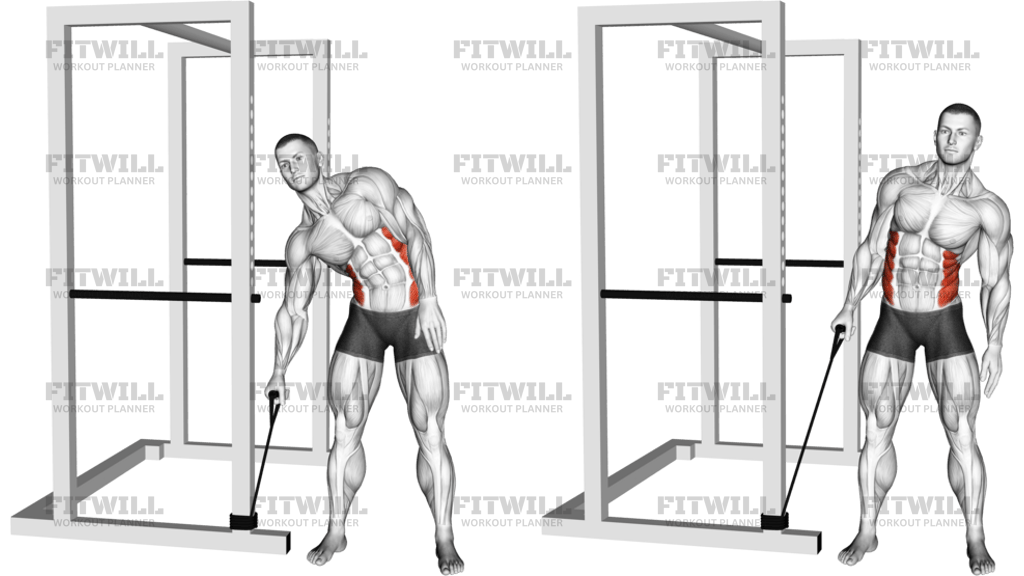
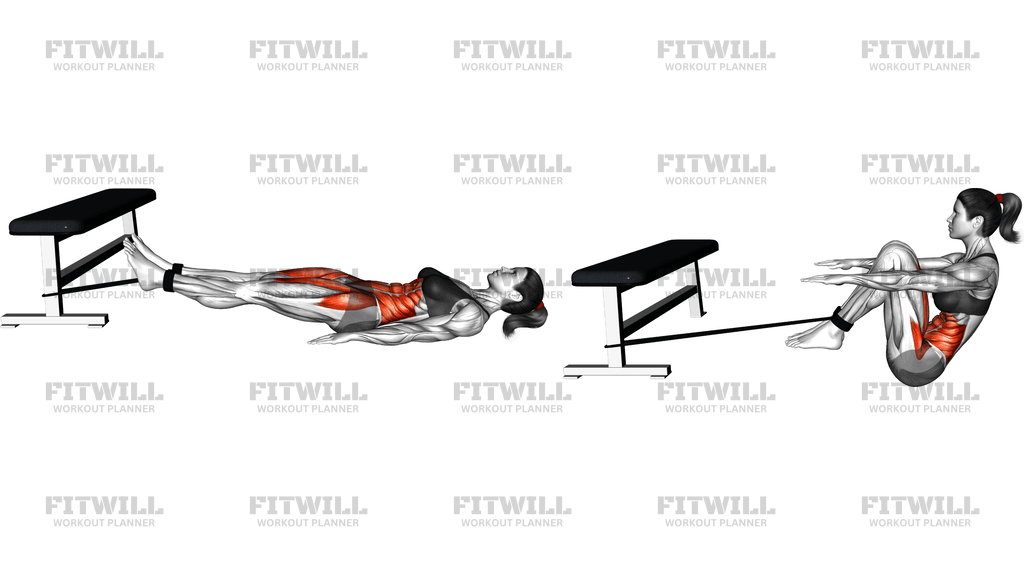
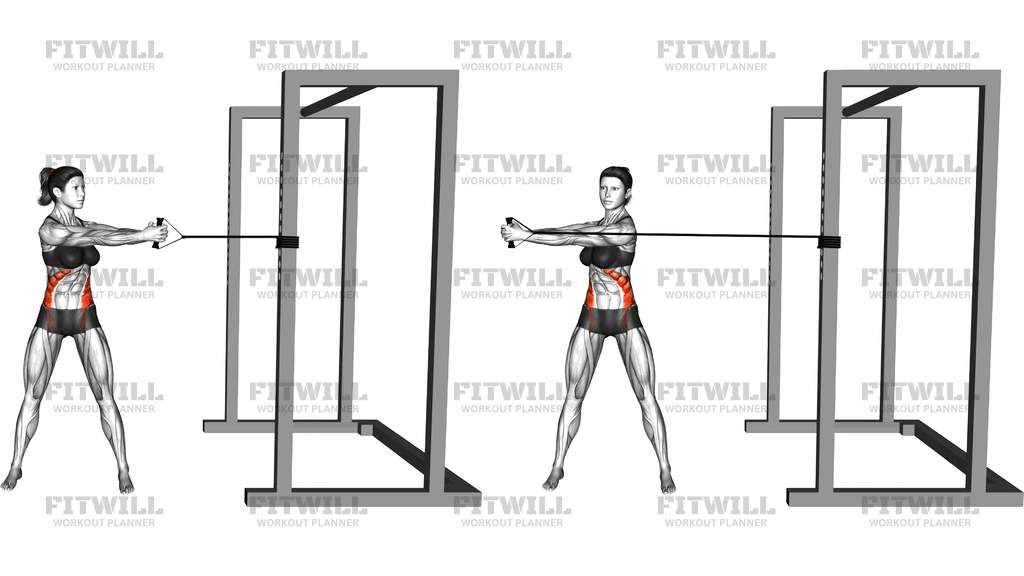
Bar Band Standing Side Bend
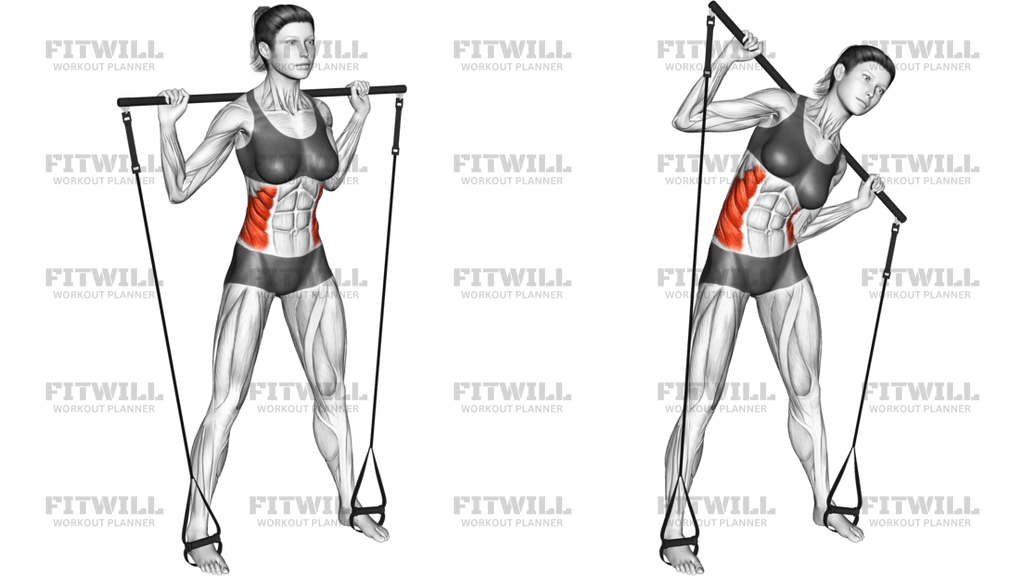
Bar Band Standing Side Bend is a standing lateral-flexion exercise for the obliques, waist, and trunk stabilizers. The bar rests across the upper back while the bands run under the feet, so the movement is loaded from the shoulders down rather than from the hands alone. That setup matters because it keeps the torso honest: if you twist, lean forward, or rush the rep, the bar and band make the loss of position obvious.
The main work comes from the external obliques, with the rectus abdominis, transverse abdominis, and spinal erectors helping you stay stacked as you bend and return. You should feel one side of the waist shorten while the opposite side controls the descent and then brings you back to tall. This makes the exercise useful for athletes and lifters who want better side-to-side trunk control without the heavy spinal compression of loaded carries or barbell side bends.
Set the bar across the upper traps, not on the neck, and stand with your feet about hip-width apart on the band. Keep the knees soft, the ribs stacked over the pelvis, and the hips square to the front before the first rep. The cleanest reps come from a quiet lower body and a torso that moves in one plane. If the shoulders hike, the pelvis drifts, or the chest turns, the range is too big or the band is too heavy.
Lower only as far as you can while keeping the bar centered and the neck relaxed, then exhale and return to tall with control. The return should feel like the obliques pulling the ribcage back over the pelvis, not like a bounce out of the bottom. Use this exercise for controlled accessory work, core training, or a trunk-focused warm-up, and keep the resistance light enough that each rep looks the same from the first to the last.
[ Workout Log & Planner ]
Put your next workout in Fitwill
Keep your plan and training log ready when you are.


Instructions
- Stand on the middle of the band with your feet about hip-width apart, then rest the bar across your upper back just below the base of the neck.
- Grip the bar just outside shoulder width and keep your elbows slightly out so the bar stays anchored across the traps.
- Unlock your knees, stack your ribs over your pelvis, and keep both feet flat before you start the first rep.
- Brace your midsection, then bend your torso slowly to one side without letting the chest rotate forward or back.
- Keep both hips facing straight ahead and let the movement happen through the waist, not by shifting your weight to one leg.
- Lower only as far as you can while the bar stays centered and the neck stays long and relaxed.
- Exhale and drive back to tall by pulling the ribcage over the pelvis with the obliques, not by jerking with the arms.
- Finish all reps on one side, then switch sides if your program calls for both directions.
- Set the bar down and step off the band before releasing tension at the end of the set.
Tips & Tricks
- Keep the bar on the upper traps, not on the cervical spine, so the neck does not take the load.
- A small, clean side bend is better than a big lean that turns the exercise into a hip shift.
- If your shoulders start to hike, reduce the range and lighten the band tension.
- Keep the chin slightly tucked so the head does not chase the torso during the rep.
- Move down slowly and let the return feel like a controlled pull from the side waist.
- Both feet should stay planted; if one heel pops up, the stance is too narrow or the load is too heavy.
- Use the same tempo on every rep so the band does not snap you back to center.
- Stop the set when the lower back starts doing the work that should belong to the obliques.
Frequently Asked Questions
What muscles does Bar Band Standing Side Bend train?
It targets the obliques most directly, with the rectus abdominis, transverse abdominis, and spinal erectors helping stabilize the torso.
Where should the bar sit during the exercise?
The bar should rest across the upper traps and upper back, not on the neck, so the shoulders can stay level.
Should my hips move when I bend to the side?
No. Keep the hips square and let the torso side-bend without shifting your weight or twisting the chest.
Can beginners do this movement?
Yes, as long as the band tension is light and the side bend stays small and controlled.
How heavy should the band tension be?
Use a tension that lets you return to tall without jerking or leaning into the opposite side.
What is the most common mistake with this exercise?
Most people either twist the torso or use too much range, which turns the side bend into a sloppy hip shift.
Do I train one side at a time or both sides?
Most programs use equal reps on each side so the obliques stay balanced.
How can I make Bar Band Standing Side Bend harder without cheating?
Slow the lowering phase, pause briefly at the bottom, or increase band tension only if you can keep the bar and hips steady.