Band Twist Up-Down
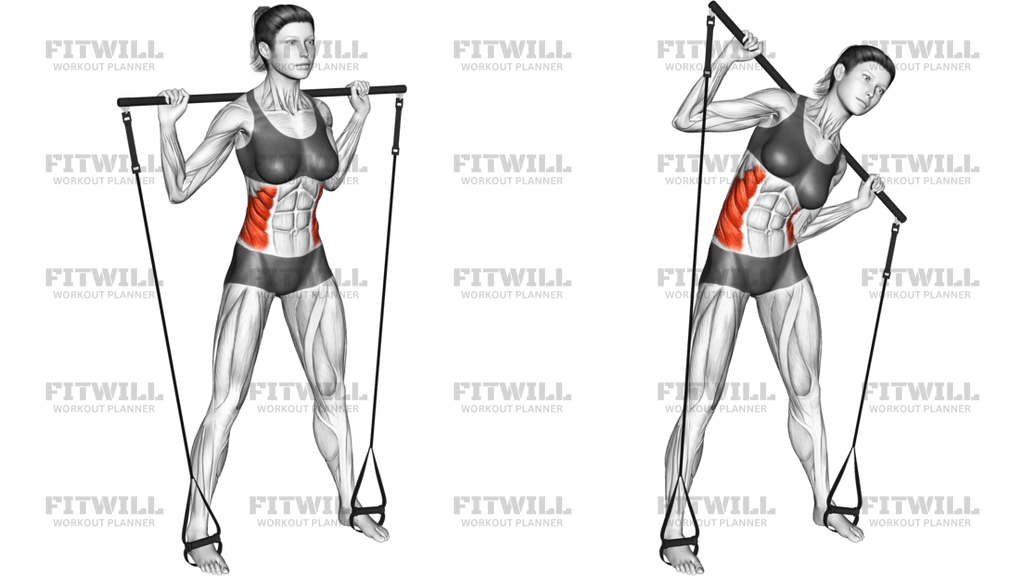
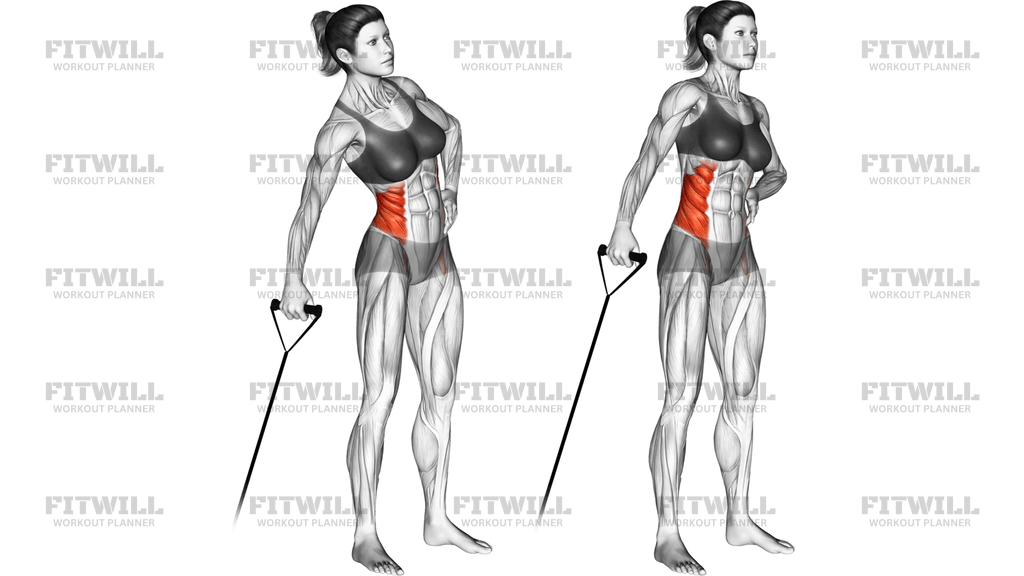
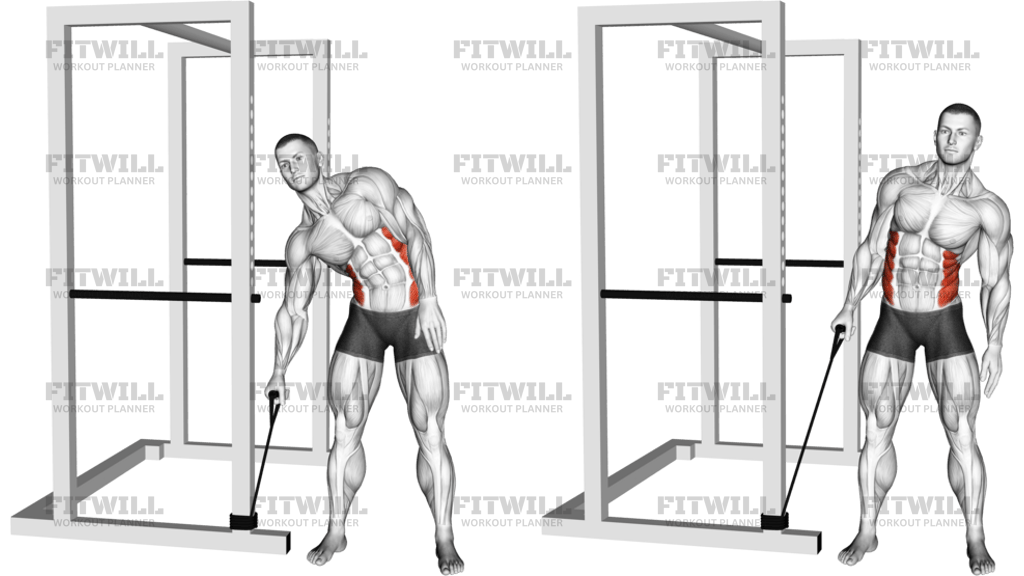
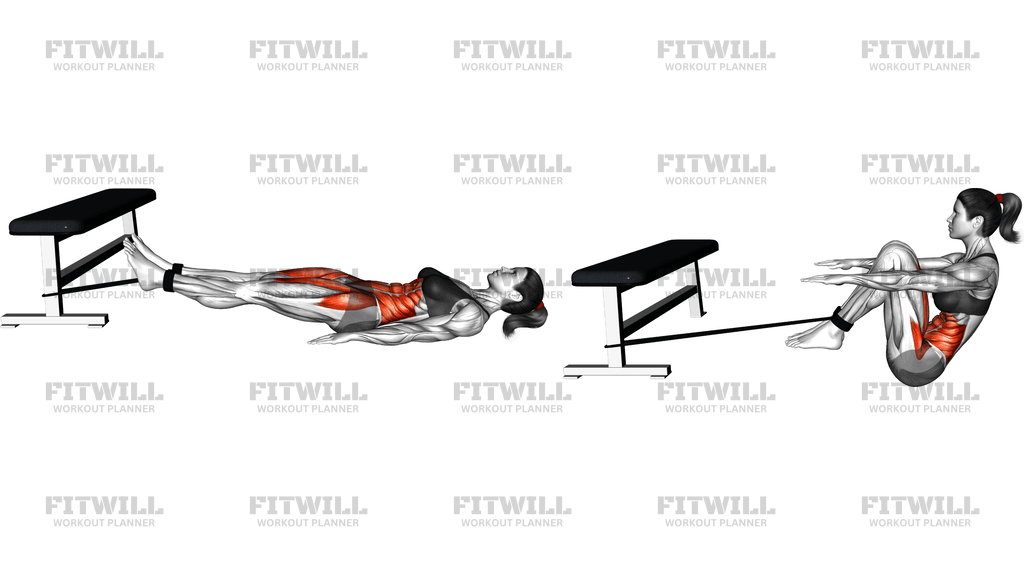
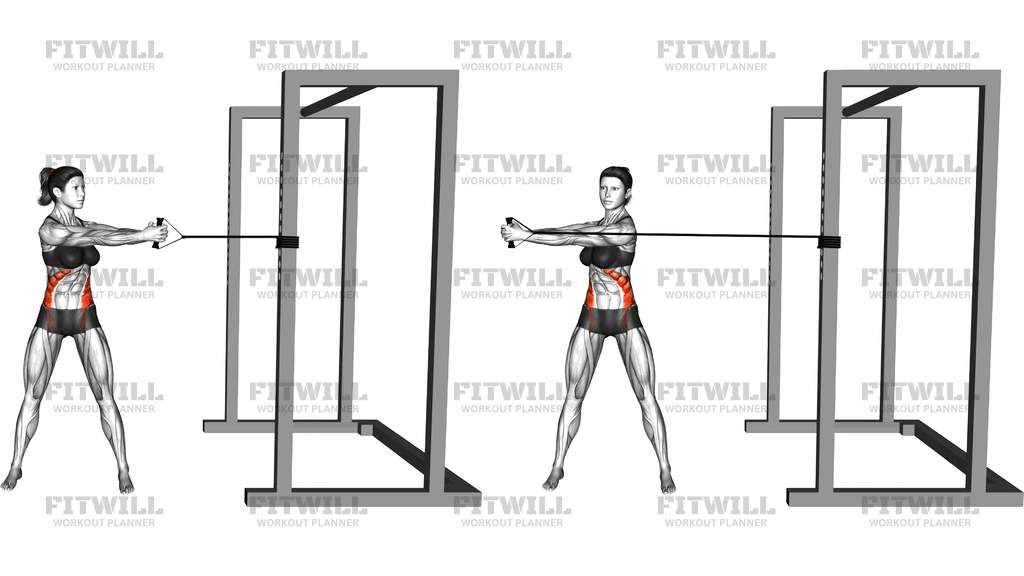
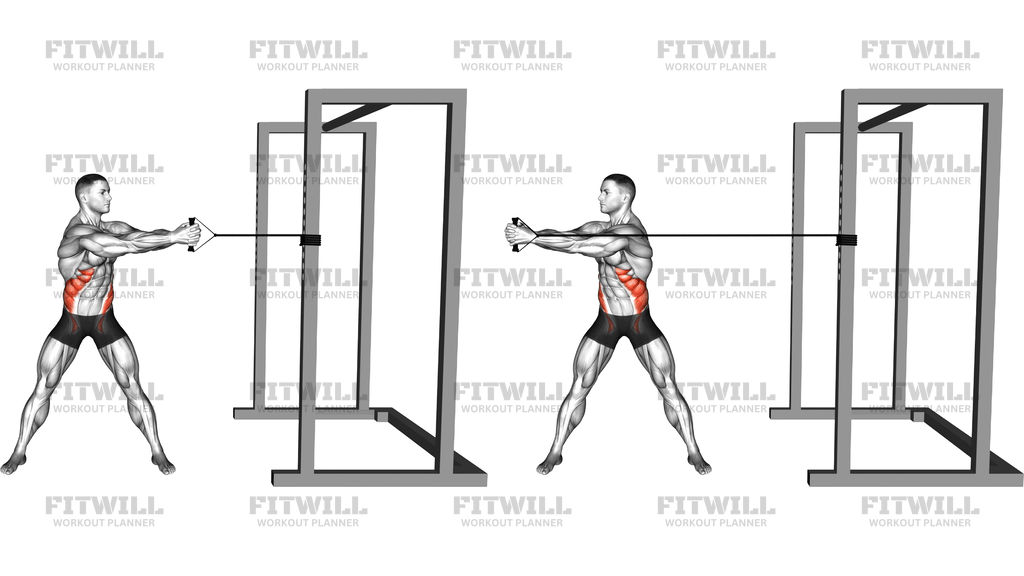
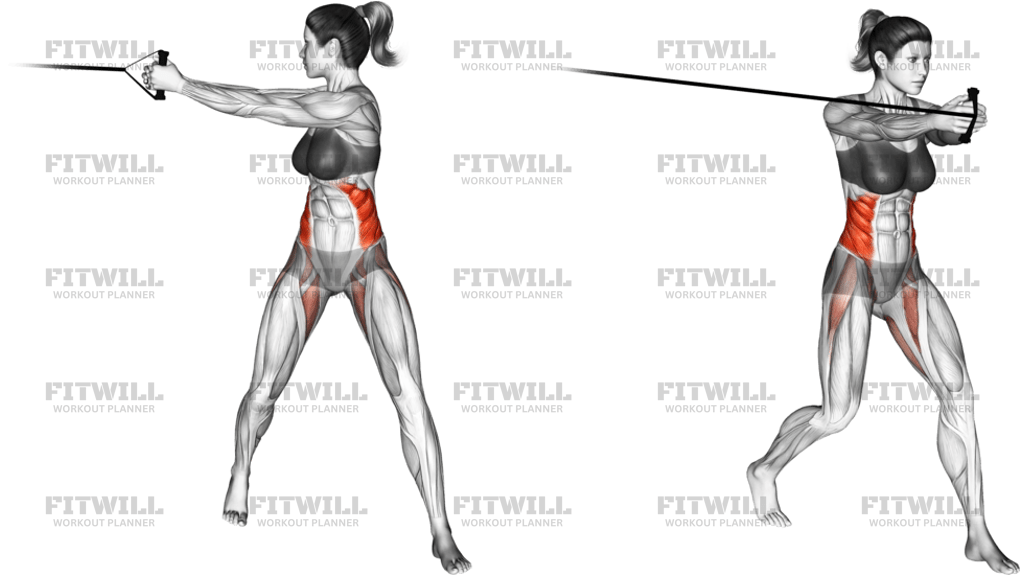
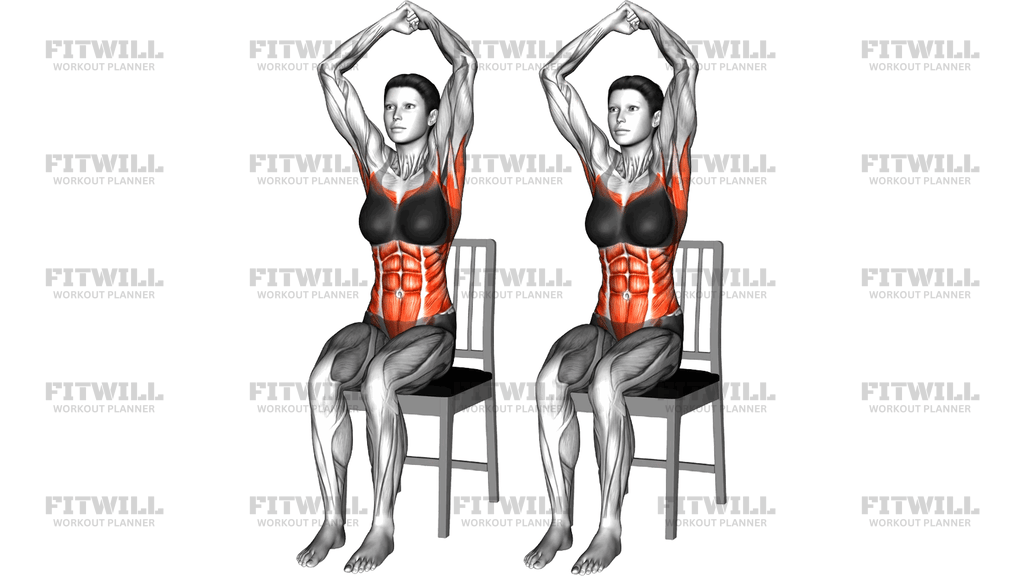
Band Twist Up-Down is a standing diagonal band chop that trains the obliques, abs, hips, and shoulder girdle to work together while the body stays organized against the pull of the band. In the image, the band is anchored high and to the outside, and the rep travels from a tall, overhead start into a lower, cross-body finish with a split or lunge-like stance. That setup matters because it changes the exercise from a simple arm pull into a coordinated trunk-and-hip pattern.
The main job is to move the hands and torso along a clean high-to-low line while the ribs, pelvis, and feet stay under control. The obliques do most of the work, with the rectus abdominis, transverse abdominis, and hip stabilizers helping resist unwanted arching, wobbling, or over-rotation. The shoulders should guide the band, not shrug against it, and the neck should stay relaxed so the trunk can rotate and brace without tension leaking upward.
A good repetition starts tall, with enough distance from the anchor to create tension before the first pull. From there, the body lowers and rotates as the hands travel diagonally across the front of the body toward the opposite hip. The image shows the finish with the front knee bent and the back leg loaded, which suggests a controlled split stance or lunge can be used to match the band path. That lower position should feel deliberate, not collapsed.
Because the band is pulling on a long diagonal, the exercise rewards precision more than force. If the torso twists first and the arms lag behind, the band is probably too heavy or the stance is too unstable. Keep the movement smooth on the way down, pause briefly in the low position, and reverse the path under control so the band does not snap you back overhead. Exhale during the pull and inhale on the return.
This variation fits well in warmups, core blocks, rotational strength work, or accessory circuits when you want the trunk to learn how to transfer force between the upper and lower body. It is useful for beginners if the resistance is light and the range is short, but it becomes much more demanding as the band tension, step distance, or speed increases. Prioritize clean posture and a repeatable diagonal path over a bigger twist or a deeper lunge.
[ Workout Log & Planner ]
Put your next workout in Fitwill
Keep your plan and training log ready when you are.


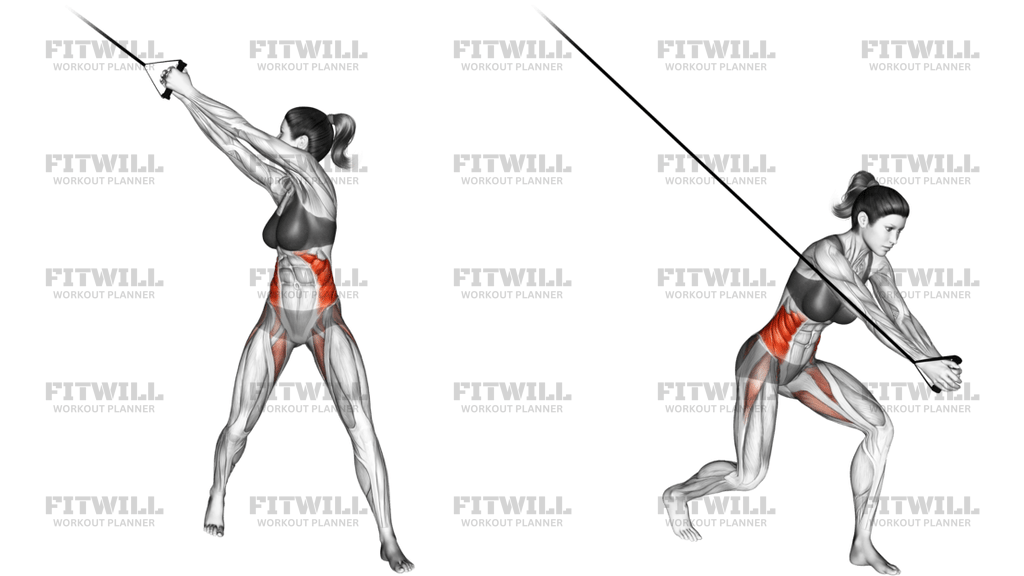
Instructions
- Anchor the band high and slightly outside the side you will work, then face across the line of pull.
- Stand with your feet set in a split or staggered stance and grasp the band with both hands overhead on the anchor side.
- Step far enough away that the band is already under tension before the first rep begins.
- Stack your ribs over your pelvis, soften both knees, and keep your shoulders down away from your ears.
- Start the pull by drawing your hands diagonally down and across your body toward the opposite hip.
- Let your torso and hips rotate together as you lower into the lunge or split stance shown in the image.
- Keep your arms long and the band line smooth; do not let the shoulders shrug or the low back arch.
- Pause briefly when your hands reach the low finish position with the core fully braced.
- Reverse the same path under control until your hands return overhead, then reset before the next rep.
Tips & Tricks
- Choose a light band first; if your torso jerks before the hands move, the resistance is too high.
- Think about pulling the band toward the front pocket on the opposite side, not straight down toward the knee.
- Keep the elbows only slightly bent so the obliques do most of the work instead of the arms.
- Stay tall through the chest as you lower; collapsing forward turns the rep into a sloppy hinge.
- Let the rear leg and front leg share the load so the lower body supports the twist instead of fighting it.
- Move slowly enough that you can feel the band tension increase on the way down and stay controlled on the way back up.
- Exhale as you drive the hands down and across, then inhale as you return to the high start.
- If the low back feels pinched, shorten the range and reduce how far you rotate into the finish.
- Switch sides evenly so one side does not get all the rotation and lunge work.
Frequently Asked Questions
What muscles does Band Twist Up-Down work most?
It mainly trains the obliques, with help from the abs, transverse abdominis, hips, and shoulder stabilizers.
Why is the band anchored high for this movement?
A high anchor creates the diagonal high-to-low pull that makes the exercise work like a controlled chop instead of a straight arm raise.
Should I stay standing or drop into a lunge?
Both can work, but the image shows a staggered, lowered finish, so a split stance or shallow lunge is a good match for this pattern.
Should my arms bend during the twist?
Keep the arms mostly long and use only a small elbow bend so the band path stays clean and the trunk does the real work.
What is the most common form mistake?
People often yank the band with the shoulders or over-rotate the low back instead of controlling the diagonal with the core and hips.
Is this exercise good for beginners?
Yes, if the band is light and the range is short enough to keep the torso stacked and the movement smooth.
Where should the band finish?
The hands should end low across the front of the body, usually near the opposite hip or front pocket, not down by the knee.
How do I make this exercise harder?
Step farther from the anchor, use more band tension, slow the return, or lower the stance a little while keeping the same diagonal path.