Chair Pose I Utkatasana I
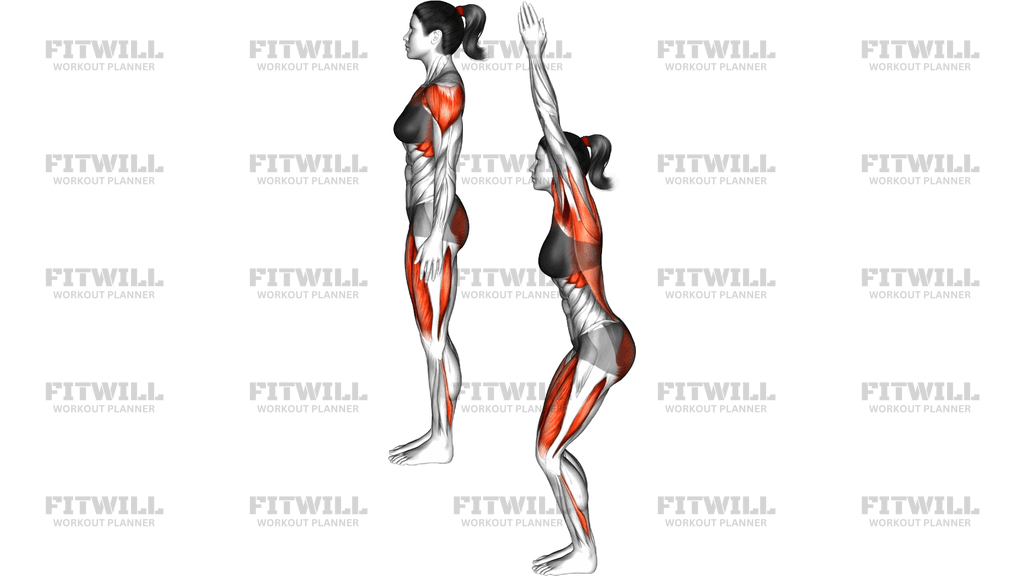
Chair Pose I Utkatasana I is a bodyweight standing yoga posture built from a controlled partial squat with the arms reaching overhead. It challenges the quads, glutes, calves, upper back, and trunk by asking you to keep the torso long while the hips sink and the knees flex. Because the shape is held rather than repeated like a gym lift, the main training effect comes from staying organized under isometric tension and breathing without collapsing in the chest or lower back.
The setup matters. Feet stay about hip-width or together depending on your balance, with all toes grounded and the weight centered over the mid-foot and heels. From there, sit the hips back and down as if reaching for a chair, but keep the chest lifted enough that the spine stays long. The knees should track in line with the toes instead of drifting inward, and the arms can reach beside the ears or slightly forward if your shoulders need relief.
In the bottom position, the shins stay fairly angled forward, the heels stay down if possible, and the pelvis stays neutral enough that you do not dump into the low back. The pose should feel demanding through the thighs and glutes, with the core helping you resist the urge to over-arch. Inhale as you set the posture, exhale to settle into the hold, and use steady breathing so the shape stays calm instead of braced and jerky.
Chair Pose is commonly used in yoga flows, warmups, and conditioning blocks because it builds leg endurance, trunk control, and shoulder elevation endurance at the same time. It is also easy to scale: you can shorten the hold, reduce the squat depth, keep the hands at heart center, or separate the feet slightly for more balance. If knee pain, ankle limits, or shoulder discomfort appear, adjust the stance and arm position before forcing a deeper shape.
Good execution is about staying tall through the spine while the thighs work hard. The pose should look still, but the effort is active from the feet to the fingertips. When the hold ends, press through the floor, straighten the knees, and return to standing with control rather than snapping upright. That makes the posture useful both as a strength-building drill and as a clean technical yoga shape.
[ Workout Log & Planner ]
Put your next workout in Fitwill
Keep your plan and training log ready when you are.


Instructions
- Stand tall with your feet together or hip-width apart, arms relaxed at your sides.
- Root through all four corners of each foot and shift your weight to the mid-foot and heels.
- Bend your knees and send your hips back as if sitting into a chair.
- Keep your chest lifted and your spine long instead of rounding forward.
- Reach your arms overhead with biceps beside your ears, or keep your hands at heart center if that feels steadier.
- Track your knees in line with your toes and keep them from caving inward.
- Hold the position for the planned breath count, breathing smoothly without lifting the shoulders.
- Press through your feet to stand back up under control, then reset before the next hold.
Tips & Tricks
- Widen your stance slightly if your ankles or balance limit how low you can sit.
- Keep more weight in the heels than the toes, but do not let your toes lift off the floor.
- If the low back arches, lower the arms a little and tuck the ribs back toward the pelvis.
- A small bend at the hips is fine, but do not hinge so far forward that the pose turns into a forward fold.
- Let the knees travel forward only as far as the ankles and mid-foot can support without pain.
- Squeeze the inner thighs lightly to help keep the knees aligned.
- Choose a shorter hold before you choose a deeper squat if form starts to wobble.
- Exhale as you settle into the hold so the shoulders and jaw stay relaxed.
Frequently Asked Questions
What muscles does Chair Pose I Utkatasana I work most?
The quads and glutes lead the effort, with the calves, core, and upper back helping you hold the posture.
Is this more of a strength move or a stretch?
It is mainly an isometric strength and endurance posture, not a stretch.
Can beginners do Chair Pose?
Yes. Start with a small knee bend, feet hip-width apart, and hands at your chest before progressing to deeper holds or overhead arms.
Should my heels stay down?
Ideally yes, with weight spread across the whole foot. If the heels lift, reduce the depth or widen the stance slightly.
Why do my knees hurt in this pose?
Knee discomfort usually comes from the knees collapsing inward, sitting too deep, or placing too much weight in the toes. Back off the depth and realign the knees over the toes.
Where should my arms be?
Overhead arms match the full pose, but hands at heart center or slightly forward are easier on the shoulders and can improve balance.
How long should I hold it?
Hold long enough to keep good posture and smooth breathing, then come out before the thighs shake so hard that alignment breaks down.
Can I use this in a yoga flow?
Yes, it is commonly used as a transition posture in standing sequences, especially when you want leg warmth and trunk control.