Leg Up Hamstring Stretch
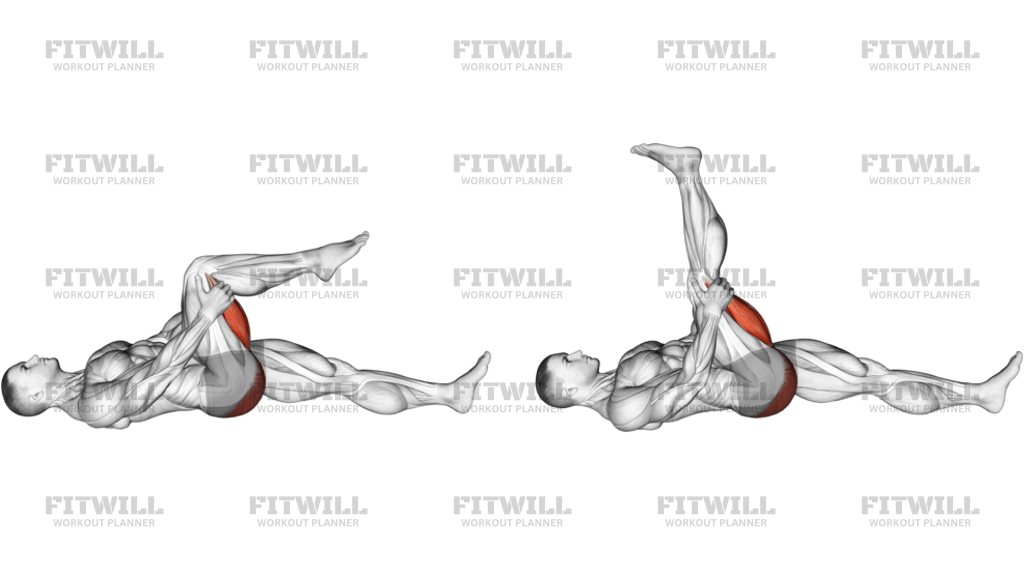
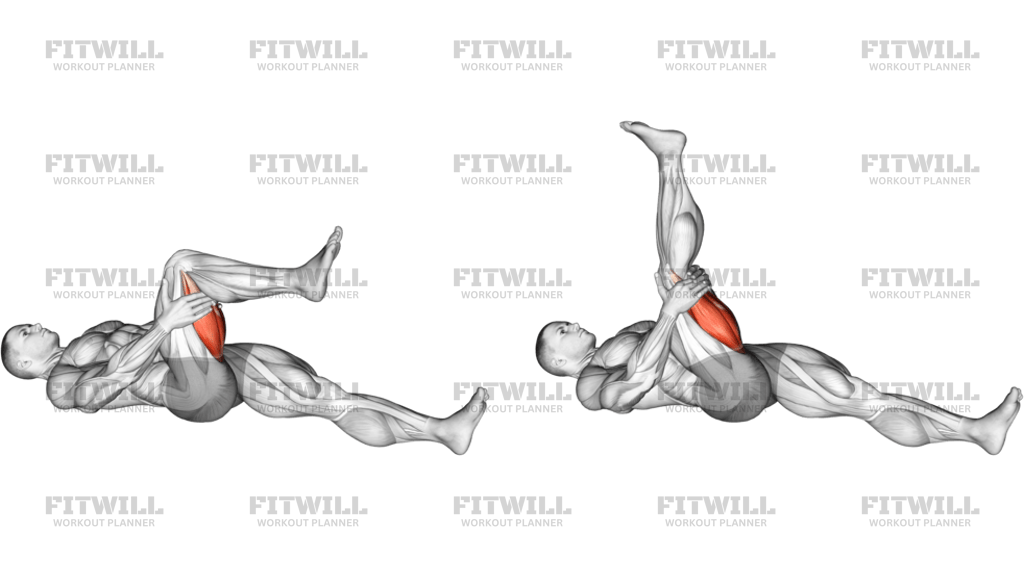
Leg Up Hamstring Stretch is a floor-based flexibility drill performed on an exercise mat with body weight. You lie on your back, lift one leg, and use your hands to guide the thigh as the knee gradually opens toward a longer hamstring stretch. The image shows a bent-knee start and a straighter finish, so the exercise is about easing into more length rather than forcing the leg straight from the beginning.
The main target is the hamstrings on the raised leg, with the hips, glutes, and deep trunk muscles helping keep the pelvis steady. Because the lower back can easily take over in this position, the setup matters: the non-working leg should stay relaxed on the floor, the ribs should stay down, and the pelvis should not tip up just to create more range. That makes the stretch more honest and keeps the tension where it belongs.
This movement is useful when you want to restore hamstring length after training, prepare for hinges and deadlift patterns, or calm down tight posterior-chain tissue after long sitting. It can also help lifters who feel their hamstrings limit toe touch, split stance work, or running stride mechanics. The best version of the stretch feels firm but controlled, with a clear pull through the back of the thigh and no sharp sensation behind the knee.
The key is to move from the bent-knee position into a longer line one small step at a time. Pull the leg in only far enough to keep the pelvis down, then slowly straighten the knee until you feel the hamstring lengthen. If your hands cannot comfortably hold behind the thigh, a strap or towel can replace the grip, but the shape of the stretch should stay the same: hip flexed, spine quiet, and the raised leg moving under control.
Use this stretch as a controlled accessory, not a race to full extension. Slow breathing helps the hamstrings release and keeps the shoulders from tensing while you hold the leg. If the stretch moves into the calf, the knee, or the lower back instead of the hamstrings, shorten the range and reset. Clean reps and steady holds are more useful here than chasing a bigger angle.
[ Workout Log & Planner ]
Put your next workout in Fitwill
Keep your plan and training log ready when you are.


Instructions
- Lie on your back on an exercise mat with one leg extended along the floor and the other knee bent toward your chest.
- Reach both hands behind the raised thigh or use a strap around the foot if your arms are too short to hold comfortably.
- Keep the non-working leg relaxed, the ribs down, and the lower back gently in contact with the mat.
- Lift the thigh until you feel a light stretch through the back of the leg, then pause without letting the pelvis roll up.
- From that bent-knee position, slowly straighten the raised knee until the hamstring lengthens further.
- Hold the end position for a steady breath or two while keeping the foot relaxed and the toes pointed naturally.
- If the stretch shifts into the knee or lower back, bend the knee slightly and reduce the pull.
- Return the leg to the bent-knee start with control, then repeat on the other side.
Tips & Tricks
- Keep the opposite leg long on the floor so the pelvis does not rock backward as you straighten the raised knee.
- Hold behind the thigh first if the hamstring is tight; forcing a hand-to-foot grip usually pulls the leg into a sloppy position.
- Think about lengthening the knee, not yanking the foot toward your face.
- A strap is useful when you cannot keep both shoulders relaxed while holding the leg.
- If you feel the stretch mostly behind the knee, soften the knee a little and back off the range.
- Keep the chin and shoulders easy so the stretch stays in the leg instead of creeping into the neck.
- Use slow exhales to help the hamstrings release instead of bouncing at the top.
- Stop short of pain; a strong stretch is fine, but a sharp pull or nerve-like sensation is not.
Frequently Asked Questions
What muscle does Leg Up Hamstring Stretch target most?
It mainly targets the hamstrings on the raised leg, especially as the knee straightens.
Can beginners perform this exercise?
Yes. Beginners often do best with the knee bent at first and a smaller range before straightening the leg further.
Should I hold behind the thigh or reach for the foot?
Holding behind the thigh is usually easier for tight hamstrings. Use a strap or reach farther only if you can keep the pelvis down and the shoulders relaxed.
Why does my lower back lift off the mat?
That usually means the leg is being pulled too far. Reduce the range and keep the ribs and pelvis heavy on the floor.
What should I feel during the stretch?
You should feel a clear pull through the back of the thigh. If the sensation moves into the knee joint or feels sharp, shorten the stretch.
Can I use a strap for this exercise?
Yes. A strap around the foot can make it easier to keep the shoulders relaxed while you guide the leg from bent to straighter.
When is this stretch most useful?
It works well after lower-body training, after long periods of sitting, or before hinge-based lifts when the hamstrings feel short.
What is the biggest mistake to avoid?
Do not bounce the leg straight or tug until the hips roll up. The stretch should build gradually from the bent-knee position.