Barbell Deadlift Back View
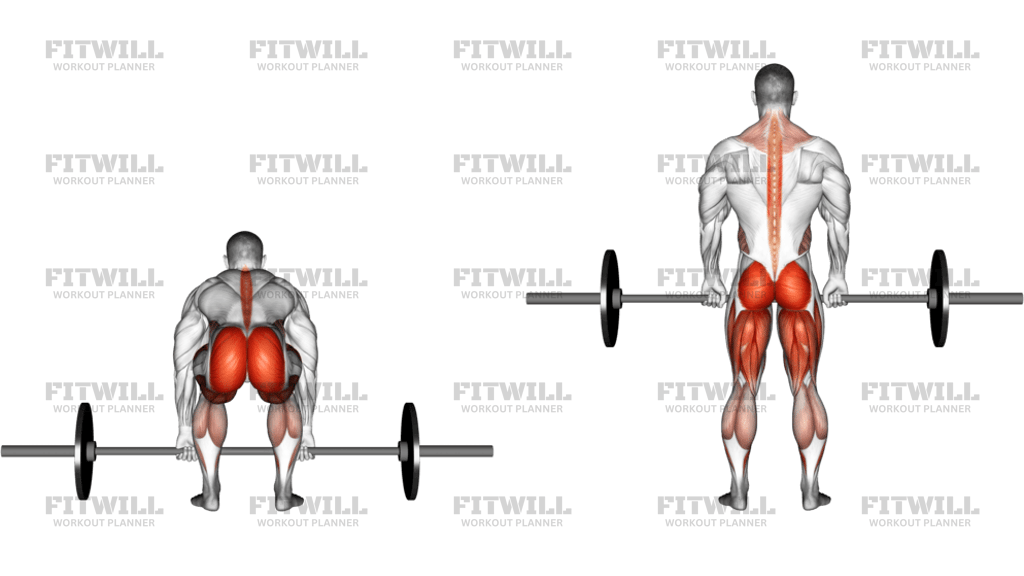
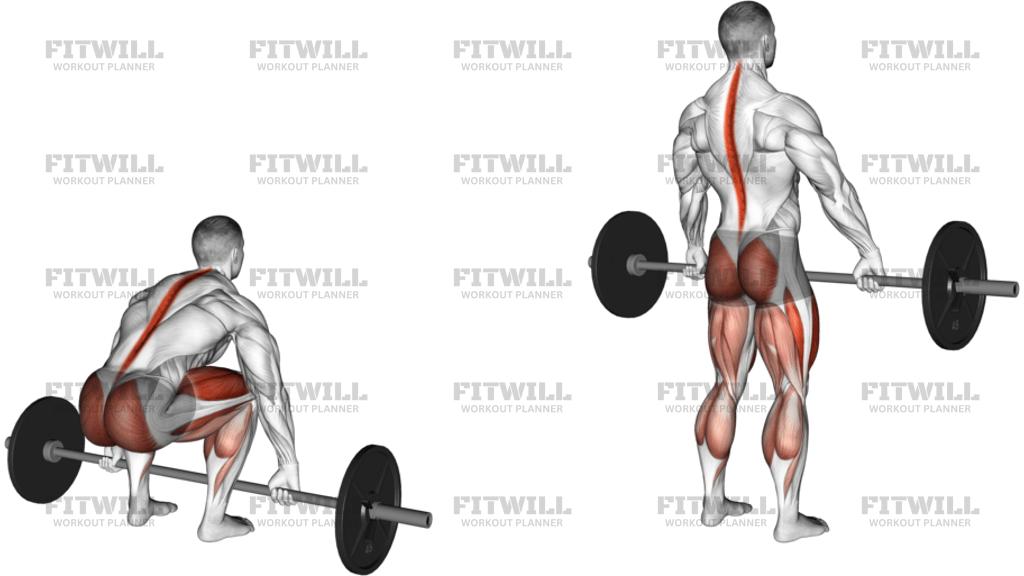
Barbell Deadlift Back View is the rear-view version of a conventional barbell deadlift: a floor pull built around a strong hip hinge, a stacked spine, and a bar path that stays close to the legs. It trains the posterior chain hard, especially the glutes, hamstrings, spinal erectors, lats, upper back, and grip, while the rear-angle image makes it easy to check whether the shoulders stay even and the bar tracks straight.
The setup determines the quality of every rep. Stand with the midfoot under the bar, feet about hip-width apart, and grip the bar just outside the shins so the arms hang straight. Hinge down until your shins lightly touch the bar, then pull your chest long, brace your trunk, and set the lats as if you are trying to keep the bar pinned to your legs before it leaves the floor.
From there, drive the floor away instead of yanking the bar. The knees and hips should open together as the bar rises up the shins and thighs, and the finish should be tall and controlled with the glutes locked, ribs down, and no leaning back. On the way down, send the hips back first, keep the bar close, then bend the knees once it clears them so the plates return to the floor without rounding the low back.
This is a foundational strength exercise for deadlift work, posterior-chain development, and full-body bracing. It can be used as a main lift on lower-body or pull days, but beginners should keep the load light enough to rehearse the hinge, brace, and lockout without losing position. If the back starts to round, the bar drifts away, or the lift turns into a tug, reset and lower the load before the next set.
[ Workout Log & Planner ]
Put your next workout in Fitwill
Keep your plan and training log ready when you are.


Instructions
- Stand with your midfoot under the bar and your feet about hip-width apart.
- Hinge at the hips, bend your knees, and grip the bar just outside your shins with straight arms.
- Lower your hips until your shins lightly touch the bar, then set a flat back and pull your chest long.
- Brace your trunk, inhale, and tighten your lats so the bar feels pinned close to your legs.
- Drive the floor away and let the knees and hips extend together as the bar breaks from the floor.
- Keep the bar brushing up the shins and thighs until you stand tall at lockout.
- Finish with the glutes squeezed, ribs down, and shoulders stacked over the hips without leaning back.
- Return the bar by hinging the hips back first, then bending the knees once the bar passes them, and reset on the floor before the next rep.
Tips & Tricks
- Keep the bar over the midfoot before the pull; if it starts in front of you, the bar will drift and the rep will feel much heavier.
- Think about wedging yourself between the bar and the floor so your shoulders are slightly in front of the bar before the pull starts.
- Keep your lats tight as if you are trying to squeeze the bar into your thighs on the way up.
- Break the floor smoothly instead of jerking the plates off the ground; a clean start usually keeps the spine and hips in a better position.
- If your hips shoot up first, reset the setup with a little more knee bend and a stronger chest position.
- Lock out by standing tall, not by leaning backward and finishing with the lower back.
- Lower the bar under control until it passes the knees before you let the knees bend more on the way down.
- Use chalk or straps only when grip is the limiting factor; the bar path and brace should still stay clean.
Frequently Asked Questions
What muscles does the barbell deadlift work most?
It mainly trains the glutes, hamstrings, spinal erectors, lats, upper back, and grip.
Why is the back view useful for this exercise?
The rear angle makes it easier to check whether your shoulders stay level, your hips rise together, and the bar stays close to the body.
Should the bar touch my shins during the deadlift?
It should stay very close and may lightly brush the shins, but it should not swing away from you or bang forward.
Do I need to reset the bar on the floor each rep?
Resetting each rep is best for strength work and form practice because it forces you to rebuild the brace and hinge every time.
What is the main difference between a deadlift and a Romanian deadlift?
A deadlift starts from the floor with more knee bend, while a Romanian deadlift begins from the top and keeps more tension in the hips during the descent.
What should I do if my lower back rounds?
Lower the load, raise the chest in the setup, and make sure the bar starts over the midfoot before you pull.
Can beginners learn this lift safely?
Yes, if they start with a light load, a solid hinge, and a controlled reset before each repetition.
When are straps useful on barbell deadlifts?
Straps help when grip fails before your back and legs do, but they should not be used to cover up a poor setup or a loose bar path.