Barbell Single Leg Deadlift
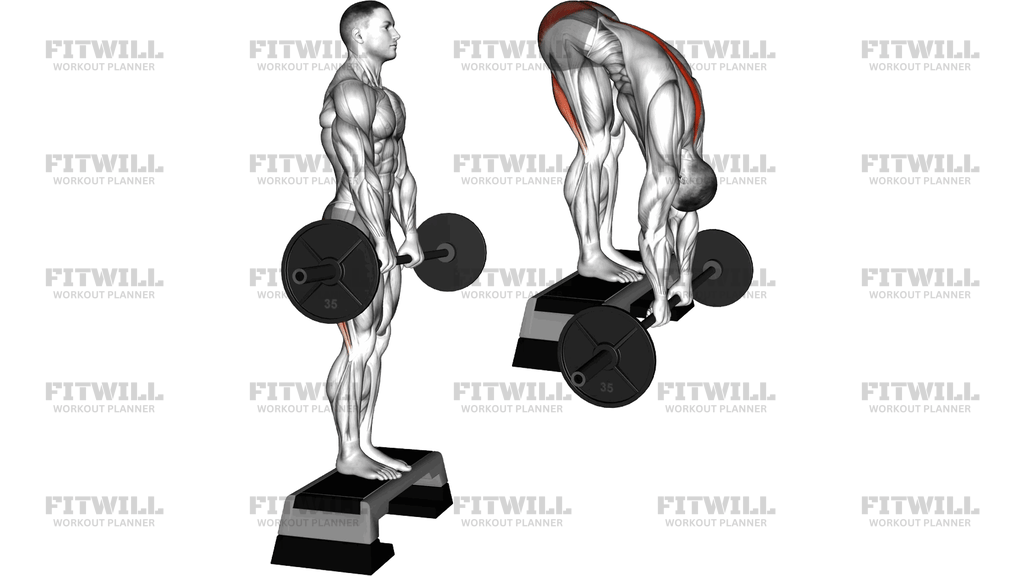
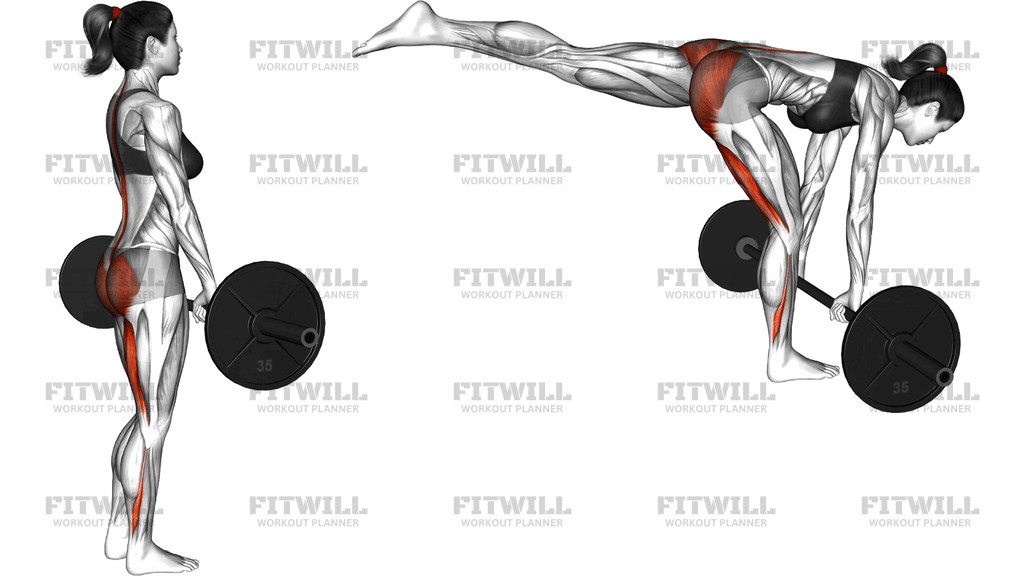
Barbell Single Leg Deadlift is a single-leg hip hinge that trains the hamstrings, glutes, and trunk to work together while one leg supports the full load. In the image, the torso folds forward as the free leg reaches back, which keeps the pelvis level and shifts emphasis into the back side of the standing leg. The bar stays close to the body, so the rep is driven by the hinge pattern instead of by swinging the weight or twisting through the spine.
This exercise is useful when you want to build posterior-chain strength, balance, and side-to-side control at the same time. Compared with a two-leg deadlift or RDL, the single-leg version exposes weak links quickly: the standing hip must stabilize, the foot must stay rooted, and the torso has to resist rotation as the bar moves. That makes it especially valuable for athletes, runners, and anyone who needs better unilateral control through the hip and ankle.
The setup matters because balance and hinge mechanics are both part of the lift. Stand tall on one leg with a soft knee, brace before you move, and keep your hips pointed toward the floor. As you descend, send the free leg straight behind you while the bar tracks down close to the standing shin. The back should stay long and neutral, and the shoulders should remain square so the bar does not drift away from the body.
At the bottom, the working hamstring should feel loaded without the lower back taking over. Drive back to standing by pushing the floor away through the planted foot and extending the hip, not by yanking the torso upright. A short pause at the top helps you reset your balance and keep each rep crisp. Use an inhale on the way down and a controlled exhale as you stand up, especially when the set gets challenging.
This movement is best used as a controlled strength or accessory exercise rather than a max-effort lift. Light to moderate loads usually produce better mechanics than trying to chase heavy numbers, because the standing leg, foot, and hip stabilizers have to do a lot of work before the prime movers can finish the rep. If balance is the limiter, shorten the range slightly or tap the rear toe lightly between reps until your hinge pattern is clean. The goal is a smooth, repeatable single-leg hinge with the bar staying close and the pelvis staying level.
[ Workout Log & Planner ]
Put your next workout in Fitwill
Keep your plan and training log ready when you are.


Instructions
- Stand on one foot with a slight bend in the knee and hold the barbell in both hands in front of your thighs.
- Set your ribs down, square your hips, and brace your midsection before the first hinge.
- Keep the planted foot tripod-heavy on the floor and fix your gaze a few feet ahead to help balance.
- Push your hips straight back as you lower the bar, letting your free leg reach long behind you.
- Slide the bar close to the standing shin and keep your shoulders and hips facing the floor.
- Lower until your torso is nearly parallel to the floor or until your hamstring stretch or balance reaches its limit.
- Pause briefly at the bottom without rounding your lower back or opening the hip of the raised leg.
- Drive through the planted foot, extend the hip, and stand back up until your body is tall and stacked.
- Reset your balance at the top, breathe, and repeat for the planned reps before switching sides.
Tips & Tricks
- Think of reaching the free heel back, not lifting it high; over-kicking usually turns the rep into a balance drill instead of a hinge.
- Keep the bar brushing close to your thigh and shin so it does not pull you forward and strain the lower back.
- A soft knee on the standing leg helps you load the hamstrings without locking the knee or collapsing into the hip.
- If your hips start opening toward the side, shorten the range and slow down until the pelvis stays square.
- Use a lighter barbell than you would for a two-leg deadlift; balance usually limits this movement before strength does.
- Keep the neck in line with the spine by looking slightly ahead of you, not up at the mirror or down at your feet.
- Lower under control for two to three seconds so the eccentric phase stays on the hamstrings instead of on momentum.
- If the rear leg swings or the bar drifts away from the standing leg, the load is too heavy or the hinge is too shallow.
- Stop the set when the standing foot starts rolling to the inside edge or you cannot keep the torso from twisting.
- For better control, tap the free toe lightly between reps while you learn the balance pattern, then progress to a true hover.
Frequently Asked Questions
What muscles does Barbell Single Leg Deadlift work?
It mainly trains the hamstrings and glutes of the standing leg, with the lower back, core, and foot stabilizers helping you stay balanced and square.
How is this different from a regular barbell deadlift or RDL?
The single-leg version adds a balance and anti-rotation challenge, so the standing hip has to stabilize the pelvis while the bar follows a smaller, stricter hinge path.
Where should the bar travel during the rep?
Keep the bar close to the standing leg, usually brushing the thigh and shin on the way down and back up, instead of letting it drift forward.
How far should I lower on the descent?
Go only as far as you can while keeping the hips square, the back neutral, and the standing hamstring loaded. For many people that is just above parallel.
Is this exercise beginner-friendly?
Yes, but only with a light load and a short range at first. Many beginners do better touching the free toe down between reps until the hinge pattern feels stable.
What is the biggest form mistake to avoid?
Opening the hip, twisting the torso, or rounding the lower back usually means the load is too heavy or the rep is getting too deep.
Should the back leg stay straight?
It should reach long behind you with a nearly straight knee, but do not force it so hard that your pelvis twists or your hamstrings cramp.
How should I breathe on each rep?
Take a breath and brace before you hinge, hold your trunk position through the lowering phase, then exhale as you drive back to standing.