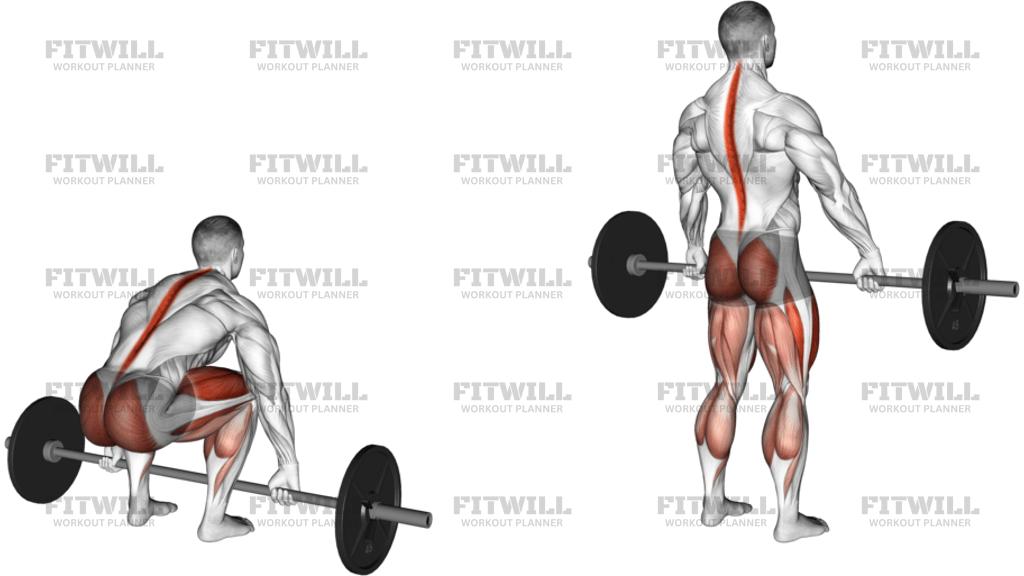
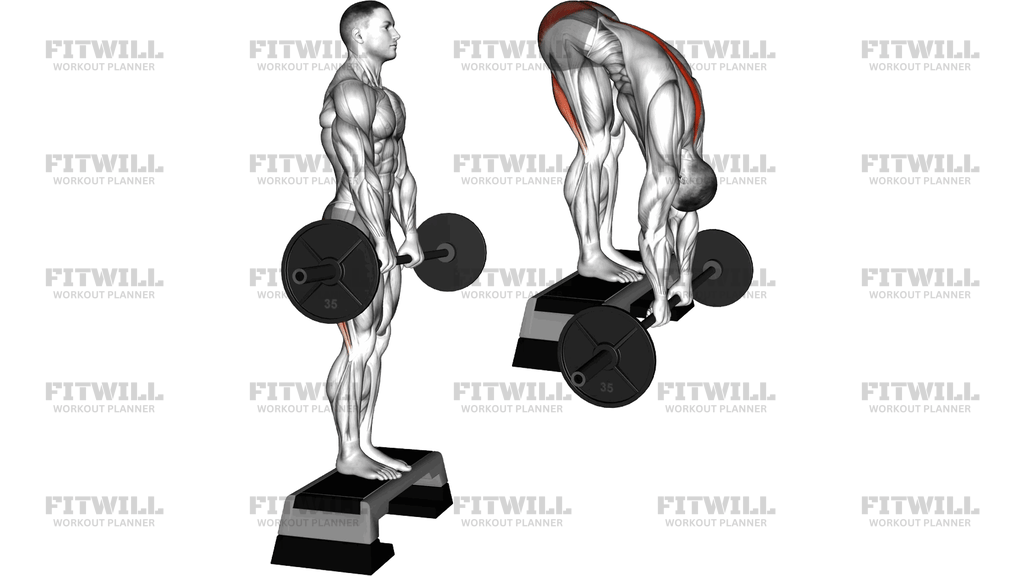
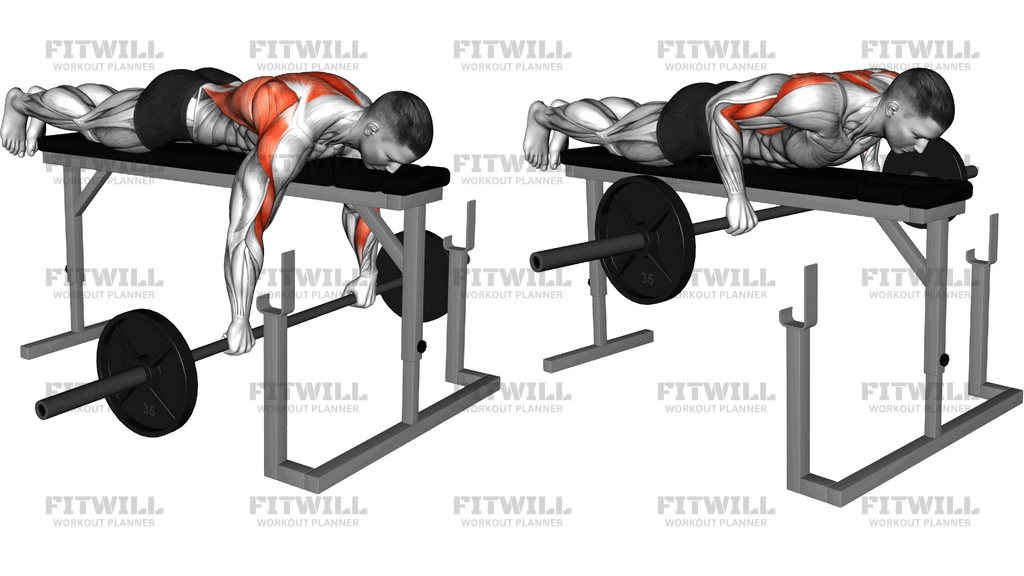
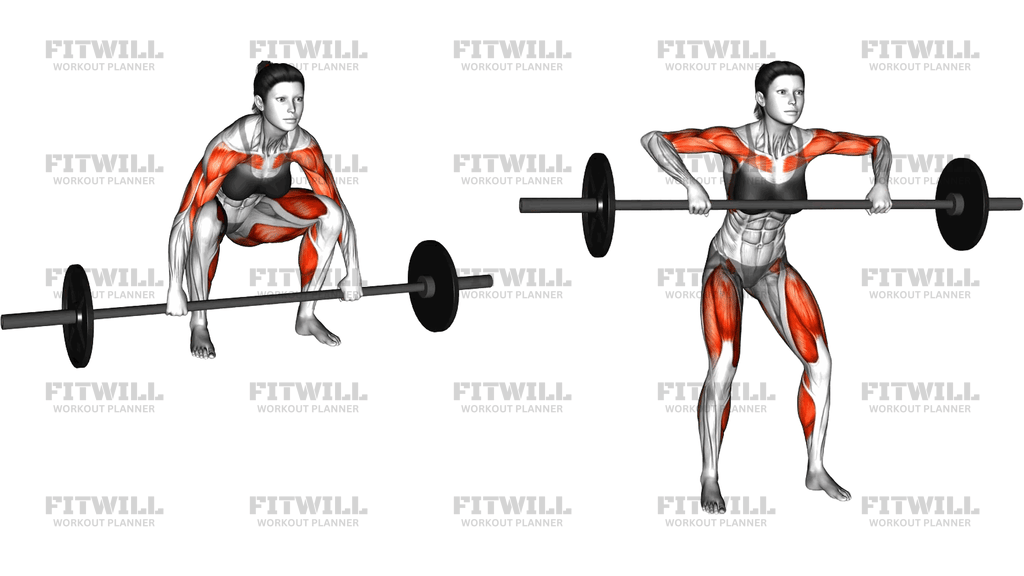
Barbell Deadlift Front View
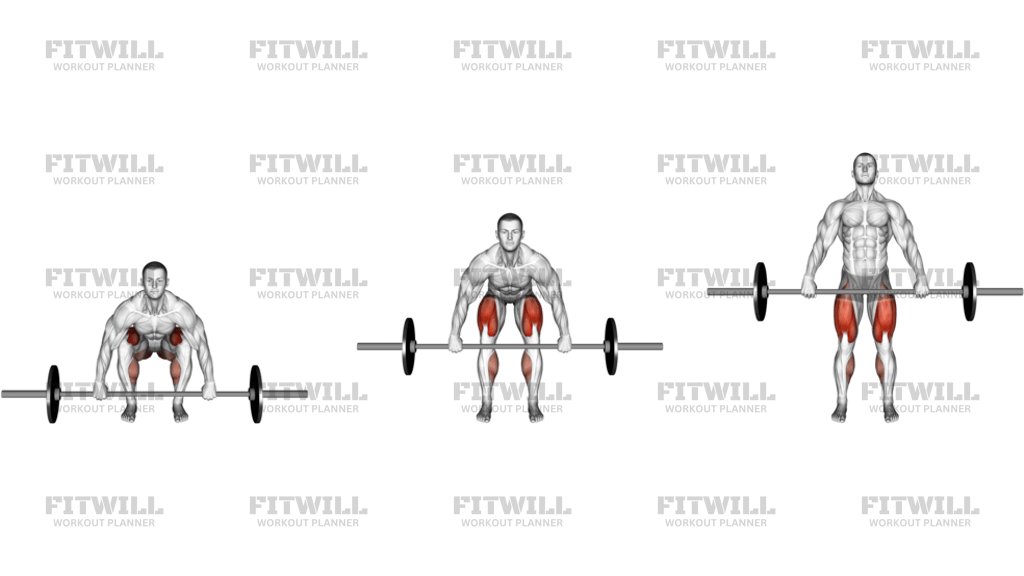
Barbell Deadlift Front View is the classic barbell deadlift shown from the front so you can see foot placement, knee tracking, grip symmetry, and how the bar stays centered as it leaves the floor. It is a compound hip hinge that trains the posterior chain hard, but it also demands a strong brace from the trunk, steady grip, and coordinated leg drive. In practical terms, it builds the kind of full-body pulling strength that carries over to lifting objects from the ground, sport-specific acceleration, and general lower-body strength.
The front-view angle matters because small setup errors are easier to spot. The bar should start over the middle of the feet, the shins should be close without pushing the bar forward, and the knees should track in line with the toes as you begin the pull. If the stance is too wide, the hands are uneven, or the bar drifts away from the legs, the lift gets harder fast and the lower back usually has to compensate. A clean deadlift is not a yank from the floor; it is a controlled wedge into position, then a coordinated push and pull that keeps the bar path close and efficient.
At the bottom, set your back before the plates leave the floor. Take hold of the bar just outside the legs, pull the chest up without overextending, lock the lats in place, and brace the abdomen as if you are preparing for a heavy contact. From there, drive the floor away and let the knees and hips rise together until the bar passes the knees. At the top, stand tall with the glutes finished, not by leaning backward. On the way down, hinge first, then bend the knees once the bar clears them so the descent stays controlled and the bar returns to the floor on the same line.
This exercise is useful for strength blocks, lower-body training, and any program that needs a heavy bilateral lift with simple setup and measurable progress. It can be trained with low reps for maximal strength or with moderate reps for technique and work capacity, but the same rules apply: keep the bar close, keep the spine organized, and reset fully between reps when the load is challenging. If the hips shoot up before the bar breaks the floor, the grip slips, or the back rounds under fatigue, the set is too heavy or the setup needs work. Clean deadlift reps should look smooth from the front, with the bar centered and the body moving as one system.
Fitwill
Log Workouts, Track Progress & Build Strength.
Achieve more with Fitwill: explore over 9600 exercises with images and videos, access built-in and custom workouts, perfect for both gym and home sessions, and see real results.
Start your journey. Download today!




Instructions
- Stand with your feet about hip-width apart and place the barbell over the middle of your feet, with the bar about an inch from your shins.
- Hinge at the hips, bend your knees until your shins lightly meet the bar, and take a shoulder-width grip just outside your legs.
- Set your back flat, lift your chest slightly, and pull the shoulders down and back enough to lock the lats in place.
- Take a deep breath into your abdomen, brace hard, and pull the slack out of the bar before it leaves the floor.
- Drive the floor away so the bar rises close to your shins and thighs instead of swinging forward.
- Let the knees and hips extend together as the bar passes the knees, keeping your weight balanced through the whole foot.
- Stand tall at the top with the glutes tight and the ribs stacked over the pelvis, without leaning back.
- Lower the bar by hinging first, then bending the knees once the bar clears them, and reset on the floor before the next rep.
Tips & Tricks
- From the front view, the bar should travel straight up between the feet and not drift toward one side.
- If the plates pull forward off the floor, set the lats harder and bring the bar closer before you start the pull.
- Use the same grip width and foot width on every rep so asymmetry shows up immediately in the mirror or video.
- Do not jerk the bar off the floor; preload it by taking the slack out first, then push smoothly.
- Keep the knees from caving inward as the bar clears the floor, especially when the load gets heavy.
- Think about pushing the floor away instead of yanking with the arms, which keeps the pull more leg-driven.
- If your hips shoot up faster than your shoulders, the start position is too loose or the load is too heavy.
- Reset your breath at the bottom on each rep instead of bouncing into the next pull.
Frequently Asked Questions
What muscles do barbell deadlifts work most?
They primarily load the glutes, hamstrings, spinal erectors, lats, and grip, with the quads helping strongly off the floor.
Is the deadlift from the floor a good beginner exercise?
Yes, if the load is light and the lifter learns the hinge, brace, and bar path before adding weight.
Why does the front view matter for this deadlift?
It makes it easier to check stance width, knee tracking, grip symmetry, and whether the bar stays centered as it rises.
Should the bar stay close to my legs?
Yes. The bar should skim the shins and thighs so the pull stays efficient and the lower back does not have to fight a forward drift.
What grip should I use on the barbell deadlift?
A double overhand grip is the default for technique work. Heavier sets may use a mixed grip or straps if grip is the limiting factor.
What is the most common deadlift mistake?
Rounding the back or letting the hips pop up before the bar breaks the floor are the two most common breakdowns.
How should I breathe during each rep?
Take a deep breath and brace before the pull, then reset that breath at the floor before the next repetition.
What should I feel if my setup is correct?
You should feel strong tension in the legs, glutes, and upper back before the plates leave the floor, not a loose tug from the arms.