Band Calf Raise Version 2
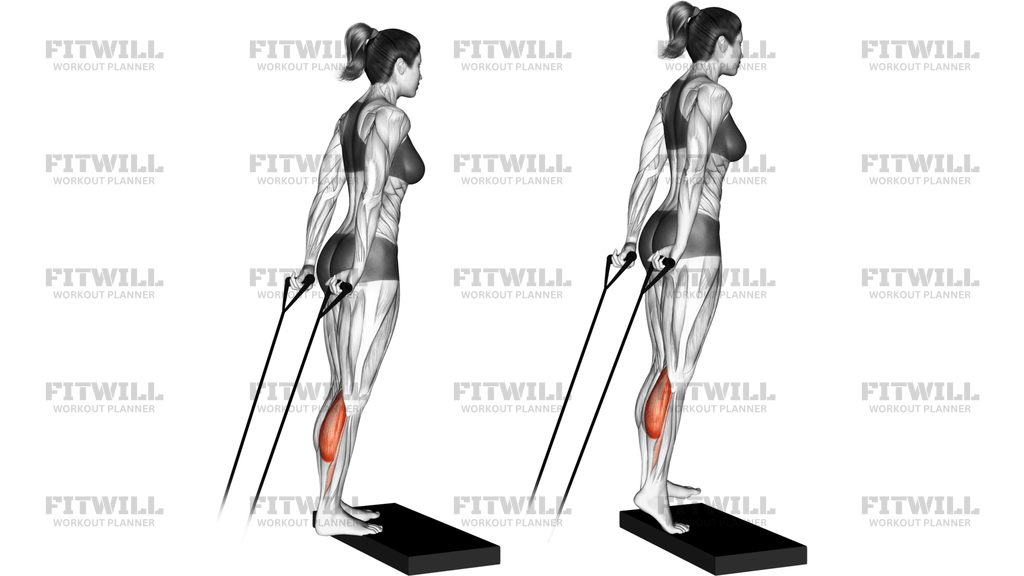
Band Calf Raise Version 2 is a standing calf exercise built around a band for resistance and a raised platform for a clear ankle range of motion. It is useful when you want direct calf work without a machine, and it lets you feel the load increase as you rise onto the balls of your feet. The movement is simple, but it rewards careful setup because the band line, foot placement, and heel drop all shape how much tension you actually get.
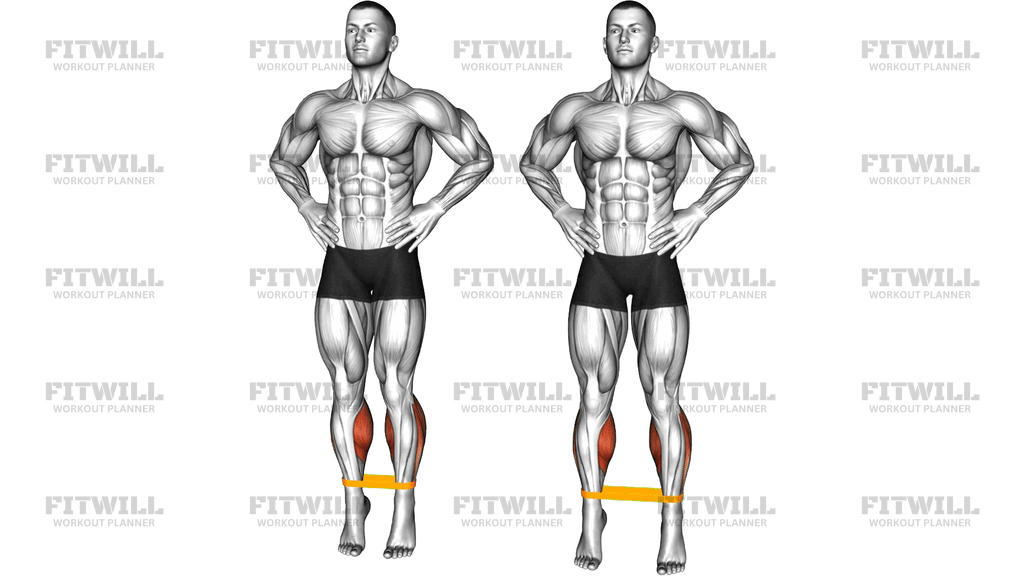
This variation places most of the work on the calves, especially the gastrocnemius, with the smaller foot and ankle stabilizers helping you stay balanced on the step. Your core and hip muscles only support the position, but they matter because a loose trunk or shifting pelvis makes the rep sloppy fast. Band Calf Raise Version 2 is therefore best treated as a controlled strength or accessory movement rather than a bounce-and-go drill.
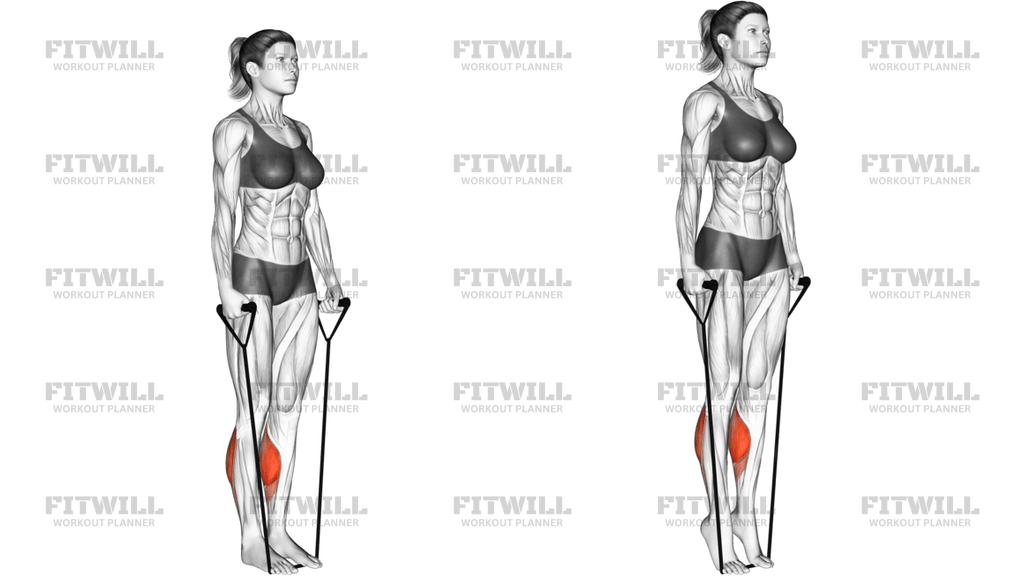
Start by standing on a low step or block with the balls of your feet on the edge and your heels free to travel below the platform. The band runs under the forefoot and up behind the body, so your hands can hold the ends low beside or slightly behind your hips while your arms stay long. That setup keeps tension on the band while letting you keep the chest tall, ribs stacked over the pelvis, and the knees mostly straight without locking them hard.
Each rep should begin with a deliberate heel drop, just far enough to feel a strong stretch through the lower calves without losing balance or collapsing the arches. From there, drive through the big toe and second toe to rise onto the tiptoes, squeeze the calves at the top, and avoid any hop or body swing. The lowering phase matters just as much: let the heels return slowly under control, keep the band steady, and breathe smoothly so the effort stays in the ankles instead of traveling up into the shoulders and back.
Band Calf Raise Version 2 fits well at the end of a lower-body workout, during a warmup that primes the ankles, or as targeted work when you want more calf endurance and cleaner ankle mechanics. Because the load comes from the band and the platform angle, it is easy to make the exercise harder by stepping farther from the anchor or softer by using a lighter band and a smaller heel drop. Keep the motion smooth, stay honest about your range, and stop the set if the feet start rolling, the band shifts, or the heels can only rise by using momentum.
[ Workout Log & Planner ]
Put your next workout in Fitwill
Keep your plan and training log ready when you are.


Instructions
- Stand on a low step or block with the balls of your feet on the edge, heels hanging free, and the band running under your forefeet.
- Hold the band ends low beside or slightly behind your hips with straight arms, keep your chest tall, and stack your ribs over your pelvis.
- Set your feet about hip-width apart with toes pointing forward and your weight centered over the big toe and second toe.
- Let your heels drop slowly until you feel a strong stretch through the lower calves without letting the arches collapse.
- Exhale and drive through the forefoot to rise onto your tiptoes, keeping the knees mostly straight and the torso still.
- Squeeze the calves hard at the top without bouncing, shrugging, or leaning backward against the band.
- Lower your heels under control until you are back in the stretched start position, keeping tension on the band the whole way down.
- Reset the foot pressure and repeat for the planned number of reps, then step down carefully before releasing the band.
Tips & Tricks
- Use a step that gives you heel drop room without forcing your ankles so low that balance gets shaky.
- Keep pressure through the big toe and second toe so the foot does not roll to the outside edge at the top.
- Straight knees bias the gastrocnemius more; a soft knee bend shifts some work toward the deeper calf muscles.
- The band should feel tight before you start the first rep, otherwise the top position will be too easy.
- If the band pulls you backward, move the hands a little farther behind the hips and keep the ribs stacked.
- Pause for a beat at the top so the calves do the work instead of a quick ankle bounce.
- Lower slowly enough that the heels travel under control; a fast drop usually turns the set into ankle springing.
- If the Achilles tendon feels pinchy, shorten the bottom range and use a lighter band before pushing depth.
Frequently Asked Questions
What does Band Calf Raise Version 2 train most?
It mainly trains the calves, especially the gastrocnemius, with the foot and ankle stabilizers helping you stay balanced on the step.
Why am I standing on a step for Band Calf Raise Version 2?
The step lets your heels drop below the forefoot so you get a clearer stretch at the bottom and a stronger contraction at the top.
What is the band doing in this version?
The band adds resistance through the full range and keeps tension on the calves as you rise onto your toes.
Should my knees be locked during this exercise?
Keep them mostly straight, but do not jam them back hard. A small softness protects the joints while still biasing the upper calf.
How far should my heels drop off the step?
Drop only until you feel a strong calf stretch and can still keep your foot stable. If the arches collapse or the ankle wobbles, the range is too deep.
Can beginners do Band Calf Raise Version 2?
Yes. Start with a light band, a low step, and slow reps so you can learn the foot pressure and balance before adding resistance.
Why are my shoulders and back getting tired?
That usually means you are leaning back into the band. Keep the arms long, the ribs stacked, and the torso quiet so the calves stay in charge.
How can I make this exercise harder?
Use a stronger band, stand a little farther from the anchor, or pause longer at the top without changing the foot position on the step.