Band Standing Leg Curl
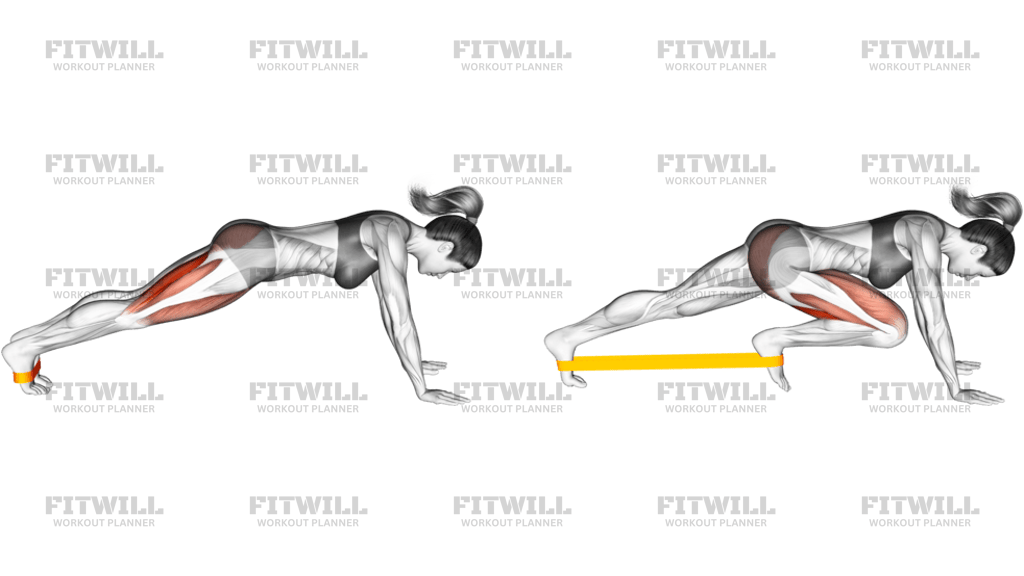
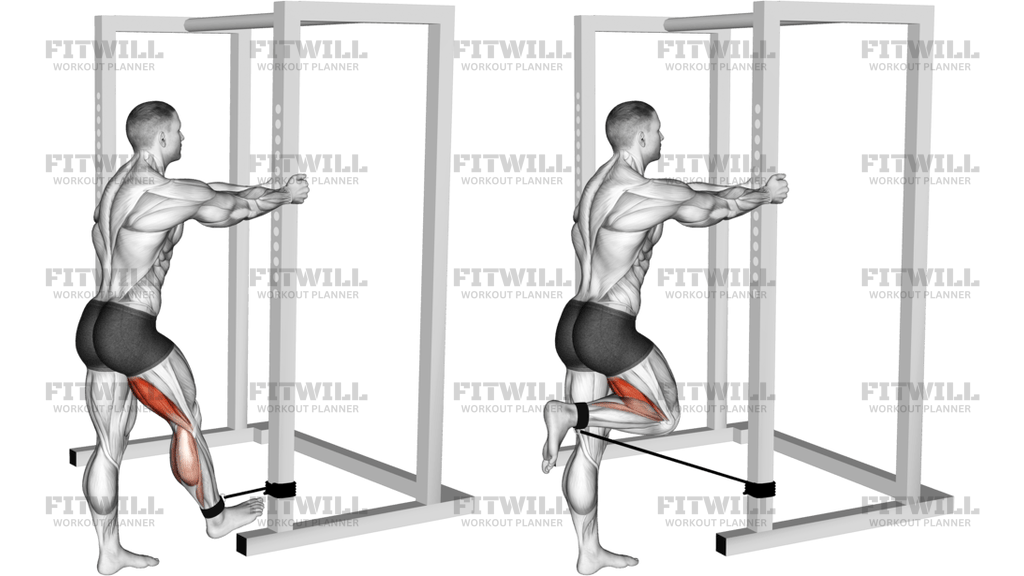
Band Standing Leg Curl is a single-leg hamstring curl performed while standing against a low band anchor. The setup makes the exercise feel simple, but the movement is only effective when the working thigh stays mostly still and the lower leg does the curling. That is why the image shows the lifter facing the anchor with both hands on support: the support frees you to focus on the hamstring instead of fighting for balance.
The main demand lands on the hamstrings of the curling leg, with the calves, glutes, and trunk stabilizers helping keep the pelvis square. Because the band creates the most resistance near the end of the curl, Band Standing Leg Curl is useful for teaching a clean squeeze and for adding accessory hamstring work after squats, deadlifts, or sprint sessions. It also works well when you need a home-gym option that does not require a machine.
The start position matters. The band should pull from low behind the body, the standing foot should stay rooted, and the working knee should begin almost straight with enough tension that the cable or band never goes fully slack. A small forward torso lean is normal, but the hips should stay stacked and the pelvis should not twist open as the knee bends. If the anchor is too light or too far away, the motion will turn into a swing instead of a curl.
Each repetition should look like a controlled knee-flexion drill. Curl the heel toward the glute, briefly squeeze the hamstring at the top, and lower the foot slowly until the leg is nearly straight again. Breathing should stay calm and timed to the effort, with the exhale happening on the curl and the inhale on the return. If the lower back arches, the thigh drifts, or the band snaps you through the range, the resistance is too high.
Band Standing Leg Curl fits best as accessory work, a warm-up for posterior-chain training, or a targeted unilateral hamstring finisher. It is especially helpful when one leg needs extra attention or when you want hamstring volume without loading the spine. The safest and most productive version is the one that lets you keep your support hand light, your pelvis level, and your curl path smooth from the first rep to the last.
Fitwill
Log Workouts, Track Progress & Build Strength.
Achieve more with Fitwill: explore over 9600 exercises with images and videos, access built-in and custom workouts, perfect for both gym and home sessions, and see real results.
Start your journey. Download today!




Instructions
- Attach a light band low to a stable anchor and loop it around the ankle of the working leg.
- Stand facing the anchor, hold a rack or post for balance, and keep the standing foot flat.
- Step back until the band is taut with the working knee almost straight and both hips square.
- Set a slight forward torso lean and keep the thighs lined up so the knee can bend without the hip opening.
- Brace your midsection, keep the standing knee soft but still, and curl the heel toward the glute.
- Squeeze the hamstring briefly at the top without arching the low back or swinging the thigh.
- Lower the foot slowly until the leg is nearly straight and the hamstring is lengthened again.
- Reset each rep with the pelvis level, then repeat on the other leg after finishing the set.
Tips & Tricks
- Keep the working knee pointed down; if it drifts forward, the hip is taking over the curl.
- Hold the rack with one or both hands until you can keep the pelvis square without wobbling.
- Use a band that lets you finish the curl without jerking off the anchor at the top.
- Stop the lowering phase before the band snaps slack and yanks the ankle backward.
- Keep the standing foot rooted; if the heel lifts, the band is too heavy or the stance is too narrow.
- A small forward torso lean usually helps keep the glute quiet and the hamstring doing the work.
- If your calf cramps, shorten the top squeeze and make the lowering phase slower.
- For a bigger hamstring stretch, step slightly farther from the anchor instead of forcing extra range.
Frequently Asked Questions
What Muscles Does Band Standing Leg Curl Work?
It mainly trains the hamstrings on the curling leg. The glutes, calves, and trunk stabilizers help keep the body steady while the knee bends.
Is Band Standing Leg Curl Good For Beginners?
Yes, as long as the band is light and you hold a support for balance. It is a good way to learn hamstring control without loading the spine.
Should My Torso Stay Upright During Band Standing Leg Curl?
A slight forward lean is fine, but the curl should still come from the knee. If the torso keeps shifting, step closer to the anchor or use a lighter band.
Why Do I Feel Band Standing Leg Curl In My Hip Or Lower Back?
That usually means the band is too heavy or the thigh is swinging instead of staying quiet. Reduce tension and keep both hips facing forward.
Do I Need A Rack Or Post For Band Standing Leg Curl?
You do not need a machine, but a rack or post makes the exercise much cleaner. Light hand support helps you isolate the hamstring instead of fighting for balance.
How Close Should I Stand To The Anchor On Band Standing Leg Curl?
Close enough that the band is already tensioned at the start, but not so close that the curl feels cramped. You want a smooth start and a full hamstring squeeze.
What Is The Biggest Mistake In Band Standing Leg Curl?
Letting the thigh move and turning the rep into a swing. The working knee should be the only joint doing most of the motion.
How Can I Make Band Standing Leg Curl Harder Without Cheating?
Use a stronger band, add a slower lowering phase, or hold the top squeeze longer. Those changes keep the hamstring working without adding body sway.