Band Calf Raise
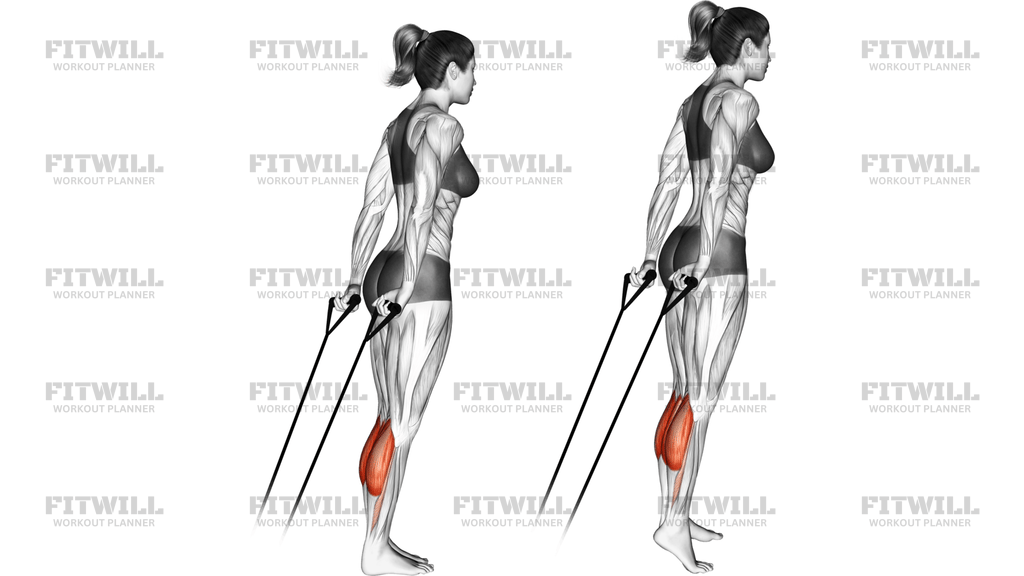
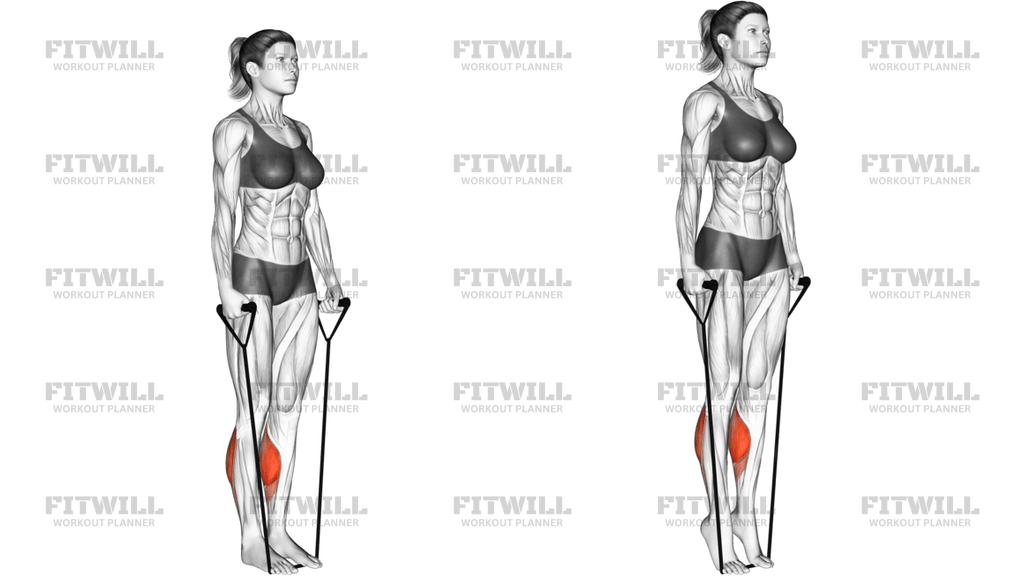
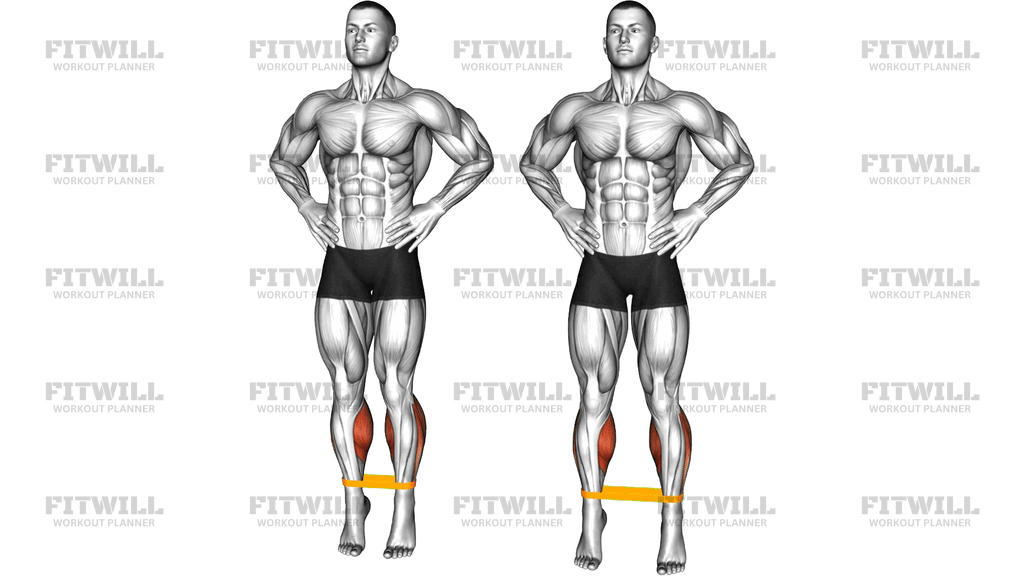
Band Calf Raise is a standing lower-leg exercise that uses band tension to load ankle plantar flexion through a very direct, easy-to-track range of motion. It is a practical option when you want the calves to work hard without needing a machine or heavy external load. The band makes the top of each rep feel increasingly demanding, so the quality of the setup matters: if your feet, torso, and balance are sloppy, the band will magnify that instability instead of the calf work.
The movement primarily targets the calves, especially the gastrocnemius and soleus, with the feet, ankles, and trunk contributing to balance and force transfer. In the existing taxonomy, that is reflected by the calves as the main focus and the stabilizers, supporting muscles, and core as secondary contributors. The exercise is most useful when you want straightforward calf volume, a warm-up before running or jumping, or a controlled accessory movement that does not require much setup time.
To perform it well, keep pressure through the balls of the feet, let the heels travel down into a comfortable stretch, and then drive straight up into full plantar flexion without rocking the hips forward or bouncing off the bottom. The band should create tension through the whole rep, but it should not pull you out of position. A smooth heel path and a steady torso are more important than chasing a huge range that changes the foot position or balance.
This exercise works well for beginners because the resistance is easy to scale and the motion is simple to learn, but it still rewards attention to detail. Use it for higher-rep sets, tempo work, or controlled accessory volume when you want the calves to do the work and the rest of the body to stay quiet. If your ankles cramp or your knees drift, reduce the band tension and shorten the range until the movement feels clean and repeatable.
Fitwill
Log Workouts, Track Progress & Build Strength.
Achieve more with Fitwill: explore over 9600 exercises with images and videos, access built-in and custom workouts, perfect for both gym and home sessions, and see real results.
Start your journey. Download today!




Instructions
- Stand tall with the band secured under the balls of both feet and hold the free ends at your sides or slightly in front of your thighs.
- Place your feet about hip-width apart and keep your weight centered over the first and second toes.
- Lock in a tall torso, relaxed shoulders, and a soft bend in the knees before starting.
- Lower your heels under control until you feel a strong calf stretch without letting the arches collapse.
- Press through the balls of your feet and rise straight up onto your toes as high as you can without leaning back.
- Squeeze at the top for a brief pause while keeping the ankles stacked and the knees quiet.
- Lower back down slowly, keeping tension on the band and avoiding a bounce off the bottom.
- Breathe out as you rise and inhale as you lower for the next repetition.
Tips & Tricks
- Keep the pressure on the big toe, second toe, and heel pad of the forefoot instead of rolling to the outside edge of the foot.
- If the band feels too light at the top, shorten your rest between reps before adding more resistance.
- Do not turn the rep into a tiny knee bend; the ankles should do the work, not a hidden squat.
- Pause briefly at the top so the calves finish the rep instead of the band rebounding you upward.
- Let the heels travel low enough to stretch the calves, but stop before your arches collapse or your ankles wobble.
- Keep the ribs stacked over the pelvis so the torso does not swing forward to fake a bigger calf raise.
- Use a slower lowering phase than lifting phase to build more tension through the calves.
- If you cramp, reduce the range and band tension first, then rebuild volume gradually.
Frequently Asked Questions
What muscle does Band Calf Raise target most?
The calves are the primary target, with the gastrocnemius and soleus doing most of the work.
Can beginners perform this exercise?
Yes. It is beginner-friendly as long as the band tension is light enough that you can control both the bottom stretch and the top squeeze.
How should my feet be positioned on the band?
Stand with the band under the balls of both feet and keep your weight centered over the forefoot so the heels can move freely.
What is the most common mistake on the band calf raise?
The most common error is bouncing at the bottom or leaning the torso to help the heels rise, which takes tension off the calves.
Should I lock my knees during the rep?
Keep the knees softly extended, not jammed straight. A tiny amount of softness helps you stay stable without turning the exercise into a squat.
Can I use this before running or jumping?
Yes. It is a useful warm-up or accessory drill before impact work because it warms the ankles and calves without needing heavy loading.
What should I do if the band pulls me out of balance?
Use less tension, shorten the range, and slow the lowering phase until you can keep the foot tripod and torso stacked.
How can I progress this exercise over time?
Add reps first, then increase band tension or slow the eccentric phase while keeping the heel path clean and vertical.