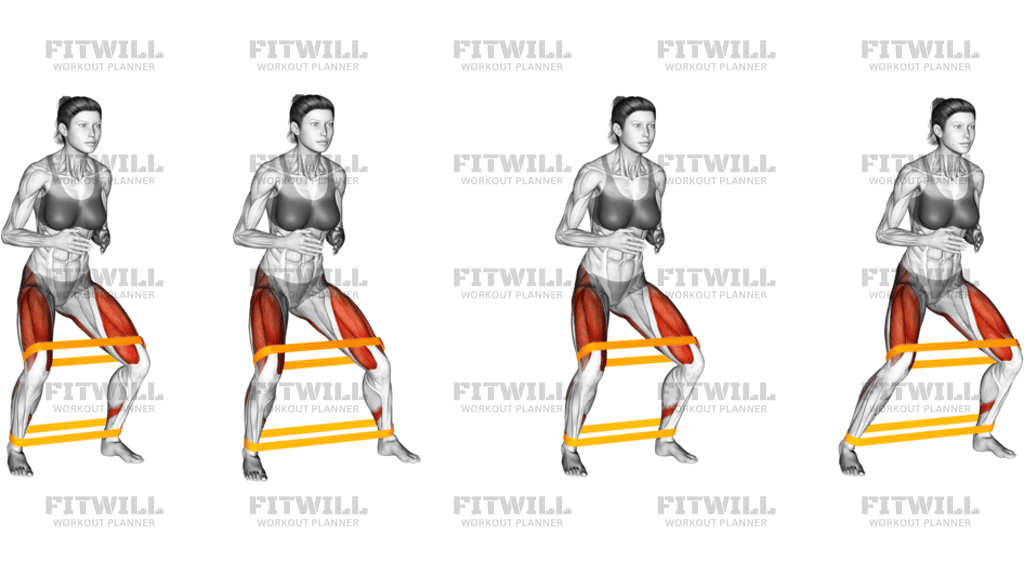
Resistance Band Squat Step Out
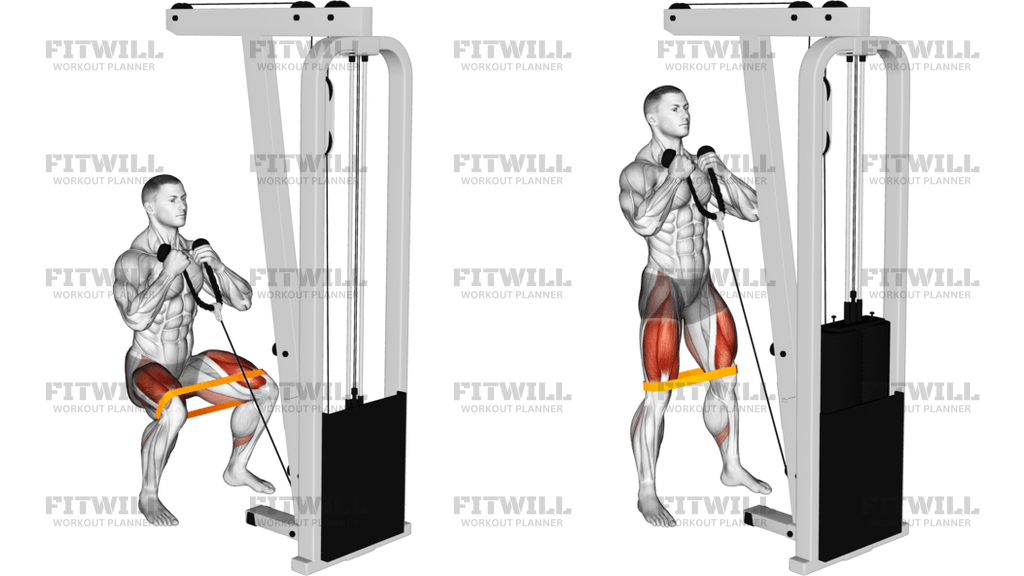
Resistance Band Squat Step Out is a lateral lower-body drill that combines a squat hold with outward steps against band tension. It is useful when you want to train the hips and glutes while also teaching the knees and feet to stay organized under load. The band adds constant inward pull, so every rep asks you to resist collapse and keep tension through the outer hips instead of just dropping into a shallow squat.
The exercise is most effective when the loop sits above the knees and the feet stay about shoulder-width apart before you start stepping. From that position, the torso stays slightly forward, the chest stays proud, and the knees track in line with the toes as you shift side to side. That setup matters because if the stance is too narrow or the band is too loose, the movement turns into a casual side shuffle instead of a controlled glute and hip drill.
On each rep, sit back into a quarter squat, keep the band taut, and step one foot out just far enough to feel the outer hip work without losing balance. The other foot follows in with control, so the squat stays consistent and the feet do not snap together. The goal is not a huge step; the goal is to keep the same squat depth while the band keeps trying to pull the knees inward.
Resistance Band Squat Step Out is commonly used in warmups, accessory blocks, home workouts, and glute-focused sessions because it builds useful control without needing heavy external load. It can also work well before squats, lunges, or running sessions as a way to wake up the hips and reinforce better knee alignment. Beginners usually tolerate it well because the resistance can be scaled by changing band tension and step width.
To get the most from the movement, stay smooth and avoid letting the band drag your knees inward or letting the torso drift upright and rigid. Breath should stay easy and rhythmic, with short exhales as you step and re-center. If the hips start rocking, the band is too tight, the squat is too deep, or the steps are too wide. In those cases, shorten the range and keep the pressure on the outer hips rather than forcing more distance.
[ Workout Log & Planner ]
Put your next workout in Fitwill
Keep your plan and training log ready when you are.


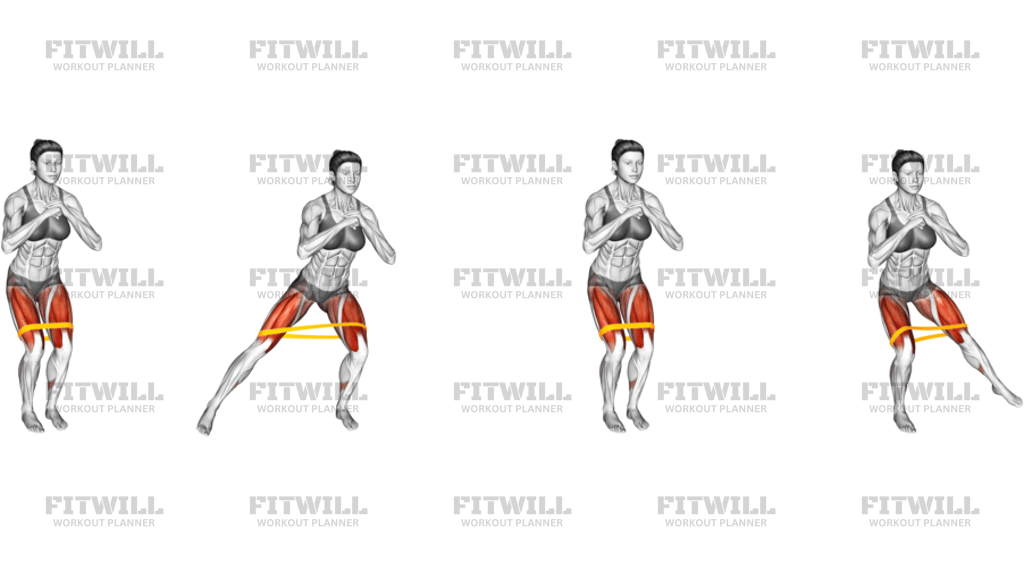
Instructions
- Loop a resistance band above your knees and stand with your feet about shoulder-width apart, toes slightly turned out.
- Lower into a quarter squat with your chest tall, hips back, and weight centered over midfoot.
- Press your knees gently out so the band stays taut before you take the first step.
- Step one foot out to the side without letting your hips rise or your knees cave inward.
- Bring the other foot in under control to re-establish the same squat stance.
- Keep the band stretched and your knees tracking over your toes as you continue stepping side to side.
- Hold the squat depth steady through each step instead of standing fully upright between reps.
- Breathe out during each step and inhale as you reset the stance.
- Finish the set by bringing your feet back under you and standing tall with control.
Tips & Tricks
- Keep the band just above the knees; if it slides to the calves, the outward tension usually disappears and the feet do too much of the work.
- Use a short, controlled step. If the step is too wide, the pelvis shifts and the squat position collapses.
- Stay in a shallow squat rather than sitting too low, because excess depth makes it harder to keep the knees tracking cleanly.
- Push the knees slightly out before each step so the band never goes slack between reps.
- Keep the chest proud and the ribs stacked over the pelvis; leaning far forward turns the movement into a balance drill instead of a hip drill.
- Move slowly enough that you can feel the outer hips resisting the inward pull of the band on every step.
- If your feet click together or you bounce between steps, reduce the pace and keep one foot grounded before the other moves.
- Choose a band tension that lets you keep the same squat height for the whole set instead of standing up to escape the burn.
Frequently Asked Questions
What muscles does Resistance Band Squat Step Out work most?
It mainly challenges the glutes and outer hips, especially the muscles that keep the knees from collapsing inward. The quads and core help keep the squat steady.
Should the resistance band stay above the knees?
Yes. Placing the band above the knees makes it easier to keep constant outward tension and helps you feel the hips work without changing the rest of the setup.
How far should I step during Resistance Band Squat Step Out?
Step far enough to keep tension on the band, but not so far that your torso sways or your squat height changes. Short, controlled steps usually work best.
Do I need to stay in a squat the whole time?
Yes, keep a small squat the whole set. Standing up between steps reduces the load on the hips and turns the movement into a simple side walk.
Is Resistance Band Squat Step Out good before squats or lunges?
Yes. It can be a useful warmup because it wakes up the outer hips and rehearses knee tracking before heavier lower-body work.
Can beginners do this exercise safely?
Yes, as long as the band is light enough to keep the squat position steady. Beginners should use small steps and stop before the knees start caving in.
What is the most common form mistake?
The most common mistake is letting the knees collapse inward or standing up between steps. Both reduce the tension on the hips and make the rep less useful.
How can I make Resistance Band Squat Step Out harder?
Use a tighter band, slow the side steps down, or stay in the squat a little longer before moving the next foot. The challenge should come from steady tension, not bigger swings.