Band Pull Through
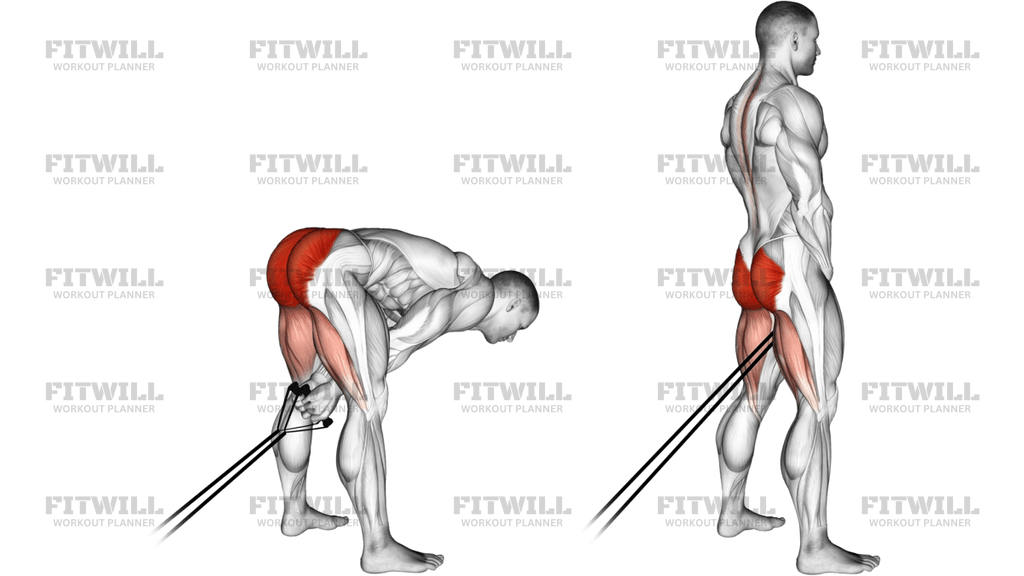
Band Pull Through is a hip-hinge strength exercise that trains the glutes through a long, controlled pull from behind the body. The band is anchored low behind you and passes between the legs, so the setup creates constant tension as you hinge back and then drive the hips forward. That makes Band Pull Through useful for building glute strength, improving hinge mechanics, and teaching the pelvis and ribcage to stay organized under load.
The main demand is on the glutes, with the hamstrings helping extend the hips and the trunk muscles resisting spinal motion while the band pulls you backward. In anatomy terms, the primary work centers on the Gluteus Maximus, with support from the Biceps Femoris, Rectus Abdominis, and Erector Spinae. Because the resistance increases as you stand up, the exercise rewards a clean hinge more than a sloppy squat pattern.
A good Band Pull Through starts with the band positioned low behind you and your feet set far enough away that you can feel tension before the first rep. Hinge the hips back, keep the knees softly bent, and let the torso lean forward without rounding the lower back. The handles or band should stay close to the body line as you return to standing, and the top position should finish with a hard glute squeeze rather than a backward lean.
This movement works well as a glute accessory after squats or deadlifts, as part of lower-body warm-ups, or as a lighter hinge option when you want tension without a heavy barbell. It can also help lifters learn how to separate hip extension from lumbar extension. If the band is too light or the anchor is too high, the exercise becomes less useful because the resistance no longer matches the intended pull-through path.
Safety depends on controlling the bottom position and respecting the band tension. Keep the spine long, the ribs stacked, and the neck neutral so the band does not drag you into a rounded hinge. If the band snaps you forward or you feel the work mostly in the low back, shorten the range, step farther from the anchor, or use a heavier band that gives a more even pull. Done well, Band Pull Through is a simple but effective way to load the glutes with smooth, repeatable tension.
[ Workout Log & Planner ]
Put your next workout in Fitwill
Keep your plan and training log ready when you are.


Instructions
- Anchor a resistance band low behind you and step forward until the band is tight with your feet about hip-width apart.
- Stand facing away from the anchor, thread the band between your legs, and hold it with both hands so it stays close to your hips.
- Soften your knees, keep your feet flat, and set your weight through the middle of each foot and the heels.
- Hinge your hips back until your torso leans forward and you feel tension in the glutes and hamstrings without rounding your lower back.
- Keep your arms straight and let the band travel back between your thighs as your hips move behind you.
- Drive your hips forward by squeezing your glutes and standing tall until your torso is upright.
- Finish the rep with the ribs stacked over the pelvis and avoid leaning back or thrusting the hips past neutral.
- Lower into the next rep under control, keeping the band tension steady and the torso braced.
- After the final rep, walk the band back to the anchor carefully and release it with control.
Tips & Tricks
- Set the anchor low enough that the band pulls backward through the hips, not upward into your hands.
- Step farther from the anchor if the band goes slack at the top; the exercise should stay loaded through the whole rep.
- Keep the arms long like straps, because bending the elbows turns the movement into an upper-body pull.
- Stop the hinge when your lower back starts to round; depth should come from the hips, not from reaching the torso lower.
- Think about pushing the hips toward the wall behind you on the way down and snapping the glutes forward on the way up.
- Do not lock the knees hard at the top, or the band will shift the work away from the glutes.
- Use a band heavy enough that the last third of the stand-up feels challenging without jerking the torso.
- If you feel the movement mostly in your low back, shorten the range and keep the ribs from flaring at the finish.
Frequently Asked Questions
What muscle does Band Pull Through target most?
The glutes are the main target, especially at the top of the hip extension. The hamstrings and trunk muscles help support the hinge and keep the torso organized.
Can beginners perform this exercise?
Yes. It is often easier to learn than a barbell hinge because the band gives smooth resistance and less overall load. Start with a light band and a short range until the hinge feels natural.
Where should the band sit during a Band Pull Through?
The band should be anchored low behind you and pass between your legs. If the anchor is too high, the pull changes and the exercise stops feeling like a true hip hinge.
Why do I feel Band Pull Through in my lower back instead of my glutes?
That usually means you are rounding at the bottom, overextending at the top, or stepping too close to the anchor. Keep the ribs stacked, hinge from the hips, and finish with a glute squeeze rather than a backward lean.
Should my knees bend a lot during Band Pull Through?
Only slightly. A soft knee bend helps you keep tension on the glutes and hamstrings, but too much knee travel turns the movement into a squat instead of a hinge.
Is Band Pull Through a replacement for deadlifts?
Not as a full replacement, but it is a useful lighter hinge option. It works well as accessory work when you want glute-focused volume without heavy spinal loading.
How should I breathe during Band Pull Through?
Inhale as you hinge back, then exhale as you drive the hips forward and stand tall. Keep the torso braced so the breath supports the hinge instead of inflating the ribs.
What is the easiest way to make Band Pull Through harder?
Use a thicker band or step farther from the anchor so tension stays higher through the standing phase. You can also slow the return and pause for a second at full hip extension.