Band Hip Lift
Band Hip Lift is a bridge-style hip extension exercise done on the floor with a band adding resistance to the pelvis. It is built to train the glutes first, while the hamstrings and deep trunk muscles help keep the hips level and the ribs stacked. The movement looks simple, but the band makes the top position more demanding, so the setup and the lockout matter as much as the lift itself.
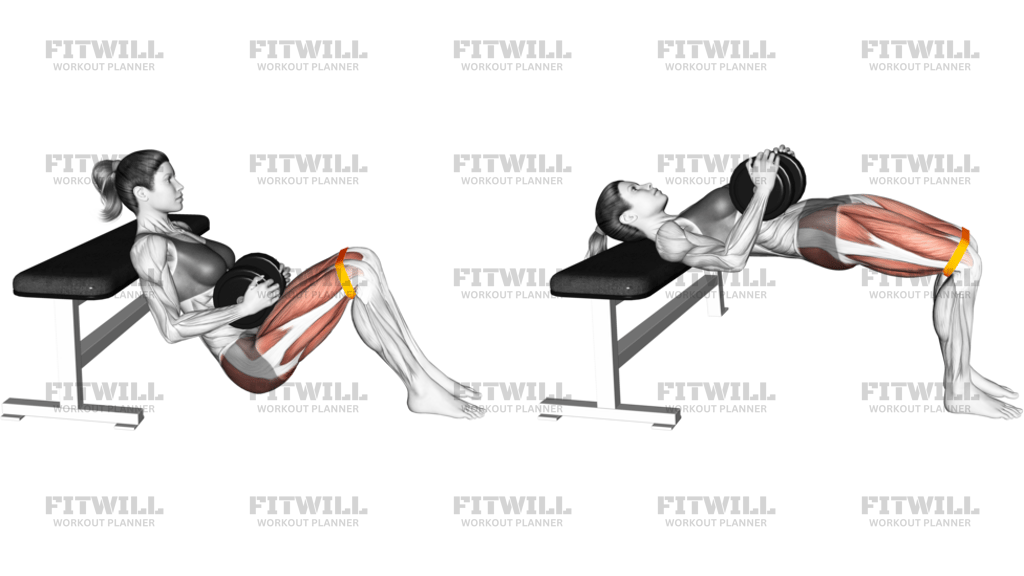
The image shows a supine position with the knees bent and the feet planted, which is the right base for this movement. From there, the band should be set so it pulls down on the hips while the upper back and feet stay rooted to the floor. That arrangement is useful because it lets you load hip extension without needing a bench or machine, and it keeps the tension where you can actually feel the glutes working.
During each rep, the goal is to drive the pelvis up until the torso and thighs form a strong line, then hold that position without arching the lower back. If the ribs flare or the hips tilt, the band turns the exercise into a low-back compensation drill instead of a glute-focused lift. A controlled descent is just as important: lowering under tension keeps the movement honest and makes each rep repeatable.
Band Hip Lift fits well as a warm-up, accessory lift, or glute activation drill when you want a floor-based pattern that is easy to set up and easy to control. It is also a good option when you want to reinforce hip extension without heavy spinal loading. Keep the range pain-free, keep the neck relaxed, and let the glutes finish the rep instead of chasing height with momentum.
For a harder set, use a stronger band, slow the lowering phase, or add a brief pause at the top. For a cleaner beginner version, reduce the band tension and shorten the range until you can keep the pelvis level from start to finish. The best sets feel crisp, stable, and centered in the hips rather than rushed through the lower back.
Fitwill
Log Workouts, Track Progress & Build Strength.
Achieve more with Fitwill: explore over 9600 exercises with images and videos, access built-in and custom workouts, perfect for both gym and home sessions, and see real results.
Start your journey. Download today!




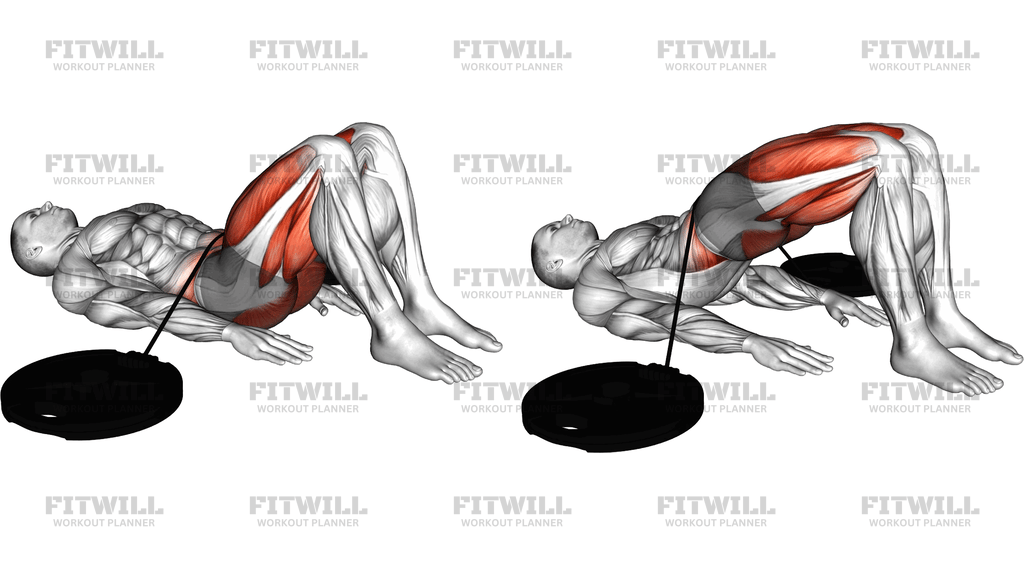
Instructions
- Lie on your back with your knees bent, feet flat, and feet about hip-width apart.
- Set the band so it pulls down on your hips and pin or anchor it low beside your upper body, as shown in the image.
- Keep your shoulder blades and the back of your head relaxed on the floor, with your ribs stacked over your pelvis.
- Brace your abs lightly and squeeze your glutes before you start the lift.
- Press through your heels and raise your hips until your thighs and torso make one strong line.
- Pause at the top without arching your lower back or shifting your weight into your toes.
- Lower your hips slowly until they are just above the floor and the band stays under tension.
- Reset your breath and repeat for the planned number of reps.
Tips & Tricks
- If you feel the hamstrings taking over, bring your heels a little closer to your hips and think about pushing the floor away through the heels.
- Keep the band line centered over the hips; if it slides toward the stomach, the top position usually turns into a lower-back arch.
- The top rep should feel like hip extension, not a hard crunch through the ribs or a big sway of the pelvis.
- A short pause at lockout makes the glutes do the work instead of bouncing through the rep.
- Lower under control until the hips are close to the floor, but do not fully relax the band between reps.
- Keep your chin slightly tucked so your neck does not help drive the lift.
- Use a band tension that lets you keep your pelvis level; too much tension usually causes twisting or rib flare.
- Exhale as you drive up and keep the exhale controlled through the top position.
- Stop the set if you cannot keep the same hip height on both sides or you start feeling the movement mostly in the lower back.
Frequently Asked Questions
What muscle does Band Hip Lift target most?
The glutes are the main target, especially at the top of the hip lift.
How is this different from a regular glute bridge?
It uses band tension to make the top of the bridge more challenging and to keep the hips working through a stronger lockout.
Where should the band sit during the lift?
It should pull down on the hips or pelvis rather than riding up onto the stomach or lower ribs.
How high should my hips go?
Lift until your torso and thighs form a strong line, then stop before your lower back starts to arch.
Why do I feel this in my hamstrings?
Your feet may be too far from your hips or you may be losing glute tension at the top, so slide the feet in a little and re-brace.
Can I use this as a warm-up exercise?
Yes, it works well as a glute activation drill before squats, deadlifts, or other lower-body work.
What should I do if the band keeps slipping?
Move it lower on the hips, use a cleaner setup, and reduce the tension until you can keep the band centered through every rep.
Is this safe for beginners?
Yes, as long as the band tension is light and you can keep the ribs down and the hips level.