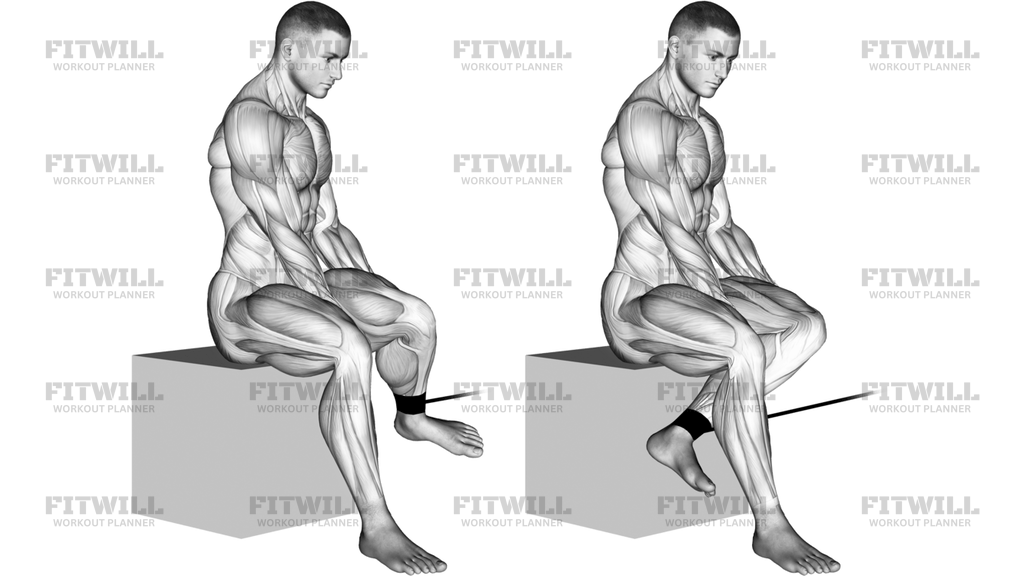
Band Seated Hip External Rotation
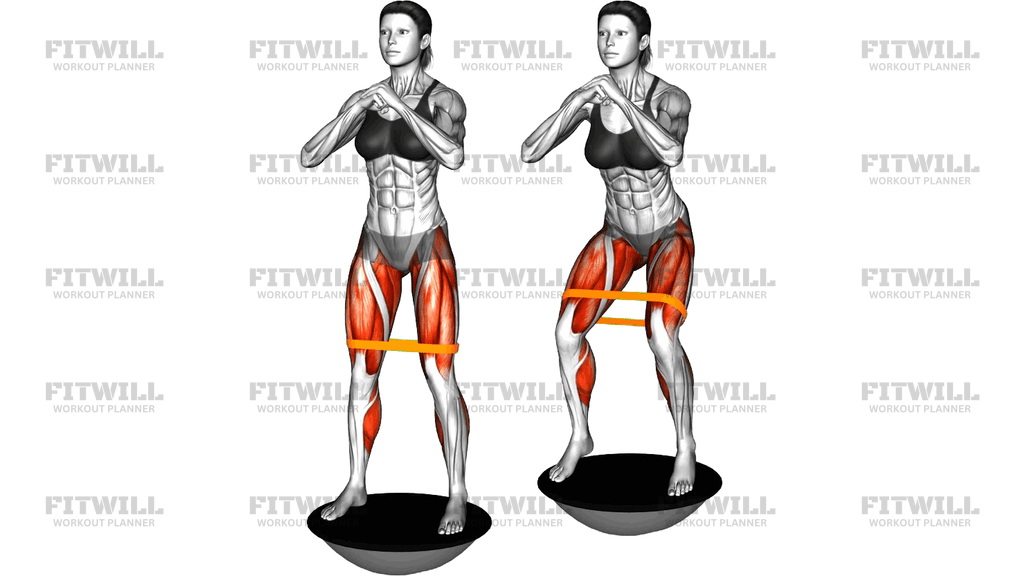
Band Seated Hip External Rotation is a controlled hip-accessory exercise that trains the muscles that turn the thigh outward and help stabilize the pelvis. It is commonly used to build better hip control, cleaner knee tracking, and stronger awareness of how the hips move without the lower back or torso doing the work.
The seated setup matters because it reduces cheating. When you sit tall with the band set just above the knees, the goal is to keep the feet planted and let the thighs rotate outward from the hips. That makes the exercise useful for warm-ups, prehab work, glute activation, and lighter accessory sets where position and control matter more than load.
Good reps feel deliberate. Open the knees only as far as you can while keeping the pelvis level, ribs stacked, and pressure even through both feet. The band should challenge the outward rotation without forcing you to lean back, lift a hip, or swing the legs open. A short pause in the open position usually improves the quality of the contraction.
This movement is especially helpful for lifters who need cleaner squat, hinge, lunge, or single-leg mechanics, because hip external rotators and glute medius often help keep the femur aligned. Use it when you want a joint-friendly way to wake up the hips before training or add low-fatigue work at the end of a session.
Keep the resistance light enough that each rep looks identical. If the knees snap open, the lower back arches, or the feet start sliding, the band is too heavy or the range is too big. The best version of this exercise is smooth, centered, and repeatable, with the hips doing the work and the torso staying quiet.
Fitwill
Log Workouts, Track Progress & Build Strength.
Achieve more with Fitwill: explore over 9600 exercises with images and videos, access built-in and custom workouts, perfect for both gym and home sessions, and see real results.
Start your journey. Download today!




Instructions
- Sit on a bench or box with your feet flat on the floor and the band looped just above your knees.
- Plant both feet about hip-width apart and sit tall with your ribs stacked over your pelvis.
- Keep your knees pointed forward to start and let the band have a little tension before you move.
- Brace lightly through your midsection so your torso stays upright instead of leaning back.
- Rotate both thighs outward by pressing your knees away from each other against the band.
- Stop when your hips stop moving and your pelvis starts to tip or twist.
- Pause briefly in the open position, then return the knees together under control.
- Keep the feet planted and repeat for the planned number of repetitions.
Tips & Tricks
- Sit on something high enough that your hips stay above your knees and you can keep your chest tall.
- Use a band that opens the knees without forcing your feet to roll outward or your hips to rock.
- Think about spinning the thighs outward, not just pushing the knees apart with your feet.
- Keep even pressure through both heels so one side does not take over the movement.
- A smaller, cleaner range is better than opening the knees so far that your pelvis twists.
- Exhale as you open the knees and inhale as you return to the start.
- If the lower back starts working harder than the hips, shorten the range and lighten the band.
- Use slow returns to keep tension on the hip rotators instead of letting the band snap your knees back.
Frequently Asked Questions
What muscles work hardest in Band Seated Hip External Rotation?
The hip external rotators and glute medius do most of the work, with the deep glute muscles and core helping keep the pelvis steady.
Where should I place the band?
Most versions use the band just above the knees so the thighs have to rotate outward instead of the feet doing all the work.
Should my feet move during the rep?
No. Keep both feet planted and let the knees and thighs open and close from the hip joint.
How do I know if I am using too much band tension?
If you have to lean back, twist your pelvis, or let your feet roll outward to finish the rep, the band is too heavy.
Can beginners do this exercise?
Yes. It is beginner-friendly when the band is light and the range stays controlled.
What is the most common form mistake?
People usually open the knees by arching the lower back or shifting the hips instead of rotating from the thigh.
When should I use this exercise in a workout?
It works well in a warm-up, activation block, or light accessory section before bigger lower-body lifts.
What should I do if I feel it in my lower back instead of my hips?
Reduce the band tension, sit taller, and shorten the range so the hips stay in control and the pelvis stays quiet.