Band Shoulder Press
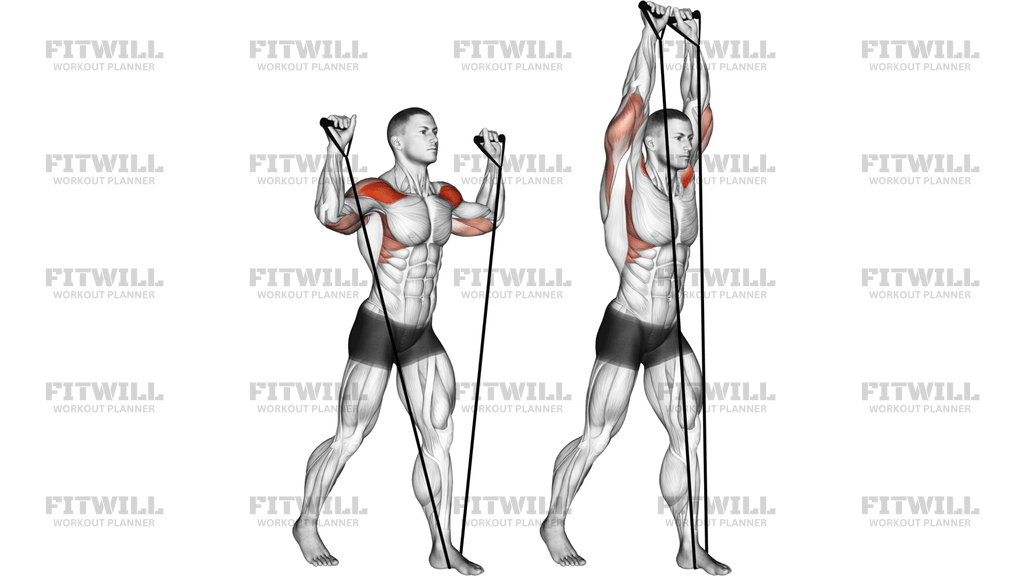
Band Shoulder Press is a standing overhead press performed with a resistance band under the feet and the handles or ends lifted from shoulder height to lockout overhead. It trains the shoulders through a long, resistance curve that gets harder as the band stretches, so the top of each repetition demands the most control. That makes it a practical choice for building pressing strength, shoulder endurance, and cleaner overhead mechanics without needing a machine or dumbbells.
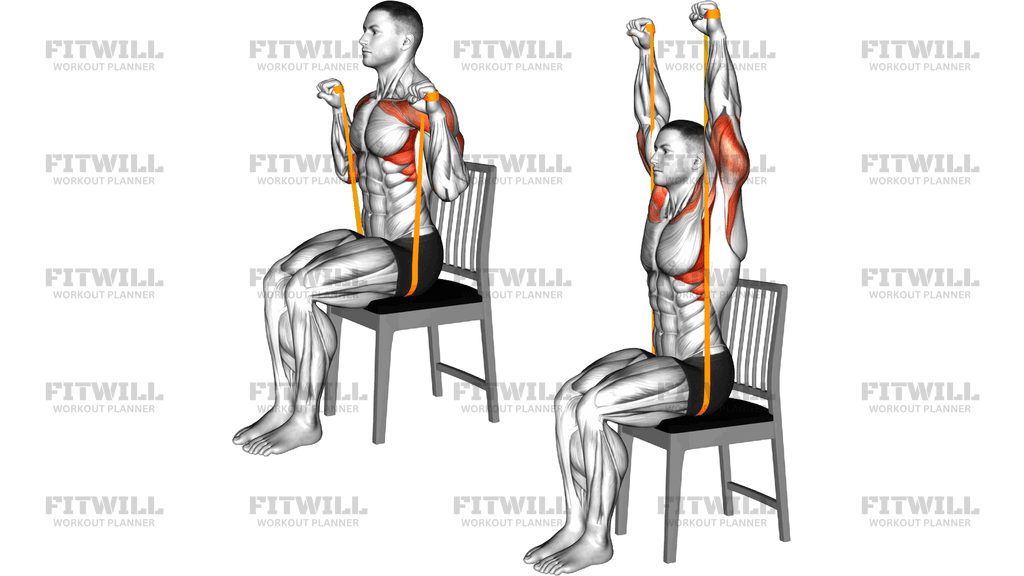
The image shows a tall, stable stance with the band anchored beneath the feet and the hands starting beside the shoulders. That setup matters because the band line, foot pressure, and torso brace determine whether the press stays smooth or turns into a lean-back lift. Keep the ribs stacked over the pelvis, resist arching through the lower back, and let the shoulders do the work instead of turning the movement into a standing incline press.
At the bottom, the elbows should sit slightly forward of the torso and just under the wrists. Press the band on a slight arc so the hands finish above the shoulders and a little behind the ears, not far in front of the face. As the arms extend, the shoulder blades should rotate upward naturally rather than being forced down and pinned back. That overhead rhythm is what makes the exercise useful for both strength work and shoulder stability.
Band Shoulder Press fits well in upper-body sessions, warm-ups, accessory blocks, or conditioning circuits where you want controlled tension and joint-friendly resistance. It is especially useful when you want to train overhead pressing without a heavy setup, or when you need a regression for pressing volume. The band keeps constant tension on the delts and triceps, while the upper back works to keep the torso organized and the press path clean.
Use a band tension that lets you reach full overhead lockout without shrugging, leaning, or flaring the ribs. A smooth rep should look deliberate from the first press to the return, with no bounce out of the bottom and no crashing into the shoulders on the way down. If the band pulls you off balance, shorten the range slightly or reduce resistance before chasing more repetitions.
[ Workout Log & Planner ]
Put your next workout in Fitwill
Keep your plan and training log ready when you are.


Instructions
- Stand on the middle of the band with both feet about hip-width apart, or in the staggered stance shown in the image if you need extra balance.
- Hold the band ends at shoulder height with your elbows slightly in front of your torso and your wrists stacked over your elbows.
- Brace your core, keep your ribs down, and set your chest tall without leaning backward.
- Press both hands upward in a smooth path until your arms are straight overhead.
- Finish with the biceps close to the ears and the band stretched vertically over the shoulders.
- Lower the band back to shoulder height under control, letting the elbows track down and slightly forward.
- Keep the neck relaxed and avoid shrugging as the hands travel overhead.
- Exhale as you press up and inhale as you return to the start.
Tips & Tricks
- If the band is too light at the start, shorten your grip slightly or use a stronger band; if it is too hard to get overhead, reduce tension before the first rep.
- Keep the wrists stacked over the elbows at the bottom so the press starts from the shoulder, not from a bent wrist or forward drift.
- Do not turn the press into a standing backbend; a small rib flare can make the band feel easier, but it shifts work away from the delts.
- Press slightly in front of the head on the way up, then let the arms finish in line with or just behind the ears at lockout.
- Let the shoulder blades rotate upward naturally instead of pinning them hard down and back, which can make overhead range feel cramped.
- Use a slow, controlled lowering phase because the band loses tension quickly if you drop the handles back to the shoulders.
- Keep the front foot and back foot pressed into the floor so the band force does not pull you onto your toes.
- Stop the set when the elbows flare wide, the neck tightens, or the lower back starts taking over the rep.
Frequently Asked Questions
What muscle does Band Shoulder Press target most?
The delts are the primary movers, especially the front and middle shoulder fibers.
How should my feet be placed on the band?
Stand on the middle of the band with both feet about hip-width apart so the resistance is even on both sides.
Should I press straight up or slightly forward?
Press on a slight arc so the handles finish over the shoulders and close to the line of your ears, not far in front of your body.
Why does the top of the rep feel harder with a band?
A band creates more tension as it stretches, so the lockout is usually the hardest part of the press.
Can I do this with a staggered stance like the image?
Yes. A staggered stance can help you balance the band and keep your torso from swaying, especially with stronger resistance.
What should I avoid at the bottom of the press?
Avoid letting the elbows drift too far behind the body or letting the wrists collapse backward under the band.
Is this a good substitute for dumbbell shoulder press?
Yes, it is a useful substitute when you want standing overhead pressing with lighter equipment or a smoother resistance curve.
How do I know if the band is too heavy?
If you have to lean back, shrug hard, or lose the overhead finish, the band is too heavy for strict reps.