Lying Isometric Quad Hold
The Lying Isometric Quad Hold is a simple yet highly targeted contraction drill for the front of the thigh. You lie flat on your back with a rolled towel placed under one knee, then press the back of that knee down into the towel while keeping the leg still. The tension comes entirely from the quadriceps squeezing isometrically — there is no joint movement, no load through the foot, and no bending or straightening of the knee once the hold begins.
This movement is a staple in early-stage knee rehabilitation and return-to-training programs. After injury, surgery, or a flare-up of knee pain, the quadriceps often switch off or fire weakly, a phenomenon coaches and physical therapists call quadriceps inhibition. Because the Lying Isometric Quad Hold trains the muscle without moving the knee joint, it lets you rebuild that mind-muscle connection and basic strength with very little stress on the joint itself. It is equally useful for beginners who have never felt their quads contract deliberately, and for lifters who want a low-fatigue activation drill before squats or leg presses.
The setup matters more than it looks. The rolled towel under the knee creates a slight bend and, more importantly, gives the quad something to press against. Without it, a straight-leg squeeze produces a much weaker contraction and it becomes easy to lose focus. Lying down also removes the balance and hip demands of standing variations, so all of your attention can go into the thigh itself. Keep the other leg relaxed and straight beside it, arms resting at your sides, and your head neutral on the floor.
To execute it well, exhale, then drive the back of the knee down into the towel and feel the entire front of the thigh tighten from hip to just above the kneecap. The heel may lift a few millimeters off the floor — that is fine — but the hip and lower back should stay quiet. Hold the squeeze firmly for five to ten seconds, breathing steadily rather than bearing down, then release the tension completely and let the leg rest before the next repetition. Quality of the squeeze matters far more than duration; a crisp, full contraction for eight seconds beats a half-hearted thirty-second hold.
Common use cases include post-injury quad reactivation, prehab around the kneecap, warm-up sets before heavier leg training, and maintaining thigh strength during periods when loaded knee flexion or extension is uncomfortable. Because the drill is gentle, it can be performed daily, but it should never push through sharp pain. If pressing down causes discomfort at the knee itself, reduce the size of the towel roll or the intensity of the squeeze and build back up gradually. Treat this as a precision exercise, not an endurance grind.
[ Workout Log & Planner ]
Put your next workout in Fitwill
Keep your plan and training log ready when you are.


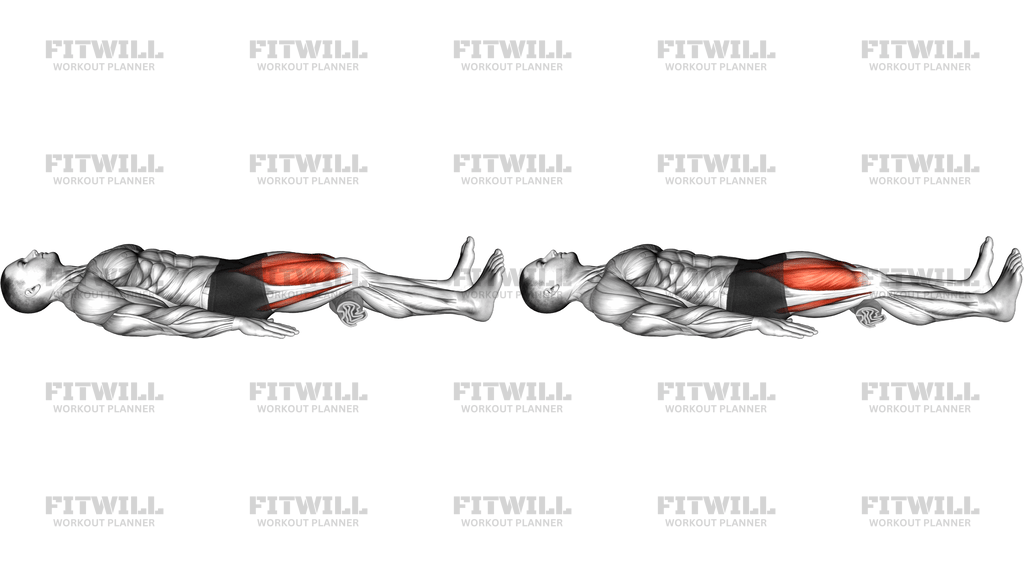
Instructions
- Lie flat on your back on an exercise mat or firm floor with both legs extended and your arms relaxed at your sides.
- Roll a towel into a cylinder roughly 10 to 15 centimeters thick and slide it under one knee so the back of the knee rests on top of it.
- Point the toes of the working leg toward the ceiling and let the opposite leg lie relaxed and straight on the floor.
- Take a breath, brace your core lightly, and keep your lower back in comfortable contact with the floor.
- Exhale and press the back of the knee down into the towel, straightening the leg against the roll.
- Squeeze the entire front of the thigh hard — from the hip down to just above the kneecap — and hold the contraction without letting the hip or buttock take over.
- Keep breathing steadily during the hold; do not hold your breath or clench your jaw.
- After five to ten seconds, release the squeeze slowly and let the leg rest fully on the towel for a few seconds.
- Reset your position if the towel has shifted, then repeat for the prescribed number of reps before switching legs.
Tips & Tricks
- If you cannot feel the quad working, press the knee down harder and pull your toes toward your shin — the thigh should visibly tighten and the kneecap should glide slightly upward.
- A common mistake is letting the glute or hamstring do the pressing. Put your free hand on the front of the thigh to confirm it is the muscle tightening.
- Do not drive the lower back into the floor as you squeeze; if your trunk tenses hard, you are exceeding the effort the exercise needs.
- Keep the towel roll directly behind the knee crease. Placing it too far down the calf turns the drill into a hamstring push instead of a quad contraction.
- The heel lifting slightly off the floor is normal, but the whole leg should not rise — if the hip flexes, reduce the force and reset.
- Match hold length to contraction quality: stop the set when the squeeze feels noticeably weaker rather than pushing through fatigue.
- On days when the knee feels irritable, use a slightly larger roll or press at a lower intensity instead of skipping the exercise entirely.
- Compare sides. If one quad fires much weaker after injury, perform an extra set on that side and always start with the weaker leg.
Frequently Asked Questions
Which muscles does the Lying Isometric Quad Hold work?
It targets the quadriceps on the front of the thigh, including the rectus femoris and the vasti muscles around the knee. Because the contraction is isometric, the muscle works without the knee joint actually moving.
Why is a towel placed under the knee during this exercise?
The rolled towel gives the back of the knee a firm surface to press into, which produces a much stronger and more focused quad contraction than squeezing with the leg flat on the floor. It also supports the knee in a slight, comfortable bend.
Is the Lying Isometric Quad Hold suitable for beginners?
Yes, it is one of the easiest quad exercises to learn because there is no balance, load, or joint movement to coordinate. Beginners should focus on feeling the whole front of the thigh tighten during each short hold.
How long should I hold each contraction?
Five to ten seconds per hold works well for most people, with complete relaxation between reps. If the squeeze fades before you reach your target time, shorten the holds instead of tolerating a weak contraction.
Can I do this exercise every day?
In most cases yes, because the drill creates very little fatigue and no joint impact. Daily practice is common when reactivating the quad after a layoff, but stop if you notice increased knee pain or swelling.
What is the most common mistake in the Lying Isometric Quad Hold?
The most common error is pressing with the glutes and hamstrings instead of actually contracting the quad, often paired with a tense lower back. Placing a hand on the thigh to feel it tighten keeps the work where it belongs.
What can I use if I do not have a towel?
Any soft, rolled object of similar thickness works, such as a small blanket, sweatshirt, or foam pad. The goal is simply a compressible roll behind the knee crease to press against.
How is this different from a straight-leg raise?
A straight-leg raise lifts the whole leg and loads the hip flexors heavily, while the Lying Isometric Quad Hold keeps the leg still and isolates the quad squeeze itself. It is lower effort and easier to control, which is why it is used earlier in training progressions.
When should I progress beyond the Lying Isometric Quad Hold?
Once you can produce a strong, crisp squeeze for all prescribed holds without pain, move on to short-arc knee extensions and then straight-leg raises. Progress when quality stays high, not just when the holds feel easy.