Medicine Ball Overhead Toss
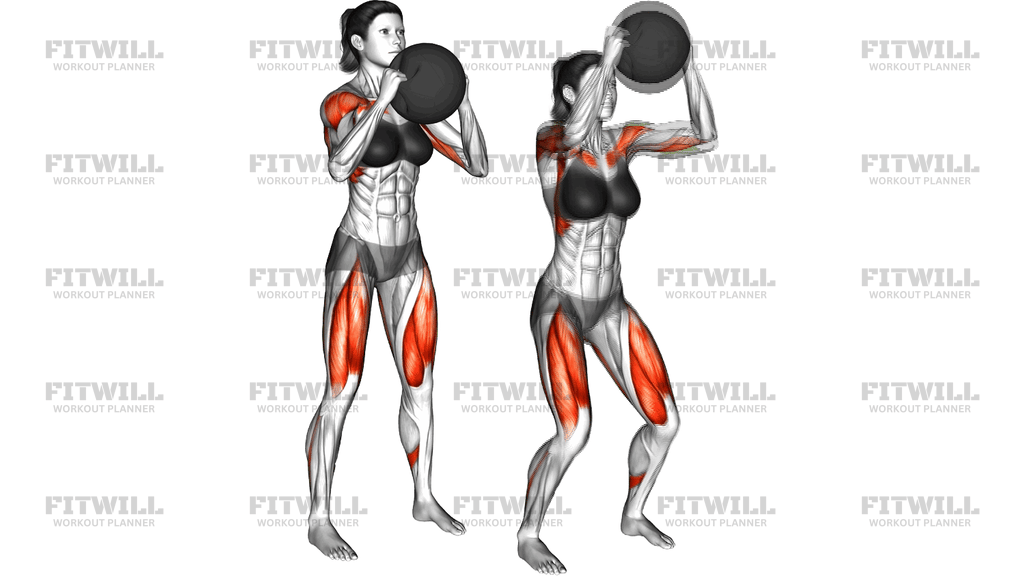
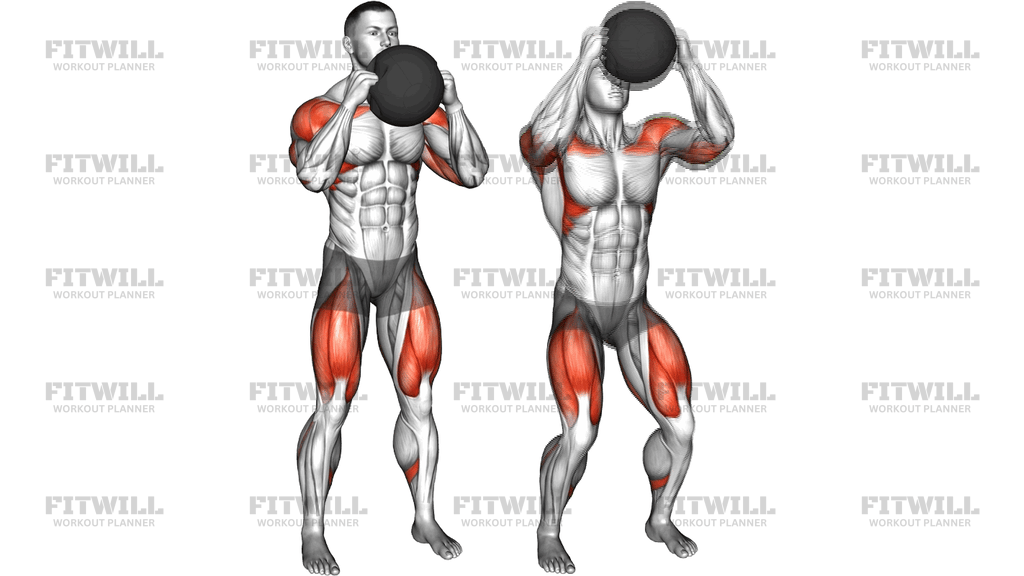
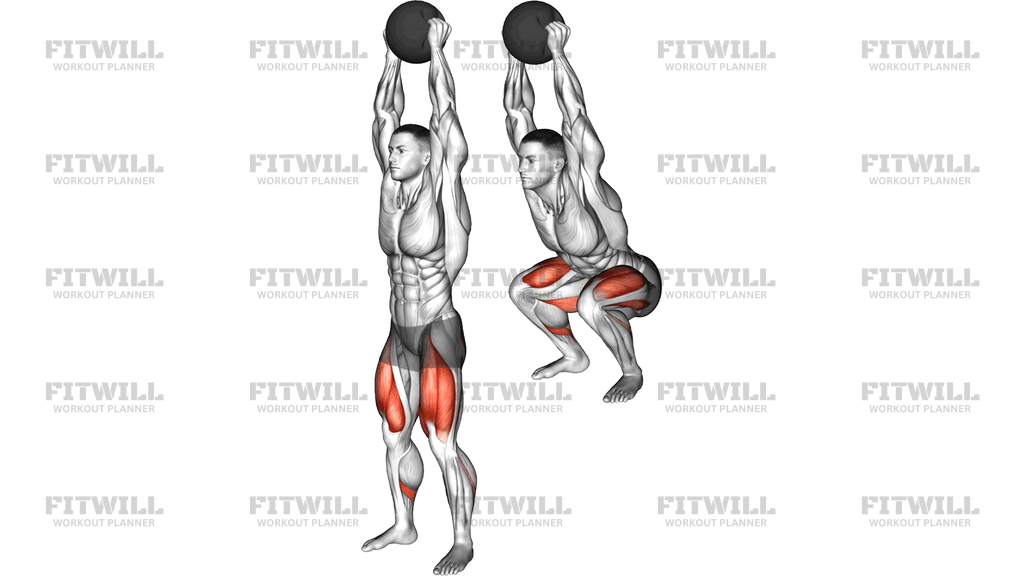
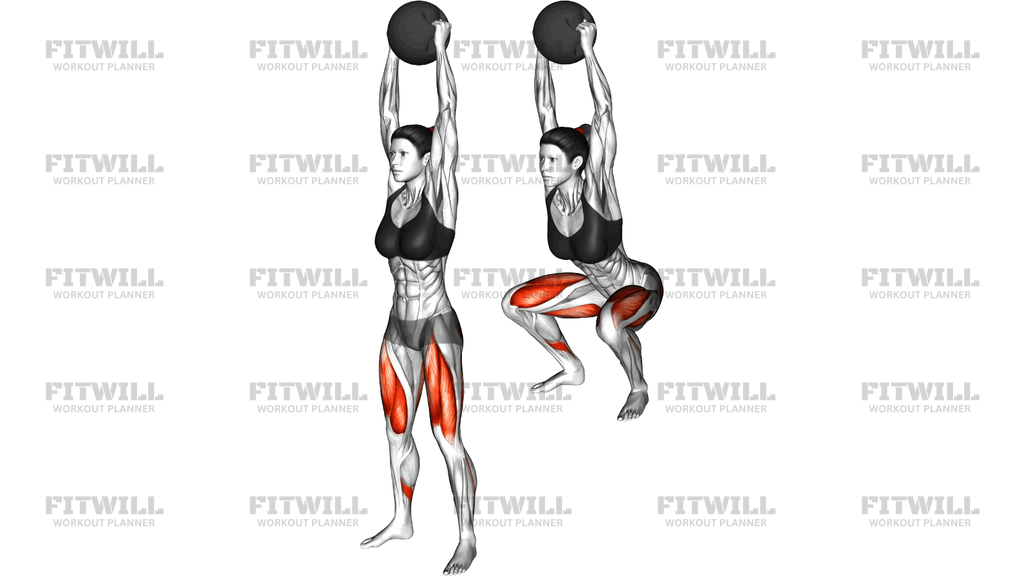
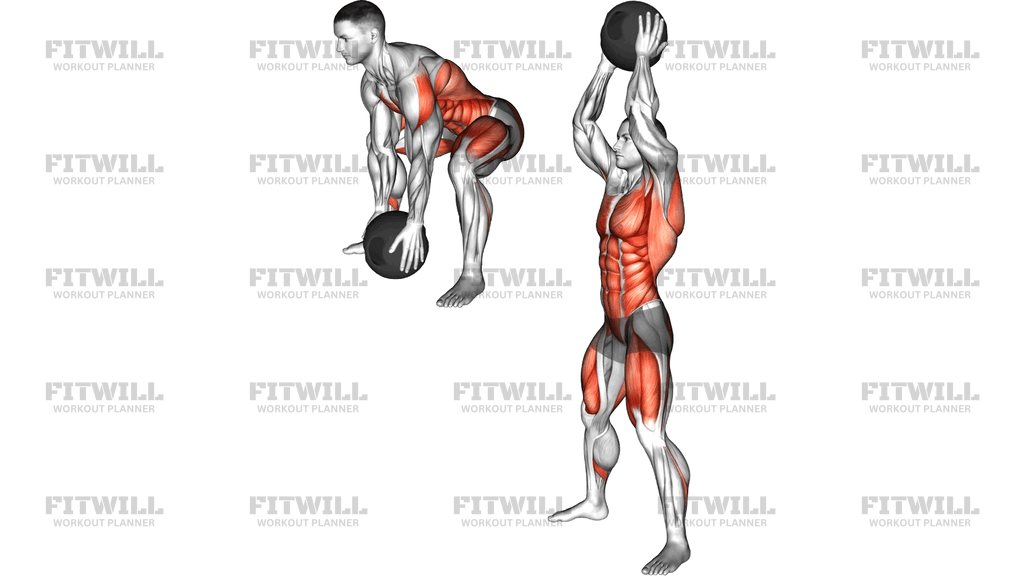
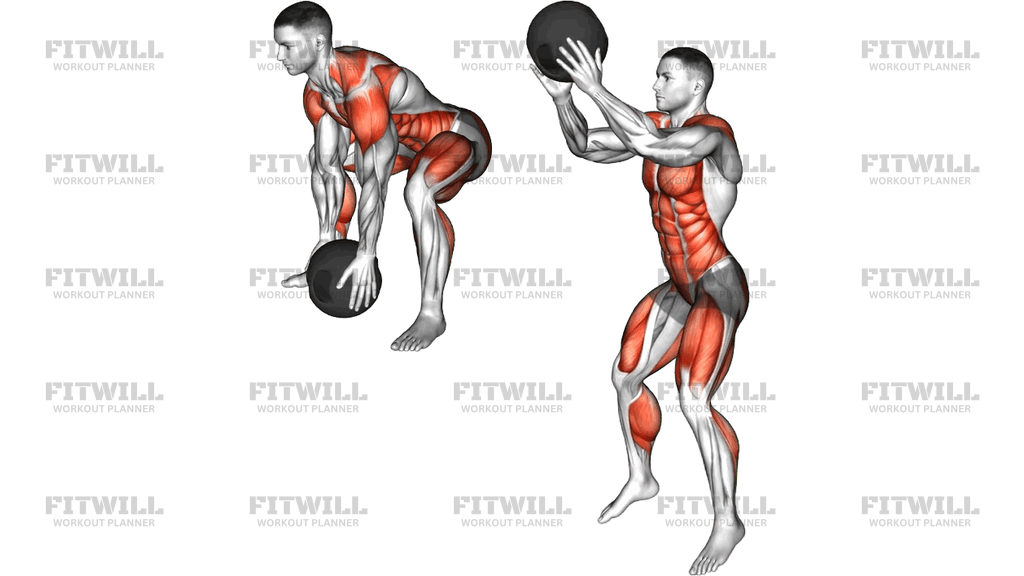
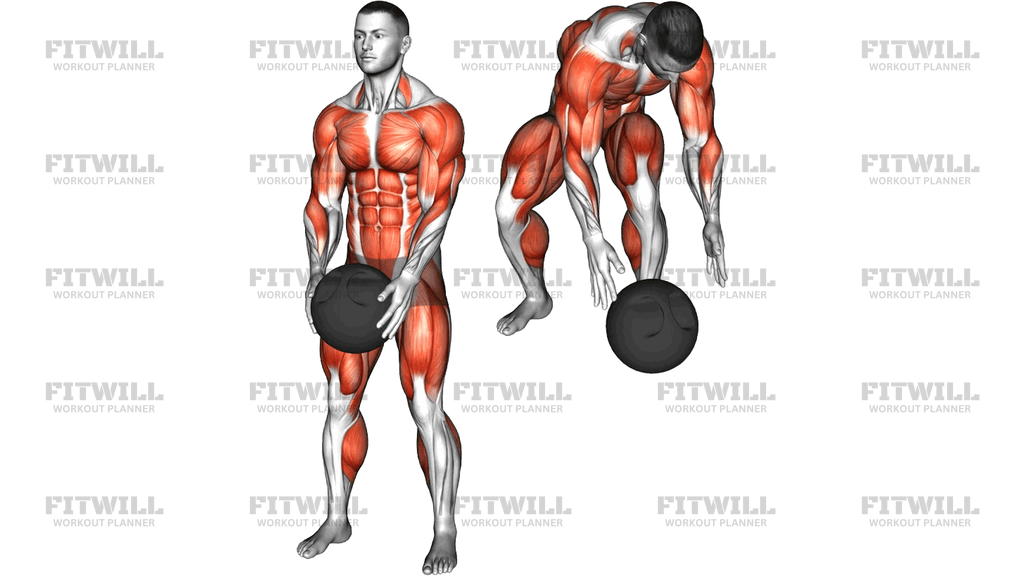
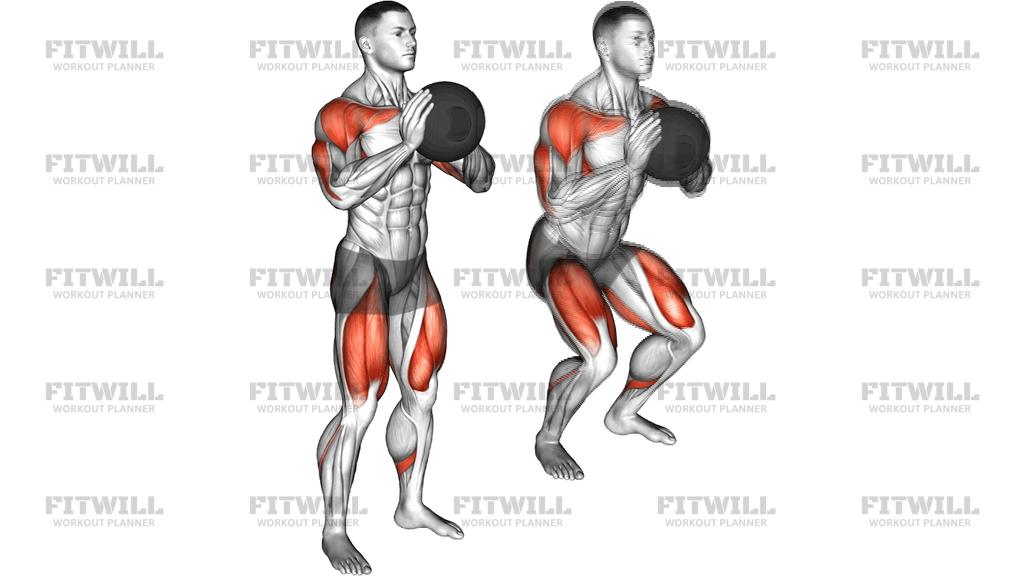
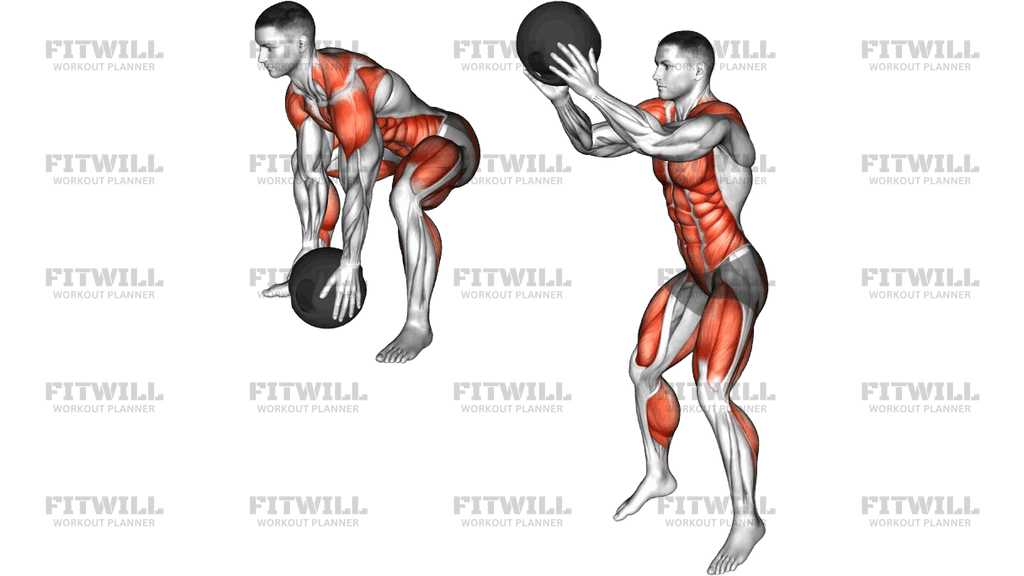
The Medicine Ball Overhead Toss is an explosive, full-body throw that starts with the ball loaded low at the floor and finishes with it launched up and forward above your head. You begin in a hip hinge or quarter squat, gripping a medicine ball between your feet, then drive through the ground to stand tall and release the ball in one continuous, powerful motion. Because the throw travels from the ground up, it rewards strong hip extension more than arm strength, which is exactly what makes it valuable.
This movement is a staple for athletes who need explosive triple extension — sprinters, jumpers, throwers, and field sport players — but it also works well for general lifters who want a low-skill way to train power. Unlike slow strength lifts, the overhead toss forces you to accelerate a load all the way to release, which recruits the glutes, quads, and hamstrings hard and teaches the core to transfer force from lower body to upper body without leaking energy.
The setup matters more than most people expect. Your stance width, hand position on the ball, and how low you load it all determine whether the throw comes from your hips or gets cheated with a forward lean and a shoulder-only press. Keeping your back relatively flat in the hinge position and your weight mid-foot sets you up to extend vertically instead of collapsing forward as you throw.
To execute it well, think of the ball as the last thing that moves, not the first. Hips and legs drive the floor away, the torso follows, and the arms simply guide the ball overhead and release it at full extension. The best throws look almost effortless at the top because the momentum was generated from below. Use a wall, open field, or partner as a target and choose a ball weight that lets you throw fast — a ball that is too heavy turns this into a grind and defeats the purpose.
You will see this exercise in warm-up sequences before lower body lifting days, in dedicated power blocks, and in conditioning circuits where a few maximal throws are followed by rest. Start with a lighter ball in the 4–8 lb range, keep the reps low per set so every throw stays sharp, and prioritize quality of extension over distance or ball size.
[ Workout Log & Planner ]
Put your next workout in Fitwill
Keep your plan and training log ready when you are.


Instructions
- Place a medicine ball on the floor between your feet and set your stance about shoulder-width apart with your toes pointed slightly out.
- Hinge at the hips and bend your knees to lower into a quarter squat, gripping the ball on both sides with your fingers spread and your arms straight.
- Keep your chest tall enough that your back stays flat, and shift your weight to the middle of your feet so you are ready to push the floor away.
- Brace your core as if you are about to be tapped in the stomach before starting the throw.
- Explosively extend your hips and knees to stand up, letting the momentum carry the ball up along the front of your body.
- As you reach full standing extension, release the ball forward and overhead with your arms finishing long above your head.
- Follow through fully toward the wall, partner, or open space you are throwing toward, then take a step back or to the side so the returning ball cannot hit you.
- Exhale sharply as you drive up and throw; inhale as you walk to the ball for the next rep.
- Reset your stance and grip on every rep rather than throwing from a rushed or twisted position.
Tips & Tricks
- If your throws feel weak and shoulder-heavy, you are probably pressing with your arms too early — delay the hand action until your hips have finished extending.
- A rounded back in the starting hinge is the most common fault in this setup; drop the ball height by hinging more at the hips and less at the waist.
- Choose a lighter ball than feels impressive. The toss is a speed exercise, and a ball you can only heave slowly trains strength, not power.
- Do not chase distance by leaning back and hyperextending your low back at release — finish tall with your ribs stacked over your hips instead.
- Stand far enough from your target that the ball lands at your feet or beyond, never so close that a bounce comes straight back at your face.
- Keep reps to three to five per set and rest fully between sets; power output drops quickly once you are fatigued and sloppy throws follow.
- If your heels lift as you throw, widen your stance slightly and consciously drive through mid-foot so the extension stays stable.
- Warm up your shoulders and hips with a few lighter, half-speed tosses before going all-out, especially in cold gyms or outdoor sessions.
Frequently Asked Questions
What muscles does the Medicine Ball Overhead Toss work?
The main drivers are the glutes, quads, and hamstrings, which produce the explosive hip and knee extension. Your abs, lower back, and shoulders work to transfer that force and guide the ball overhead.
Is the Medicine Ball Overhead Toss good for beginners?
Yes, as long as the pattern is learned slowly first. Practice the hinge, grip, and extension at half speed with a light ball for a session or two before adding full-intent throws.
How heavy should the medicine ball be for the Overhead Toss?
Pick a weight you can throw explosively for all reps, usually 4–10 lbs for most people. If the throw slows down noticeably by the last rep, the ball is too heavy.
Should I throw the ball straight up or forward during the Medicine Ball Overhead Toss?
Forward and slightly upward is the standard path, ideally toward a wall, partner, or open area at about a 45-degree release angle. Throwing straight up forces awkward positioning and risks the ball landing on you.
Why does my lower back ache after this exercise?
It usually means you are rounding in the starting hinge or leaning back hard at release. Keep your spine neutral when gripping the ball and finish the throw tall instead of arching for extra distance.
Can I do the Medicine Ball Overhead Toss without a partner?
Absolutely. Throw against a sturdy wall from several feet away, or perform it into open space such as a field or turf lane and walk to the ball after each throw.
How is the Overhead Toss different from a slam or chest pass?
The overhead toss starts from a low hinge position and uses full hip extension to launch the ball up and forward, while a slam throws it downward and a chest pass relies mostly on the arms and torso. Each trains a different force pattern.
Where should this exercise fit in my workout?
Do it early, either in your warm-up or right after, when you are fresh and can move fast. Placing maximal throws at the end of a tiring session turns them into slow, low-value reps.
Is the Medicine Ball Overhead Toss safe for my shoulders?
It is generally shoulder-friendly when the arms stay relaxed and simply follow the body's extension. Keep the ball light, avoid jerking the arms before the hips fire, and stop if you feel any pinching at the top of the throw.