Medicine Ball Thruster
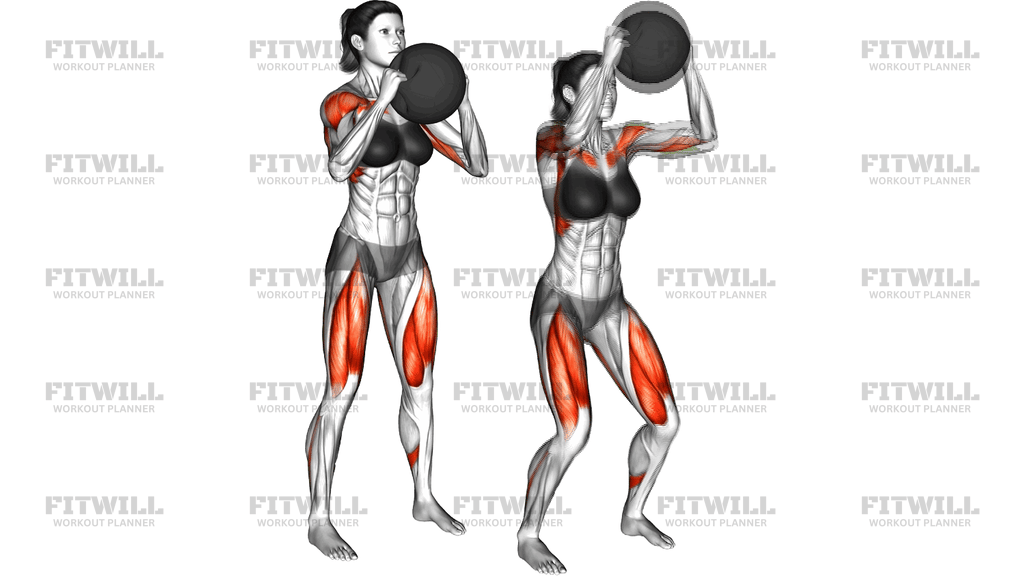
The Medicine Ball Thruster is a full-body compound movement that combines a front squat with an overhead press, all performed while holding a medicine ball at chest height. You sink into a squat with the ball cradled against your chest, then drive through your legs to stand tall while pressing the ball straight overhead in one fluid motion. Because the ball is soft and relatively light compared to a barbell, the exercise rewards speed and coordination rather than maximal load, making it a staple in conditioning circuits and functional training programs.
The main appeal of this movement is how much of the body it trains in a single rep. The quadriceps and glutes produce the force during the squat and the drive upward, the shoulders and triceps finish the press overhead, and your core works continuously to keep your torso upright while transferring power from legs to arms. Your heart rate climbs quickly because so many muscles are involved at once, which is why thrusters appear so often in metabolic conditioning, bootcamp classes, and circuit training.
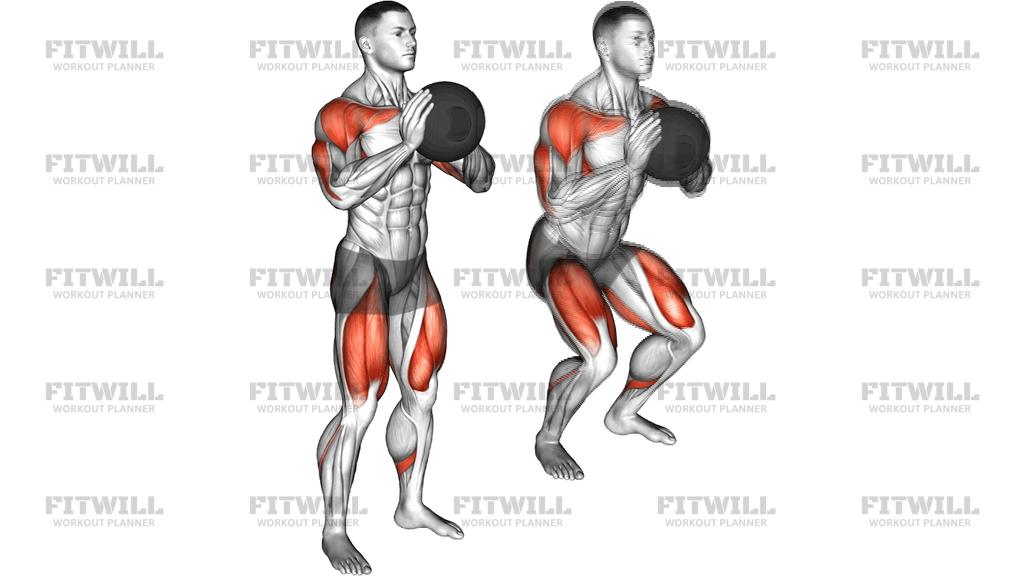
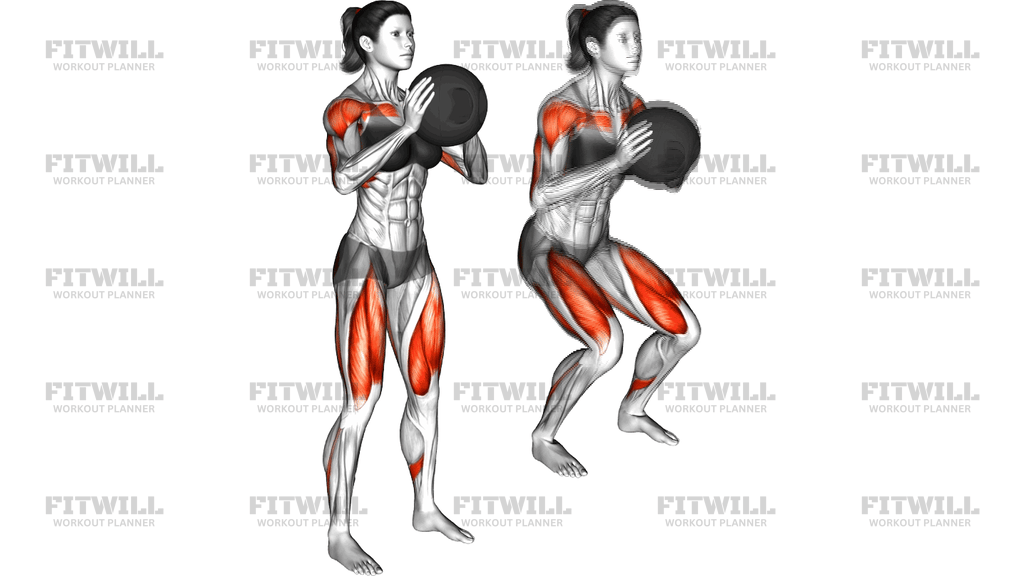
Setup matters more than people expect with such a simple-looking exercise. Stand with your feet roughly shoulder-width apart, toes turned out slightly, and hold the medicine ball with both hands at chest level, elbows tucked close to the body rather than flared wide. This front-rack position keeps the ball supported and your spine neutral before the squat begins. If the ball drifts away from your chest or your elbows drop, your torso tends to pitch forward and the press loses its connection to leg drive.
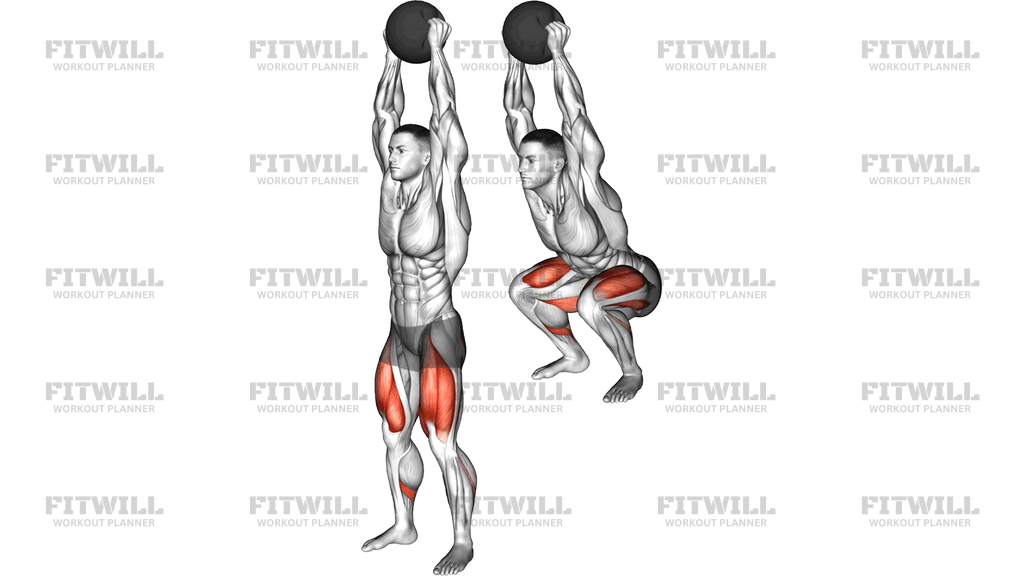
To execute the movement well, think of it as one continuous wave of force rather than two separate exercises. Descend into a squat until your thighs are at or near parallel, keeping your chest tall and your weight spread across the whole foot. As you push out of the bottom, begin pressing the ball so that it reaches full lockout overhead just as your hips and knees reach full extension. Reverse the sequence in a controlled way, catching the ball at chest height as you descend into the next rep, or resetting your stance between reps if you prefer single thrusters.
This exercise suits a wide range of trainees because the load is easy to scale. Beginners can use a light ball to groove the squat-to-press pattern safely, while more advanced lifters and athletes can use a heavier ball, add a jump at the top, or perform the movement for time to build conditioning. It is also a practical choice for home training, since a single medicine ball provides all the resistance needed.
A few safety points are worth keeping in mind. Keep your lower back from over-arching as you press overhead, and avoid letting your knees cave inward at the bottom of the squat. Choose a ball weight you can press overhead for all planned repetitions with clean technique, because once the press becomes a struggle, form in the squat usually deteriorates next. Move with control on the way down even though the press itself can be explosive.
[ Workout Log & Planner ]
Put your next workout in Fitwill
Keep your plan and training log ready when you are.


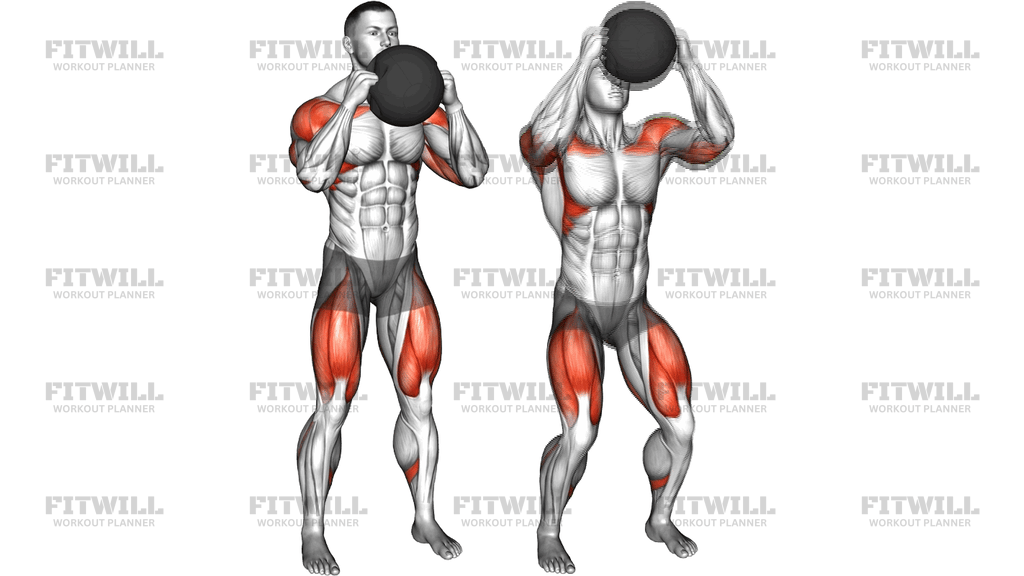
Instructions
- Stand with your feet about shoulder-width apart, toes turned out slightly, and hold a medicine ball with both hands at chest height, fingers spread around the sides of the ball.
- Keep your elbows tucked in close to your ribs so the ball rests against your upper chest, and set your gaze forward or slightly up.
- Brace your core by taking a breath into your belly and tightening your midsection as if preparing for a light push.
- Push your hips back and bend your knees to descend into a squat, keeping the ball against your chest and your weight balanced across your whole foot.
- Lower until your thighs are at or close to parallel with the floor, making sure your knees track over your toes and your chest stays tall.
- Drive through your heels and mid-foot to stand up, pressing the ball straight overhead as your hips extend so the ball reaches lockout at the top with your arms fully extended and your biceps near your ears.
- Pause briefly overhead, keeping your ribs down and your lower back from arching excessively.
- Lower the ball back to your chest under control as you simultaneously descend into your next squat, or stand fully and reset your position between reps.
- Exhale as you drive up and press, then inhale at the top or as you lower into the next rep.
- Complete your set, then set the ball down on the floor rather than dropping it from overhead, and shake out your shoulders and legs before the next round.
Tips & Tricks
- The most common mistake is squatting and pressing as two disconnected movements; let the press begin as your hips start to extend so the momentum from your legs carries the ball overhead.
- If your elbows flare out wide or drop low during the squat, the ball will pull you forward; actively keep them tucked so your forearms stay roughly vertical.
- Watch for knees caving inward at the bottom of the squat, which is common when fatigue sets in during high-rep sets; think about spreading the floor with your feet.
- Do not let the ball drift behind your head at lockout; press it slightly forward so it finishes over the middle of your body, not behind it.
- Pick a ball weight that lets you finish every press with straight arms; if your reps turn into a push with bent elbows, the load is too heavy for the pattern.
- Breathe deliberately on longer sets, since holding your breath through multiple thrusters will gas you far faster than the legs will.
- If your heels lift as you squat, widen your stance slightly and work on ankle mobility, because rising onto the toes shifts stress away from the glutes and quads.
- For conditioning rounds, set a rhythm instead of rushing; a smooth squat-press cycle with consistent depth beats sprinting the first reps and shortening the squat afterward.
- If overhead pressing bothers your shoulders, reduce the range so the press finishes at eye level, or substitute a lighter ball until your overhead position improves.
Frequently Asked Questions
What muscles does the Medicine Ball Thruster work?
It primarily targets the quadriceps and glutes during the squat and drive, while the shoulders and triceps handle the press overhead. Your abs and lower back also work hard to keep your torso stable through the leg-to-arm power transfer.
Is the Medicine Ball Thruster good for beginners?
Yes, it is one of the friendliest ways to learn the squat-to-press pattern. Start with a light ball, practice the squat and the press separately if needed, and combine them once you can squat to parallel with your chest tall.
How heavy should the medicine ball be for thrusters?
Choose a weight you can press overhead for all your planned reps while still squatting to full depth with a tall chest. For most people this is far lighter than the weight they could squat, since the press and the coordination are the limiting factors.
Should the squat and press be one motion or two separate movements?
The thruster works best as one continuous action, with the press starting as you drive up from the squat so the ball arrives overhead as your legs reach full extension. Performing them separately turns it into a squat followed by a strict press, which is a valid variation but slower and less conditioning-focused.
Why do I keep losing the ball away from my chest during the squat?
This usually happens when the elbows drop or flare out, letting the ball roll forward. Keep your elbows tucked close to your ribs and press the ball gently against your upper chest so your forearms stay vertical throughout the descent.
Can I use the Medicine Ball Thruster for cardio and conditioning?
Absolutely. Because it involves so much muscle mass, thrusters raise your heart rate quickly, which makes them a common choice in circuits, interval workouts, and finishers. Use a lighter ball and steady pacing when the goal is conditioning rather than strength.
How deep should I squat on each rep of the Medicine Ball Thruster?
Aim for thighs at or near parallel as long as you can keep your heels down, chest up, and knees tracking over your toes. If depth compromises your position, squat to a shallower but well-controlled range and build up gradually.
What can I use if I do not have a medicine ball?
A dumbbell held vertically at your chest in goblet style, a kettlebell, or a sandbag all work as substitutes. The key is holding the load at chest height so the squat and overhead press pattern stays intact.
How do I avoid arching my lower back when pressing the ball overhead?
Squeeze your glutes and keep your ribs pulled down at lockout instead of leaning back to finish the press. If you cannot reach full lockout without arching, the ball is likely too heavy or your overhead shoulder mobility needs work.
Should I drop the medicine ball between sets?
It is safer to lower the ball to the floor with both hands rather than dropping it from overhead, especially on hard floors or with balls that bounce unpredictably. Controlled placement also keeps your last rep technically consistent.