Dumbbell Incline Curl
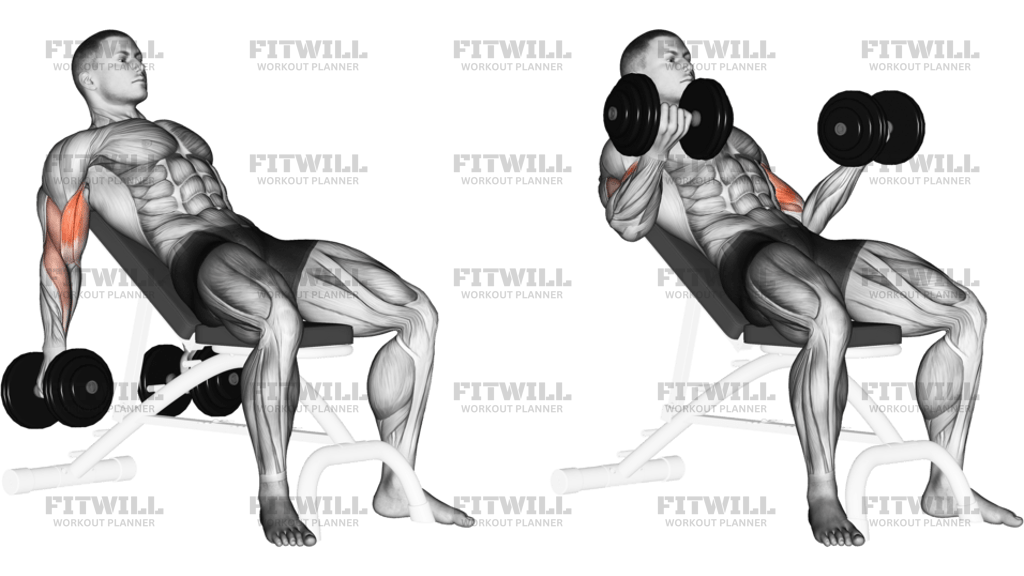
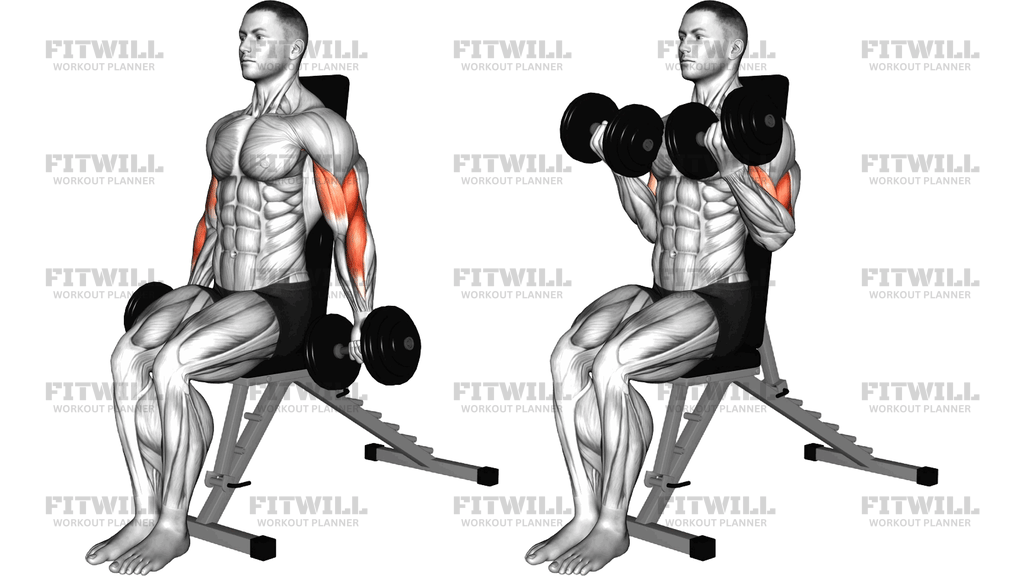
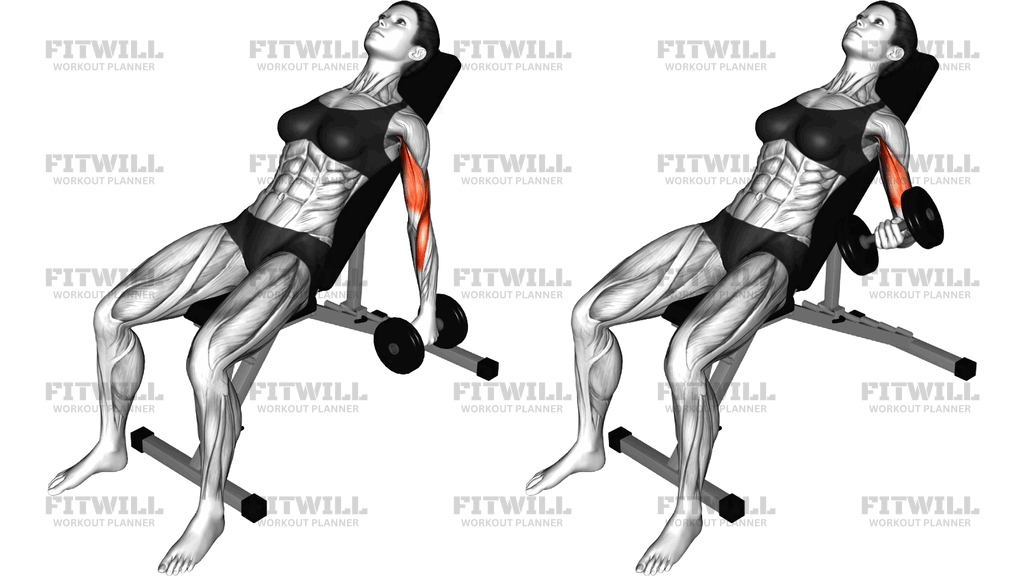
The Dumbbell Incline Curl is a seated biceps exercise performed on an incline bench, usually set at roughly 45 to 60 degrees. You lean back against the pad with a dumbbell in each hand and let your arms hang straight down toward the floor, then curl the weights up with your palms facing forward. That hanging-arm position is the whole point of the movement: because your upper arm sits behind your torso instead of in front of it, the biceps start in a longer, more stretched position than they do in a standing curl.
This variation is especially useful for lifters who already do standard curls and want to emphasize the long head of the biceps and the stretch portion of the rep. The incline setup also removes most opportunities to cheat. With your back supported and your upper arm fixed behind you, swinging your torso or driving with your shoulders is essentially off the table, so the biceps have to do the work on their own.
Because the arms hang freely, the shoulder joint and upper back have to stabilize the arm throughout the set. You will feel supporting work in the rear shoulder area and even the grip as the dumbbells pull your hands toward a neutral position at the bottom. Keeping the palm turned up as you curl keeps tension on the biceps rather than letting the brachioradialis take over.
Setup matters more here than in most curl variations. The bench angle controls the stretch: a steeper angle puts the shoulder further back and increases tension at the bottom, while a shallower angle makes the rep feel more like a standard curl. Sit fully back against the pad, let the head rest on the bench, and keep the feet planted so your body does not shift as the weight moves.
A common way to run this exercise is one arm at a time, curling with the left while the right holds the stretched position, or curling both arms together for a tighter technical focus. Either way, the bottom of the rep is where the value lives. Lower the dumbbell slowly until the arm is fully extended and pause there briefly before starting the next curl. Rushing through the bottom turns the incline curl into a shortened, partial movement and wastes the position you set up.
Because the biceps are loaded in a stretched position, start lighter than you would for standing dumbbell curls. The exercise rewards strict tempo and full range far more than heavy loads, and controlling the descent is what keeps the shoulder and elbow joints comfortable set after set.
Fitwill
Log Workouts, Track Progress & Build Strength.
Achieve more with Fitwill: explore over 9600 exercises with images and videos, access built-in and custom workouts, perfect for both gym and home sessions, and see real results.
Start your journey. Download today!




Instructions
- Set an incline bench to roughly 45 to 60 degrees and sit back on it with a dumbbell in each hand, feet flat on the floor.
- Lean your entire back and head against the pad and let your arms hang straight down at your sides, palms facing forward, so the dumbbells sit just behind your torso.
- Draw your shoulder blades back and down slightly and keep them fixed against the bench to stop your shoulders from rolling forward.
- Exhale and curl the right dumbbell up by bending only at the elbow, keeping the upper arm still and pointing down toward the floor.
- Curl until your forearm is close to your upper arm or the dumbbell is near shoulder height, squeezing the biceps at the top without letting the elbow drift forward.
- Inhale and lower the dumbbell under control until the arm is fully extended and you feel a stretch along the biceps at the bottom.
- Pause for a beat with the arm straight, keeping the palm turned up, then curl with the left arm if working one side at a time, or repeat with both arms together.
- Keep your wrists firm and neutral throughout so the dumbbell does not roll back toward your fingers.
- Complete all reps on the planned side or in alternation, then set the dumbbells down on the floor before standing up from the bench.
Tips & Tricks
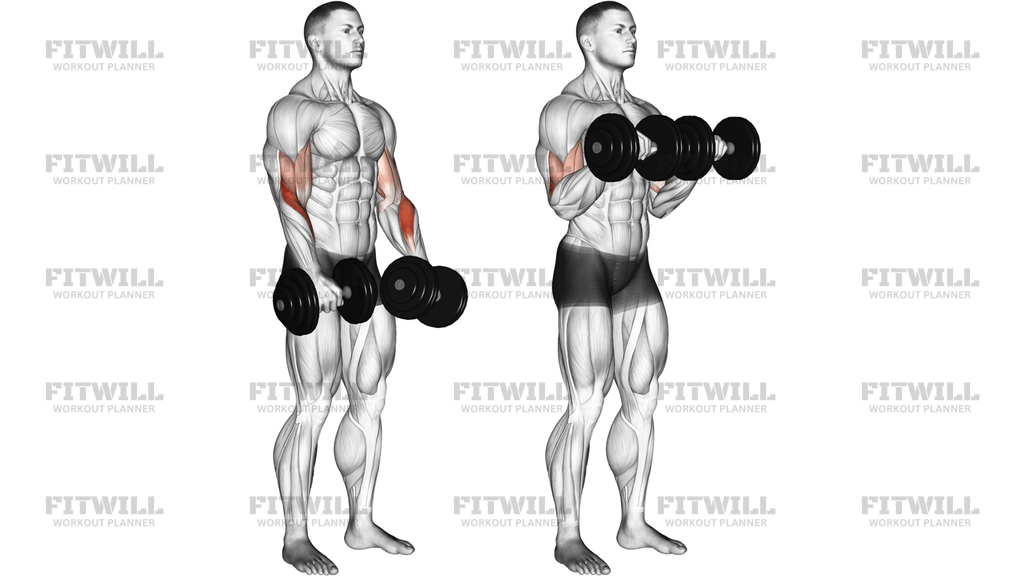
- Pick a lighter weight than your standing curl. With the arms behind the torso, the biceps start from a stretch and have far less leverage, so the same dumbbell feels heavier.
- If your front shoulder pinches or feels strained at the bottom, lower the bench angle a notch. A 45-degree setup still targets the long head but reduces the stretch demand.
- The most common error is letting the elbow travel forward as you curl, which turns the set into a regular curl. Imagine your elbow glued to an invisible point beside your ribs.
- Do not let the wrist curl inward or the dumbbell drift toward a hammer position at the bottom. Keep the pinky side of the hand slightly up to hold tension on the biceps.
- Count a two to three second lowering phase. The stretched bottom position is the main reason to choose this variation, and dropping the weight quickly skips it entirely.
- If your back or hips shift as you fatigue, reduce the weight. The bench support is there to lock your torso in place, not to brace against a weight that is too heavy.
- Alternate arms rep for rep if you notice one side finishing faster, or curl both arms together if balance is not an issue and you want a stricter set.
- Breathe out on the curl and in on the way down rather than holding your breath through the stretched position.
- Warm up the elbows with a lighter set first, since fully straightening the arm under load is harsher on the joint than a standing curl with the arm angled forward.
Frequently Asked Questions
Which muscles does the Dumbbell Incline Curl work?
The biceps brachii is the primary mover, with strong involvement from the brachialis and brachioradialis. The forearms and the stabilizers around the shoulder also work to control the hanging dumbbells.
Why does the Dumbbell Incline Curl feel harder than a standing dumbbell curl at the same weight?
Leaning back on the incline bench places your upper arm behind your torso, which puts the biceps in a lengthened position at the bottom. Muscles under a stretch produce less force, so the same load feels more demanding.
What bench angle should I use for the Dumbbell Incline Curl?
Around 45 to 60 degrees works for most people. A steeper pad increases the stretch on the long head of the biceps but demands more shoulder mobility, so start closer to 45 degrees and adjust from there.
Should I curl both arms together or one at a time?
Both work. Curling one arm at a time makes it easier to focus on technique and lets you spot side-to-side differences, while curling both together keeps the set shorter and the torso more symmetrical.
Is the Dumbbell Incline Curl suitable for beginners?
Yes, as long as the weight is modest and the tempo is slow. Beginners should first be comfortable with a basic standing curl, since the stretched bottom position of the incline version needs some control.
Why do my shoulders roll forward at the bottom of the Dumbbell Incline Curl?
The hanging dumbbells pull the arms into a stretched position, and if your upper back relaxes the shoulders drift with them. Set your shoulder blades back against the pad before the first rep and keep the weight light enough to hold that position.
What can I use instead of an incline bench for the Dumbbell Incline Curl?
A decline bench set on its high end, an adjustable bench with a backrest, or even a sturdy chair angled against a wall can approximate the position. The key is a backrest that lets your arms hang behind your torso.
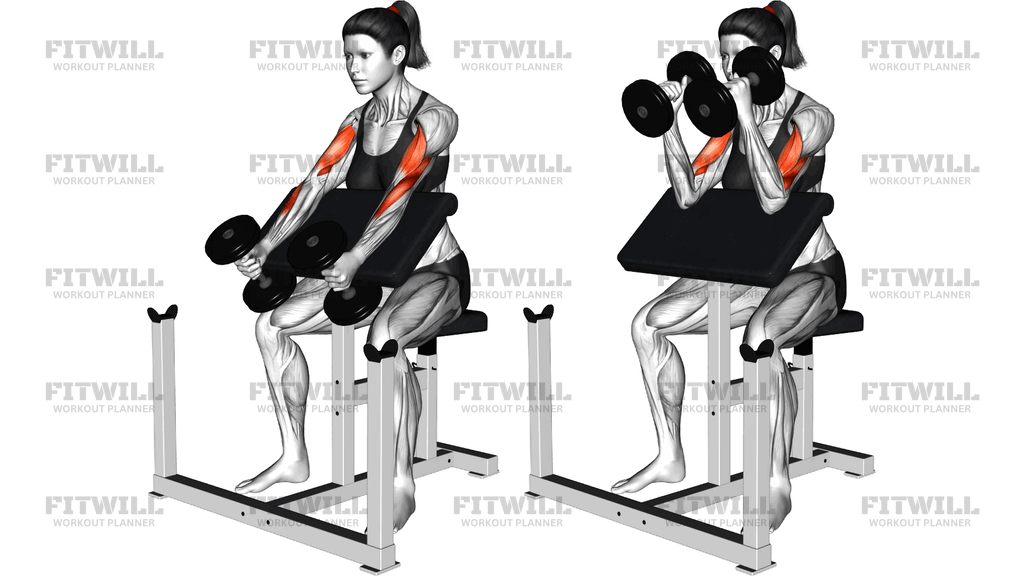
How does the Dumbbell Incline Curl differ from a preacher curl?
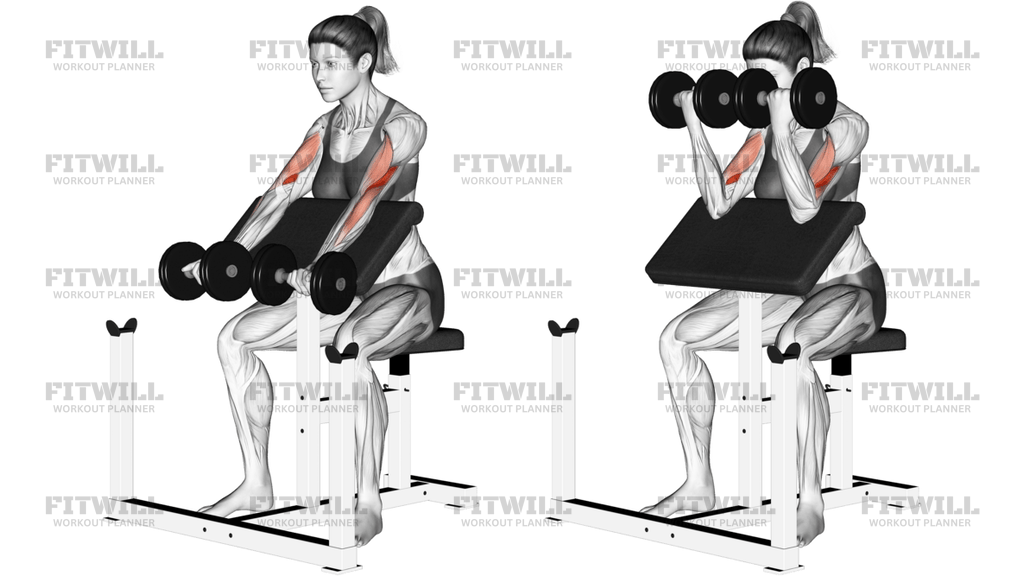
The preacher curl supports the upper arm in front of the body and loads the biceps hardest at the top of the rep, while the incline curl lets the arm hang behind and loads the stretched bottom position. They complement each other rather than replace one another.
Is it safe to let my arm fully straighten at the bottom of the Dumbbell Incline Curl?
Full extension is part of the benefit, but it should be controlled, not a drop. If you feel discomfort in the elbow or shoulder when straightening under load, stop the descent slightly short of full lockout and use a lighter dumbbell.
How many reps and sets of the Dumbbell Incline Curl should I do?
Two to four sets of 8 to 15 controlled reps fits most programs. Because the movement emphasizes the stretched position, err toward the higher end of that range rather than chasing heavy loads.