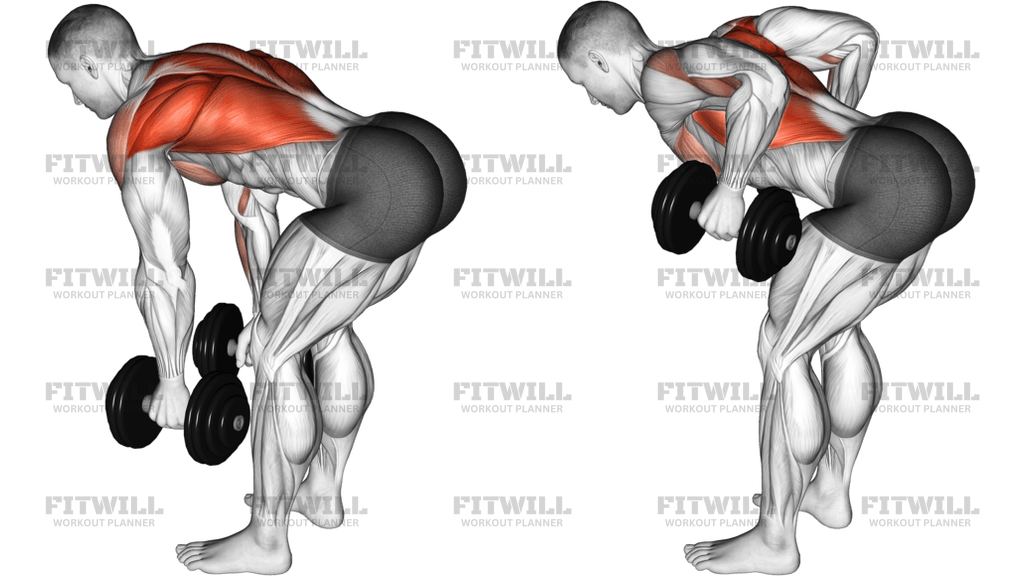
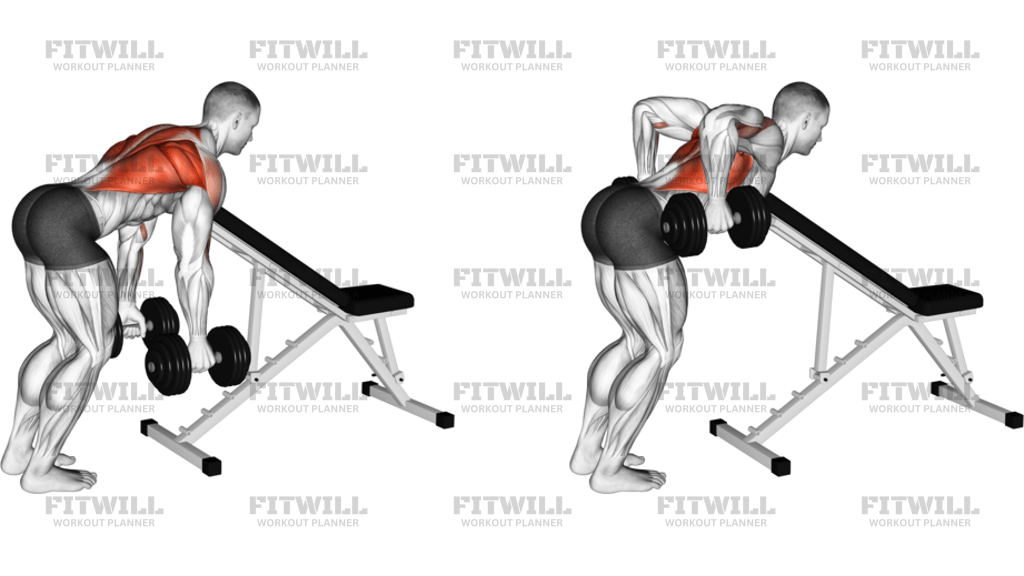
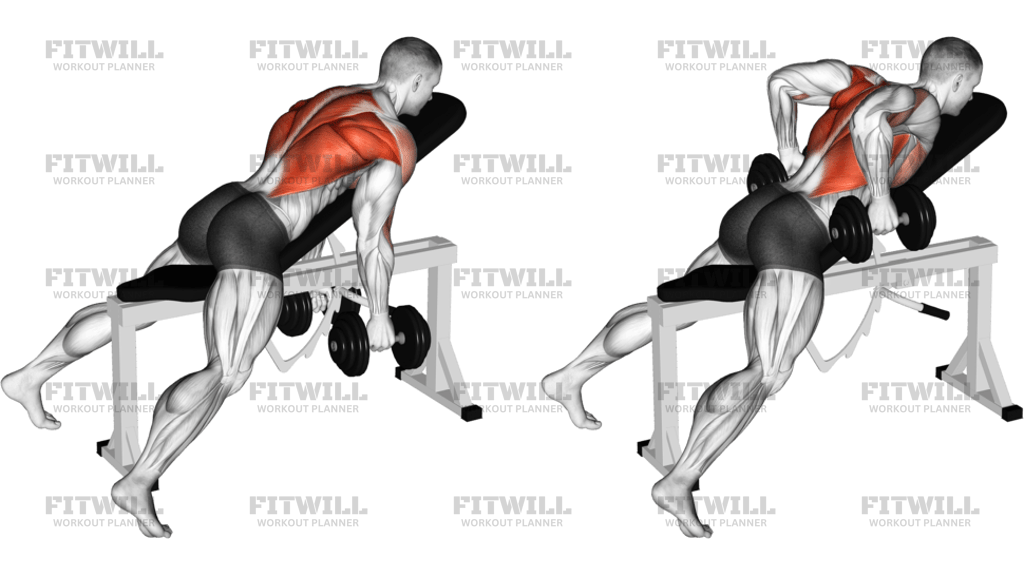
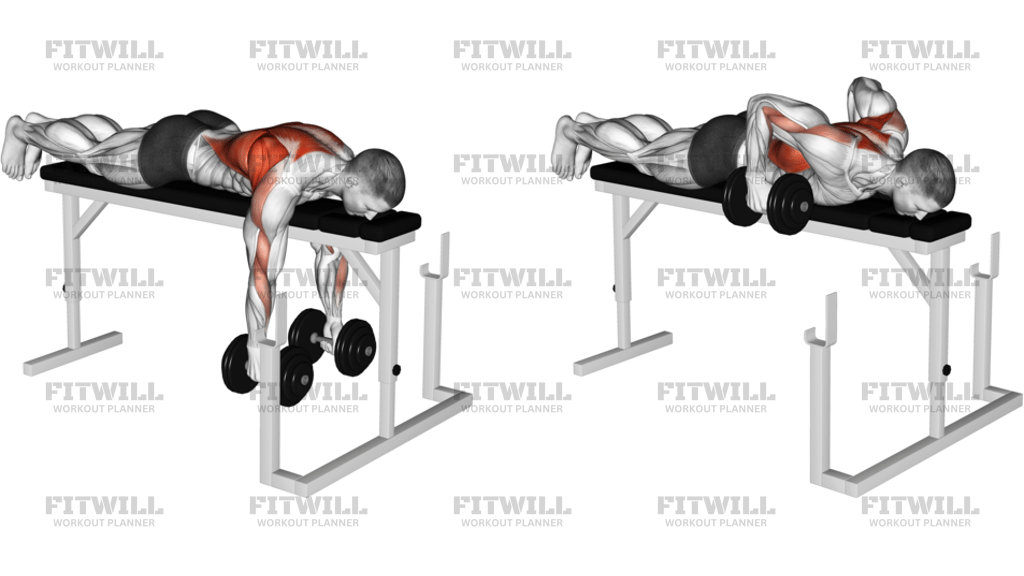
Dumbbell Lying Neutral Grip Row On Rack
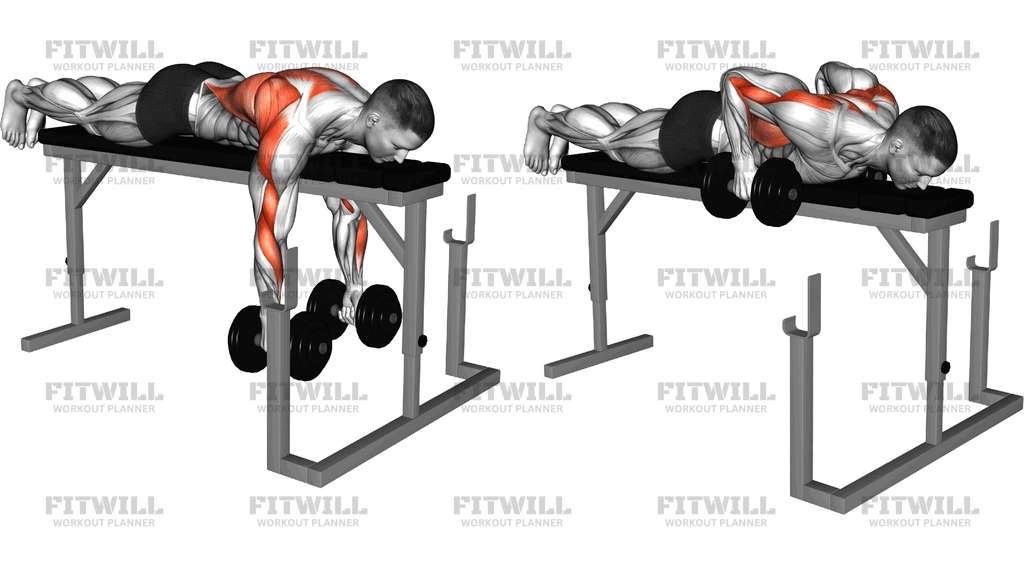
The Dumbbell Lying Neutral Grip Row On Rack is a prone row variation where you lie face down on a high bench, let both arms hang straight toward the floor with a dumbbell in each hand, and row the weights up to your sides with your palms facing each other. The bench is positioned on or against a rack so it sits high enough that your arms hang freely and the plates clear the floor at the bottom of each rep. Because your torso is fully supported and the movement happens below you, there is almost no lower back load compared with a bent-over row.
This setup makes the exercise a great fit for lifters who want a hard rowing stimulus without straining their lower back, as well as anyone who tends to cheat standing rows with body English. With the bench carrying your whole body weight, the only thing that can move the dumbbells is your back and arms, so the target muscles get honest work. It is also useful for home or garage gyms where a rack and a flat bench are already available, but no row machine or suspension setup exists.
The neutral grip, with palms turned inward toward each other, sits comfortably in the shoulder joint and tends to let the elbows travel close to the ribs. That path biases the lats and the muscles of the mid-back, with the rear shoulders and biceps assisting on every pull. If you rotate the grip or flare the elbows, the emphasis shifts, which is exactly why the neutral position is worth keeping consistent.
Execution is simple but demanding: pull both dumbbells up together until your upper arms are roughly level with your torso, squeeze your shoulder blades back and down at the top, then lower the weights under control until your arms are fully extended again. The bench removes most of the stability requirement, so your attention goes to scapular movement and a clean, even path on both sides.
Keep your chin off the pad, your neck in line with your spine, and your legs relaxed or lightly braced against the floor. Choose a weight you can pull to full height without jerking, because once momentum enters the lift, the row becomes a shrug with extra steps. Done well, this movement builds thickness through the upper back and strength through the lats while sparing your spine, which is a combination few rowing variations offer this cleanly.
[ Workout Log & Planner ]
Put your next workout in Fitwill
Keep your plan and training log ready when you are.


Instructions
- Set a flat bench on or against the rack at a height that lets your arms hang straight down with the dumbbells clearing the floor when fully extended.
- Hold a dumbbell in each hand with a neutral grip, palms facing each other, and lie face down on the bench so your chest and head rest on the pad and your arms hang toward the floor.
- Position your body so the bench supports your torso from chest to hips, with your legs extended behind you and feet lightly touching the floor for balance.
- Let your shoulders drift slightly forward at the bottom so your upper back gets a mild stretch before each rep.
- Exhale and pull both dumbbells up at the same time, keeping your elbows close to your ribs and driving them toward the ceiling.
- At the top, your upper arms should be roughly in line with your torso; pull your shoulder blades back and down and hold the squeeze for a beat.
- Inhale as you lower the dumbbells slowly until your arms are fully extended and your shoulders drop back toward the floor.
- Keep your neck neutral, face resting on the pad, and avoid lifting your head to watch the weights.
- Complete all reps with an even tempo on both sides, then set the dumbbells down on the floor before sitting up off the bench.
Tips & Tricks
- The most common error on this setup is pulling the dumbbells up toward your head instead of your hips, which turns the row into a wide rear-delt flap; aim your elbows at your ribs to keep the lats and mid-back in charge.
- If the plates tap the floor at the bottom, the bench is too low for your arm length; raise it on the rack rather than shortening your range.
- Do not press your hips into the pad to help the pull; the bench already supports you, so extra pushing just changes your angle and hides the weak point you are trying to train.
- Watch for one arm finishing higher than the other, which is easy to miss when both weights move together; slow the eccentric down and even out the tempo before adding load.
- Keep a full hand grip without strangling the dumbbells; a crushing grip makes the forearms fail before your back gets enough work.
- If your shoulders feel pinched at the top, shorten the range slightly or angle your elbows a touch further out instead of forcing full height with a heavy pair of dumbbells.
- Chin tucked, forehead on the pad; lifting the head to look at the mirror or the weights strains the neck and rounds your upper back the wrong way.
- Start lighter than you would for a seated cable row; the lack of torso support behind you is gone, but the awkward bottom position near the floor catches people off guard.
Frequently Asked Questions
Which muscles does the Dumbbell Lying Neutral Grip Row On Rack work?
The primary work comes from the lats and the rhomboids and traps of the mid-back, while the rear shoulders and biceps assist on every pull. The neutral grip keeps the elbows close to your sides, which favors the lats a bit more than a wide-elbow version would.
Why use a neutral grip instead of an overhand grip on this row?
Palms facing each other keeps the shoulders in a comfortable position and lets the elbows track near the ribs, which many lifters find smoother at the shoulder joint. It also shifts slightly more emphasis toward the lats compared with a prone overhand grip.
How high should the bench be for the Dumbbell Lying Neutral Grip Row On Rack?
High enough that your arms hang fully extended with the dumbbells clear of the floor and your shoulders can drop slightly at the bottom. If the plates touch down mid-set, either raise the bench on the rack or use smaller-diameter dumbbells.
Is this exercise suitable for beginners?
Yes, and it is actually a friendly way to learn rowing because the bench supports your torso and removes the balance and lower back demands of a bent-over row. Start with a light pair of dumbbells and focus on pulling the elbows to the ribs rather than moving heavy weight.
Can I row one arm at a time on this setup?
You can, and it helps if one side is noticeably weaker or if holding two dumbbells at the bottom is fatiguing. Just keep your body square on the bench, because lying slightly twisted to make the single-arm pull easier defeats the purpose.
What is the most common mistake with this movement?
Pulling the dumbbells up beside your head with flared elbows instead of drawing them toward your hips. The fix is simple: cue your elbows to your ribs and think about pulling your shoulder blades back and down at the top.
What can I substitute if I do not have a rack to elevate the bench?
A standard prone row on a regular-height bench works, though the dumbbells may not reach full arm extension if the bench is low. Alternatives include single-arm dumbbell rows on the bench or chest-supported rows with your torso on an incline bench.
How should I breathe during the Dumbbell Lying Neutral Grip Row On Rack?
Exhale as you pull the dumbbells up and inhale as you lower them back to full extension. Do not hold your breath through the set, especially since the pad against your chest already makes breathing feel more restricted than in a standing row.
Is it safe for my lower back?
The prone, bench-supported position removes most of the spinal loading that makes bent-over rows taxing, which is why it suits lifters with cranky lower backs. Keep your neck neutral and your hips on the pad, and stop if you feel any pinching at the shoulder instead of pushing through it.