Dumbbell Reverse-Grip Biceps Curl
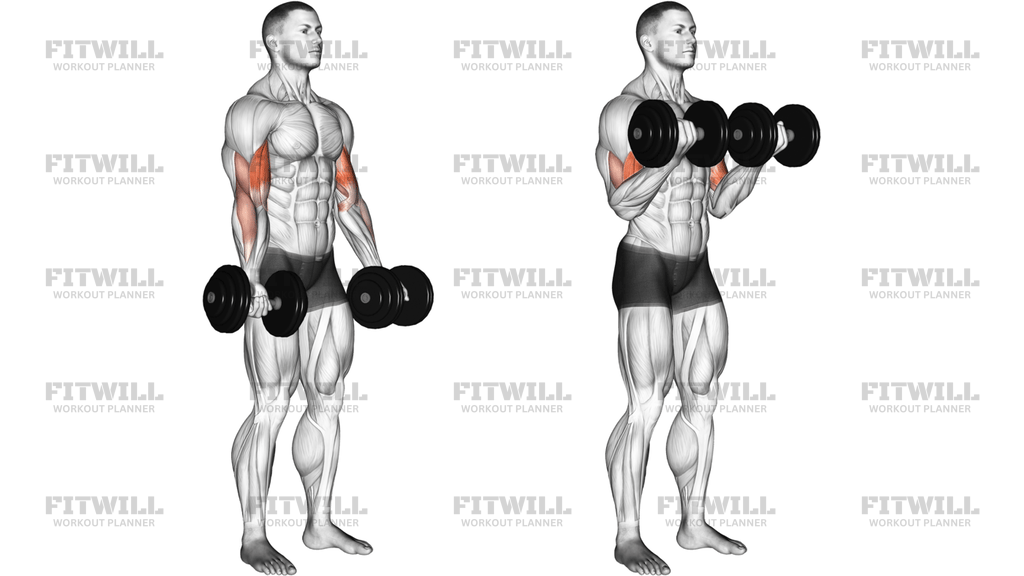
Dumbbell Reverse-Grip Biceps Curl is a standing dumbbell curl variation that uses a palms-down grip to shift more of the work toward the brachioradialis and forearms while still training the biceps and brachialis. The change in hand position makes the curl feel different from a standard supinated curl: the wrist and elbow have to stay organized, and the weight usually feels more demanding through the forearm on the way up.
This exercise is useful when you want direct arm work that carries over to grip strength, elbow flexion strength, and the top half of many pulling movements. Because the dumbbells move independently, it is also easy to spot side-to-side differences in control, wrist position, or how much one arm wants to swing ahead of the other. That makes it a good accessory choice after heavier back work or as a focused arm finisher.
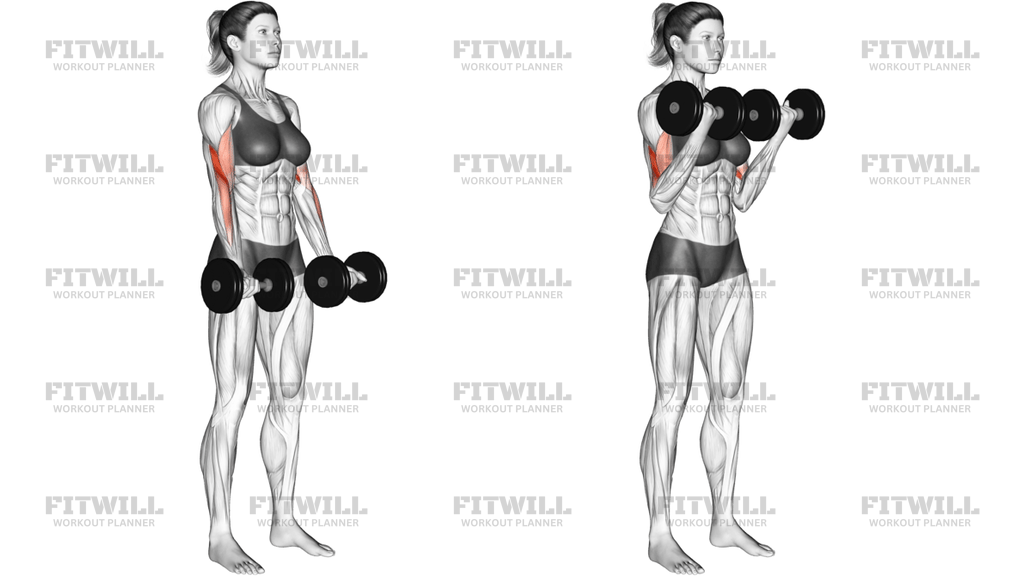
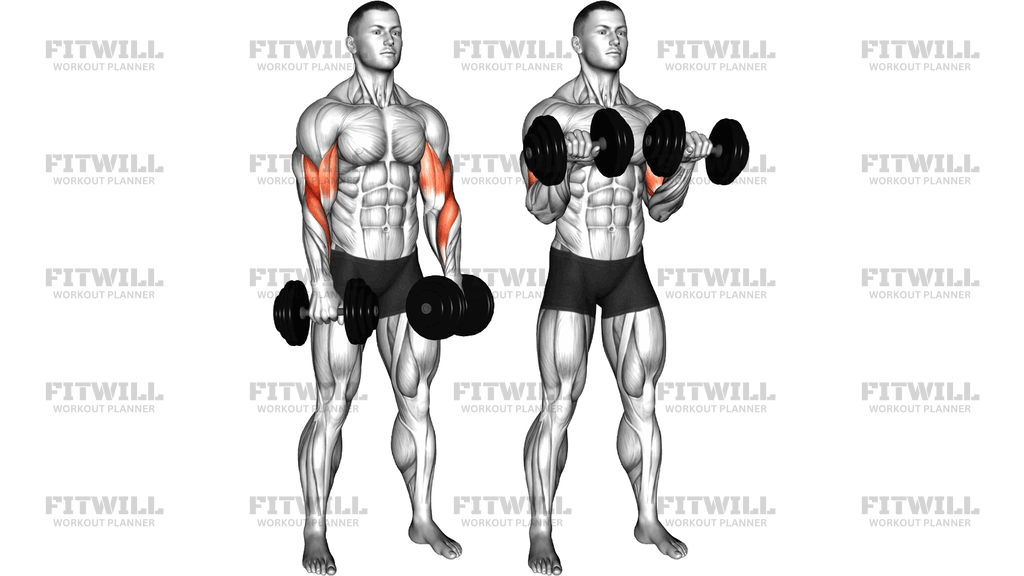
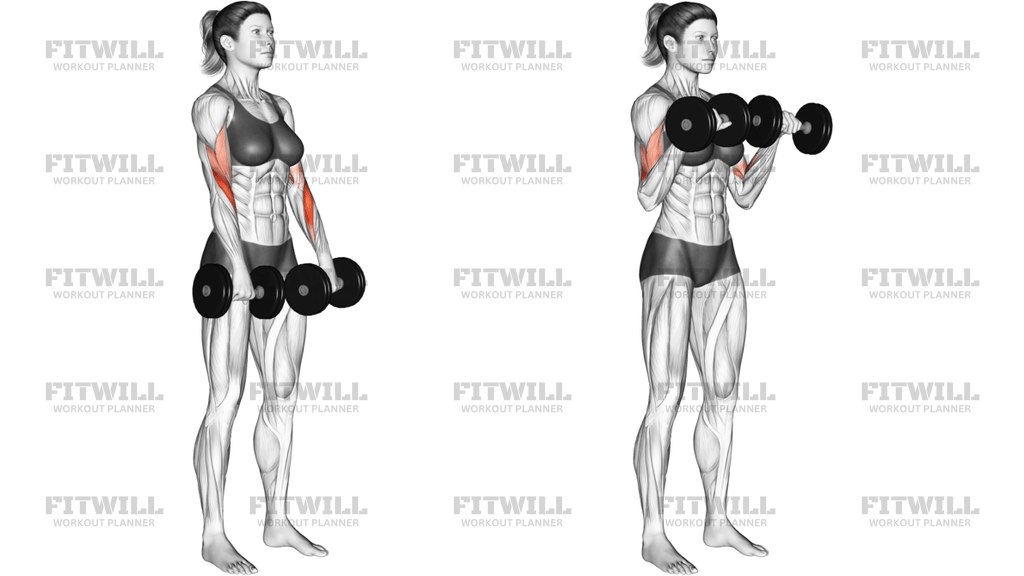
The setup matters more than it first appears. Stand tall with a dumbbell in each hand, feet about hip-width apart, and the arms hanging straight down at your sides. Turn the palms toward the floor, keep the wrists stacked over the forearms, and pin the elbows close to the ribs so the curl starts from the elbow instead of from the shoulder.
On each rep, curl the dumbbells up by bending the elbows while the upper arms stay quiet. The hands should travel in a clean arc toward the front of the shoulders without the torso leaning back or the elbows drifting forward. At the top, squeeze the forearms and upper arms briefly, then lower the dumbbells under control until the elbows are almost straight again.
Use a load that lets you keep the palms-down position, wrist alignment, and shoulder position intact through every rep. If the weight forces you to swing, shrug, or break the wrist back, the movement stops being a reverse-grip curl and turns into a cheat lift. Done well, Dumbbell Reverse-Grip Biceps Curl is a straightforward way to build arm size and elbow-flexion strength without needing a bench, bar, or machine.
[ Workout Log & Planner ]
Put your next workout in Fitwill
Keep your plan and training log ready when you are.


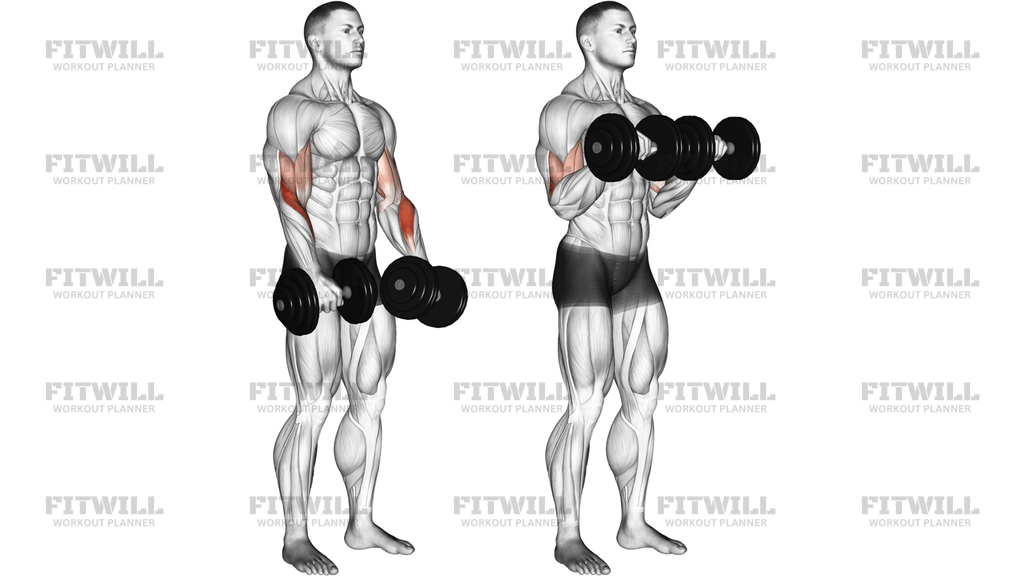
Instructions
- Stand tall with a dumbbell in each hand, feet about hip-width apart, and the weights hanging at your sides.
- Turn both palms toward the floor and stack your wrists straight over the handles.
- Set your elbows close to your ribs and keep your shoulders down instead of shrugged forward.
- Brace your torso and keep your chest tall before the first rep starts.
- Curl the dumbbells by bending the elbows while the upper arms stay mostly still.
- Bring the weights up in a smooth arc until your forearms are near vertical and the dumbbells are close to the front of your shoulders.
- Pause briefly at the top without letting the elbows slide forward or the wrists bend back.
- Lower the dumbbells slowly until the arms are almost straight, then reset the shoulders and repeat.
Tips & Tricks
- A reverse grip usually forces a lighter load than a standard curl, so start conservatively and earn the weight with strict reps.
- Keep the wrists neutral; if the hands start to cock back, the forearms are losing the position that makes this variation worthwhile.
- Think about lifting the knuckles toward the shoulders instead of swinging the dumbbells upward with the torso.
- If one side twists or rises earlier than the other, alternate reps instead of forcing both arms to match a sloppy tempo.
- The elbows should stay close to the ribs, not flare forward, or the front delts will take over the lift.
- Lower the dumbbells slower than you curl them so the brachioradialis and brachialis stay under tension longer.
- Stop the set when your shoulders start shrugging or your upper back begins to help the lift.
- Use the straightest possible line from start to finish; wide looping arcs usually mean too much momentum.
Frequently Asked Questions
What muscles does Dumbbell Reverse-Grip Biceps Curl work?
It mainly trains the brachioradialis and brachialis, with the biceps and forearm muscles helping throughout the curl. The palms-down grip shifts more emphasis to the forearm side of elbow flexion than a standard curl.
Should I stand or sit for Dumbbell Reverse-Grip Biceps Curl?
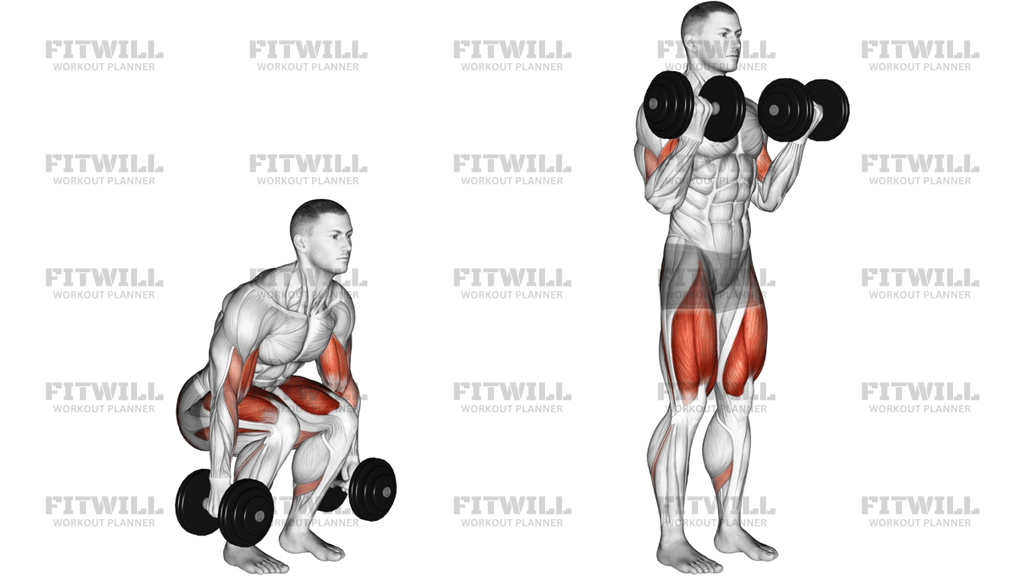
Standing is the common version and matches the setup in the image. Sitting is fine if it helps you stop using body English, but your elbows should still stay close to your sides.
Why use a palms-down grip for Dumbbell Reverse-Grip Biceps Curl?
A palms-down grip reduces the biceps' advantage and makes the brachioradialis and forearms work harder. That is the main reason this curl feels different from a regular dumbbell curl.
How far should I lift the dumbbells?
Lift until the forearms are near vertical and the dumbbells are close to the front of the shoulders. If the shoulders roll forward or the wrists bend back to get higher, the rep has gone too far.
Can I alternate arms on Dumbbell Reverse-Grip Biceps Curl?
Yes, alternating works well if one side is stronger or less coordinated. Just keep the nonworking arm quiet at your side instead of letting both shoulders and torso rock together.
What is the biggest mistake in Dumbbell Reverse-Grip Biceps Curl?
Leaning back to swing the dumbbells up is the most common error. If your torso moves, the exercise stops loading the forearms and biceps the way it should.
Is Dumbbell Reverse-Grip Biceps Curl hard on the wrists?
It can be if you let the wrists extend or if the load is too heavy. Keep the knuckles in line with the forearms, and reduce the weight if the grip position feels forced.
How can I make Dumbbell Reverse-Grip Biceps Curl safer for my elbows?
Use a controlled lowering phase, avoid locking out hard at the bottom, and stop before the shoulders start taking over. Pain in the front or outside of the elbow is a sign to lighten the load or shorten the set.