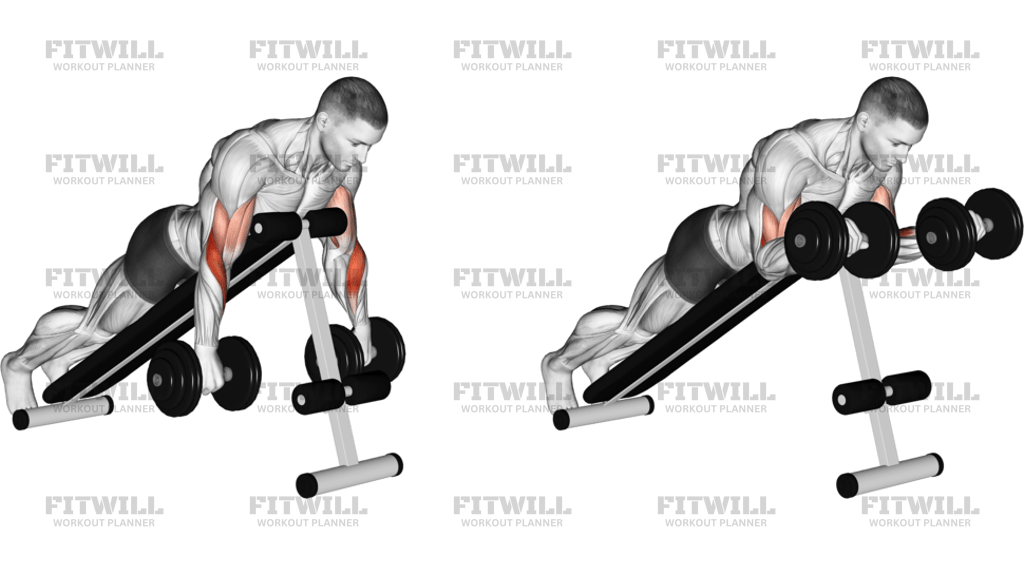
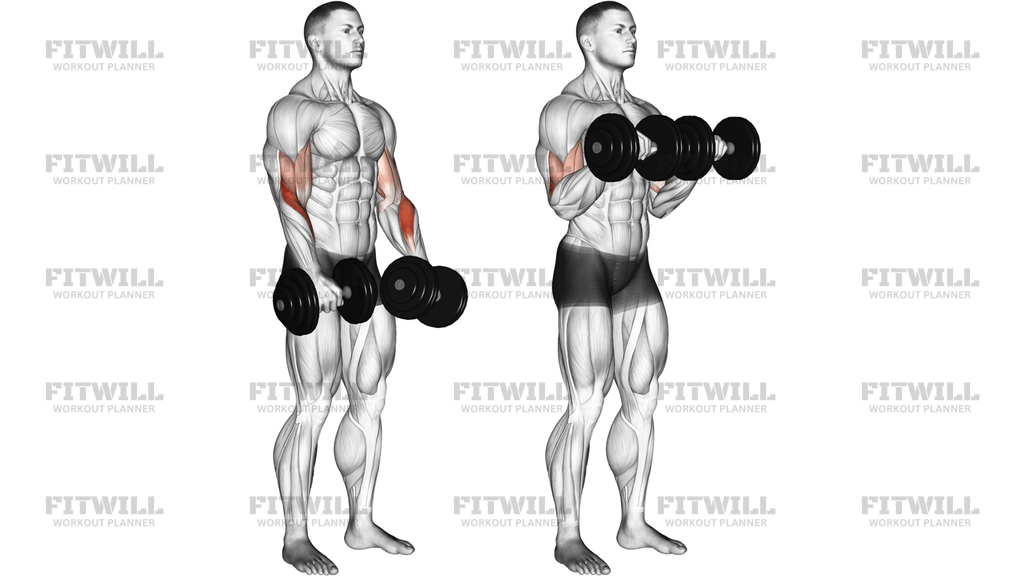
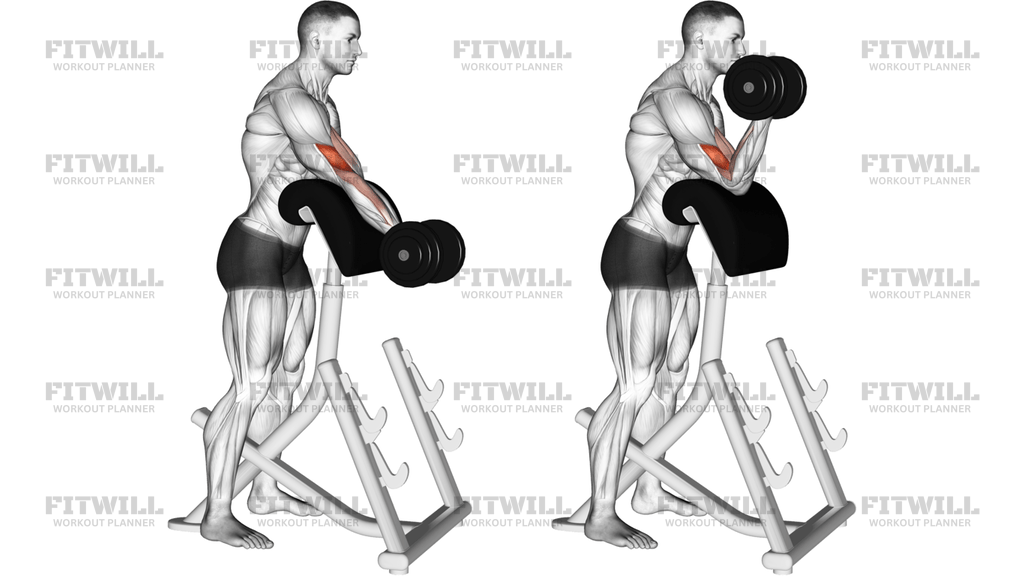
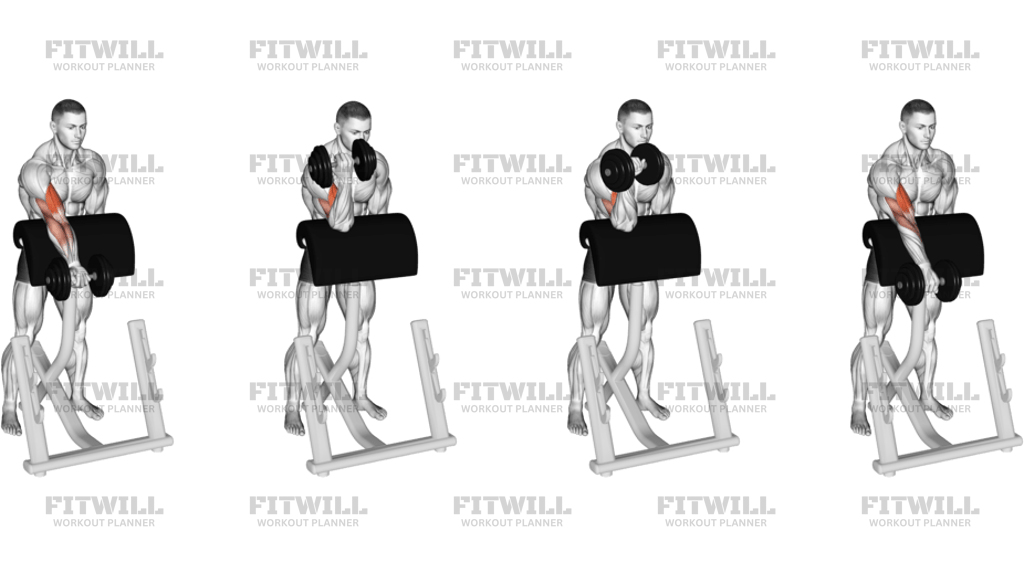
Dumbbell Reverse Preacher Curl
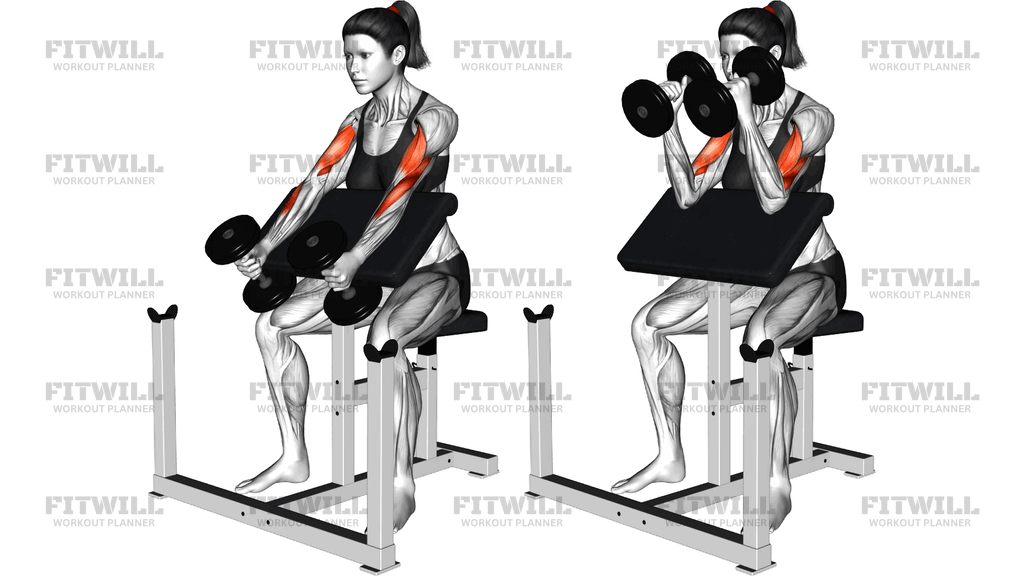
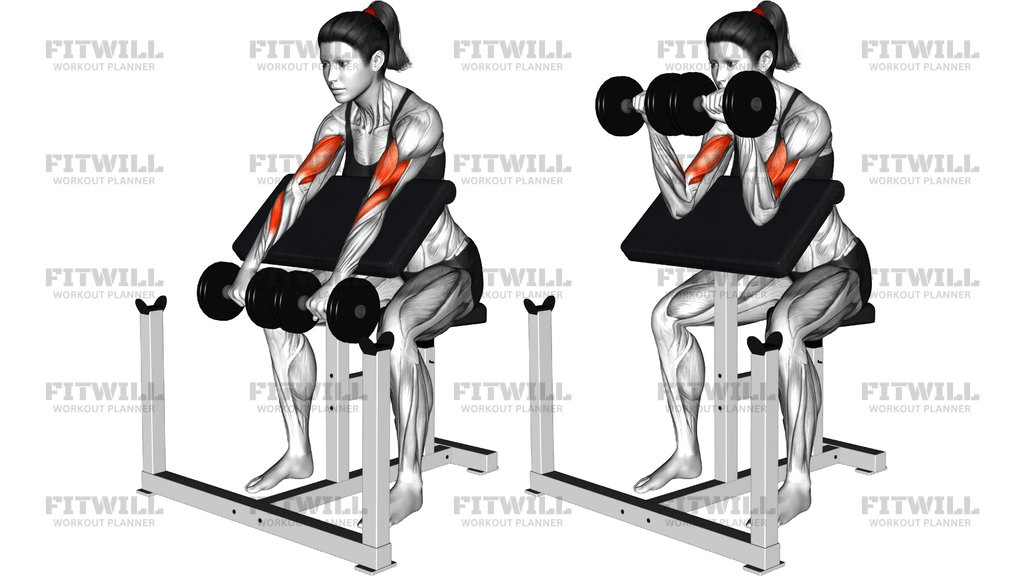
The Dumbbell Reverse Preacher Curl is an arm isolation exercise performed seated at a preacher bench with the backs of your hands facing forward. Instead of the traditional underhand grip, you hold the dumbbells with a pronated (overhand) grip, which shifts most of the workload from the biceps to the brachioradialis along the top of the forearm and the brachialis underneath the biceps. The preacher pad pins your upper arms at a fixed angle, so your elbows cannot drift behind your torso to borrow momentum from the shoulders.
This movement is especially useful for lifters whose forearms lag behind their upper arms, or anyone whose grip tends to give out during pulling exercises like rows and deadlifts. Because the reverse grip places the wrist extensors and forearm flexors under constant load, it also builds grip endurance and forearm size in a way a standard curl does not. It pairs naturally with regular preacher curls in the same session so both sides of the arm get direct work.
The setup matters more here than in most curl variations. With the armpits, upper arms, and elbows resting fully on the angled pad, the only moving joints are the elbows and wrists, which makes cheating nearly impossible and keeps tension on the target muscles through the entire range. That same setup, however, puts the elbow in a vulnerable position at full extension, so the bottom of each rep is where control matters most.
To perform it well, curl the dumbbells up until your forearms are close to vertical and squeeze at the top, then lower slowly until your arms are almost straight without letting the elbows lift off the pad. Keep your wrists straight and locked in the overhand position rather than letting them bend backward, since a bent wrist under load is the most common source of discomfort in this exercise.
Choose lighter dumbbells than you would use for a standard preacher curl. The brachioradialis and brachialis are smaller muscles than the biceps, and the reverse grip shortens the biceps' contribution, so weight that feels easy with an underhand grip will feel noticeably heavier here. Two to four sets of 8 to 15 controlled reps near the end of an arm or pull workout works well for most people.
[ Workout Log & Planner ]
Put your next workout in Fitwill
Keep your plan and training log ready when you are.


Instructions
- Sit on the preacher bench with your feet flat on the floor and your armpits, upper arms, and elbows pressed firmly against the angled pad.
- Hold a dumbbell in each hand with an overhand (pronated) grip, palms facing down and knuckles pointing forward, and set your upper arms flat on the pad with your arms nearly straight.
- Squeeze your elbows into the pad, brace your core, and keep your chest up and shoulders pulled back so your torso does not round forward.
- Exhale and curl both dumbbells up by bending only at the elbows, keeping the backs of your hands facing forward and your wrists straight throughout.
- Continue until your forearms are close to vertical and the dumbbells are near shoulder height, then pause briefly and squeeze the top of your forearms.
- Inhale and lower the dumbbells under control over two to three seconds until your elbows are just short of full extension.
- Keep the backs of your arms and elbows glued to the pad during the descent and stop before the arms lock out completely at the bottom.
- Begin the next rep from that almost-straight position, driving the movement from the elbows without lifting your shoulders or leaning back.
- After finishing the set, set the dumbbells down on the floor or rack to your sides while still seated, then stand up to reset.
- Repeat for your target number of reps, keeping the tempo smooth and identical on every repetition.
Tips & Tricks
- Pick a dumbbell weight roughly 20 to 30 percent lighter than your standard preacher curl weight; the reverse grip removes most biceps assistance and heavier loads usually break wrist position first.
- If your wrists ache at the top, angle the dumbbells slightly inward so your hands are not forced into full pronation, or use a pair of dumbbells whose handles allow a small neutral tilt.
- The most common mistake is lifting the elbows off the pad as fatigue sets in, which turns the exercise into a standing curl; if the elbows rise, the set is over regardless of reps remaining.
- Do not fully lock out and rest between reps at the bottom. The elbow is under the least support at full extension on a preacher bench, and a hard stop there can stress the joint.
- Keep your knuckles stacked over your wrists. Letting the wrists flex backward under the dumbbell shifts load onto the wrist extensors and is the usual cause of forearm discomfort in this grip.
- Slightly less range of motion with constant pad contact beats a bigger arc with sloppy elbows; a controlled three-quarter rep is more productive than a full rep done with momentum.
- Expect the top of the forearms to burn before your upper arms do. That sensation means the brachioradialis is doing its job, not that the exercise is wrong.
- If one arm fatigues faster than the other, finish with a few single-arm reps on the weaker side using the same pad position rather than compensating with torso twist.
- Skip this exercise entirely if you have an active elbow or wrist injury; the fixed arm position gives you nowhere to adjust mid-rep when discomfort appears.
Frequently Asked Questions
Which muscles does the Dumbbell Reverse Preacher Curl work?
The brachioradialis along the top of the forearm is the main mover, with the brachialis and biceps assisting in elbow flexion. The forearm and grip muscles also work hard to hold the overhand grip throughout the set.
Why use a reverse grip instead of a normal underhand curl on the preacher bench?
With the palms facing down, the biceps are in a mechanically weaker position, so the brachioradialis and brachialis take over. This builds the forearm and the thickness of the arm underneath the biceps in a way an underhand grip does not.
Is the Dumbbell Reverse Preacher Curl suitable for beginners?
Yes, as long as the weight starts light and the wrists stay straight. Beginners often benefit from learning it early because it teaches strict elbow-only movement before momentum habits develop.
Why is my forearm burning more than my biceps during this exercise?
That is the expected response to the overhand grip, which shifts the effort to the brachioradialis and forearm muscles. It does not mean the exercise is being performed incorrectly.
Can I do Dumbbell Reverse Preacher Curls without a preacher bench?
You can approximate it seated with your upper arms braced against your inner thighs, or use an incline bench set to a steep angle. A dedicated preacher bench is preferable because it locks the upper arms in place more reliably.
How heavy should the dumbbells be for this exercise?
Use noticeably less weight than your regular dumbbell preacher curl, often 20 to 30 percent lighter. If your wrists bend backward or your elbows lift off the pad, the dumbbells are too heavy.
Should I go all the way down until my arms are completely straight?
Lower until your elbows are just short of full extension while keeping the backs of your arms on the pad. Locking out hard at the bottom places unnecessary stress on the elbow joint with no extra muscle-building benefit.
Can the Dumbbell Reverse Preacher Curl improve my grip for pulling exercises?
It can help, since holding a pronated grip under load trains the forearm flexors and extensors isometrically. Stronger forearm muscles generally carry over to rows, deadlifts, and pull-ups.
How many sets and reps should I do?
Two to four sets of 8 to 15 reps with a controlled tempo works well for most lifters. Place it after your main pulling or biceps work so the smaller forearm muscles are not pre-fatigued first.
What should I do if my wrists hurt during the movement?
Reduce the weight first, then allow a slight inward angle of the hands instead of forcing full pronation. If discomfort continues, switch to a hammer-grip preacher curl, which keeps the wrists in a more neutral position.